
Latest world news
Hosni Mubarak, the survivor, returns

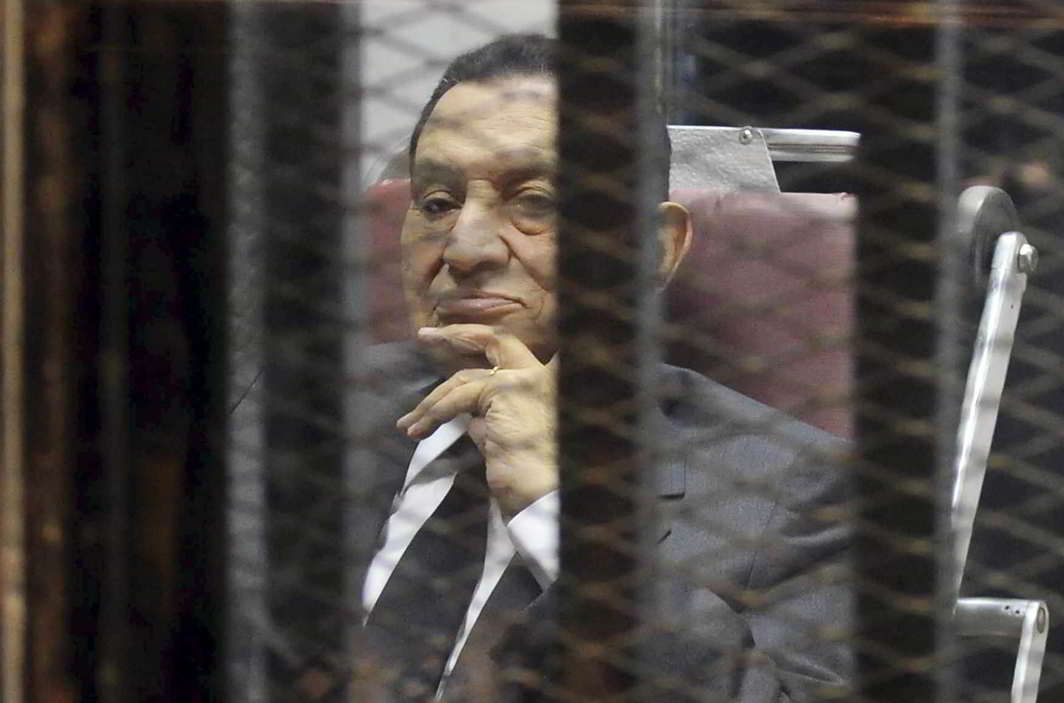
[vc_row][vc_column][vc_column_text]The former Egyptian president’s acquittal shows he still wields power with the West. The question is will his influence lead to the release of the thousands of other political prisoners languishing behind bars?
By Sujit Bhar
That Egypt’s military junta respects tradition was proved once again through the acquittal and release of ex-President Hosni Mubarak from house arrest.
On March 24 Mubarak left the military hospital where he was detained—in Maadi, south of Cairo—and immediately left under heavy security for his home in the posh Heliopolis area. Egyptian newspaper al-Masry al-Youm has quoted his lawyer Farid el-Deeb as saying that Mubarak had a relaxed breakfast with wife Suzanne and their two sons Alaa and Gamal.
The 88-year-old leader had always maintained that he was in no way responsible for the death of nearly 900 protesters during the 25 January 25 to February 11 uprising in 2011. He had been sentenced to life, but an appeals court later had dismissed charges against him.
Technically, there has been no one directly held responsible for the deaths and, according to experts, nor will any one be. The deaths will have been for nothing. The expert, quoted in the media, says that for all practical purposes Egypt has remained in the grips of the military since 1952. That was when Egypt’s first president Gamal Abdel Nasser took over power, overthrowing King Farouk in what can be called the first Egyptian Revolution.
Anwar Sadat, who can be called the real builder of modern Egypt, was a confidante of Nasser, and became his vice-president as the new junta took control. Sadat was never too far away from the military, which always had a say in matters of policy.
When Sadat was assassinated in 1981, openly during a military parade in Cairo, Mubarak was at his side, and narrowly escaped the bullets. He was inducted into the presidency, with senior leaders expecting him to be a puppet president who does their bidding. Mubarak was, anyway, not expected to last long in the position.
The military believed it too, but later joined hands with Mubarak in steering the country, and Mubarak lasted a little under 30 years in his position with the tacit support from the military and, of course, the West.
The Sadat-Mubarak period has been the most colourful and, according to some, the most politically romantic in Middle East politics.
Sadat was a visionary. Despite the overarching presence of the military, he led the country from relative insignificance to a politically prominent position the world. In the 11 years that he led Egypt (he became president in 1970), he not only set up another multi-party system of democracy, but also opened up the country’s economy in what was called his Infitah economic policy.
Those were his wise development agendas, while on the populist side his dealings with old enemy Israel were incredibly impressive. As a start, he gave his Arab reply to Israel’s 1967 Six-Day War through his 1973 Yom Kippur War in which he regained Egypt’s Sinai Peninsula. That sealed the hearts of the people of not just Egypt, but of all the Arab world.

IN MARKED CONTRAST: Muhammad Anwar el-Sadat, the visionary president who put Egypt on the path of peace and progress, was assassinated in 1981
And then he did a bit for himself as well. He negotiated the Egypt-Israel Peace Treaty that won him and Israeli Prime Minister Menachem Begin the Nobel Peace Prize in 1978. It might also have sown the seed of his own destruction.
Following in the footsteps of a person like Sadat wasn’t easy for Mubarak. He survived no less than six assassination attempts. But he again managed to dodge the assassins’ bullets.
Mubarak’s hold on the throne was primarily because of his proximity to the West, especially the US, a shift in policy from being close to the then USSR. The US, of course, decided to overlook all of Mubarak’s indiscretions, installing him as virtually a dictator and a key ally in the Arab world.
He would have faced the same fate as Libyan dictator Muammar Gaddafi, but he chose to keep his allies close in every move he made. It has been said that even during the Arab Spring uprising, when social media for the first time carried live pictures around the world, Mubarak was well ensconced within his Western allies’ security.
The difference between Mubarak and Sadat would be in their relation with the masses. Human rights abuse has been rampant in Egypt in the years that followed the Arab Spring movement. Even as Mubarak enjoyed a lavish and comfortable breakfast with his family, there were “thousands… still languish[ing] in horrific prison conditions”, which was how Harriet McCulloch, deputy director of human rights organisation Reprieve, described ground realities to Al Jazeera. “Many face the death penalty on charges relating to protests, in mass trials that make a mockery of due process.”
Mubarak is the last president wowed by the West. The western relationship with the Middle East had undergone a sea change during President Barack Obama’s regime, with focus shifting to Syria, where the Muslim Brotherhood was fooling people, mingling with the rebels against President Bashar al-Assad. Obama was stopped in the nick of time from sending support strikes for the “rebels”, because that would have been technically helping the Brotherhood’s agenda. The Brotherhood has been considered a terrorist right wing organisation.
That the Muslim Brotherhood has its roots in Egypt is no secret. With the Saudi-UAE axis against the Brotherhood presenting a strong force, the West was more inclined to back that group, with Egypt’s interests left in its wake.
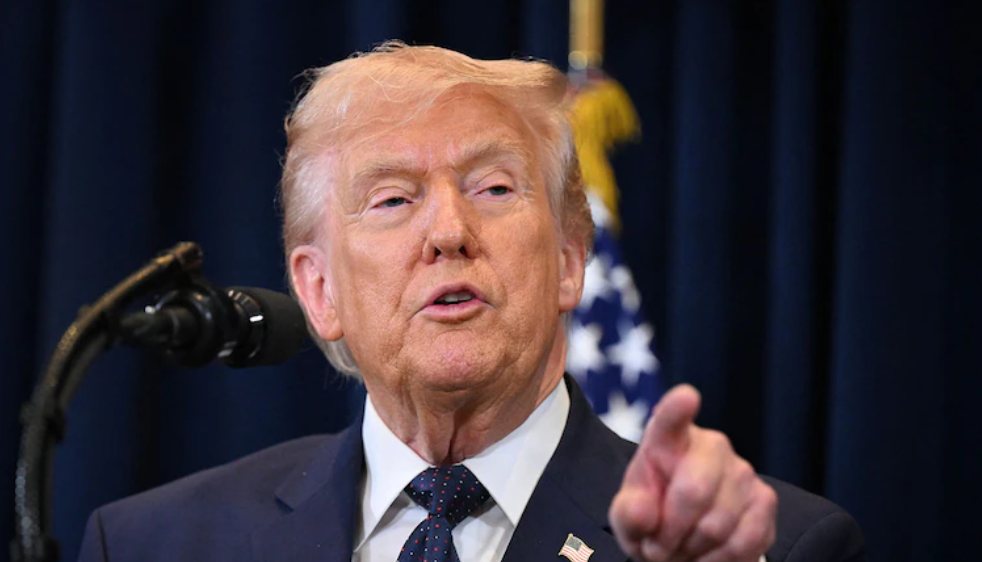
There seems to have been no special change in this approach in the Donald Trump era, though no clear policy consensus has emerged from this befuddled administration, more inward looking than ever before. That, sort of, leaves Egypt in the lurch.
The military junta in Egypt cannot survive in isolation, quickly becoming a footnote in the overall Arab picture. The dominance it had during Sadat’s regime has eroded and the only secure link that the country still has with the West is through one Hosni Mubarak.
Mubarak’s release from prison, therefore, should not surprise anybody. It would be unwise for the military junta to carry out policy decisions against the wishes of its western allies, and Mubarak is a person who still wields immense clout in regions that matter.
Egypt’s economy has hit a plateau, with his humongous tourism industry having dipped dangerously. Its exports are in very bad shape and domestic consumption cannot be pushed without further outside incentives.
The sins of the uprising will now vest with the commoners still behind bars. Those few days of freedom have resulted in many more years of subjugation. One has to see if the West can do a double deal of getting those unfortunate souls released from jail.
That, probably, would be Mubarak’s only gift to Egypt.[/vc_column_text][/vc_column][/vc_row]





Latest world news
Putin praises PM Modi, says he has very good ideas on Ukraine war
Russian President Vladimir Putin has praised Prime Minister Narendra Modi for repeatedly raising the need to end the Ukraine war, describing his ideas for a settlement as “very good”.


Latest world news
S Jaishankar calls Pakistan a “serial practitioner of terrorism” at UN
S Jaishankar criticised Pakistan at the UN General Assembly, referring to a “serial practitioner of terrorism” and warning against attempts to normalise terrorism.

Latest world news
Trump rejects Iran’s 7-day peace plan, says deal can come after US polls
US President Donald Trump rejected Iran’s seven-day proposal to end hostilities and indicated that a deal could come after the US midterm elections in November.

CJP claims Saurav Das, Ashutosh Ranka detained at Jantar Mantar

Supreme Court stays defamation case against Rahul Gandhi over PM Modi remarks

Rahul Gandhi hosts high tea for INDIA bloc after Gyanesh Kumar protests

Amit Shah attacks Rahul Gandhi over Congress poll losses, questions SIR row

L Murugan quits Union ministry to strengthen BJP in Tamil Nadu

BJP focuses on religion as opposition pushes BDM strategy in UP
L Murugan quits Union ministry to strengthen BJP in Tamil Nadu
Amit Shah attacks Rahul Gandhi over Congress poll losses, questions SIR row
Rahul Gandhi hosts high tea for INDIA bloc after Gyanesh Kumar protests
Supreme Court stays defamation case against Rahul Gandhi over PM Modi remarks

Afghan Men Try To Hang With The Jet Engine Of The Aircraft in Kabul- Afghanistan News – Kabul News
Trending Top 10 News: 10000 Crore Fine on Flipkart, Apple to Launch Unique Feature, Hdfc Bank Job Ad

Trending Top 10 News: Nokia 6310, Apple sales, Bachpan ka Pyar Video Kid, Dainik Bhaskar IT Raid

Trending Top 10 News: Canada bans Indian flights, Rain in Delhi NCR, AIMIM Twitter hacked, Raj Kundra case

Trending Top 10 News: Shein India, Apple New Service, Pocket Oxygen, Oppo Launched New Phone
-
 India News21 hours ago
CJP claims Saurav Das, Ashutosh Ranka detained at Jantar Mantar
-
 India News19 hours ago
Supreme Court stays defamation case against Rahul Gandhi over PM Modi remarks
-
 India News11 hours ago
Rahul Gandhi hosts high tea for INDIA bloc after Gyanesh Kumar protests
-
 India News10 hours ago
Amit Shah attacks Rahul Gandhi over Congress poll losses, questions SIR row
-
 India News10 hours ago
L Murugan quits Union ministry to strengthen BJP in Tamil Nadu
-
 India News9 hours ago
BJP focuses on religion as opposition pushes BDM strategy in UP
