English हिन्दी
Connect with us

Latest world news

India hits back at Canada, says no international norms violated in asking to withdraw diplomats

Canada’s Foreign Minister Melanie Joly said that the decision was unreasonable and unprecedented and clearly violated the Vienna Convention on diplomatic reasons.

Published

on

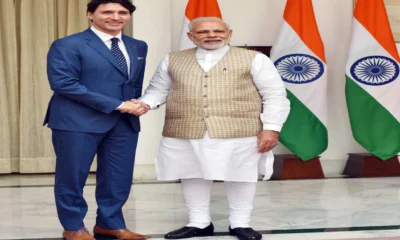
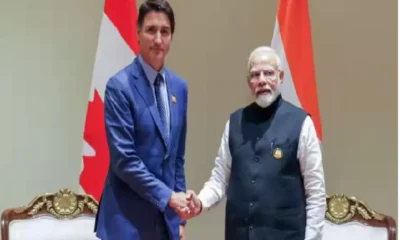
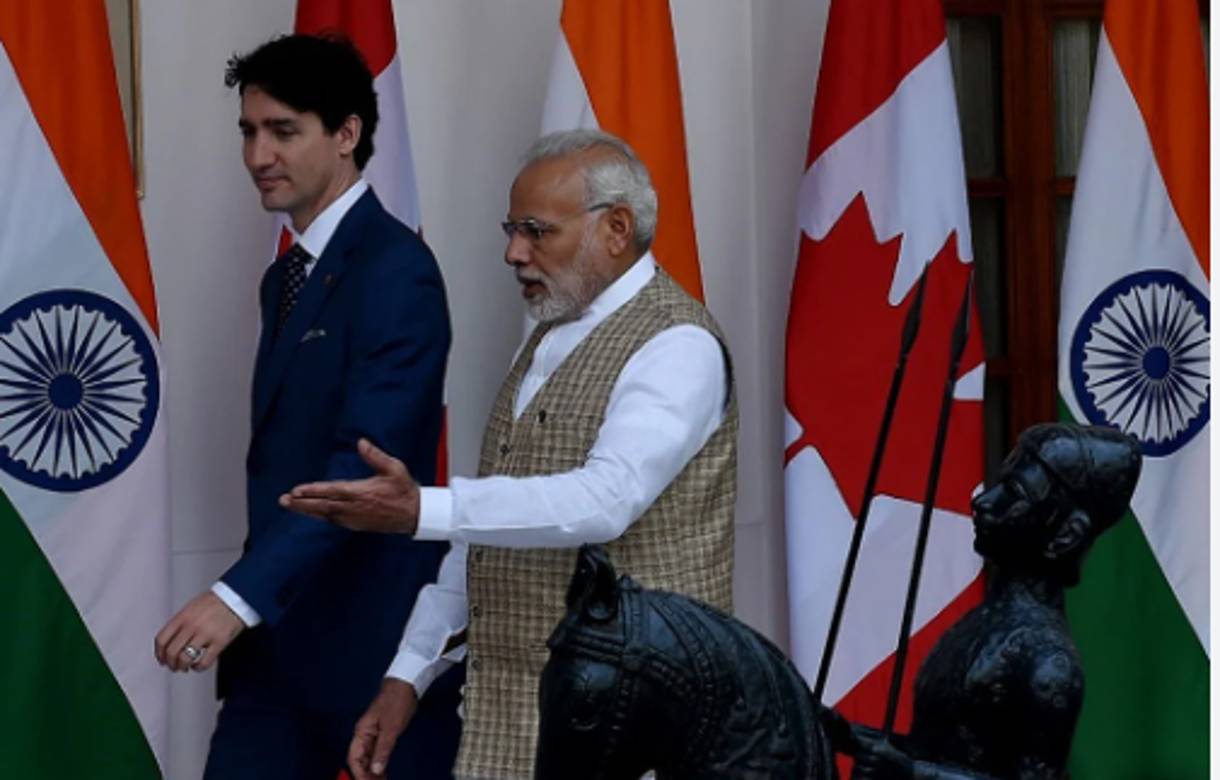
PM Mpdi and Justin Trudeau

India’s Ministry of External Affairs on Friday stated that no international norms were violated in India seeking parity in the mutual diplomatic presence in New Delhi and Ottawa. The ministry issued the statement a few hours after Canada withdrew 41 diplomats accusing India of violating the Vienna Convention on Diplomatic Relations.

Canada’s foreign Minister Melanie Joly said that India has threatened to unilaterally revoke the diplomats official status by Friday unless they left. She further added that this decision was unreasonable and unprecedented and clearly violated the Vienna Convention on diplomatic reasons.
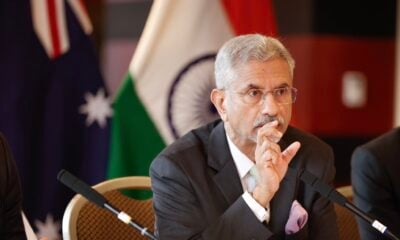
In the statement, the Ministry of External Affairs stated that India rejected any attempt to portray the implementation of parity as a violation of international norms. It added that their bilateral relations, the much higher number of Canadian diplomats in India, and their continued interference in our internal affairs warrant a parity in mutual diplomatic presence in New Delhi and Ottawa.

The statement further noted that their actions in implementing this parity are fully consistent with Article 11.1 of the Vienna Convention on Diplomatic Relations that states, in the absence of any specific agreement as to the size of the mission, the receiving State might require that the size of a mission be kept within limits considered by it to be reasonable and normal, having regard to circumstances and conditions in the receiving State and to the needs of the particular mission. 

Earlier on Friday, Canada also paused all in-person services at the consulates in Mumbai, Chandigarh, and Bengaluru and urged its citizens in these three cities to exercise caution. All Canadians in India have been asked to contact the High Commission in New Delhi in case they need assistance.

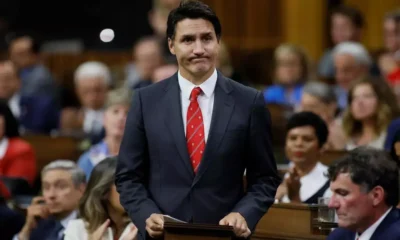
Last month New Delhi asked Canada to minimize its diplomatic presence after Prime Minister Justin Trudeau cited what he said was credible evidence of a potential link between Indian agents and the murder of Khalistani extremist Hardeep Singh Nijjar. India denies the allegation and called it absurd and politically motivated.

Latest world news

Trump rejects Iran peace proposal, warns Tehran over uranium dispute

Donald Trump has rejected Iran’s latest response to a US peace proposal, escalating tensions over uranium enrichment, sanctions relief and control of the Strait of Hormuz.

Published

on

Donald Trump statement

US President Donald Trump has rejected Iran’s latest response to a US-backed peace proposal, calling Tehran’s position “totally unacceptable” as negotiations aimed at ending the ongoing conflict remain stalled.

According to reports, Iran responded to the American proposal by demanding war reparations, the removal of sanctions, recognition of its sovereignty over the Strait of Hormuz, and the release of frozen Iranian assets. Tehran also warned it would retaliate against any fresh US military strikes and oppose the deployment of additional foreign warships in the region.

The dispute has intensified over Iran’s nuclear programme, particularly uranium enrichment. The US proposal reportedly sought strict limits on Iran’s nuclear activities, including a long-term halt to uranium enrichment and tighter international oversight. However, Iran’s counter-response did not accept key American demands related to dismantling or restricting its nuclear infrastructure.

Iran has maintained that its nuclear programme is for civilian purposes, while the US and its allies continue to push for stronger safeguards amid concerns over regional security.

The latest exchange comes amid continuing tensions in the Strait of Hormuz, a strategically important shipping route for global oil supplies. Concerns over disruptions in the region have already pushed oil prices higher in international markets.

Reports also suggest that the US proposal aimed to expand the current ceasefire framework and create conditions for broader negotiations involving regional conflicts and maritime security. However, both sides remain far apart on major issues, including sanctions relief and nuclear restrictions.

Continue Reading

Latest world news

Trump approves nearly $9 billion weapons sales to Israel, UAE and other allies amid Iran tensions

The US has fast-tracked nearly $9 billion in weapons sales to Israel, UAE and other allies as tensions linked to the Iran conflict continue despite a fragile ceasefire.

Published

on

Donald Trump statement

The United States has approved nearly $9 billion worth of weapons sales to key Middle Eastern allies, including Israel and the United Arab Emirates, amid ongoing tensions linked to the Iran conflict.

The decision, cleared by the administration of Donald Trump, includes expedited military transfers to Israel, the UAE, Qatar, and Kuwait. The approvals were granted under an emergency provision, allowing authorities to bypass the usual congressional review process.

Emergency clearance amid ongoing conflict

Officials said the move was necessary due to the evolving security situation in the region, particularly as the conflict involving Iran continues despite a fragile ceasefire. The war, which began earlier in 2026, has heightened instability across West Asia.

US Secretary of State Marco Rubio invoked emergency powers to fast-track the deals, citing urgent defence requirements for allied nations.

What the arms package includes

The approved package includes a mix of advanced defence systems and precision weapons:

  • Patriot missile defence replenishments worth over $4 billion for Qatar
  • Precision-guided weapon systems for multiple countries
  • Integrated battle command systems for Kuwait
  • Additional advanced weapons support for Israel and the UAE

The total value of these deals is estimated at over $8.6 billion, often rounded to nearly $9 billion.

Timing linked to iran war

The approval comes nearly nine weeks into the conflict involving the US, Israel, and Iran, with tensions still high despite a ceasefire that has been in place for several weeks.

Analysts note that the move signals continued US military backing for its regional allies, particularly in strengthening air defence and precision strike capabilities during uncertain conditions.

Criticism and concerns

The decision to bypass congressional oversight has drawn criticism from some quarters, particularly over transparency and the broader implications of increasing arms supplies in a conflict-prone region.

Continue Reading

Latest world news

Trump and Putin hold over 90-minute call, discuss Iran war and Ukraine conflict

Trump and Putin held a 90-minute call focusing on Iran tensions and the Ukraine conflict, with warnings over escalation and talks of ceasefire.

Published

on

Vladimir Putin and Donald Trump

US President Donald Trump and Russian President Vladimir Putin held a phone conversation lasting more than 90 minutes, focusing on escalating tensions in the Middle East and the ongoing war in Ukraine.

According to official statements, the discussion was described as “frank and businesslike,” with both leaders addressing key global security concerns. A major part of the conversation centred on the situation involving Iran and developments in the Persian Gulf.

Putin supported Trump’s decision to extend the ceasefire related to Iran, suggesting that continued restraint could create space for negotiations and help stabilise the region. However, he also issued a strong warning, stating that renewed military action by the United States or Israel could lead to “extremely damaging consequences” not only for Iran but for the wider international community.

Ukraine conflict also discussed

The leaders also discussed the ongoing war in Ukraine, which has continued for several years since Russia’s invasion in 2022. During the call, there were indications of potential efforts toward a temporary ceasefire, although no final agreement has been confirmed.

Reports suggest that the idea of a short-term pause in hostilities was explored, possibly linked to upcoming symbolic dates, but significant differences between the parties remain unresolved.

Focus on diplomacy amid global tensions

The call highlights ongoing diplomatic engagement between Washington and Moscow at a time of heightened geopolitical tensions involving both the Middle East and Eastern Europe.

While both sides acknowledged the importance of dialogue, the situation on the ground in both conflict zones remains complex, with no immediate resolution in sight.

Continue Reading

Trending

© Copyright 2022 APNLIVE.com