English हिन्दी
Connect with us

Latest world news

Iran claims capture of US unmanned submarine in Strait of Hormuz

Iran claims it captured a US Dive-LD unmanned submarine near the Strait of Hormuz, while the Pentagon says an underwater drone malfunctioned.

Published

on

Strait of Hormuz

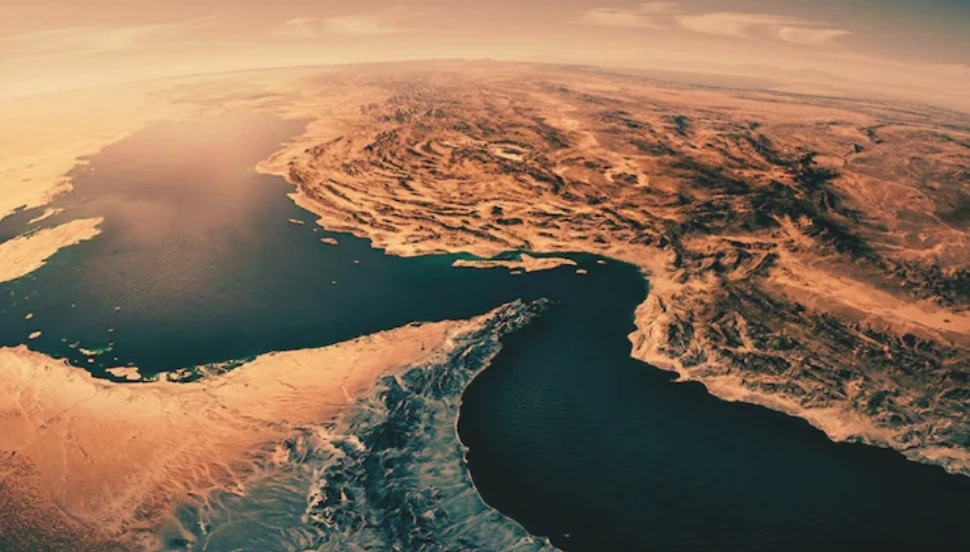
Iran has claimed that its forces captured a US unmanned underwater vehicle near the entrance of the Strait of Hormuz, releasing a video that it said showed the seized submarine drone.

The Iranian navy, in a statement carried by Iranian state media, identified the vehicle as a Dive-LD and described it as one of the US military’s advanced unmanned underwater systems. The Revolutionary Guards said the vehicle was captured during what it described as a complex intelligence operation.

However, the US military has not explicitly confirmed that the vehicle displayed by Iran was the same underwater drone that malfunctioned earlier.

US says underwater drone malfunctioned

Following Iran’s claim, the US military said one of its underwater drones had malfunctioned more than a day earlier while conducting a survey of regional waters.

A Pentagon spokesperson said the defective drone was an older model and did not collect sensitive data or carry classified sonar or radar equipment.

The US statement did not directly say whether the malfunctioning drone was the one Iran claimed to have captured.

What is the Dive-LD?

The Dive-LD is an autonomous underwater vehicle developed by California-based defence company Anduril.

According to information cited in the report, the unmanned vehicle can operate for up to 10 days without returning to its base and is designed to reach depths of up to 6,000 metres, or around 19,700 feet.

The system can be used for underwater missions including seabed mapping, mine countermeasures, intelligence gathering and inspection of underwater infrastructure. Individual Dive-LD units have been reported to cost about $2.5 million.

Iran also claims US drone was shot down

Separately, Iran’s Revolutionary Guards claimed that its air-defence systems had shot down an MQ-9 Reaper drone over the Strait of Hormuz.

The claim came amid heightened military tensions between Washington and Tehran, with the strategic waterway remaining a major focus of the confrontation.

US says five Iranian oil tankers destroyed

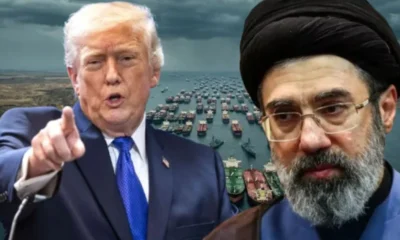
The submarine-drone claim came after the US Central Command said its forces had destroyed five Iranian crude oil tankers.

According to the US military, the strikes followed two Iranian attempts to target a US warship with ballistic missiles over a two-day period.

The US Treasury Department has also announced sanctions targeting 27 Iranian airlines, accusing them of supporting activities of the Iranian regime and facilitating the movement of weapons and personnel.

Iran vows to continue resistance

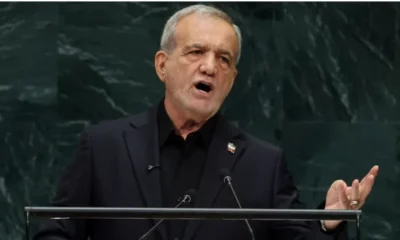
Iranian President Masoud Pezeshkian said Tehran would continue its resistance until what he called the aggressors were brought to “complete regret”.

He also reiterated Iran’s stated opposition to war while saying the country would continue defending itself against what it considers aggression.

The latest developments add to tensions between the US and Iran, with both sides issuing competing claims about military operations in and around the strategically important Strait of Hormuz.

Latest world news

US warns EB-1 green cards for Indians could run out before September 30

The US has warned that EB-1 green cards for Indian professionals could become unavailable before September 30 due to high demand.

Published

on

Trump

The United States has warned that employment-based first-preference (EB-1) green cards for Indian professionals could become unavailable before September 30, as high demand puts pressure on the number of immigrant visas available under the category.

The warning was issued in the September Visa Bulletin from the US State Department. It comes as Indian applicants already face significant backlogs across several employment-based green card categories.

Why EB-1 availability is under pressure

EB-1 is an employment-based green card category for priority workers. It covers people with extraordinary ability, outstanding professors and researchers, and certain multinational executives and managers.

The State Department said that high demand and the use of visa numbers by applicants chargeable to India could result in the EB-1 category becoming unavailable in the coming weeks if India’s pro-rated limit is reached before the US fiscal year ends on September 30.

The department also said the situation would continue to be monitored and that necessary adjustments could be made.

This does not mean EB-1 green cards for Indians have already been stopped. The warning concerns the possibility that the available visa numbers could be exhausted before the end of the fiscal year.

EB-1 India cutoff date remains October 15, 2022

For September, the EB-1 final action date for India is October 15, 2022.

In general, an applicant’s priority date needs to be earlier than the applicable final action date for a visa number to be available for final action, subject to other eligibility requirements.

The September Visa Bulletin’s dates-for-filing chart provides a later date of December 1, 2023, for EB-1 India. However, applicants seeking adjustment of status in the US must check which chart the US Citizenship and Immigration Services has authorised for that particular month.

Other green card categories also face constraints

The pressure on Indian employment-based applicants extends beyond EB-1.

India’s EB-2 category is listed as “U”, meaning unavailable, in the September Visa Bulletin. The State Department uses this designation when visa numbers are not authorised for issuance in that category during the relevant period.

The EB-3 category also has a substantial backlog, with its final action date stretching back to January 1, 2014 for India.

Meanwhile, India’s unreserved EB-5 category is also unavailable for final action in September. The set-aside EB-5 categories for rural projects, high-unemployment areas and infrastructure remain current for all countries.

What the warning means for Indian applicants

The immediate concern is the availability of visa numbers before September 30, which marks the end of the US fiscal year.

If the pro-rated EB-1 allocation for India is exhausted before that date, the category could become unavailable for the remainder of the fiscal year. The State Department has indicated that it will continue monitoring demand and visa-number usage.

The situation is particularly significant for Indian professionals because employment-based green card applicants from India are already dealing with long queues and restrictions in multiple categories.

Continue Reading

Latest world news

India-France ties reach new heights, says PM Modi at Paris temple event

PM Modi said India-France relations have reached new heights while highlighting strategic cooperation and cultural ties at the Paris temple inauguration.

Published

on

Prime Minister Narendra Modi on Sunday said India-France relations have reached “new heights”, highlighting the expanding strategic partnership between the two countries and their longstanding cultural connections.

Addressing the inauguration of the BAPS Swaminarayan Hindu Mandir in Paris virtually, PM Modi said India and France are moving ahead with new momentum across several areas, including technology, artificial intelligence, defence, space and climate action.

He said the India-France strategic partnership is particularly significant because it is built on longstanding cultural and political ties.

PM Modi highlights India-France strategic partnership

PM Modi said India and France are building a Special Global Strategic Partnership with French President Emmanuel Macron.

He also noted that 2026 is being celebrated as the India-France Year of Innovation, underlining the importance of innovation and cooperation between the two countries.

The prime minister said there is also growing discussion around joint venture possibilities between India and France.

He linked the relationship between the two nations not only to contemporary strategic cooperation but also to historical and cultural connections.

Paris temple seen as symbol of cultural ties

PM Modi described the newly inaugurated Swaminarayan temple in Paris as another milestone in India’s cultural relationship with France.

He said the temple is “Made in India” and “Built in France”, noting that several of its stones were carved in India before being incorporated with modern engineering in France.

According to PM Modi, the temple could become a symbol of cooperation and opportunity between the two countries and help strengthen cultural ties across Europe.

He said the values associated with Indian culture could reach people across Europe through the temple.

PM Modi recalls historical India-France connections

The prime minister also referred to the contribution of Indian soldiers in France and said their sacrifices remain remembered.

He highlighted the role of French scholars in popularising Sanskrit and referred to French writer Romain Rolland’s writings on Ramakrishna Paramahamsa and Swami Vivekananda.

PM Modi also mentioned the spiritual journey of ‘The Mother’ from Paris to the Sri Aurobindo Ashram in Puducherry, as well as Srila Prabhupada Swami’s visit to France and the subsequent development of spiritual connections through ISKCON.

He said yoga has also emerged as an important bridge between people in India and France, pointing to its popularity in France.

Temple to support service activities

PM Modi said Swaminarayan temples have traditionally served as centres of service alongside devotion.

He said he had been informed that the newly inaugurated Paris temple would also become a centre for service projects.

The prime minister expressed confidence that the temple would enrich France’s diversity while giving further momentum to cultural relations between India and France.

PM Modi also said he would try to visit the temple in the future whenever his schedule permits.

Continue Reading

Latest world news

S Jaishankar defends Russian oil imports, says it won’t end Ukraine war

S Jaishankar defended India’s Russian oil purchases, saying the Ukraine war can only be resolved through dialogue, diplomacy and negotiations

Published

on

External Affairs Minister S Jaishankar has defended India’s continued purchase of Russian crude oil, saying that stopping the trade would not bring an end to the war in Ukraine.

Speaking to the media during his official visit to Kyiv, Jaishankar said the conflict, now in its fifth year, can only be resolved through dialogue, diplomacy and negotiations. He was responding to questions about Western pressure on India to reduce its purchases of Russian energy.

“This conflict, which is today in its fifth year, will not be solved because somebody is buying or not buying oil or alumina or minerals or metals or fertiliser,” Jaishankar said. He added that dialogue, diplomacy and negotiation were the way to resolve the conflict.

Jaishankar stresses India’s energy security

Jaishankar also highlighted the challenge of ensuring energy security for India’s 1.4 billion people amid difficult global energy conditions.

He said India respects Ukraine’s perspective on the issue but expects other countries to respect New Delhi’s position as well.

India imports around 88 per cent of its crude oil requirement from overseas. According to the report, about one-third of those imports currently come from Russia.

Western pressure over Russian oil

Jaishankar’s comments came amid continued pressure from Western countries over India’s purchases of Russian crude.

The United States and the United Kingdom have backed the argument that restricting Russia’s energy revenues could reduce the funds available to support its military operations in Ukraine.

Last month, the US Senate passed a bipartisan bill that could allow President Donald Trump to impose tariffs of up to 100 per cent on goods from countries, including India and China, that continue importing Russian oil and gas.

India remains a major buyer of Russian crude

Russia has remained India’s largest source of crude oil despite pressure from Washington. However, Indian imports of Russian crude declined in August after reaching record levels in June and July.

Before Russia’s invasion of Ukraine in February 2022, Russian crude accounted for only around 0.2 per cent of India’s crude imports. After Western countries moved away from Russian oil following the invasion, India emerged as the largest buyer of discounted Russian crude.

India imported around 2.1 million barrels of Russian crude per day in August, according to data cited in the report. That represented more than 40 per cent of India’s crude imports, down from around 2.6 million barrels per day in June and July.

Russian exporters increasingly rely on Asian buyers

Russia has also become more dependent on Asian markets after European sanctions disrupted its traditional energy trade.

Countries such as India and China have emerged as important buyers of Russian crude. Continued demand from Indian refiners has helped Russian exporters maintain significant volumes despite restrictions affecting Western shipping, insurance and financial services.

Jaishankar, meanwhile, maintained that the Ukraine conflict requires a diplomatic solution rather than an attempt to resolve it through decisions by individual countries over oil purchases.

Continue Reading

Trending

© Copyright 2022 APNLIVE.com