English हिन्दी
Connect with us

Latest world news

Iran: Mehmoud Ahmedinejad arrested for inciting protests

Published

on

Iran: Mehmoud Ahmedinejad arrested for inciting protests

Arabic media reports the arrest while Iranian media remains silent

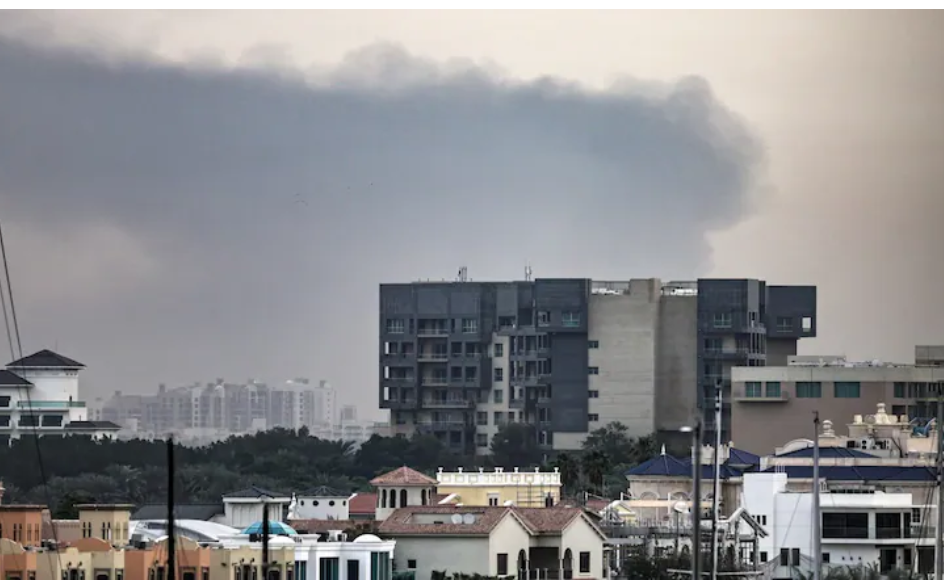
In an unprecedented move after 1979 Islamic Revolution, former Iranian president Mahmoud Ahmadinejad has been reportedly arrested for allegedly “inciting unrest” against Hassan Rouhani government. The country has recently witnessed violent protests causing 21 deaths and losses of public properties.

Al-Quds Al-Arabi, a London-based Arabic daily had reported about Ahmedinejad’s arrest on Saturday, citing “reliable sources in Tehran.”  Saudi Arabia’s official news network “Al-Arabiya” has reproduced the report on Sunday. However, none of Tehran based news outlets has confirmed the arrest so far.

The daily said that former president Mehmoud Ahmadinejad, during his visit to Bushehr city, on December 28, said, “Some of the current leaders live detached from the problems and concerns of the people, and do not know anything about the reality of society.” He alleged that Rouhani government was suffering from “mismanagement” and his government “believes that they own the land and that the people are an ignorant society.”

Ahmedinejad was president of the country between 2005 and 2013. He was eager to contest elections for the top post once again in 2016. However, he deserted the idea obeying advice of supreme leader Ayatollah Khamenei, APN was told by sources in Tehran.

According to Al-Quds Al-Arabi, Ahmadinejad’s comments at a time when anti-government protests over the economy were heating up might have led to his arrest.

The protests against rising prices and unemployment were suddenly turned into anti-government power display events. The protesters demanded Tehran not to indulge into regional countries. Iranian government has alleged that the protests were guided by foreign governments including those of US, Israel and Saudi Arabia, who were against its widening influence in the region.

Iran has played important role in fighting against Daesh (IS) and other terror groups in Syria and Iraq. Iranian military advisors and weapons were used to defeat the terror groups.

The newspaper said authorities now seek to impose house arrest on the former president after it gets consent of the supreme leader Ayatollah Khamenei.

Large pro-government rallies were held in response to the anti-government protests, considered to be the largest after 2009, when large number of people came out against Mehmoud Ahmedinejad’s re-election.

On Sunday, Iran’s Islamic Revolutionary Guards Corps (IRGC) had claimed victory against the protesters. The anti government protests were followed by country wide pro-government protests during last several days.

Latest world news

India flags attacks on Hindus in Bangladesh as worrisome after recent lynchings

India has reacted sharply to recent lynchings of Hindu men in Bangladesh, calling the attacks on minorities worrisome and urging that those responsible be brought to justice.

Published

on

Randhir Jaiswal

India has expressed strong concern over a series of violent incidents targeting members of minority communities in Bangladesh, following the lynching of two Hindu men in separate incidents. The Ministry of External Affairs said such attacks are “worrisome” and cannot be ignored, stressing that those responsible must be held accountable.

Speaking on Friday, External Affairs Ministry spokesperson Randhir Jaiswal said New Delhi has taken serious note of the developments across the border and is closely monitoring the law and order situation. He underlined that continued violence against minorities, including Hindus, Christians and Buddhists, remains a matter of grave concern for India.

“The unremitting hostility against minorities in Bangladesh at the hands of extremists is deeply troubling,” Jaiswal said, while condemning the recent killing of a Hindu youth in Mymensingh. He added that incidents of violence cannot be dismissed as exaggeration and expressed hope that perpetrators would be identified and punished.

According to the ministry, over 2,900 incidents of violence against minorities — including killings, arson and land-related crimes — have been documented by independent sources during the tenure of Bangladesh’s interim government. These developments, India said, cannot be brushed aside.

Rajbari killing under investigation

The latest incident took place on Wednesday in Pangsha upazila of Rajbari district, around 145 km west of Dhaka. As per police accounts quoted by media, the victim, identified as Amrit Mondal, was beaten to death by local residents following allegations of extortion.

Police said Mondal was suspected of leading a criminal gang and had allegedly attempted to extort money from a local resident along with his associates. Locals confronted the group and assaulted Mondal, leaving him critically injured. He was later taken to a hospital, where doctors declared him dead in the early hours of the morning.

Mondal’s body was sent to Rajbari Sadar Hospital for post-mortem examination. While most of his alleged associates fled, police said one person was arrested and firearms were recovered. Investigators also noted that Mondal had multiple criminal cases registered against him, including a murder case.

Lynching in Mymensingh sparks outrage

The Rajbari incident came days after another Hindu man was lynched in Mymensingh, triggering widespread outrage. The victim, identified as Dipu Das, also referred to as Dipu Chandra Das, was a factory worker in the city, located about 112 km north of Dhaka.

According to police and local reports, Das was attacked by a mob over allegations of blasphemy. He was first beaten outside a factory and later hanged from a tree. After the killing, his body was left along the Dhaka-Mymensingh highway and set on fire, leading to traffic disruption. Videos of the incident circulated widely on social media, fuelling anger and concern.

Interim government responds

Bangladesh’s interim government, led by Chief Adviser Muhammad Yunus, condemned the killing and said it does not support illegal activities, mob violence or mass beatings. At the same time, it maintained that the Rajbari incident was not communal in nature, describing it as a violent episode linked to alleged extortion and criminal activities. The administration said legal action would be taken against all those directly or indirectly involved.

India, however, reiterated that violence against minorities is a serious issue and called for effective action to ensure justice and safety for vulnerable communities.

Continue Reading

Latest world news

Khaleda son Tarique Rahman arrives to rapturous welcome in Bangladesh

Tarique Rahman returned to Bangladesh after 17 years and, in his first speech, invoked Martin Luther King while outlining what he called a plan for the country’s future.

Published

on

Khalida Zia son

Bangladesh Nationalist Party (BNP) acting chairman Tarique Rahman, who returned to Bangladesh on Thursday after 17 years in exile, outlined his political vision in his first public address, drawing a comparison with American civil rights leader Martin Luther King Jr.’s famous “I have a dream” speech.

Addressing a massive gathering in Dhaka, Rahman said that just as Martin Luther King spoke of a dream, he wished to speak of a concrete plan for Bangladesh. He referred to the country as “Beloved Bangladesh” and thanked party leaders, workers and citizens who stood by the BNP during his absence.

Rahman, the son of former President Ziaur Rahman and former Prime Minister Khaleda Zia, said that his plan would succeed only with public support and urged citizens to participate actively in nation-building.

Parallels drawn with 1971 and 2024 movements

In his speech, Rahman linked the 1971 Liberation War with the 2024 uprising against the government of former Prime Minister Sheikh Hasina. He said those who lost their lives in these movements should be honoured by building the country they had envisioned.

“We liberated Bangladesh in 1971, and we liberated it again in 2024,” he said, adding that the events of 2024 were about defending the country’s independence and sovereignty. He stressed the need to “repay the blood debt of the martyrs” through responsible governance.

Emphasis on tolerance, safety and economic rights

Touching upon Bangladesh’s social fabric, Rahman said the country belongs to everyone, irrespective of religion or geography, and underlined the importance of tolerance. He spoke about creating a safe environment where women, men and children can move freely without fear.

He also said the BNP would focus on peace, political reform and strengthening the economy. Referring to student leader Sharif Osman Hadi, Rahman said he had dreamt of a democratic Bangladesh and promised justice in connection with his killing, along with restoring people’s economic rights.

Call to youth and visit to Khaleda Zia

Rahman called upon the younger generation to take responsibility for development and stability, stressing that collective effort would be crucial to implementing his plan for Bangladesh.

After the address, he left to visit his ailing mother, Khaleda Zia, who is undergoing treatment at Evercare Hospital.

Rahman has been living in exile since 2008 following convictions in multiple corruption cases, which he has described as politically motivated. He has also alleged that the previous government attempted to assassinate him through torture.

With the Awami League barred from contesting elections, the political landscape has narrowed significantly. The BNP now holds a dominant position, and Rahman’s return has added fresh momentum and uncertainty to Bangladesh’s political future.

Continue Reading

Latest world news

Tarique Rahman returns to Dhaka after 17 years, massive crowd greets BNP leader

Tarique Rahman returned to Bangladesh after more than 17 years in exile, with thousands of BNP supporters gathering in Dhaka to welcome the party’s acting chairman.

Published

on

Tariq Rahman

Thousands of people poured onto the streets of Dhaka on Thursday as Bangladesh Nationalist Party (BNP) acting chairman Tarique Rahman returned to the country after more than 17 years in self-imposed exile in the United Kingdom. Rahman, who is the son of former prime minister Khaleda Zia, landed in the capital along with his wife Zubaida Rahman and daughter Zaima Rahman.

Supporters and party leaders marched from the Banani Airport Road towards Dhaka airport to welcome him, turning the stretch into a sea of BNP flags and slogans. Rahman was later escorted in a bulletproof vehicle as part of heightened security arrangements for his high-profile return.

Bulletproof convoy and reception in Purbachal

After arriving at the airport, Rahman was received by senior BNP leaders before heading to a large reception organised in the Purbachal area. Party workers and leaders lined both sides of the road to greet him during the journey. According to party expectations, a very large gathering assembled at the venue, where Rahman was scheduled to address supporters.

BNP leaders said only Rahman would speak at the event, while other senior figures remained present on the stage. His return is being closely watched as he has emerged as a key political figure ahead of Bangladesh’s upcoming general elections.

Visit to ailing mother and family residence

Following the public address, Rahman was expected to visit Evercare Hospital to meet his mother, former prime minister Khaleda Zia, who has been undergoing treatment there for over a month. After the hospital visit, the family was scheduled to go to Firoza, the Zia family residence in Gulshan.

Security across Dhaka was tightened during Rahman’s movement, with police deploying additional forces to prevent any untoward incident amid recent political tensions in the country.

Political backdrop of the return

Rahman’s return comes at a time when the BNP is seen to be gaining political ground following the ouster of former prime minister Sheikh Hasina in a student-led uprising last year. Surveys conducted in December indicate the BNP could secure the largest number of seats in the upcoming parliamentary elections, while other parties, including Islamist groups, are also in the fray.

Alongside political developments, personal reasons have also played a role in Rahman’s decision to return, particularly his mother’s prolonged illness, which party sources describe as a key factor behind the move.

Continue Reading

Trending

© Copyright 2022 APNLIVE.com