Latest world news
Iran rejects Saudi Arabia allegation of supplying missiles to Houthis


Riyadh demands UNSC to hold Tehran accountable for missile attacks
Iran has rejected Saudi Arabia’s accusations of providing missiles to Yemen’s Houthi Ansarullah movement and alleges that such claims were aimed at diverting attention from Riyadh’s war crimes in Yemen.
According to Tehran based Tasnim news agency, Islamic Revolution Guards Corps (IRGC) political deputy Brigadier General Yadollah Javani told on Tuesday that all routes to send weapons to Yemen are blocked as the “oppressed nation” remains under a full Saudi blockade.
Earlier on Monday Saudi-led coalition spokesman Turki al-Malki had displayed wreckage of what he said were fragments of ballistic missiles supplied to the Houthis by Iran. He said “The missiles launched against Saudi territory were smuggled from Iran” and warned that the alliance reserves “the right to respond against Iran at the right time and right place.”
Read More: Saudi Arabia claims intercepting Yemen’s Houthi missiles
According to Press TV, the senior IRGC commander further said, “the Saudis with the help of the Americans, Zionists and some other reactionary regional governments have actually been committing major crimes and attacking the oppressed nation of Yemen over the past two or three years.”
Meanwhile, Saudi Arabia has demanded UN Security Council to hold Iran accountable for Yemen’s Houthi ballistic missiles fired towards the kingdom and called on the world body to bear its responsibilities to maintain international security and stability.
According to Al-Arabia, Saudi Arabia’s permanent representative at UN Abdullah Al-Muallami has submitted a letter to the UN Secretary General Antonia Guterres and the president of UN Security Council in this regard.
Read More: Trump meets Saudi Crown Prince MBS, sells weapons
The development came at a time when Crown Prince Muhammed Bin Salman is currently visiting US for two and a half weeks. He has already met President Donald Trump when the two sides discussed their ties in defence, security and economic spheres.
Meanwhile, Saudi Arabia’s Ambassador to the United States, Prince Khalid bin Salman bin Abdulaziz, on Tuesday spoke out against the Iranian government through a series of tweets.
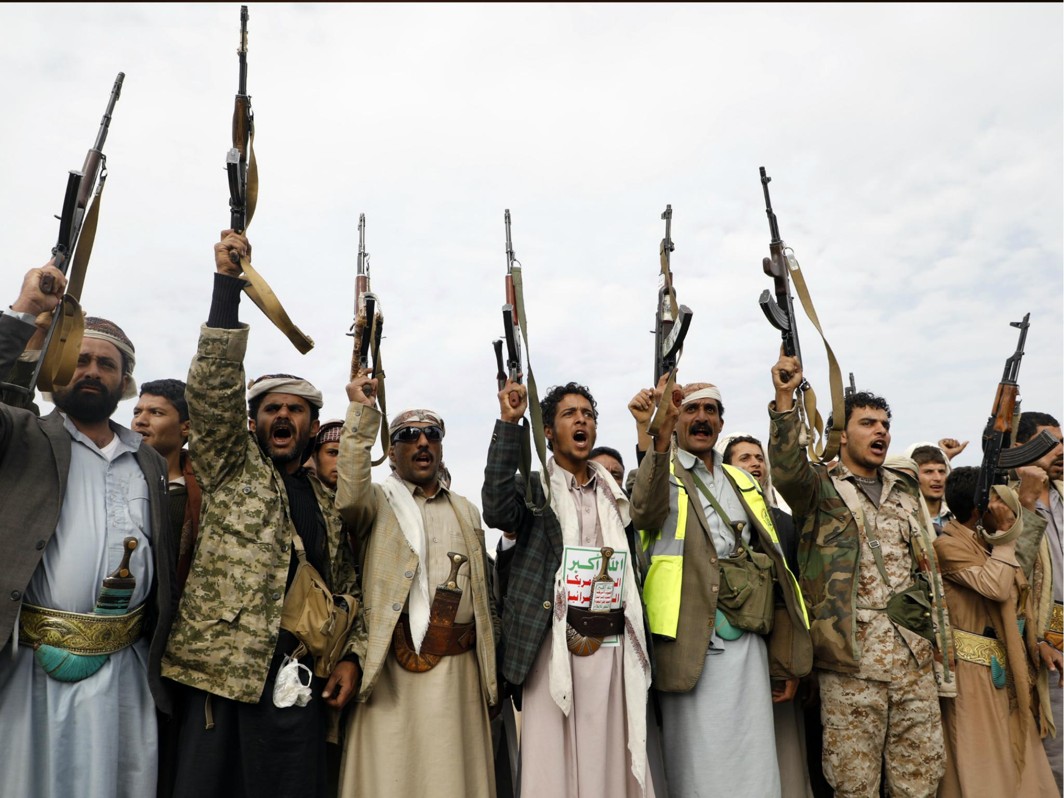 Saudi Arabia’s Ambassador alleged Iran for continuous violation of international laws and supporting terrorism in Syria, Iraq, Lebanon, Bahrain and Yemen. He also alleged that Iran provides the terrorist Houthi militias with missiles in violation of UN Security Council resolutions.
The Iranian regime continues to violate international laws as it tests the world’s resolve. It is still supporting terrorism in Syria, Iraq, Lebanon, Bahrain and Yemen. It provides the terrorist Houthi militias with missiles in violation of UN Security Council resolutions.
— Khalid bin Salman خالد بن سلمان (@kbsalsaud) March 27, 2018
Iran’s record is one of death and destruction. They plotted terrorist bombings in Buenos Aires in 1994, the Khobar attacks in 1996, and the Riyadh bombings in 2003.
— Khalid bin Salman خالد بن سلمان (@kbsalsaud) March 27, 2018
In the past, they have tried to assassinate my predecessor here in Washington, they have killed Lebanese Prime Minister Rafiq Al Hariri, They assassinated political opponents in European capitals, and bankroll terrorist militias and provide them with dangerous weapons.
— Khalid bin Salman خالد بن سلمان (@kbsalsaud) March 27, 2018
Yesterday, the Iran backed Houthi Militias have fired seven ballistic missiles at four cities in the Kingdom. Totaling over a hundred attempts, and continue to kill thousands of innocent Yemenis while they refuse any political settlement and continue to escalate.
— Khalid bin Salman خالد بن سلمان (@kbsalsaud) March 27, 2018
The only way to prevent further conflict in the region is to hold Iran accountable for its violations of all international laws. Friends and enemies are watching for the world’s reaction; it will shape the behavior of countries in region on the long term.
— Khalid bin Salman خالد بن سلمان (@kbsalsaud) March 27, 2018
Saudi Arabia has claimed of intercepting all seven missiles fired by Houthis on Monday, on the third anniversary of the Saudi led campaign against the improvised country. However, Houthis claim that some of the missiles hit the intended targets in the Kingdom.
Earlier on Monday, Bahram Qassemi, spokesman of the Foreign Ministry, alleged that Britain was responsible for the war crimes in Yemen through sale of weapons and providing logistics and intelligence assistance to the aggressors and helping in blockading the country.






Latest world news
Putin praises PM Modi, says he has very good ideas on Ukraine war
Russian President Vladimir Putin has praised Prime Minister Narendra Modi for repeatedly raising the need to end the Ukraine war, describing his ideas for a settlement as “very good”.


Latest world news
S Jaishankar calls Pakistan a “serial practitioner of terrorism” at UN
S Jaishankar criticised Pakistan at the UN General Assembly, referring to a “serial practitioner of terrorism” and warning against attempts to normalise terrorism.

Latest world news
Trump rejects Iran’s 7-day peace plan, says deal can come after US polls
US President Donald Trump rejected Iran’s seven-day proposal to end hostilities and indicated that a deal could come after the US midterm elections in November.

INDIA Bloc protest intensifies, Opposition MPs plan Rajghat march

Delhi Building Collapse: Many trapped as 5-storey structure comes down

Bhagwant Mann hits back at BJP over CBI search in Sangrur

India’s 3-part peace plan to end Russia-Ukraine war explained
PM Modi recalls Bhuj earthquake, Covid lessons from 25-year journey

Afghan Men Try To Hang With The Jet Engine Of The Aircraft in Kabul- Afghanistan News – Kabul News
Trending Top 10 News: 10000 Crore Fine on Flipkart, Apple to Launch Unique Feature, Hdfc Bank Job Ad

Trending Top 10 News: Nokia 6310, Apple sales, Bachpan ka Pyar Video Kid, Dainik Bhaskar IT Raid

Trending Top 10 News: Canada bans Indian flights, Rain in Delhi NCR, AIMIM Twitter hacked, Raj Kundra case