
Latest world news
Istanbul: Missing Journalist Khashoggi Killed In Saudi Mission


In a major development, Turkish authorities have confirmed that the dissident Saudi journalist Jamal Khashoggi, who disappeared four days ago after entering Saudi Arabia’s consulate in Istanbul, has been killed.
According to the Reuters, a Turkish official said on Saturday, “The initial assessment of the Turkish police is that Mr Khashoggi has been killed at the consulate of Saudi Arabia in Istanbul. We believe that the murder was premeditated and the body was subsequently moved out of the consulate.”
However, a Saudi source at the consulate has denied that Khashoggi had been killed at the mission saying that the accusations were baseless.
The Turkish official position was made public about the suspected assassination four days after he entered the Saudi Arabia’s consulate in Istanbul on Tuesday.
His fiancée Hatis, who refused to disclose her second name for security reasons, was waiting outside the consulate. She said that Khashoggi entered the building at 1.00 pm and never returned till the mission was closed at 5.00 pm. In panic she called her family and friends and also reported to the police and other authorities.

Next day, Saudi consulate issued a statement telling that Khashoggi went missing only after his departure from the mission. However, it was told that Saudi authorities were investigating the incident.
Read More: Saudi Arabia Denies Detaining Dissident Journalist
Earlier on Saturday, sources told Al Jazeera that a delegation of 15 Saudi officials arrived in Turkey the day Khashoggi, 59, disappeared.
Jamal Elshayyal, Aljazeera’s Istanbul correspondent quoted sources saying, “The Saudi officials flew into Istanbul on two different flights on Tuesday.” It was not clear if the Saudi delegation consisted of security or diplomatic officials.
Report from Istanbul says that Saturday’s revelations came as Turkey widened its investigation as Saudi Arabia failed to substantiate its claim that he left the consulate on Tuesday.
The mysterious disappearance of the Saudi journalist may create further tension between the two countries that are already at loggerheads on Qatar crisis. One of the Saudi Arabia’s demands was the withdrawal of Turkish forces from Qatar in the aftermath of severing ties last year. At present Turkey has been supporting Qatar with supplies and assured military support in case of any further adventure.
On missing of Jamal Khashoggi Turkey’s ruling party has asserted that it will “uncover” the details surrounding journalist’s vanishing, saying that the country’s sensitivity on the issue was at the “highest level”.

Omer Celik, the spokesperson of the ruling AK party, while talking to the reporters at a summit chaired by President REcep Tayyip Erdogan, said, “The condition of the lost journalist, details on him and who is responsible for this will be uncovered.”
On Friday, Turkey’s foreign ministry summoned Saudi Arabia’s ambassador to Ankara over the issue.
Later that day, Saudi Arabia’s heir apparent Crown Prince Mohammed bin Salman (MBS) said that he would allow Turkey to search its consulate.
He told Bloomberg TV Network on Friday, “We will allow them to enter and search and do whatever they want to do … We have nothing to hide.”
Mohammad al-Otaiba, the Saudi Consul General in Istanbul said, “I would like to confirm that…Jamal is not at the consulate, nor in the Kingdom of Saudi Arabia, and the consulate and the embassy are working to search for him.”
Saudi Arabia has also invited a group of journalists into the Istanbul mission on Saturday, in an effort to show that Khashoggi was not on the premises.
Rights groups had called on Saudi Arabia to verify Khashoggi’s whereabouts, with Human Rights Watch calling on Turkey to deepen its investigation into the case, saying if Saudi Arabia had detained Khashoggi without acknowledging it, his detention would constitute an enforced disappearance.
Khashoggi, living in self- exile in the US for over a year, was one of the well known critics of the reforms being implemented under the stewardship of the Crown Prince MBS.
His regular columns published by Washington Post used to be critical of Saudi policies towards Qatar and Canada, the war in Yemen, and a crackdown on dissent and the media persons in the kingdom.
Khashoggi gained fame for his interview and by co-travelling with Alqaeda’s fugitive head Osama Bin Laden in 1987 and 1995.







Latest world news
S Jaishankar says India is a natural option for Russia amid Europe tensions
External Affairs Minister S Jaishankar said India remained a natural option for Russia as Moscow increasingly turned towards Asia amid strained relations with Europe. He highlighted the continuity of India-Russia ties and their significance for the balance of power in Asia.


Latest world news
Putin praises PM Modi, says he has very good ideas on Ukraine war
Russian President Vladimir Putin has praised Prime Minister Narendra Modi for repeatedly raising the need to end the Ukraine war, describing his ideas for a settlement as “very good”.

Latest world news
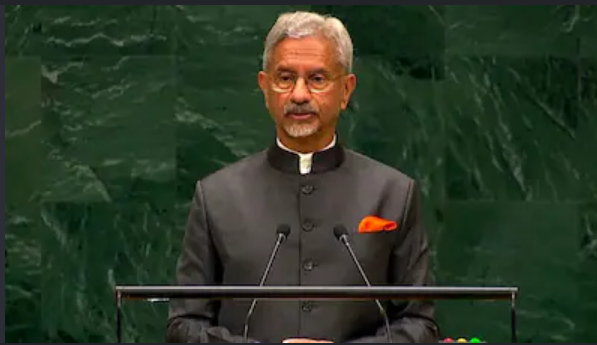
S Jaishankar calls Pakistan a “serial practitioner of terrorism” at UN
S Jaishankar criticised Pakistan at the UN General Assembly, referring to a “serial practitioner of terrorism” and warning against attempts to normalise terrorism.

Dhruv Rathee gets fresh summons in 2018 BJP IT cell video case

Nobody can browbeat judiciary, Chief Justice warns over Rahul Gandhi’s march

India-US trade deal first phase finalised, drafting underway

Election Commission orders voter roll revision in 17 states, UTs

Actor Imran Khan asked to leave India after CJP protest

Delhi Police offers 11-person limit for CJP’s Connaught Place protest
Actor Imran Khan asked to leave India after CJP protest
Election Commission orders voter roll revision in 17 states, UTs
India-US trade deal first phase finalised, drafting underway
Nobody can browbeat judiciary, Chief Justice warns over Rahul Gandhi’s march

Afghan Men Try To Hang With The Jet Engine Of The Aircraft in Kabul- Afghanistan News – Kabul News
Trending Top 10 News: 10000 Crore Fine on Flipkart, Apple to Launch Unique Feature, Hdfc Bank Job Ad

Trending Top 10 News: Nokia 6310, Apple sales, Bachpan ka Pyar Video Kid, Dainik Bhaskar IT Raid

Trending Top 10 News: Canada bans Indian flights, Rain in Delhi NCR, AIMIM Twitter hacked, Raj Kundra case

Trending Top 10 News: Shein India, Apple New Service, Pocket Oxygen, Oppo Launched New Phone
-
 India News17 hours ago
Dhruv Rathee gets fresh summons in 2018 BJP IT cell video case
-
 India News13 hours ago
Nobody can browbeat judiciary, Chief Justice warns over Rahul Gandhi’s march
-
 India News9 hours ago
India-US trade deal first phase finalised, drafting underway
-
 India News6 hours ago
Election Commission orders voter roll revision in 17 states, UTs
-
 India News6 hours ago
Actor Imran Khan asked to leave India after CJP protest
-
 India News5 hours ago
Delhi Police offers 11-person limit for CJP’s Connaught Place protest
