English हिन्दी
Connect with us

Latest world news

J&K: Pak likely to raise matter day after UN Human Rights chief expressed concern asking India to ease lockdown

Published

on

Pak likely to raise matter day after UN Human Rights chief expressed concern asking India to ease lockdown
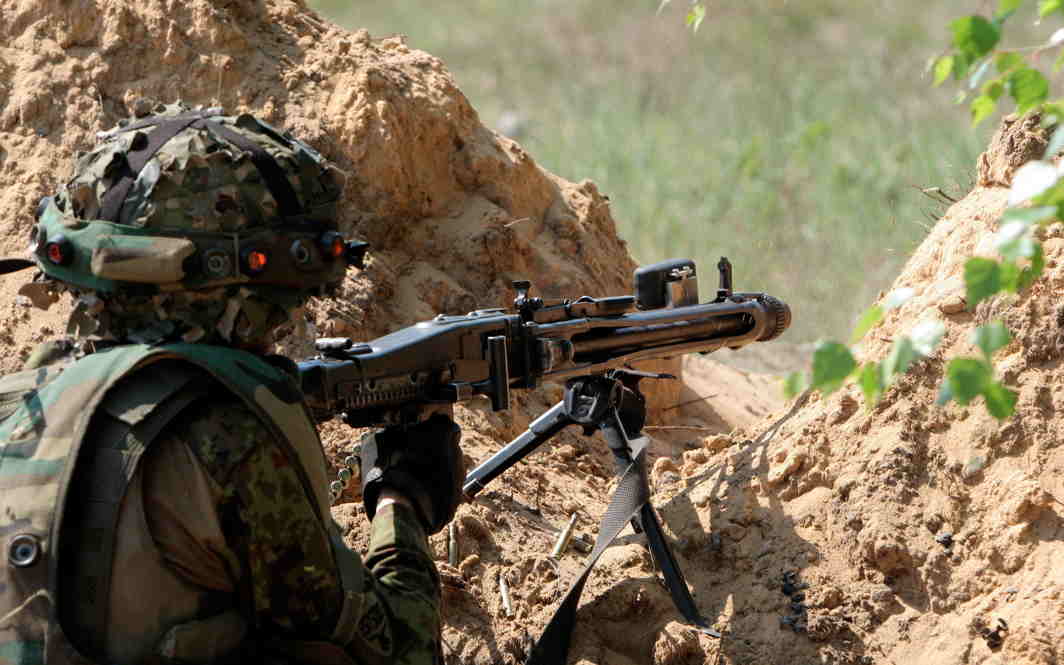
While India has got more or less the entire international community to treat Kashmir dispute as a bilateral issue between India and Pakistan, the current phase – post revocation of Jammu and Kashmir’s special status and its bifurcation into two union territories – is attracting close international attention.

India and Pakistan are expected to face off today – Tuesday, Sep 10 – over the issue at the ongoing UN Human Rights Council (UNHRC) session in Geneva, Switzerland.

Pakistan has announced that it will speak on the matter. It has been trying hard to rope in support from other countries and to have the issue discussed in UN forums. Yesterday, Pakistan and China put out a statement saying they opposed India’s “unilateral actions” in Kashmir and called for a dialogue.

India responded today, rejecting the joint reference to Kashmir and protested against the “so-called China-Pakistan Economic Corridor” running through Pakistan-occupied-Kashmir.

A statement issued by the Ministry of External Affairs said: “We reject the reference to Jammu & Kashmir in the Joint Statement issued by China and Pakistan. J&K is an integral part of India. On the other hand, India has consistently expressed concerns to both China and Pakistan on the projects in so-called ‘China Pakistan Economic Corridor’, which is in the territory of India that has been illegally occupied by Pakistan since 1947. India is resolutely opposed to any actions by other countries to change the status quo in Pakistan occupied J&K. We call on the parties concerned to cease such actions.”

There was some embarrassment for India yesterday when the UNHCR chief Michelle Bachelet expressed “deep concern” at the communication shutdown and detention of political leadership in Jammu and Kashmir (J&K) and urged the Indian government to ensure that human rights are respected and protected.

Also Read: See Delhi, Meri Jaan, On Its Roads

In her opening statement at the 42nd session of the UN Human Rights Council in Geneva, Bachelet said: “My office continues to receive reports on the human rights situation on both sides of the Line of Control. I am deeply concerned about the impact of recent actions by the Government of India on the human rights of Kashmiris, including restrictions on Internet communication and peaceful assembly, and the detention of local political leaders and activists.”

“While I continue to urge the governments of India and Pakistan to ensure that human rights are respected and protected, I have appealed, particularly to India, to ease the current lockdowns or curfews; to ensure people’s access to basic services; and that all due process rights are respected for those who have been detained. It is important that the people of Kashmir are consulted and engaged in any decision-making processes that have an impact on their future,” she said.

Bachelet said it was important that the people of Kashmir are consulted and engaged in any decision-making processes that have an impact on their future.

Bachelet also said the recent National Register of Citizens verification process in Assam has caused great uncertainty and anxiety, with some 1.9 million people excluded from the final list published on August 31. She appealed to the Indian government to ensure due process during the appeals process, prevent deportation or detention, and ensure people are protected from statelessness.

This was Bachelet’s first comment on Indian situation after the government revoked J&K’s special status. While there was no official response from New Delhi, India has sent a team of senior officials. The Indian delegation is led by Ajay Bisaria, the High Commissioner expelled by Pakistan as part of a five-point plan to downgrade ties with India, and Vijay Thakur Singh, Secretary East.

Also Read: Goa Congress accuses: ‘BJP’s beef ban policy is divisive’

Pakistan wrote to the United Nations last month, flagging what it called “massive violations of International Human Rights Law” in Jammu and Kashmir. But its efforts fell flat as at the closed-door meeting held at UN, the participating nations – barring China – had sided with India, agreeing that the changes in Jammu and Kashmir were an internal matter.

“The letter is not worth the paper it is written on,” the foreign ministry later responded.

US President Donald Trump, who earlier offered to mediate between India and Pakistan on Kashmir, has offered his help again. “I get along with both countries very well,” President Trump told reporters.”I am willing to help them if they want. They know that. That (offer) is out there,” he said.

Latest world news

Israel-Lebanon ceasefire to begin within hours as Trump announces 10-day truce

Israel and Lebanon may begin a 10-day ceasefire within hours after a proposal announced by Donald Trump amid ongoing tensions.

Published

on

Donald Trump

A temporary halt in hostilities between Israel and Lebanon is expected to begin within hours after US President Donald Trump announced a proposed 10-day ceasefire between the two sides, amid ongoing tensions in the region.

According to his statement, the ceasefire is likely to take effect around 5 p.m. Eastern Time, although independent confirmation from both sides is still awaited.

The development follows discussions involving Israeli Prime Minister Benjamin Netanyahu and Lebanese President Joseph Aoun, with mediation efforts led by the United States.

Officials indicated that the proposed truce is aimed at creating a limited window to reduce violence and potentially pave the way for broader diplomatic engagement. The situation along the Israel-Lebanon border has remained tense in recent weeks, with escalation linked to the activities of Hezbollah.

Diplomatic efforts have intensified in recent days, with discussions facilitated by the United States, including the involvement of US Secretary of State Marco Rubio. However, details of the agreement and the extent of coordination between the parties remain unclear.

The situation remains fluid, and the success of the ceasefire will depend on adherence by all sides involved. The conflict has already led to significant humanitarian and geopolitical consequences, including displacement and disruption in affected areas.

While the proposed ceasefire is being seen as an important step toward de-escalation, broader negotiations involving regional stakeholders are expected to be necessary for any lasting resolution.

Continue Reading

Latest world news

US ends oil sanctions waiver for Iran and Russia, impact likely on India’s energy imports

The US decision to end the Iran and Russia oil waiver may impact India’s oil imports, fuel prices and global energy markets.

Published

on

US oil tanker

The United States has decided not to extend a temporary sanctions waiver that allowed limited trade in Iranian and Russian oil, marking a shift towards stricter enforcement of economic restrictions.

The waiver, introduced in March 2026, had permitted the sale of oil already loaded on ships to stabilise global supply during heightened geopolitical tensions. However, it is now set to expire around mid-April without renewal.

US officials have indicated that the move is part of a broader strategy to increase pressure on both Iran and Russia amid ongoing conflicts and geopolitical tensions.

What the waiver did and why it mattered

The short-term waiver allowed millions of barrels of oil—estimated at around 140 million barrels—to enter global markets, helping ease supply shortages and prevent sharp price spikes.

It also enabled countries like India to purchase discounted crude oil from Russia and resume limited imports from Iran after years of restrictions.

Impact on India

India, one of the world’s largest oil importers, is expected to feel the impact of the decision in several ways:

  • Reduced access to discounted oil
    India had been buying cheaper Russian crude and recently resumed Iranian imports under the waiver. Its end may limit these options.
  • Potential rise in fuel costs
    With fewer discounted supplies available, India may need to rely more on costlier sources, which could increase domestic fuel prices.
  • Supply diversification pressure
    India may need to explore alternative suppliers in the Middle East, Africa, or the US to maintain energy security.
  • Geopolitical balancing challenge
    The move adds pressure on India to align with US sanctions while managing its own economic interests.

Global energy market concerns

The end of the waiver comes at a time when global oil markets are already under stress due to conflict in West Asia and disruptions in key routes like the Strait of Hormuz.

Analysts warn that tightening sanctions could:

  • Reduce global oil supply
  • Increase price volatility
  • Intensify competition among major buyers like India and China

Bigger picture

The US decision reflects a broader shift from temporary relief measures to stricter enforcement of sanctions, even if it risks tightening global energy markets.

For India, the development highlights a recurring challenge—balancing affordable energy access with geopolitical realities.

Continue Reading

Latest world news

Sanctioned tanker fails to breach US blockade, turns back near Strait of Hormuz

A US-sanctioned tanker failed to cross the Hormuz blockade and turned back, underscoring rising tensions and disruption in global shipping routes.

Published

on

A US-sanctioned oil tanker failed to break through a newly imposed American naval blockade and was forced to turn back near the Strait of Hormuz, highlighting growing tensions in the region.

The vessel, identified as the Rich Starry, reversed its course after attempting to exit the Gulf, according to shipping data. The development comes just days after the United States enforced restrictions on ships linked to Iranian ports.

The blockade was announced by Donald Trump following the collapse of recent diplomatic talks with Iran. The move aims to restrict maritime traffic associated with Iranian trade.

Officials said that during the first 24 hours of enforcement, no vessel successfully crossed the blockade. Several ships, including the sanctioned tanker, complied with instructions from US forces and turned back toward regional waters.

The tanker is reported to be linked to a Chinese company previously sanctioned for dealing with Iran. It was carrying a cargo of methanol loaded from the United Arab Emirates at the time of the incident.

The situation underscores the rising risks in one of the world’s most critical oil transit routes. The Strait of Hormuz typically handles a significant share of global energy shipments, but traffic has sharply declined due to ongoing geopolitical tensions.

The blockade, which applies specifically to vessels travelling to or from Iranian ports, has added further uncertainty for shipping companies, insurers and global energy markets.

Continue Reading

Trending

© Copyright 2022 APNLIVE.com