
Latest world news
Las Vegas Police; Mumbai Terror Attack Study Prevented Thousand Deaths

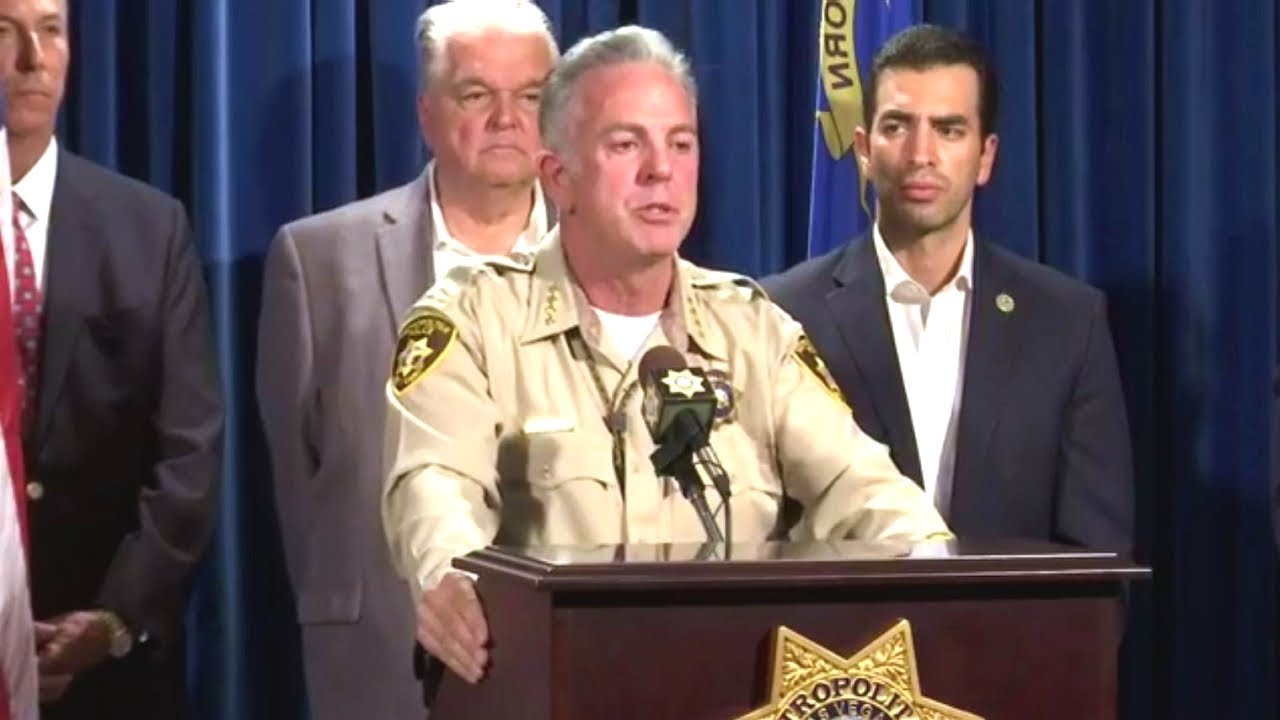
[vc_row][vc_column][vc_column_text]The Las Vegas Police Chief has revealed that his insight gleaned into 2008 Mumbai terror attacks has helped his force to prevent a thousand deaths during recent attack on a crowd of concert goers on October 1, when 58 people were killed and nearly 500 were injured. This was one of the worst attacks on the US soil.
Joseph Lombardo, the Sheriff of the Las Vegas Metropolitan Police Department, while speaking at CBS 60 Minutes show on Monday, said that 64 year old Stephen Paddock was firing into a crowd of 22,000 concert goers using powerful guns. A small team of police officers, including two K-9 (sniffer dog squad) officers, a detective and a Special Weapons and Tactics (SWAT) team member, had swiftly converged on the Mandalay Bay Hotel and minutes later they breached into gunman’s room on the 32nd floor.
Lombardo said that this was made possible because of specialized training allowing them to act so quickly. “I think they prevented a thousand deaths, and I think it’s important for the American public to understand that,” Lombardo said.
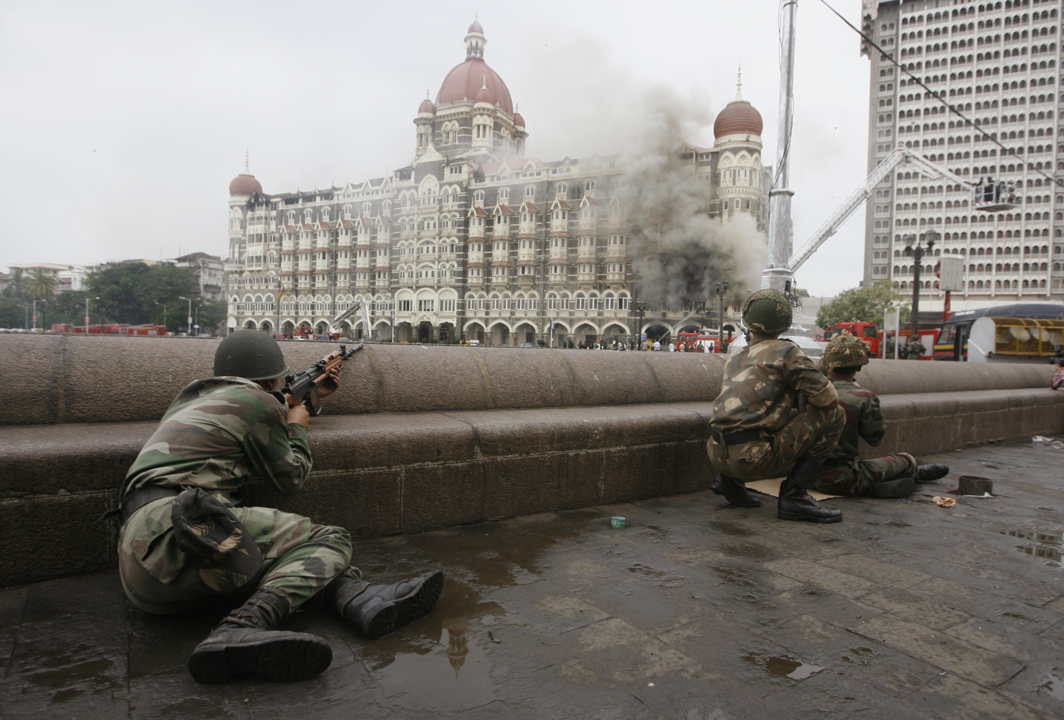
The US police official said that he had gleaned insight from the trip to Mumbai, and his department now reacts faster to such shootings, quickly forming a team to “cease the action” on the assailant on their own.
Lombardo said “Before we were trained to form a perimeter and hope for the best. Now we’re trained to gather up and go get it.”
Las Vegas police chief had travelled to Mumbai after the November 2008 terrorist attacks on hotels and other sites by suspected Pakistan based Lashkar-e-Taiba terrorists killing 164 people including some American citizens.
The Federal Bureau of Investigation (FBI) had played important role in investigating the Mumbai terror attacks. Their senior officers arrived in Mumbai on November 29, 2008, the last day of the four day attacks. New Delhi based US diplomats facilitated the FBI visit for investigation and share information with Indian agencies.
The 2008 Mumbai terror attacks were carried out by 10 members of Pakistan based Lashkar-e-Taiba spread over a series of 12 coordinated shooting and bombing attacks lasting four days, from November 26 to 29, killing 164 people and wounding at least 308.[/vc_column_text][/vc_column][/vc_row]






Latest world news
Magnitude 7 earthquake strikes Russia’s Kamchatka Peninsula
A magnitude 7 earthquake struck Russia’s Kamchatka Peninsula region on Friday. The initial report placed the earthquake at a depth of 140 kilometres.


Latest world news
S Jaishankar says India is a natural option for Russia amid Europe tensions
External Affairs Minister S Jaishankar said India remained a natural option for Russia as Moscow increasingly turned towards Asia amid strained relations with Europe. He highlighted the continuity of India-Russia ties and their significance for the balance of power in Asia.

Latest world news
Putin praises PM Modi, says he has very good ideas on Ukraine war
Russian President Vladimir Putin has praised Prime Minister Narendra Modi for repeatedly raising the need to end the Ukraine war, describing his ideas for a settlement as “very good”.


Mallikarjun Kharge’s ‘Your Friends’ jab at Rahul Gandhi over congress exits

Magnitude 7 earthquake strikes Russia’s Kamchatka Peninsula

Delhi deploys 25,000 personnel, installs CCTV cameras ahead of CJP march

Abhijeet Dipke detained ahead of CJP’s national flag march in Delhi

Mallikarjun Kharge seeks all-party meeting with PM Modi on delimitation

Centre sends 3 letters to Punjab government after anti-drug activist’s killing
Mallikarjun Kharge seeks all-party meeting with PM Modi on delimitation
Abhijeet Dipke detained ahead of CJP’s national flag march in Delhi
Magnitude 7 earthquake strikes Russia’s Kamchatka Peninsula
Delhi deploys 25,000 personnel, installs CCTV cameras ahead of CJP march

Afghan Men Try To Hang With The Jet Engine Of The Aircraft in Kabul- Afghanistan News – Kabul News
Trending Top 10 News: 10000 Crore Fine on Flipkart, Apple to Launch Unique Feature, Hdfc Bank Job Ad

Trending Top 10 News: Nokia 6310, Apple sales, Bachpan ka Pyar Video Kid, Dainik Bhaskar IT Raid

Trending Top 10 News: Canada bans Indian flights, Rain in Delhi NCR, AIMIM Twitter hacked, Raj Kundra case

Trending Top 10 News: Shein India, Apple New Service, Pocket Oxygen, Oppo Launched New Phone
-
 India News12 hours ago
Mallikarjun Kharge’s ‘Your Friends’ jab at Rahul Gandhi over congress exits
-
 Latest world news12 hours ago
Magnitude 7 earthquake strikes Russia’s Kamchatka Peninsula
-
 India News12 hours ago
Delhi deploys 25,000 personnel, installs CCTV cameras ahead of CJP march
-
 India News3 hours ago
Abhijeet Dipke detained ahead of CJP’s national flag march in Delhi
-
 India News2 hours ago
Mallikarjun Kharge seeks all-party meeting with PM Modi on delimitation
-
 India News47 mins ago
Centre sends 3 letters to Punjab government after anti-drug activist’s killing
