
Latest world news
Moscow Afghan Peace Conference Postponed


Russia and Afghanistan have agreed to postpone the planned peace talks in Moscow slated to begin on September 4, where 12 countries were invited. Washington and Kabul had earlier turned down the invitation, while Taliban were willing to attend the multilateral conference.
According to Kabul based Tolo News, Russian foreign minister Sergei Lavrov phoned Afghanistan President Ashraf Ghani on Monday and discussed the issues of mutual interest, including the peace talks scheduled to be held early next month and agreed to postpone the same.
The report quoted a statement issued by the Presidential Palace saying that “although Afghanistan strongly values the efforts by its regional and international partners towards restoring peace in the country, the Afghan government believes that any efforts for peace must be carried out in complete cooperation and harmony with the Afghan government and the Afghan people”.
Ghani hailed Moscow for its efforts for peace in Afghanistan, but he told Lavrov that any talks must be an Afghan-owned and Afghan-led process. The statement said, “The peace plan which was presented at the second Kabul Process conference had been outlined in consultation with various segments of society and with the support of the international community and the plan has defined all basic principles for sustainable peace in the country.” This was in reference to Ghani’s peace offer to the Taliban at the second Kabul Process Conference in Kabul in April this year.
 Read More: Afghanistan Toes US Decision, Not To Participate Moscow Talks
Lavrov meanwhile assured Ghani during their conversation that Russia was also in support of an Afghan-owned peace process and that Moscow was prepared to cooperate with the Afghan government regarding peace. The statement said, “It was decided to postpone the Moscow conference so that the two countries can coordinate on further preparations and effectiveness of the process.”
The telephonic conversation between Russian Foreign Minister and Afghan President Ashraf Ghani comes just days after Afghanistan objected to Moscow’s proposed talks on Afghanistan and said that any talks for peace should be carried out under the leadership of the Afghan government and the people.
In a statement issued by Afghanistan Ministry of Foreign Affairs, Kabul said, “Afghanistan will not attend a meeting where there is no commitment by the Taliban to enter direct talks with the government. The government would attend talks with the Taliban at any location but these would have to be direct talks.”
Sibghat Ahmadi, a deputy spokesman of the ministry said, “Any regional consensus about Afghanistan needs to be structured in axis of the Afghan government. The peace process definitely needs to be carried out under the leadership of the Islamic Republic of Afghanistan. We will not participate in the Moscow talks.”
On August 23, the Afghan President’s special envoy for Central Asia and the CIS countries, Mohammad Shakir Kargar, told TASS that Kabul was not considering participation in the Moscow-format talks.
It was interesting to note that Russian official TASS news agency report quoted Afghanistan TOLO News without naming any source in Moscow.







Latest world news
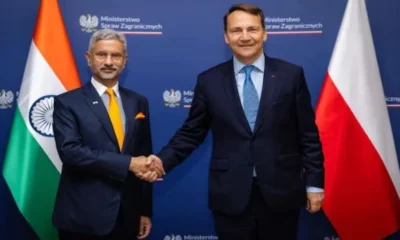
S Jaishankar says India is a natural option for Russia amid Europe tensions
External Affairs Minister S Jaishankar said India remained a natural option for Russia as Moscow increasingly turned towards Asia amid strained relations with Europe. He highlighted the continuity of India-Russia ties and their significance for the balance of power in Asia.


Latest world news
Putin praises PM Modi, says he has very good ideas on Ukraine war
Russian President Vladimir Putin has praised Prime Minister Narendra Modi for repeatedly raising the need to end the Ukraine war, describing his ideas for a settlement as “very good”.

Latest world news
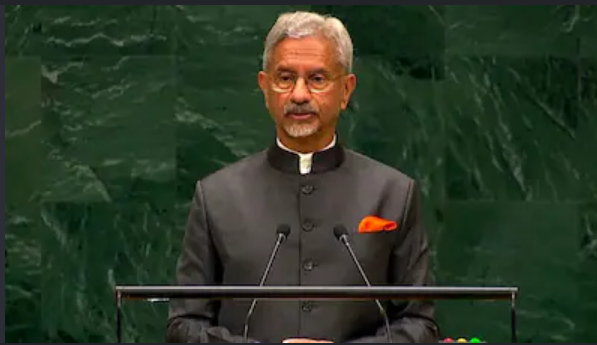
S Jaishankar calls Pakistan a “serial practitioner of terrorism” at UN
S Jaishankar criticised Pakistan at the UN General Assembly, referring to a “serial practitioner of terrorism” and warning against attempts to normalise terrorism.

Dhruv Rathee gets fresh summons in 2018 BJP IT cell video case

Nobody can browbeat judiciary, Chief Justice warns over Rahul Gandhi’s march

India-US trade deal first phase finalised, drafting underway

Election Commission orders voter roll revision in 17 states, UTs

Actor Imran Khan asked to leave India after CJP protest

Delhi Police offers 11-person limit for CJP’s Connaught Place protest
Actor Imran Khan asked to leave India after CJP protest
Election Commission orders voter roll revision in 17 states, UTs
India-US trade deal first phase finalised, drafting underway
Nobody can browbeat judiciary, Chief Justice warns over Rahul Gandhi’s march

Afghan Men Try To Hang With The Jet Engine Of The Aircraft in Kabul- Afghanistan News – Kabul News
Trending Top 10 News: 10000 Crore Fine on Flipkart, Apple to Launch Unique Feature, Hdfc Bank Job Ad

Trending Top 10 News: Nokia 6310, Apple sales, Bachpan ka Pyar Video Kid, Dainik Bhaskar IT Raid

Trending Top 10 News: Canada bans Indian flights, Rain in Delhi NCR, AIMIM Twitter hacked, Raj Kundra case

Trending Top 10 News: Shein India, Apple New Service, Pocket Oxygen, Oppo Launched New Phone
-
 India News16 hours ago
Dhruv Rathee gets fresh summons in 2018 BJP IT cell video case
-
 India News12 hours ago
Nobody can browbeat judiciary, Chief Justice warns over Rahul Gandhi’s march
-
 India News8 hours ago
India-US trade deal first phase finalised, drafting underway
-
 India News5 hours ago
Election Commission orders voter roll revision in 17 states, UTs
-
 India News5 hours ago
Actor Imran Khan asked to leave India after CJP protest
-
 India News4 hours ago
Delhi Police offers 11-person limit for CJP’s Connaught Place protest
