
Latest world news
UK Minister Naz Shah asks Prime Minister Boris Johnson to raise growing issue of Islamophobia with Modi government
Naz Shah went on to emphasize India’s human rights violations, citing a recent report by Dr Gregory Staton, who believes India is on the verge of genocide. Shah asked Boris Johnson to speak on this issue with the Modi government.


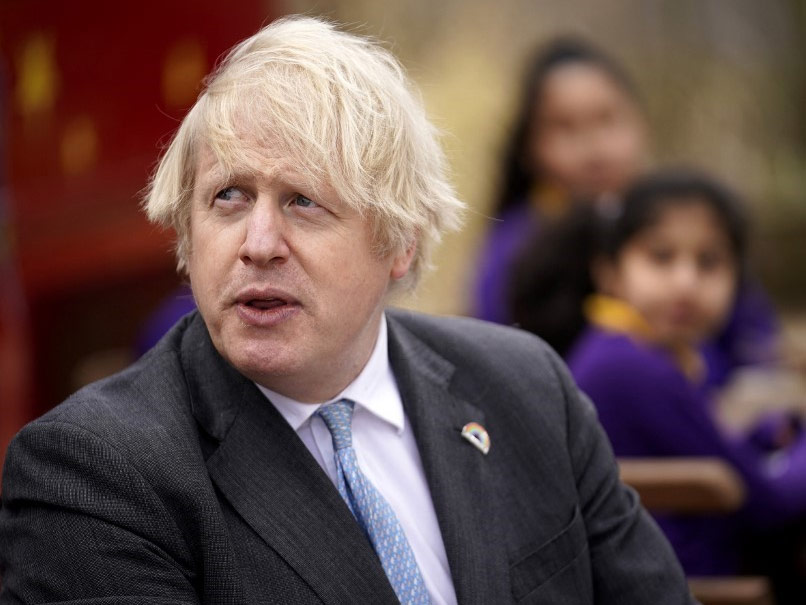
UK Prime Minister Boris Johnson was on a two-day visit to India to grow and expand the India-UK defense partnership and to promote international ties. PM Johnson landed in Ahmedabad, Gujarat, on April 21 and tried his hands on charkha in a Sabarmati Ashram before heading to Halol, where he inaugurated a JCB plant.
A photo of the British Prime Minister hopping on a JCB vehicle, and fiddling with the steering wheel and control buttons went viral on social media giving Indian memers enough content.

However, this photo didn’t go well with some as it came amidst the ongoing Jahangirpuri violence in New Delhi. Some also questioned the PM’s silence on the misery of Muslims as a result of the municipal corporation’s decision to demolish residences and shops owned by the minority population.
Amongst them was UK Shadow Minister for Crime Reduction Naz Shah who plead to UK Prime Minister’s Office that Johnson should also address India’s leadership about the country’s deteriorating human rights situation and not just only talk about international trade. She also raised concerns over the grave situation of Muslims in India. Shah went on to emphasize India’s human rights violations, citing a recent report by Dr Gregory Staton, who believes India is on the verge of genocide.
Shah shared a long thread on Twitter addressing the issue of human rights in India. She urged the UK leader to talk about the growing issue of Islamophobia with the Modi Government. The rising tide of everyday hate and mob lynching against Muslims in India is becoming worrying, she added. Shah also claimed that beating Muslims, being threatened with rape, and lynching has become a norm in India.
The minister further expressed concerns over the physical and mental torture of Muslims. In 2019, a fact-checker website that counted hate crimes in India reported that more than 90 percent of victims in the past 10 years were Muslims, she wrote.
Sharing one of the videos of Indian Fact Checker Mohammed Zubair, Shah cited an example of how a Hindu nationalist rally was cheering outside a Mosque in the presence of countless police officers, whilst calling for the rape of Muslim women.
She even raised the issue of the hijab controversy going on in Karnataka where students are not allowed to wear hijab in educational premises. Shah said Muslim women and girls in India are being told to choose between their faith and education.
Shah also talked about the Kashmir row. She tweeted about the grave situation of human rights in Indian-administered Kashmir. She raised issues related to revocation of Article 370, international black-outs, mass unmarks graves and Kashmir’s half-widows. she even stated that the people of Kashmir deserve their voices heard.
Concluding the thread, Shadow Minister wrote that the UK prides itself on human rights and successive UK governments have worked to protect the rights of women and girls worldwide. To be silent, whilst a minority Muslim population in India is being persecuted & Muslim women are at the center of such hate, would be cowardice, she wrote.
Google Doodle celebrates Iraq’s contemporary artist Naziha Salim, but why today?


Latest world news
S Jaishankar says India is a natural option for Russia amid Europe tensions
External Affairs Minister S Jaishankar said India remained a natural option for Russia as Moscow increasingly turned towards Asia amid strained relations with Europe. He highlighted the continuity of India-Russia ties and their significance for the balance of power in Asia.


Latest world news
Putin praises PM Modi, says he has very good ideas on Ukraine war
Russian President Vladimir Putin has praised Prime Minister Narendra Modi for repeatedly raising the need to end the Ukraine war, describing his ideas for a settlement as “very good”.

Latest world news
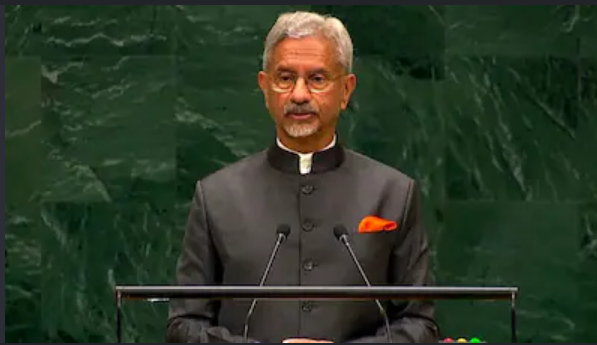
S Jaishankar calls Pakistan a “serial practitioner of terrorism” at UN
S Jaishankar criticised Pakistan at the UN General Assembly, referring to a “serial practitioner of terrorism” and warning against attempts to normalise terrorism.

Meerut murder: Muskaan Rastogi and Sahil Shukla get death sentence

Rahul Gandhi joins India Gate protest by Ankita Bhandari’s parents

Supreme Court questions EC over missing records in Sringeri election dispute

Dhruv Rathee gets fresh summons in 2018 BJP IT cell video case

Nobody can browbeat judiciary, Chief Justice warns over Rahul Gandhi’s march

Election Commission orders voter roll revision in 17 states, UTs

India-US trade deal first phase finalised, drafting underway
Nobody can browbeat judiciary, Chief Justice warns over Rahul Gandhi’s march
Dhruv Rathee gets fresh summons in 2018 BJP IT cell video case
Supreme Court questions EC over missing records in Sringeri election dispute

Afghan Men Try To Hang With The Jet Engine Of The Aircraft in Kabul- Afghanistan News – Kabul News
Trending Top 10 News: 10000 Crore Fine on Flipkart, Apple to Launch Unique Feature, Hdfc Bank Job Ad

Trending Top 10 News: Nokia 6310, Apple sales, Bachpan ka Pyar Video Kid, Dainik Bhaskar IT Raid

Trending Top 10 News: Canada bans Indian flights, Rain in Delhi NCR, AIMIM Twitter hacked, Raj Kundra case

Trending Top 10 News: Shein India, Apple New Service, Pocket Oxygen, Oppo Launched New Phone
-
 India News24 hours ago
Meerut murder: Muskaan Rastogi and Sahil Shukla get death sentence
-
 India News23 hours ago
Rahul Gandhi joins India Gate protest by Ankita Bhandari’s parents
-
 India News23 hours ago
Supreme Court questions EC over missing records in Sringeri election dispute
-
 India News10 hours ago
Dhruv Rathee gets fresh summons in 2018 BJP IT cell video case
-
 India News7 hours ago
Nobody can browbeat judiciary, Chief Justice warns over Rahul Gandhi’s march
-
 India News3 hours ago
India-US trade deal first phase finalised, drafting underway
-
 India News14 mins ago
Election Commission orders voter roll revision in 17 states, UTs
