English हिन्दी
Connect with us

Latest world news

8 killed in Nepal’s Gen-Z protest, army deployed amid social media ban unrest

Protests in Nepal against the government’s social media ban turned deadly, leaving eight people dead. The army has been deployed and curfew extended across sensitive zones in Kathmandu.

Published

on

Nepal protests turn violent with army deployment in Kathmandu

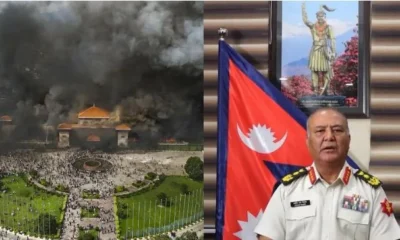
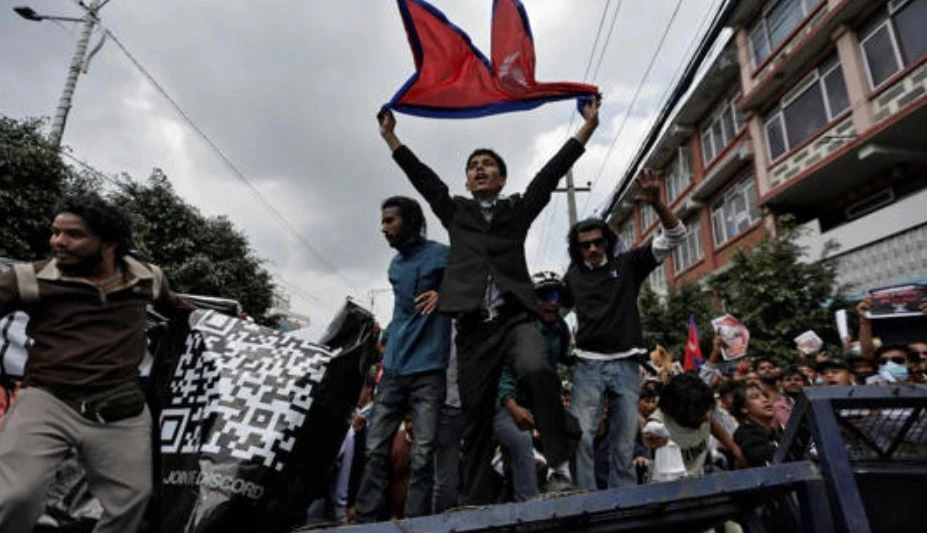
At least eight people have died in Nepal after large-scale protests against the government’s social media ban turned violent, prompting authorities to impose curfew orders and deploy the army in sensitive zones of the capital Kathmandu and other cities.

Clashes in Kathmandu and beyond

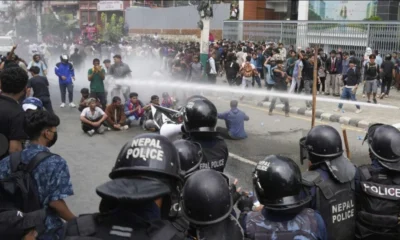
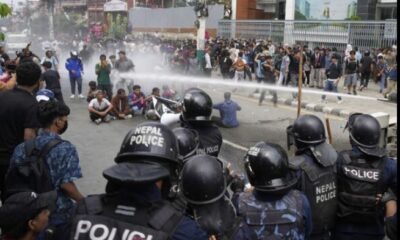
Security forces used water cannons, teargas, and rubber bullets to disperse demonstrators after protesters stormed restricted areas and entered the Federal Parliament compound. Two people were injured by rubber bullets, including Kantipur Television journalist Shyam Shrestha, who was covering the protest in Baneshwar. He is undergoing treatment at Civil Hospital. Another protester was injured in Damak, Prime Minister KP Sharma Oli’s hometown.

Curfew restrictions were extended to cover high-security areas such as the President’s residence at Shital Niwas, the Vice-President’s residence in Lainchaur, Maharajgunj, Singha Durbar, and the Prime Minister’s residence in Baluwatar. Movement, gatherings, and protests remain banned between 12:30 PM and 10:00 PM local time.

Protests also spread outside Kathmandu. In Pokhara, demonstrators damaged the Chief Minister’s office, forcing local authorities to enforce a curfew.

Why Nepal’s youth are protesting

The protests, led largely by Generation Z, erupted after the government blocked access to 26 unregistered social media platforms, including Facebook, Instagram, YouTube, and Snapchat. The move angered millions of users who rely on these platforms for news, entertainment, and business.

“This is not just about the social media ban,” said student protester Yujan Rajbhandari, 24. “We are protesting against corruption that has been institutionalised in Nepal.”

Another demonstrator, Ikshama Tumrok, 20, accused the government of displaying an “authoritarian attitude,” adding, “We want to see change. Others have endured this, but it has to end with our generation.”

Government’s stance on the ban

The cabinet had earlier directed companies to register in Nepal, establish a local office, and appoint compliance officers, following a Supreme Court directive. Authorities maintain the restrictions are aimed at regulating online platforms and curbing fraud, not silencing voices.

In a statement, the government said it “respects freedom of thought and expression” and is committed to ensuring their protection.

Nepal has previously restricted digital platforms. Telegram was blocked in July citing financial fraud, while TikTok faced a nine-month ban before returning after compliance with Nepali rules.

Latest world news

Trump may visit India next year as US envoy calls New Delhi Washington’s most essential partner

The US has described India as its most essential global partner, with ambassador-designate Sergio Gor indicating a possible visit by President Donald Trump next year.

Published

on

trump modi

The United States has said that no country is more essential to its global interests than India, with US ambassador-designate Sergio Gor indicating that President Donald Trump may visit India within the next year or two.

Speaking at the US Embassy in New Delhi, Gor highlighted the close personal rapport between Trump and Prime Minister Narendra Modi, describing their relationship as genuine and resilient even in times of disagreement.

India-US ties anchored at the highest level

Gor said the partnership between India and the United States is rooted not only in shared strategic interests but also in strong leadership-level engagement.

He noted that while differences may arise between the two countries, they are resolved through dialogue, reflecting the maturity of the relationship. According to him, India’s scale and global standing make bilateral cooperation both complex and crucial.

Trade talks to resume from January 12

The ambassador-designate confirmed that the next round of India-US trade negotiations will begin on Tuesday, January 12. Acknowledging the challenges involved, Gor said both sides remain committed to reaching an agreement.

Trade, he said, is a vital pillar of bilateral ties, alongside cooperation in areas such as security, counter-terrorism, energy, technology, education and health.

Trump-Modi friendship described as ‘real’

Gor reiterated that he has personally witnessed the bond between Trump and Modi during international engagements, stressing that the friendship goes beyond diplomacy.

Recalling conversations with the US President, he said Trump often speaks positively about his previous India visit and his relationship with the Indian Prime Minister.

Possible Trump visit to India

Indicating a potential presidential visit, Gor said Trump could travel to India in the next one or two years. He described his own appointment as an effort to elevate the bilateral partnership to a new level, calling the India-US relationship a meeting point of the world’s oldest and largest democracies.

India to join Pax Silica alliance

Gor also announced that India will be invited to join the US-led Pax Silica alliance as a full member next month.

The initiative aims to develop a secure, resilient and innovation-driven global silicon supply chain, reinforcing India’s role in strategic technology partnerships.

Continue Reading

Latest world news

Trump says Iran wants talks amid protests, warns US may act before meeting

Donald Trump claims Iran’s leadership wants negotiations amid mass protests, but says the US may take action before any talks are held.

Published

on

US President Donald Trump has claimed that Iran’s leadership has reached out to his administration seeking negotiations, even as large-scale anti-government protests continue across the country and Washington signals possible military action.

Speaking to reporters aboard Air Force One, Trump said Iranian leaders had contacted him after his recent warnings. “The leaders of Iran called yesterday,” he said, adding that a meeting was being planned. However, he cautioned that the United States “may have to act before a meeting.”

The remarks come amid reports of deaths during protests in several Iranian cities. Trump accused Iran’s rulers of maintaining control through force, saying there were indications that people had been killed who “aren’t supposed to be killed.”

He said the US military was closely monitoring developments and that senior officials were reviewing what he described as “very strong options.” Trump said he was receiving hourly briefings on the situation and that a decision would be made after assessing all factors.

When asked if Iran had crossed a red line, Trump declined to provide operational details, saying he would not disclose how or where the US might act. “We’re gonna make a determination,” he said.

Addressing reports of fatalities among protesters, Trump suggested that some deaths occurred due to crowd stampedes, while others involved gunfire. He did not provide specific figures or details.

Trump also issued a strong warning against any retaliation by Iran or its allied groups. He said any such response would be met with unprecedented force, stating that the US would strike “at levels that they’ve never been hit before.”

The US President said Iran should already be aware of Washington’s resolve, referring to previous American actions against high-profile militant leaders and what he described as the elimination of Iran’s nuclear threat.

Trump did not clarify whether the US had coordinated with allies on a potential response or outline a timeline for further action.

Iran has witnessed repeated waves of unrest in recent weeks, with thousands of people participating in protests against the current regime in cities across the country.

Continue Reading

Latest world news

Trump again threatens forceful takeover of Greenland citing US security concerns

Donald Trump has again suggested the US could use force to take control of Greenland, brushing aside Denmark’s sovereignty and linking the move to Arctic security concerns.

Published

on

donald trump

US President Donald Trump has once again raised the possibility of using force to take control of Greenland, dismissing Denmark’s sovereignty over the autonomous Arctic island and framing the issue as a matter of US national security.

Speaking at a White House meeting with oil executives on Friday, Trump said the United States would act on Greenland “whether they like it or not,” reiterating his long-standing interest in acquiring the mineral-rich territory.

“I would like to make a deal, the easy way. But if we don’t do it the easy way, we’re going to do it the hard way,” Trump said when asked about Greenland.

Trump links Greenland control to Arctic security

Trump argued that Washington cannot allow rival powers to gain a foothold in Greenland, citing increased military activity by Russia and China in the Arctic region.

“We’re not going to have Russia or China occupy Greenland. That’s what they’re going to do if we don’t,” he said, adding that the US would act either “the nice way or the more difficult way.”

While Russia and China have stepped up their presence in the Arctic in recent years, neither country has made any territorial claim over Greenland.

Denmark and allies react with concern

Trump’s remarks have sparked strong reactions in Denmark and among European allies. Denmark, which governs Greenland as an autonomous territory, has expressed shock over the repeated threats.

Danish Prime Minister Mette Frederiksen warned that any invasion of Greenland would bring an end to “everything,” referring to NATO and the post-World War II security framework.

The United States already operates a military base in Greenland, underscoring its existing strategic presence in the region.

Trump dismisses Danish sovereignty claims

Despite the backlash, Trump played down Denmark’s concerns and questioned its historical claim over the island.

“I’m a fan of Denmark, too,” he said, adding that the country had been “very nice” to him. However, he remarked that Denmark’s historical presence did not automatically translate into ownership of Greenland.

“The fact that they had a boat land there 500 years ago doesn’t mean that they own the land,” Trump said.

Meanwhile, US Secretary of State Marco Rubio is scheduled to meet Denmark’s foreign minister and representatives from Greenland next week, as diplomatic tensions over the issue continue.

Continue Reading

Trending

© Copyright 2022 APNLIVE.com