English हिन्दी
Connect with us

Latest world news

Pakistan asks India: Resolve Kashmir issue for normalizing ties

Published

on

Pakistan asks India: Resolve Kashmir issue for normalizing ties

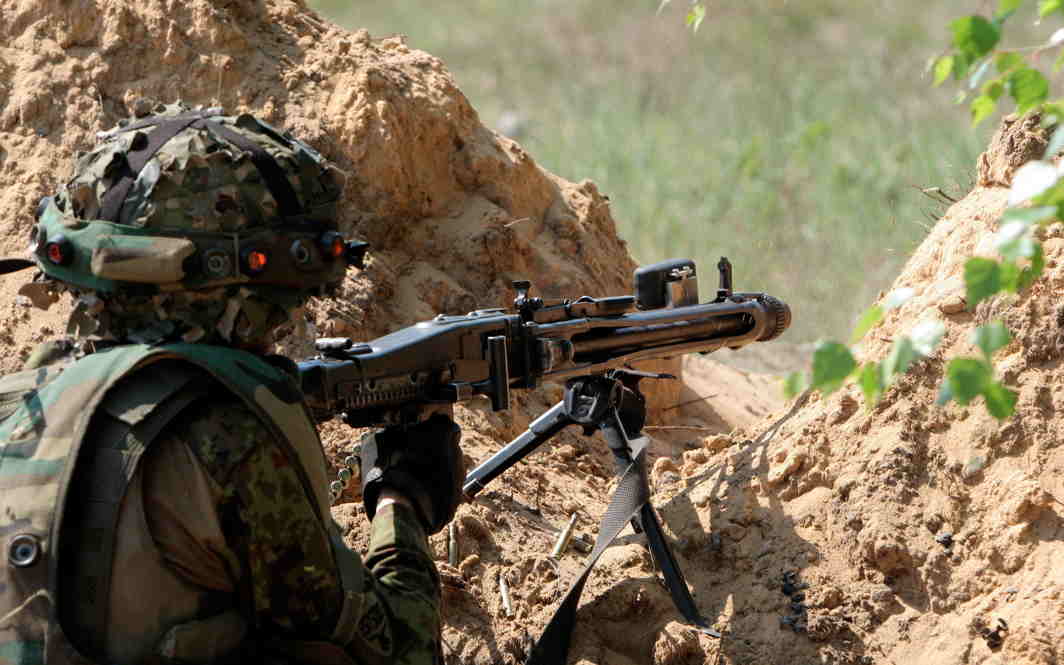
Pakistan has expressed that its desire for peace should never be mistaken as its weakness while normalizing relations with India needs resolution of all issues including the “core issue of Kashmir” between the two nuclear countries.

Major General Asif Ghafoor, Director General of Inter-Services Public Relations (ISPR) – the media wing of Pakistan’s Armed Forces, while responding to the questions raised by Gulf News in an exclusive interview, said that India needs to behave “like a responsible country”, stop atrocities on both sides of Line of Control (LoC) and also discontinue “interference inside Pakistan through (the alleged) state-sponsored terrorism”.

The interview was published in Dubai based Gulf News on Sunday. The Pakistani military official responded to a variety of questions about Pakistan’s success in war against terrorism, Pakistan’s relations with UAE and $54 billion China-Pakistan Economic corridor (CPEC) project, linking  Gawadar  port with China.

He claimed that Pakistan has eliminated sanctuaries of all terrorists groups including the Haqqani network from its soil through “a well-thought-out military campaign”.

Responding to a question on Pakistan’s war on terror, the official said that his country has fought a  successful war against terrorism – a war which entered Pakistan through the 2,611-km scantily manned Pak-Afghan border when US –led coalition forces started military operations in Afghanistan against Al Qaida.

However, he said that there are no more organized sanctuaries, for elimination of remaining “disorganized scanty residual presence of militants, Operation Raddul Fasaad, a largely intelligence-based operation is in progress.

He said, “But all this has come with a huge price. Besides cost in blood of over 75,000 Pakistanis there has been loss of more than $123 billion [Dh451.6 billion] to the national exchequer,”

The Pakistan military official said that over 200,000 troops were deployed in FATA (Federally Administered Tribal Areas) along Pak-Afghan border. However, he said this deployment will continue despite successes inside Pakistan as threat continues to reside inside Afghanistan “not due to lack of will but lack of capacity of the Afghan forces.”

Meanwhile, Prime Minister Shahid Khaqan Abbasi held an unscheduled meeting with US Vice President Micheal Pence in Washington on Friday and discussed a proposal for negotiated settlement to the conflict in Afghanistan.

Recently, Afghan President Ashraf Ghani had offered peace talks with Taliban which was supported by US administration.

On Thursday last, UN Security Council had welcomed Afghanistan government’s offer to the Taliban to engage in direct peace talks and called upon the terror group to go ahead with the process without any preconditions and threat of violence.

Latest world news

India-Nepal military ties in focus as Army Chief General Dhiraj Seth meets Nepal PM

Indian Army Chief General Dhiraj Seth met Nepal PM Balendra Shah in Kathmandu and discussed mutual interests and ways to strengthen bilateral military ties.

Published

on

Indian Army Chief General Dhiraj Seth on Tuesday met Nepal Prime Minister and Defence Minister Balendra Shah in Kathmandu, with the two sides discussing matters of mutual interest and ways to strengthen military-to-military relations.

The meeting took place at the Office of the Prime Minister and Council of Ministers in Singha Durbar. Indian Ambassador to Nepal Naveen Srivastava was also present.

According to sources at the Prime Minister’s secretariat, discussions focused on bilateral interests and strengthening military relations between the two neighbouring countries.

General Dhiraj Seth’s Nepal visit

General Seth is on a four-day official visit to Nepal at the invitation of Nepal Army chief General Ashok Raj Sigdel. During the visit, he was conferred the honorary rank of General of the Nepali Army by President Ramchandra Paudel at a ceremony on Monday.

India and Nepal have followed a longstanding tradition since 1950 of conferring the honorary rank of General on each other’s army chiefs. The practice reflects the reciprocal military ties between the two countries.

General Seth also held bilateral talks with General Sigdel at the Nepal Army Headquarters on Monday. The discussions covered matters of mutual interest.

On Tuesday, General Seth also offered prayers at the Pashupatinath Temple in Kathmandu, according to Nepal Army sources.

India-Nepal ties amid border concerns

The meeting comes amid some unease in relations between India and Nepal, including differences over the Lipulekh, Limpiyadhura and Kalapani areas.

Earlier this year, Nepal Prime Minister Balendra Shah said in Parliament that he had learnt about Nepal’s territories being “encroached” upon by India. He also said Kathmandu was discussing the longstanding border issue with India and was in contact with China and the UK.

New Delhi subsequently rejected any role for third parties in resolving the India-Nepal boundary dispute.

Nepal and India have traditionally maintained close political, economic and people-to-people ties. Shah has not yet visited either India or China as prime minister, while Nepal’s Foreign Minister Shisir Khanal visited New Delhi and Beijing in June.

Earlier this month, Shah also held a one-on-one meeting with Indian Ambassador Naveen Srivastava and stressed the importance of strengthening Nepal’s historic relationship with India.

The Indian Embassy in Kathmandu said General Seth’s visit reaffirmed the “unique and time-tested defence relations” between India and Nepal, rooted in shared values, mutual trust and longstanding military-to-military ties.

Continue Reading

Latest world news

India envoy Dinesh Trivedi meets PM Modi after talks with Bangladesh PM Tarique Rahman 

India’s High Commissioner to Bangladesh Dinesh Trivedi met PM Modi after talks with Bangladesh PM Tarique Rahman amid diplomatic tensions.

Published

on

India’s High Commissioner to Bangladesh Dinesh Trivedi met Prime Minister Narendra Modi in New Delhi on Tuesday, a day after his meeting with Bangladesh Prime Minister Tarique Rahman in Dhaka.

According to the High Commission of India in Bangladesh, Trivedi sought PM Modi’s guidance on further strengthening the bilateral relationship between India and Bangladesh through a constructive and people-centric approach.

The meeting came a day after Trivedi held discussions with Tarique Rahman on matters of mutual interest and ways to advance ties between the two neighbouring countries.

Dinesh Trivedi Meets Bangladesh PM

During his meeting with Tarique Rahman on Monday, Trivedi conveyed greetings from Prime Minister Modi and reiterated India’s commitment to working with the Bangladeshi administration and its people in a positive, constructive and forward-looking manner.

The two sides discussed issues of mutual interest and explored avenues for strengthening India-Bangladesh relations with a people-centric approach.

The engagement took place at the Prime Minister’s Office in the Cabinet Division at the Bangladesh Secretariat. Trivedi also shared his experience of serving in Dhaka over the previous two months.

Sheikh Hasina Extradition Request

The meeting assumed significance as Bangladesh has expressed hope that India will expedite the extradition process involving former Prime Minister Sheikh Hasina, who was ousted following a student-led uprising in 2024.

According to a statement issued by the Bangladesh Prime Minister’s Office, Dhaka also reiterated its request for India to return individuals it alleges were involved in the killing of Shahid Osman Hadi, a prominent figure associated with the July uprising who was shot on December 12, 2025.

Tarique Rahman stressed the need to create a suitable environment to take forward relations between Bangladesh and India.

Bangladesh Foreign Minister Khalilur Rahman, Prime Minister’s Foreign Affairs Adviser Humayun Kabir and other officials attended the meeting.

India-Bangladesh Ties Amid Diplomatic Friction

The latest high-level engagements come amid diplomatic tensions between the two countries following a virtual press interaction by Sheikh Hasina in New Delhi on August 5.

The event, organised by the Foreign Correspondents’ Club of South Asia to mark the second anniversary of her ouster, prompted strong objections from Dhaka.

During the interaction, Hasina said she remained determined to return to Bangladesh in December and restore democracy, while acknowledging the possibility of imprisonment or a death sentence upon her return.

Bangladesh’s Ministry of Foreign Affairs subsequently registered a strong protest and said the development had affected public sentiment and complicated efforts to strengthen bilateral cooperation.

India has said the government had no involvement in the event. Ministry of External Affairs spokesperson Randhir Jaiswal said it was organised by a private media entity and clarified that New Delhi did not endorse views expressed at the forum.

Continue Reading

Latest world news

Trump, PM Modi will resolve tariff issue over Russian oil trade, says US official

White House Trade Adviser Peter Navarro said Donald Trump and Prime Minister Narendra Modi will resolve the issue over US tariff threats linked to India’s Russian oil trade.

Published

on

Modi trump

US President Donald Trump and Prime Minister Narendra Modi will resolve the issue surrounding the threat of US tariffs linked to India’s purchase of Russian oil, White House Trade Adviser Peter Navarro said on Tuesday.

Navarro’s remarks came days after the US Senate passed a bill authorising the US President to impose tariffs of up to 100 per cent on the top five purchasers of Russian oil. The measure argues that such purchases directly contribute to financing Russia’s war in Ukraine.

Navarro comments on India’s Russian oil trade

Speaking to reporters at the White House, Navarro said India was not involved in the oil trade with Russia before the Ukraine war began in 2022.

He alleged that India became heavily involved in the trade after Russia’s invasion and sold refined products on behalf of Russia, which he said helped support the Russian war effort.

“Prior to the Russian invasion of Ukraine, India was not involved in the oil trade with Russia, but afterwards it got heavily involved,” Navarro said.

The White House adviser also claimed that the issue had since been resolved and attributed some of the shift in India’s Russian oil trade to an opinion article he recently wrote in the Financial Times.

Trump and Modi will resolve issue, Navarro says

Navarro said the relationship between Trump and Modi would help address the tariff-related issue.

“The president and your prime minister have a very good working relationship. They are going to work that out amongst themselves,” he said, adding that it was not his place to intervene.

His comments come amid US concerns over countries purchasing Russian oil and proposed measures aimed at imposing additional tariffs on major buyers.

Continue Reading

Trending

© Copyright 2022 APNLIVE.com