
Latest world news
Pakistan blocks Dawn circulation after Nawaz 26/11 comments


International media watchdog condemned attack on media freedom
In a rare situation Dawn, a leading Pakistani daily is facing difficult times after publishing Nawaz Sharif’s interview when he acknowledged his country’s role in 26/11 Mumbai terror attacks in 2008. Pakistani authorities have blocked the circulation of the newspaper in many parts of the country.
Reporters Without Borders or Reporters Sans Frontiers (RSF) a media watchdog has alleged that days after the newspaper published ousted prime minister Nawaz Sharif’s controversial remarks, which reportedly displeased the Pakistan’s powerful military establishment, appeared in Dawn’s May 12 issue and the blocking began on May 15. The watchdog condemned the “latest attack on media freedom in Pakistan”.
Read More: Nawaz Sharif admits Pakistan’s role in 2008 Mumbai terror attack?
According to RSF, distribution is being disrupted in most of Balochistan province, many cities in Sindh province and in all military cantonments.

In an exclusive interview with Dawn in Multan, Sharif said: “Militant organisations are active. Call them non-state actors, should we allow them to cross the border and kill 150 people in Mumbai? Explain it to me. Why can’t we complete the trial?”
Sensing the seriousness of the situation Nawaz Sharif’s younger brother Shahbaz Sharif, who is also Chief Minister of Punjab and also heading Pakistan Muslim League (N) distanced from ousted PM’s stance.
Read More: Pakistan: PML-N distances from Nawaz Sharif Mumbai terror remarks
The National Security Committee (NSC) – Pakistan’s top civil-military body – also condemned his statement in a high-level meeting.
Toeing the country’s political position the Press Council of Pakistan has also notified Dawn’s editor that the newspaper breached the ethical code of practice by publishing content that “may bring into contempt Pakistan or its people or tends to undermine its sovereignty or integrity as an independent country”.
The RSF, an international non-profit, non-govrnmental organization that promotes and defends freedom of information and freedom of press, said, “The unwarranted blocking of the distribution of one of the main independent newspapers has yet again shown that the military are determined to maintain their grip on access to news and information in Pakistan.”
Read More:- Pakistan facing worse than martial law dictatorship: Nawaz
“It is clear that the military high command does not want to allow a democratic debate in the months preceding a general election. We call on the authorities to stop interfering in the dissemination of independent media and to restore distribution of Dawn throughout Pakistan,” RSF added.
Several lawmakers on both sides of the aisle had fired a broadside at Nawaz for statement about the Mumbai attack, with some going as far as demanding that the PML-N supremo be tried for high treason; that his name be placed on the Exit Control List, and a thorough investigation be undertaken to determine the reasons behind the statement made by three-time prime minister.
Read More:- Pakistan: Supreme Court disqualify Nawaz Sharif for life
On May 17, Lahore High Court has dismissed a petition seeking that Nawaz Sharif face trial under treason charges for his remarks on 2008 Mumbai terror attacks. Aftab Virk, the chief of Pakistan Zindabad party, had filed the petition on behalf of Pakistan Awami Tehreek leader Khurram Nawaz Gandapur. Federal Interior Minister Ahsan Iqbal was also mentioned as a respondent in the plea apart from Nawaz.
Ten Lashkar-e-Taiba (LeT) militants from Pakistan have reportedly killed 166 people and wounded dozens in Mumbai on 26 November, 2008. Nine of the attackers were killed by police while lone survivor Ajmal Kasab was caught. Later Kasab was executed after a court found him guilty.








Latest world news
Magnitude 7 earthquake strikes Tibet after floods
A magnitude 7 earthquake struck northern Tibet on Thursday, October 22. The tremor came weeks after deadly flash floods and landslides hit the mountainous region near the Nepal-China border. Initial reports did not confirm casualties or damage from the earthquake.


Latest world news
Macron rejects Trump’s immigration claims over France riots
French President Emmanuel Macron criticised Donald Trump and other foreign leaders over their comments on France’s recent unrest. Macron rejected claims that the country was being overrun by migrants and Islamists, calling such assertions false.

Latest world news
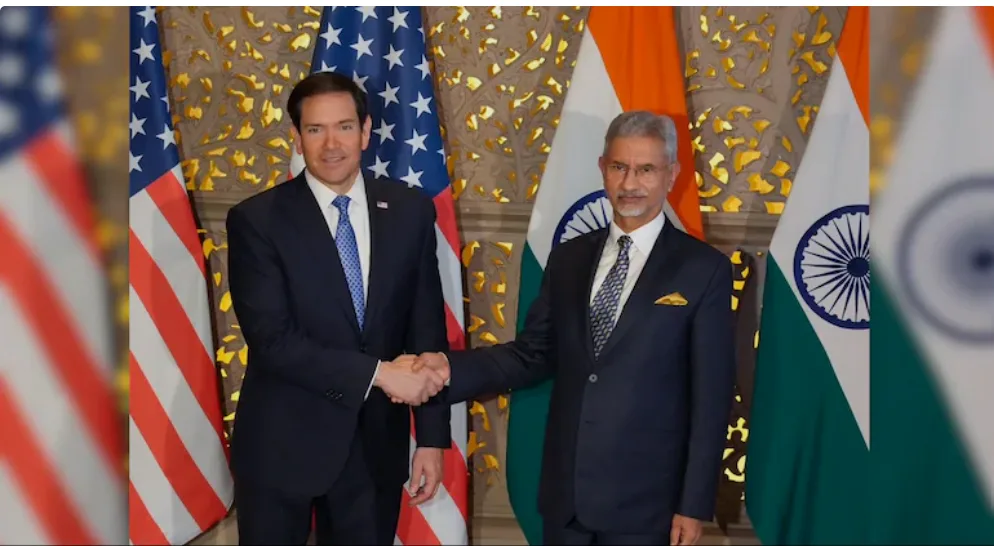
Marco Rubio says India and US share extraordinary alignment on key issues
US Secretary of State Marco Rubio said India and the United States share an extraordinary alignment on core issues, even though disagreements between the two countries may arise.

Punjab strike hits public services as 3 lakh employees and roadways workers protest

Two election commissioners complained against senior poll officer, RTI reveals

Om Prakash Mathur sworn in as Keralam Governor

PM Modi to inaugurate Rs 169-crore RBI data centre in Odisha on October 25

Delhi High Court rejects Neha Bora’s plea against peace bond notice

MEA responds after ITBP chief flags ongoing face-offs with China in Arunachal
Delhi High Court rejects Neha Bora’s plea against peace bond notice
PM Modi to inaugurate Rs 169-crore RBI data centre in Odisha on October 25
Om Prakash Mathur sworn in as Keralam Governor
Two election commissioners complained against senior poll officer, RTI reveals

Afghan Men Try To Hang With The Jet Engine Of The Aircraft in Kabul- Afghanistan News – Kabul News
Trending Top 10 News: 10000 Crore Fine on Flipkart, Apple to Launch Unique Feature, Hdfc Bank Job Ad

Trending Top 10 News: Nokia 6310, Apple sales, Bachpan ka Pyar Video Kid, Dainik Bhaskar IT Raid

Trending Top 10 News: Canada bans Indian flights, Rain in Delhi NCR, AIMIM Twitter hacked, Raj Kundra case

Trending Top 10 News: Shein India, Apple New Service, Pocket Oxygen, Oppo Launched New Phone
-
 India News19 hours ago
Punjab strike hits public services as 3 lakh employees and roadways workers protest
-
 India News19 hours ago
Two election commissioners complained against senior poll officer, RTI reveals
-
 India News8 hours ago
Om Prakash Mathur sworn in as Keralam Governor
-
 India News7 hours ago
PM Modi to inaugurate Rs 169-crore RBI data centre in Odisha on October 25
-
 India News6 hours ago
Delhi High Court rejects Neha Bora’s plea against peace bond notice
-
 India News6 hours ago
MEA responds after ITBP chief flags ongoing face-offs with China in Arunachal
