English हिन्दी
Connect with us

Latest world news

May 9 violence: Former Pakistan PM Imran Khan charged with criminal conspiracy

Khan is charged with storming the city’s Askari Tower and Lahore Corps Commander House on May 9 along with many PTI leaders and employees.

Published

on

Former Pakistan PM Imran Khan

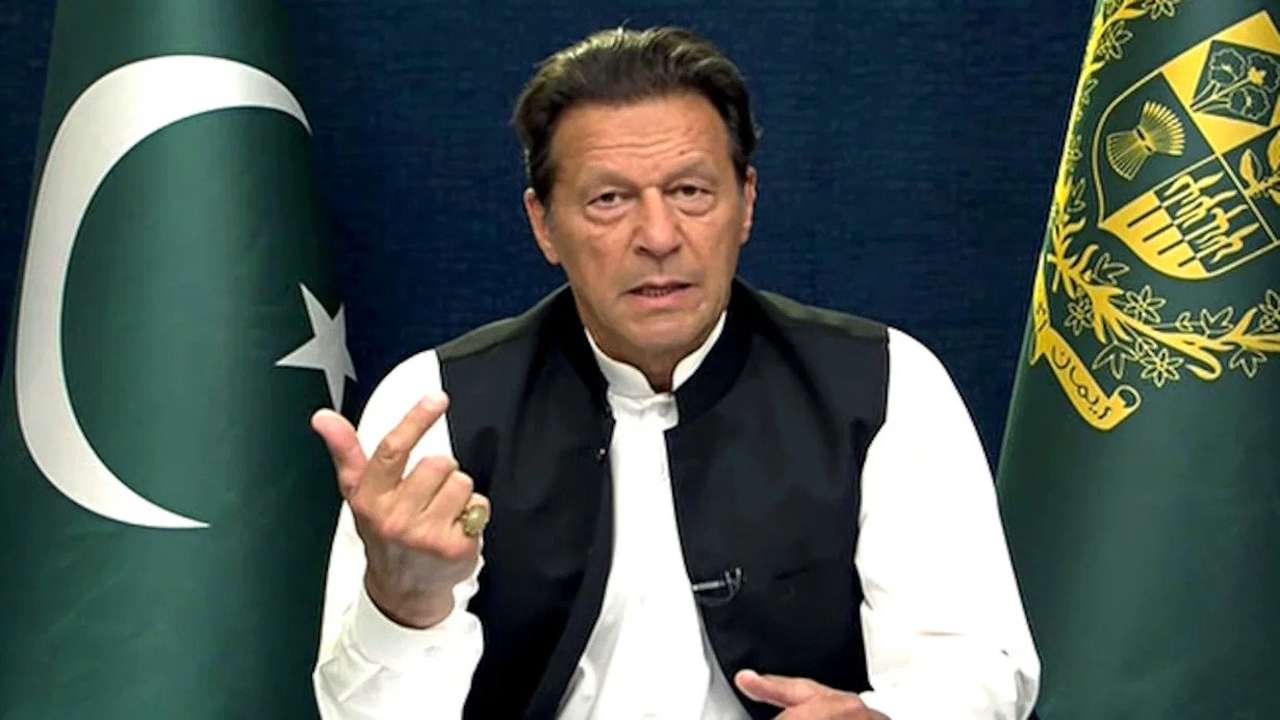
Former Pakistan Prime Minister Imran Khan has been accused of masterminding the attack on army sites and encouraging the populace to mutiny, a charge that carries a possible sentence of the death penalty, a senior Punjab Police official said on Wednesday.

Following Khan’s May 9 arrest by the paramilitary Rangers in a corruption case, Pakistan saw widespread anti-government demonstrations on a large scale. Later, 70-year-old Khan was released on bond.

During the riots, several of military facilities and government structures, including the military headquarters in Rawalpindi, were destroyed or set on fire. More than 100 police and other security agency vehicles caught fire.

Khan is charged with storming the city’s Askari Tower and Lahore Corps Commander House on May 9 along with many PTI leaders and employees.
Anoosh Masood, a senior investigating officer with the Lahore police, announced at a press conference that Khan and other PTI leaders and employees have been charged with criminal conspiracy for encouraging supporters to destroy military and government facilities on May 9.

The PTI chairman was masterminding the attacks on military posts and instigating people to violence, according to the police investigation into the events of May 9 in Lahore, she claimed.

Along with violating Section 120-B, Khan and others will also be held accountable for nine more offences, including inciting riots, encouraging mutiny, and attempting to wage war against Pakistan. The police detectives and prosecutors have filed a challan for the case, which will be delivered to the Anti-Terrorism Court Lahore, Masood added.

Since August 5, 2023, Khan has been detained in the Punjab province’s Attock Jail. He was detained in connection with the Toshakhana (gifts) case, and a three-year sentence was subsequently imposed. After the higher court postponed the judgement, he was later given bail in the case. He was detained once more under the Official Secrets Act in the cypher case, nevertheless.

Khan has applied for post-arrest bail in the cypher case before the Islamabad High Court (IHC).

Latest world news

S Jaishankar calls Pakistan a “serial practitioner of terrorism” at UN

S Jaishankar criticised Pakistan at the UN General Assembly, referring to a “serial practitioner of terrorism” and warning against attempts to normalise terrorism.

Published

on

S Jayshankar

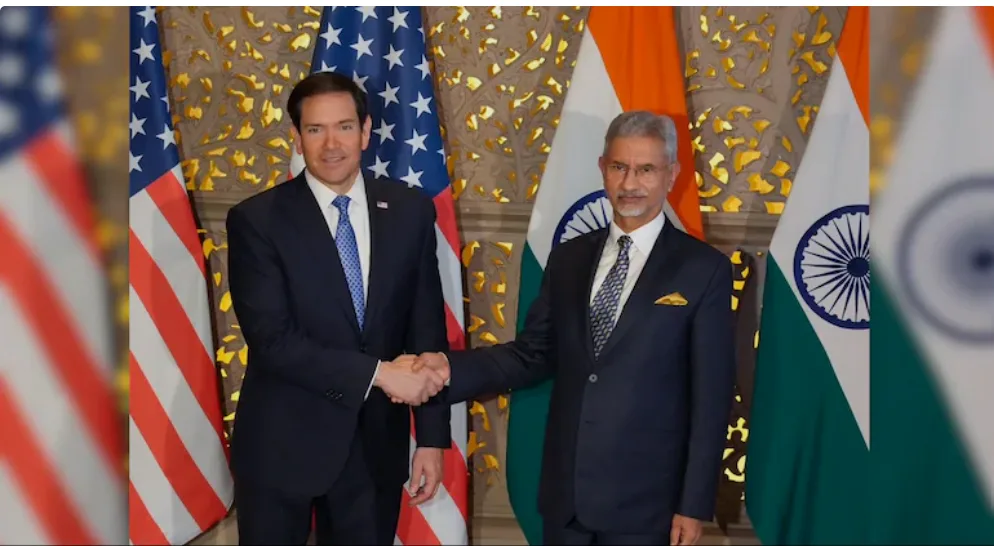
External Affairs Minister S Jaishankar criticised Pakistan during his address to the 81st session of the United Nations General Assembly in New York, saying that a “serial practitioner of terrorism” had misrepresented facts and that arguments were being made to normalise terrorism. 

Jaishankar’s remarks came a day after Pakistan Prime Minister Shehbaz Sharif addressed the UN General Assembly and spoke about the 2025 military confrontation between India and Pakistan.

Jaishankar’s message to Pakistan

Referring to Pakistan without naming it directly in that remark, Jaishankar said a “serial practitioner of terrorism” had misrepresented facts before the UN General Assembly.

He said arguments were being made to normalise terrorism and claim immunity from its consequences, adding that such an approach would not stand. 

Jaishankar reiterated India’s position that the country would exercise its right to defend itself against terrorism.

He also said that friendship and goodwill could not coexist with terrorism and that understandings based on such circumstances would naturally be called into question. 

“It is for the perpetrator of terrorism to mend its ways,” Jaishankar said.

India stresses zero tolerance on terrorism

Jaishankar described terrorism as a persistent threat to peace and called for governments involved in cross-border terrorism to be held accountable.

He also stressed that there should be no dilution in India’s zero-tolerance approach towards terrorism and particularly called for greater attention to its financial aspects.

His remarks came a day after Pakistan Prime Minister Shehbaz Sharif referred to the 2025 India-Pakistan military confrontation during his UN General Assembly address. 

Jaishankar backs two-state solution for Palestine

During his UN address, Jaishankar also spoke about the situation in West Asia and said India was prepared to contribute to efforts addressing food and energy security amid continuing tensions and violence.

On the Palestine issue, he reiterated India’s longstanding support for a two-state solution.

Jaishankar said India was also contributing humanitarian assistance and relief efforts for the Palestinian people.

He also warned about continuing threats and pressures around the world and stressed the need for greater stability, security and predictability.

Continue Reading

Latest world news

Trump rejects Iran’s 7-day peace plan, says deal can come after US polls

US President Donald Trump rejected Iran’s seven-day proposal to end hostilities and indicated that a deal could come after the US midterm elections in November.

Published

on

Donald Trump

US President Donald Trump has rejected Iran’s latest proposal aimed at bringing an end to the ongoing conflict, while indicating that a possible agreement could come after the US midterm elections in November.

Iran had proposed a seven-day framework under which hostilities could be brought to an end, the Strait of Hormuz could be reopened and negotiations over its nuclear programme could resume.

Iran’s seven-day proposal

Iranian Foreign Minister Abbas Araghchi said Tehran had put forward the proposal through intermediaries. Under the plan, the Strait of Hormuz would be reopened by the end of the seventh day if specified conditions were met, while broader nuclear discussions would restart.

The proposal was based largely on an earlier understanding reached between Washington and Tehran, but Iran sought to implement the latest framework much faster. The earlier arrangement had provided a longer period for negotiations.

The Strait of Hormuz is a strategically important waterway for global energy shipments, making its reopening a key element of any effort to ease the wider conflict.

Trump points to US midterm elections

Trump, speaking at the United Nations, showed no indication that he was ready to immediately resume negotiations on the terms proposed by Tehran.

He called for the economic isolation of Iran and said he believed a deal could be reached after the US midterm elections in November. Trump also said Iran was waiting to see how he performed in the midterm elections.

The remarks came as Iranian officials signalled that they remained open to diplomacy and described the UN General Assembly as an opportunity to revive negotiations.

Nuclear talks remain part of Iran proposal

Iran’s latest plan links the easing of hostilities with the resumption of negotiations over its nuclear programme.

The proposal follows the collapse of an earlier US-Iran arrangement. According to reporting on the latest proposal, the new framework is intended to compress the timeline for implementing commitments that had previously been discussed by the two sides.

For now, Trump’s remarks indicate that Washington is not accepting Tehran’s seven-day framework as presented, while Iran continues to put diplomacy and negotiations forward as part of its proposal.

Continue Reading

Latest world news

Iranian President Pezeshkian at UN says Iranians have been victims of US terrorism

Iranian President Masoud Pezeshkian said at the UN General Assembly that Iranians had been victims of US terrorism and insisted that Iran had acted in self-defence.

Published

on

Iranian President Masoud Pezeshkian accused the United States of subjecting Iranians to what he described as terrorism while addressing the United Nations General Assembly on Wednesday.

Pezeshkian said Iran had defended itself against attacks and rejected the characterisation of the country as a terrorist actor. His remarks came during a rare wartime appearance at the UN as tensions between Iran and the United States remain high.

Pezeshkian accuses US and Israel of attacks

Speaking at the General Assembly, Pezeshkian said Iranian civilians had been targeted by attacks and described the actions against his country as aggression.

“We have only defended ourselves. We are not terrorists,” he said, according to the report.

Pezeshkian also accused the United States and Israel of attacking Iran, while maintaining that Tehran’s response was an act of self-defence.

The Iranian president displayed photographs of former Supreme Leader Ali Khamenei and more than 150 schoolchildren who, according to his account, were killed during the early days of the conflict.

Iran’s message at the UN

Pezeshkian’s address came against the backdrop of the ongoing conflict between Iran and the United States and heightened tensions in the region.

Iranian officials had indicated ahead of the UN visit that they intended to highlight what Tehran considers attacks against its people and raise concerns over the international response to the conflict.

The Iranian delegation’s visit to New York also comes amid restrictions imposed by the United States on the delegation’s movement and other aspects of its stay, according to reporting ahead of the address.

Pezeshkian says Iran defended itself

Pezeshkian’s central message at the UN was that Iran’s military actions should be viewed as a response to attacks rather than terrorism.

His description of the conflict and the allegations against the United States and Israel represent the Iranian government’s position. They should therefore be attributed to Pezeshkian rather than presented as independently established facts.

Continue Reading

Trending

© Copyright 2022 APNLIVE.com