
Latest world news
Pakistan: PPP-ruled Sindh tries to distance itself from Nawaz son-in-law arrest
The political situation in Pakistan is getting stranger by the day with a regional police chief said to have been kidnapped by federal law enforcement just to okay the arrest of exiled Pakistan Muslim League-Nawaz chief Nawaz Sharif’s son-in-law and party worker Safdar Awan.


The political situation in Pakistan is getting stranger by the day with a regional police chief said to have been kidnapped by federal law enforcement just to okay the arrest of exiled Pakistan Muslim League-Nawaz chief Nawaz Sharif’s son-in-law and party worker Safdar Awan.
This bewildering claim has been made by Pakistan People’s Party spokesman Mustafa Khokhar whose party rules the Sindh province in a bid to distance the PPP from Awan’s arrest. While Pakistan Army chief General Qamar Bajwa has ordered an inquiry into the reported kidnapping of Sindh Inspector General Mushtaq Mahar, the Imran Khan government has not reacted to the outcry.
The episode comes on the heels of Sunday’s tens of thousands-strong protests in Karachi against Imran Khan demanding him to step down. Nine major opposition parties have come together under the joint platform of the Pakistan Democratic Movement (PDM) last month to begin a nationwide agitation against the government.

With the worries over Pakistan’s economic conditions getting dire and double-digit inflation, the opposition says Khan has failed the nation on all fronts from the economy to governance. Nawaz Sharif has himself called Imran’s election in 2018 into question, saying he had been selected by the military as opposed to being elected by the people in the rigged election.
Maryam Nawaz, the daughter and political heir of Nawaz Sharif, said that if the Imran Khan government was allowed to complete its term, it would destroy Pakistan. She said protesters have come together to protect and rescue the people of Pakistan.
Addressing the rally via video link from London, Nawaz Sharif accused Pakistan Army chief General Bajwa of orchestrating his ouster in 2017, saying the corruption charges brought against him were concocted. The Pakistan army is yet to respond to Nawaz Sharif’s accusation.
Read Also: End SARS Protests: Why tens of thousands of Nigerians have been taking to the streets?
Sharif was sacked by the Pakistan Supreme Court in 2017 on corruption charges and left for London last November for medical treatment. The next general election is scheduled in 2023.








Latest world news
Magnitude 7 earthquake strikes Tibet after floods
A magnitude 7 earthquake struck northern Tibet on Thursday, October 22. The tremor came weeks after deadly flash floods and landslides hit the mountainous region near the Nepal-China border. Initial reports did not confirm casualties or damage from the earthquake.


Latest world news
Macron rejects Trump’s immigration claims over France riots
French President Emmanuel Macron criticised Donald Trump and other foreign leaders over their comments on France’s recent unrest. Macron rejected claims that the country was being overrun by migrants and Islamists, calling such assertions false.

Latest world news
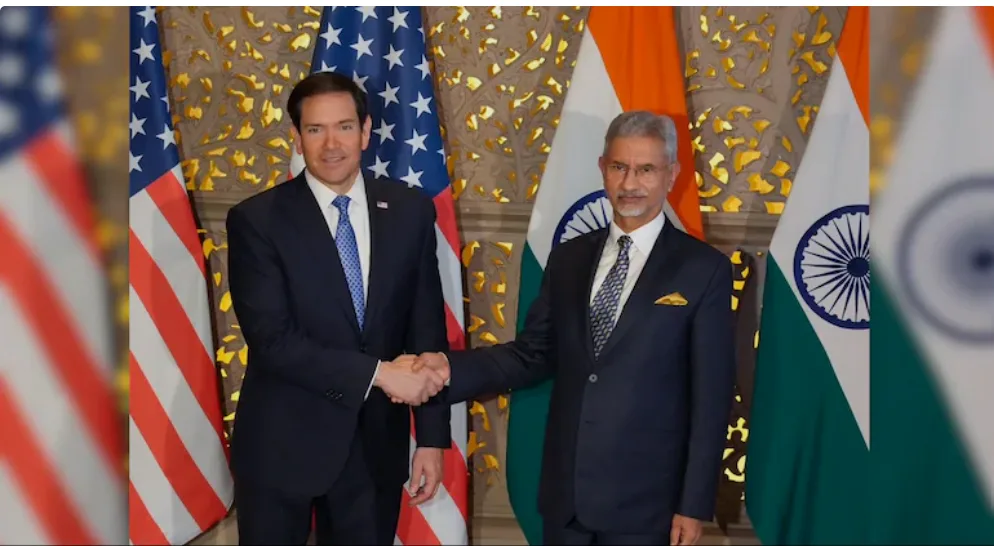
Marco Rubio says India and US share extraordinary alignment on key issues
US Secretary of State Marco Rubio said India and the United States share an extraordinary alignment on core issues, even though disagreements between the two countries may arise.

Punjab strike hits public services as 3 lakh employees and roadways workers protest

Two election commissioners complained against senior poll officer, RTI reveals

Om Prakash Mathur sworn in as Keralam Governor

PM Modi to inaugurate Rs 169-crore RBI data centre in Odisha on October 25

Delhi High Court rejects Neha Bora’s plea against peace bond notice

MEA responds after ITBP chief flags ongoing face-offs with China in Arunachal
Delhi High Court rejects Neha Bora’s plea against peace bond notice
PM Modi to inaugurate Rs 169-crore RBI data centre in Odisha on October 25
Om Prakash Mathur sworn in as Keralam Governor
Two election commissioners complained against senior poll officer, RTI reveals

Afghan Men Try To Hang With The Jet Engine Of The Aircraft in Kabul- Afghanistan News – Kabul News
Trending Top 10 News: 10000 Crore Fine on Flipkart, Apple to Launch Unique Feature, Hdfc Bank Job Ad

Trending Top 10 News: Nokia 6310, Apple sales, Bachpan ka Pyar Video Kid, Dainik Bhaskar IT Raid

Trending Top 10 News: Canada bans Indian flights, Rain in Delhi NCR, AIMIM Twitter hacked, Raj Kundra case

Trending Top 10 News: Shein India, Apple New Service, Pocket Oxygen, Oppo Launched New Phone
-
 India News18 hours ago
Punjab strike hits public services as 3 lakh employees and roadways workers protest
-
 India News18 hours ago
Two election commissioners complained against senior poll officer, RTI reveals
-
 India News7 hours ago
Om Prakash Mathur sworn in as Keralam Governor
-
 India News6 hours ago
PM Modi to inaugurate Rs 169-crore RBI data centre in Odisha on October 25
-
 India News5 hours ago
Delhi High Court rejects Neha Bora’s plea against peace bond notice
-
 India News5 hours ago
MEA responds after ITBP chief flags ongoing face-offs with China in Arunachal
