English हिन्दी
Connect with us

Latest world news

Pakistan and Saudi Arabia sign mutual defence pact, India responds cautiously

Published

on

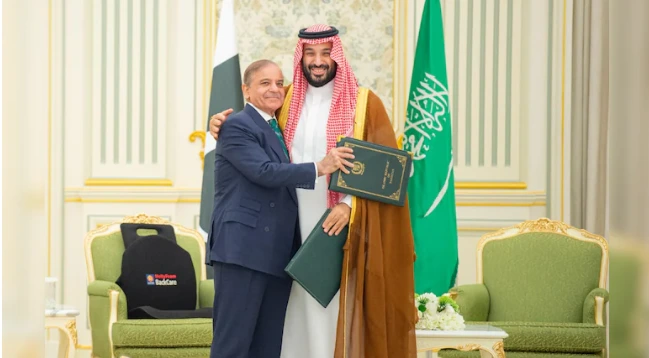
Saudi Arabia and Pakistan have signed a strategic mutual defence agreement during Prime Minister Shehbaz Sharif’s state visit to Riyadh, formalising decades of military cooperation between the two nations. A key clause of the pact declares that “any aggression against either country shall be considered an aggression against both.”

The signing took place at the Al-Yamamah Palace, where Sharif met Crown Prince Mohammed bin Salman. Pakistan Army Chief, Field Marshal Asim Munir, was also present at the meeting.

India’s reaction

India, reacting to the development, said it was aware of the long-standing security arrangement between Riyadh and Islamabad. The Ministry of External Affairs (MEA) issued a statement noting that New Delhi would assess the implications for national security and regional stability.

“We have seen reports of the signing of a strategic mutual defence pact between Saudi Arabia and Pakistan. The Government was aware that this development, which formalises a long-standing arrangement between the two countries, had been under consideration,” the MEA said.

It added: “We will study the implications of this development for our national security as well as for regional and global stability. The Government remains committed to protecting India’s national interests and ensuring comprehensive national security in all domains.”

A historic partnership

According to the joint statement, the pact builds on an eight-decade-long relationship rooted in “brotherhood, Islamic solidarity, shared strategic interests and close defence cooperation.” Both countries stressed that the agreement aims to enhance defence ties, strengthen deterrence and contribute to regional peace.

“This agreement reflects the shared commitment of both nations to enhance their security and to achieving peace in the region and the world,” the statement said.

Broader regional context

The agreement comes at a sensitive time when India-Pakistan relations remain strained following the Pahalgam terror attack and New Delhi’s retaliatory Operation Sindoor.

Saudi Arabia had earlier condemned the Pahalgam attack during Prime Minister Narendra Modi’s visit to Riyadh in April this year. In a joint statement, India and Saudi Arabia had “called on all States to reject the use of terrorism against other countries, dismantle terrorism infrastructure where it exists, and bring perpetrators of terrorism to justice swiftly.”

India-Saudi ties on an upward track

Despite Pakistan’s closer defence ties with Riyadh, India has steadily expanded its own strategic and economic partnership with Saudi Arabia. New Delhi is now the Kingdom’s second-largest trading partner.

Prime Minister Modi has visited Saudi Arabia three times, and in 2016 he was awarded the country’s highest civilian honour, the King Abdulaziz Sash. The two sides continue to deepen cooperation in energy, infrastructure, and counter-terrorism.

Continue Reading

Latest world news

Trump may visit India next year as US envoy calls New Delhi Washington’s most essential partner

The US has described India as its most essential global partner, with ambassador-designate Sergio Gor indicating a possible visit by President Donald Trump next year.

Published

on

trump modi

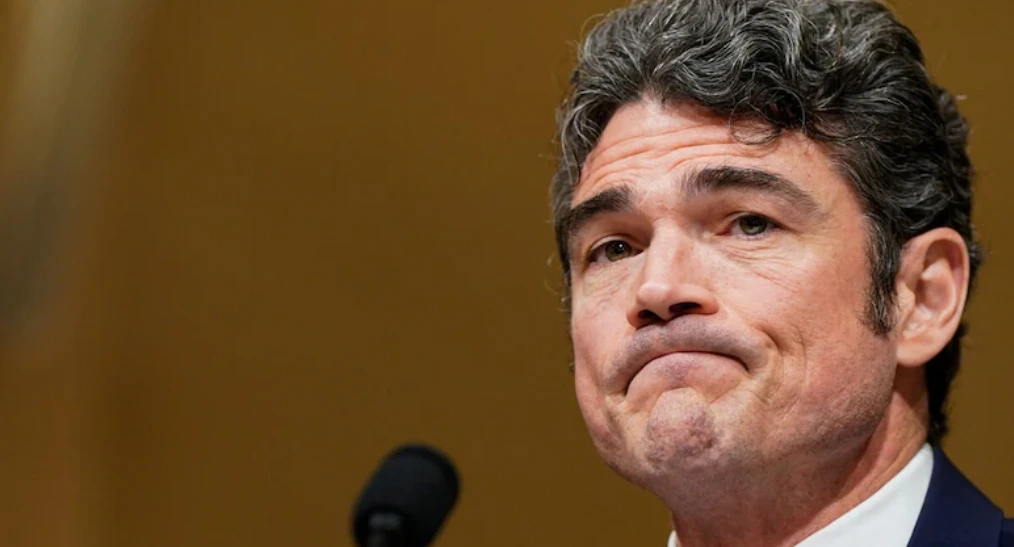
The United States has said that no country is more essential to its global interests than India, with US ambassador-designate Sergio Gor indicating that President Donald Trump may visit India within the next year or two.

Speaking at the US Embassy in New Delhi, Gor highlighted the close personal rapport between Trump and Prime Minister Narendra Modi, describing their relationship as genuine and resilient even in times of disagreement.

India-US ties anchored at the highest level

Gor said the partnership between India and the United States is rooted not only in shared strategic interests but also in strong leadership-level engagement.

He noted that while differences may arise between the two countries, they are resolved through dialogue, reflecting the maturity of the relationship. According to him, India’s scale and global standing make bilateral cooperation both complex and crucial.

Trade talks to resume from January 12

The ambassador-designate confirmed that the next round of India-US trade negotiations will begin on Tuesday, January 12. Acknowledging the challenges involved, Gor said both sides remain committed to reaching an agreement.

Trade, he said, is a vital pillar of bilateral ties, alongside cooperation in areas such as security, counter-terrorism, energy, technology, education and health.

Trump-Modi friendship described as ‘real’

Gor reiterated that he has personally witnessed the bond between Trump and Modi during international engagements, stressing that the friendship goes beyond diplomacy.

Recalling conversations with the US President, he said Trump often speaks positively about his previous India visit and his relationship with the Indian Prime Minister.

Possible Trump visit to India

Indicating a potential presidential visit, Gor said Trump could travel to India in the next one or two years. He described his own appointment as an effort to elevate the bilateral partnership to a new level, calling the India-US relationship a meeting point of the world’s oldest and largest democracies.

India to join Pax Silica alliance

Gor also announced that India will be invited to join the US-led Pax Silica alliance as a full member next month.

The initiative aims to develop a secure, resilient and innovation-driven global silicon supply chain, reinforcing India’s role in strategic technology partnerships.

Continue Reading

Latest world news

Trump says Iran wants talks amid protests, warns US may act before meeting

Donald Trump claims Iran’s leadership wants negotiations amid mass protests, but says the US may take action before any talks are held.

Published

on

US President Donald Trump has claimed that Iran’s leadership has reached out to his administration seeking negotiations, even as large-scale anti-government protests continue across the country and Washington signals possible military action.

Speaking to reporters aboard Air Force One, Trump said Iranian leaders had contacted him after his recent warnings. “The leaders of Iran called yesterday,” he said, adding that a meeting was being planned. However, he cautioned that the United States “may have to act before a meeting.”

The remarks come amid reports of deaths during protests in several Iranian cities. Trump accused Iran’s rulers of maintaining control through force, saying there were indications that people had been killed who “aren’t supposed to be killed.”

He said the US military was closely monitoring developments and that senior officials were reviewing what he described as “very strong options.” Trump said he was receiving hourly briefings on the situation and that a decision would be made after assessing all factors.

When asked if Iran had crossed a red line, Trump declined to provide operational details, saying he would not disclose how or where the US might act. “We’re gonna make a determination,” he said.

Addressing reports of fatalities among protesters, Trump suggested that some deaths occurred due to crowd stampedes, while others involved gunfire. He did not provide specific figures or details.

Trump also issued a strong warning against any retaliation by Iran or its allied groups. He said any such response would be met with unprecedented force, stating that the US would strike “at levels that they’ve never been hit before.”

The US President said Iran should already be aware of Washington’s resolve, referring to previous American actions against high-profile militant leaders and what he described as the elimination of Iran’s nuclear threat.

Trump did not clarify whether the US had coordinated with allies on a potential response or outline a timeline for further action.

Iran has witnessed repeated waves of unrest in recent weeks, with thousands of people participating in protests against the current regime in cities across the country.

Continue Reading

Latest world news

Trump again threatens forceful takeover of Greenland citing US security concerns

Donald Trump has again suggested the US could use force to take control of Greenland, brushing aside Denmark’s sovereignty and linking the move to Arctic security concerns.

Published

on

donald trump

US President Donald Trump has once again raised the possibility of using force to take control of Greenland, dismissing Denmark’s sovereignty over the autonomous Arctic island and framing the issue as a matter of US national security.

Speaking at a White House meeting with oil executives on Friday, Trump said the United States would act on Greenland “whether they like it or not,” reiterating his long-standing interest in acquiring the mineral-rich territory.

“I would like to make a deal, the easy way. But if we don’t do it the easy way, we’re going to do it the hard way,” Trump said when asked about Greenland.

Trump links Greenland control to Arctic security

Trump argued that Washington cannot allow rival powers to gain a foothold in Greenland, citing increased military activity by Russia and China in the Arctic region.

“We’re not going to have Russia or China occupy Greenland. That’s what they’re going to do if we don’t,” he said, adding that the US would act either “the nice way or the more difficult way.”

While Russia and China have stepped up their presence in the Arctic in recent years, neither country has made any territorial claim over Greenland.

Denmark and allies react with concern

Trump’s remarks have sparked strong reactions in Denmark and among European allies. Denmark, which governs Greenland as an autonomous territory, has expressed shock over the repeated threats.

Danish Prime Minister Mette Frederiksen warned that any invasion of Greenland would bring an end to “everything,” referring to NATO and the post-World War II security framework.

The United States already operates a military base in Greenland, underscoring its existing strategic presence in the region.

Trump dismisses Danish sovereignty claims

Despite the backlash, Trump played down Denmark’s concerns and questioned its historical claim over the island.

“I’m a fan of Denmark, too,” he said, adding that the country had been “very nice” to him. However, he remarked that Denmark’s historical presence did not automatically translate into ownership of Greenland.

“The fact that they had a boat land there 500 years ago doesn’t mean that they own the land,” Trump said.

Meanwhile, US Secretary of State Marco Rubio is scheduled to meet Denmark’s foreign minister and representatives from Greenland next week, as diplomatic tensions over the issue continue.

Continue Reading

Trending

© Copyright 2022 APNLIVE.com