English हिन्दी
Connect with us

Latest world news

PLO Central Council: Palestine to revoke Israel’s recognition

Published

on

PLO Central Council: Palestine to revoke Israel’s recognition

In a major setback to the US President Donald Trump’s Jerusalem move, the Palestine Liberation Organisation’s (PLO) Central Council has, on Monday, recommended revoking recognition of Israel until the latter recognises the State of Palestine in its 1967 borders, with East Jerusalem as its capital. The Council is the second-highest Palestinian decision-making body.

According to official Wafa news agency, PLO has decided that the transitional period stipulated in the agreements signed in Oslo, Cairo and Washington, with its obligation “no longer stand”.

Central Council’s Chairman Salim Al-Za’noun called on the international community to “shoulder its responsibilities on the basis of the relevant UN resolutions to end the Israeli occupation and enable the State of Palestine to achieve its independence and to exercise its full sovereignty over its territory, including in East Jerusalem as its capital and on the borders of June 4, 1967.”

The 28th ordinary session of the Central Council concluded its two day meeting in Ramallah on Monday. The sources in Ramallah say that a total of 87 out of 109 members attended the session, while a number of them were unable to attend “because they were arrested or prevented by Israel”.
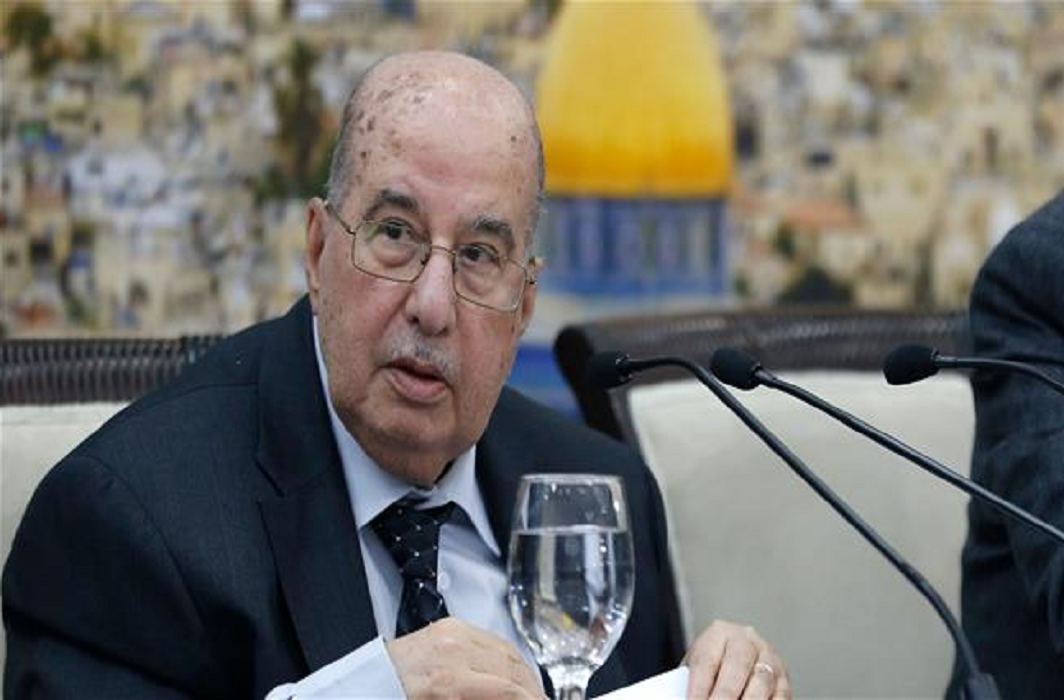
PLO Central Council: Palestine to revoke Israel’s recognition

The Palestinian powerful body has also decided to renew its decision to “stop security coordination [with Israel] in all its forms” and called on all Arab states “to sever all ties with any state that recognises Jerusalem as the capital of Israel and transfers its embassy to it”.

This resolution is considered to be a major setback to Saudi Arabia and other GCC countries, the close US allies who were allegedly involved in regular hobnobbing with Israel. Donald Trump has recently recognized Jerusalem as the capital of Israel and asked Department of State to start process of shifting its embassy from Tel Aviv to Jerusalem.

Breaking with decades of US policy that favoured a two-state solution, Trump’s declaration dealt a blow to the Palestinian leadership, which for more than two decades has failed to establish a state on the West Bank, Gaza Strip and East Jerusalem.

On Sunday, the first day of the two day conference, Mehmoud Abbas, President of Palestinian Authority had denounced Trump’s policy towards Israel-Palestine conflict as the “slap of the century”. Expressing fury of over Trump’s Jerusalem move, Abbas was quoted saying “shame on you”. He said “Jerusalem was removed from the table by a tweet of Mr. Trump”.

In 1993, there were exchange of letters between PLO Chief Yasser Arafat and Israeli PM Yitzhak Rabin of mutually recognizing each other. Arafat’s letter dated September 9, 1993 said, “PLO recognizes the right of the State of Israel to exist in peace and security”. He had also renounced use of terrorism and other acts of violence during the peace negotiations.

On the same day Yitzhak Rabin reciprocated saying, “in the light of PLO commitments…the government of Israel has decided to recognize the PLO as representative of the Palestinian people and commence negotiations with PLO within the Middle East peace process.”

However, nothing has been achieved during the US mediated peace process since 1993.
Latest world news

US hits Iranian missile sites and mine-laying boats near Strait of Hormuz amid peace talks

US Central Command executed targeted strikes against Iranian missile launch sites and mine-laying vessels near Bandar Abbas, testing a fragile ceasefire even as high-stakes diplomatic talks continue in the region.

Published

on

In a major development testing a fragile regional ceasefire, the United States military carried out targeted strikes in southern Iran on Monday. The operation hit missile launch sites and vessels allegedly attempting to lay mines near the crucial Strait of Hormuz, according to statements from the US Central Command (CENTCOM).

The military action took place near Bandar Abbas, a prominent southern port city hosting a primary Iranian naval base. Media reporting indicated that explosions were heard across multiple coastal locations, including Sirik and Jask.

Focus on ‘Self-Defense’ Amid Active Ceasefire

A spokesperson for CENTCOM, Capt. Tim Hawkins, confirmed that the engagement was defensive in nature. “US forces conducted self-defense strikes in southern Iran today to protect our troops from threats posed by Iranian forces,” Hawkins stated. He noted that the operational targets included active missile launch sites alongside Iranian boats attempting to emplace naval mines. Despite the escalation, CENTCOM emphasized that it continues to exercise restraint under the parameters of the ongoing ceasefire brokered in early April.

According to media reports, the tactical response was triggered when two Islamic Revolution Guard Corps (IRGC) boats were detected laying mines in the strategic shipping lane. Additionally, a surface-to-air missile site reportedly targeted American warplanes, prompting US forces to neutralize both the vessels and the missile installations. Media channels citing local updates indicated that four individuals were killed in the strikes, though the complete casualty figures remain unverified.

Diplomatic Dialogue Continues in Parallel

The strikes coincide with a critical phase of diplomatic negotiations aimed at extending the current truce. Top Iranian negotiators traveled to Qatar early this week to discuss a potential 60-day extension of the ceasefire, alongside provisions to keep the Strait of Hormuz fully operational for global trade.

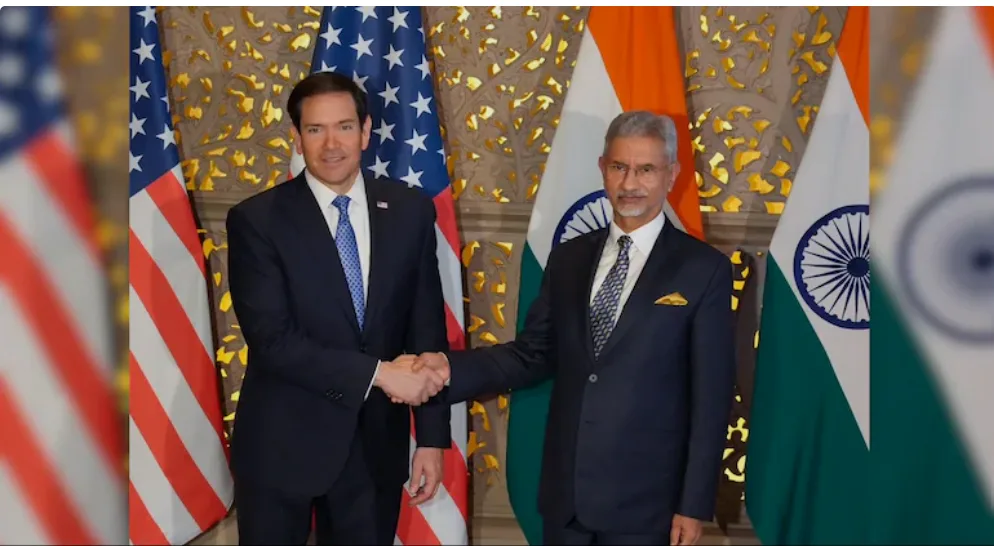
US officials maintain that the military action does not signal an end to the active truce. A senior administration source clarified that the specific operations are “over for now”. US Secretary of State Marco Rubio, speaking from India, affirmed that diplomatic channels remain open and active. Rubio stated that intensive language discussions regarding the initial documents are ongoing, reiterating that the opening of the strategic strait remains a core objective.

Meanwhile, political leaders in Washington have separately reiterated demands for the secured disposal or international transfer of enriched uranium stockpiles as part of any comprehensive long-term agreement.

Continue Reading

Latest world news

US announces new America First visa schedule to boost business ties with India

During his official state visit to New Delhi, US Secretary of State Marco Rubio announced a new America First visa schedule designed to prioritise business professionals and boost bilateral trade efficiency.

Published

on

In a significant development aimed at strengthening bilateral cooperation, the United States has introduced a new “America First” visa schedule. The policy update was announced by US Secretary of State Marco Rubio during his official four-day visit to India. The new schedule is specifically designed to prioritise business professionals who play a key role in fortifying trade and strategic connections between the two nations.

Speaking about the initiative in the national capital, the top US diplomat clarified that the updated framework will not only assist visa applicants but will also significantly enhance operational productivity for the diplomatic mission. “We’re introducing a new America First visa schedule that prioritises business professionals that strengthen these ties,” Rubio stated. He added that the arrangement will enable the system to process applications with greater accuracy, speed, and efficiency.

Focus on Indo-Pacific and regional security

The announcement coincided with high-level discussions between the visiting diplomat and Prime Minister Narendra Modi. The meeting, which lasted for over an hour, covered critical areas of bilateral interest, including trade, energy security, strategic technologies, defence cooperation, and the ongoing West Asia crisis. During the interaction, Rubio extended an official invitation from US President Donald Trump for PM Modi to visit the White House in the near future.

The US Secretary of State described the partnership between New Delhi and Washington as a foundational cornerstone of America’s overarching strategy for the Indo-Pacific region. Highlighting India’s central role, Rubio noted that his very first official engagement upon taking office was a meeting of the Quadrilateral Security Dialogue (Quad), emphasizing that hosting the upcoming foreign ministers’ meeting in India acts as a tangible sign of the deep commitment to this framework.

Clarification on immigration rules

Addressing separate concerns regarding recent shifts in American immigration policies, the top diplomat provided a crucial clarification regarding the new guidelines for permanent residency. Media reports had previously highlighted anxieties surrounding a newly instituted rule that requires many legal immigrants to exit the US and apply for green cards from their home countries.

Rubio explicitly stated to the media that these measures are universal regulatory updates rather than policy shifts targeted at any specific nation. He reassured that the rule is applicable globally to all international applicants and is not directed exclusively at Indian citizens.

The visit marks Rubio’s first official trip to India since assuming office. His comprehensive itinerary began in Kolkata and includes a scheduled bilateral dialogue with External Affairs Minister S Jaishankar, alongside participation in the Quad Foreign Ministers’ meeting alongside international counterparts.

Continue Reading

Latest world news

High stakes for India-US ties as top American diplomat arrives for critical bilateral talks

US Secretary of State Marco Rubio has arrived in India for a vital four-day tour aimed at reinforcing bilateral cooperation amid global energy challenges, tariff disputes, and shifting regional security dynamics.

Published

on

US Secretary of State Marco Rubio has landed in Kolkata to begin an extensive four-day diplomatic tour of India, marking his first official visit to the country since assuming office. The visit arrives at a crucial juncture for bilateral relations, with both nations navigating complex global alignments, ongoing geopolitical conflicts, and shifting economic dynamics.

Upon arriving in Kolkata, the top diplomat broke a 14-year hiatus since a US secretary of state last traveled to the eastern metropolis. Accompanied by his wife, Jeanette D. Rubio, and the US Ambassador to India, Sergio Gor, the delegation commenced the tour by visiting the Missionaries of Charity headquarters, the historical Mother House founded by Mother Teresa.

Strategic energy shifts and regional security on the table

The four-day visit carries elevated strategic significance as the two major global partners look to address critical geopolitical challenges. Headlining the bilateral talks are the economic ripples of the US-Iran war, particularly its immediate fallout on international energy security and commercial trade routes.

The energy partnership remains a key focal point. While India continues to procure substantial volumes of discounted Russian crude oil to stabilize its domestic market, Washington is actively attempting to diversify New Delhi’s energy footprint by expanding American liquefied natural gas (LNG) and crude exports to the South Asian nation. Additionally, the leadership will deliberate on resolving recent trade frictions arising from tariffs imposed by the US on Indian goods.

Strengthening the bilateral roadmap

Prior to starting his engagements, the Secretary of State underlined the strength of the relationship, characterizing India as an invaluable partner and ally with whom Washington shares a robust and extensive collaborative framework. The visit serves as a top-level initiative to stabilize and accelerate the momentum of the bilateral partnership, backed by the personal investment of both US President Donald Trump and Prime Minister Narendra Modi.

The diplomat’s packed itinerary includes a high-profile meeting with Prime Minister Narendra Modi, followed by extensive bilateral discussions with External Affairs Minister S. Jaishankar. Furthermore, the tour will culminate in New Delhi, where the Secretary of State will join regional partners for a meeting of the Quad foreign ministers. Cultural stops in Agra and Jaipur are also scheduled during the four-day visit.

Continue Reading

Trending

© Copyright 2022 APNLIVE.com