
Latest world news
Prince Alwaleed reaches home, will remain under house arrest


[vc_row][vc_column][vc_column_text]Settlement detail not known, authorities to gather $1000 bn in settlements
Prince Alwaleed bin Talal, one of the richest business tycoons of Saudi Arabia was released on Saturday after almost two-and-half months of detention after “settlement” with authorities. However, he will remain at home under guards’ eyes. Family has confirmed of his arrival at home.
Middle East Eye, quoting undisclosed sources reports that Prince Talal was released from Hotel Ritz-Carlton and arrived home. He was under detention under anti corruption purge along with over 200 princes and high ranking officials facing corruption charges since early November last year.
Informed sources have confirmed that still guards were surrounding his palace and he was being kept under house arrest.
The details of the settlement were unknown. Earlier reports said that he was asked to shell two-third of his assets to the government. The source said, “The attorney general this morning approved the settlement with Prince Al-Waleed bin Talal.”
On November 9, more than 200 influential people including princes and ranking officials were summoned for questioning, and most of them were detained in one of the most luxurious hotels Ritz-Carlton. The aim of the whole exercise was described for “rooting out corruption and reclaiming embezzled funds”.
Crown Prince Mohammed bin Salman who is known with acronym MbS is spearheading the unprecedented crackdown on corruption among members of the government and royal family as he consolidates grip on power in the country.
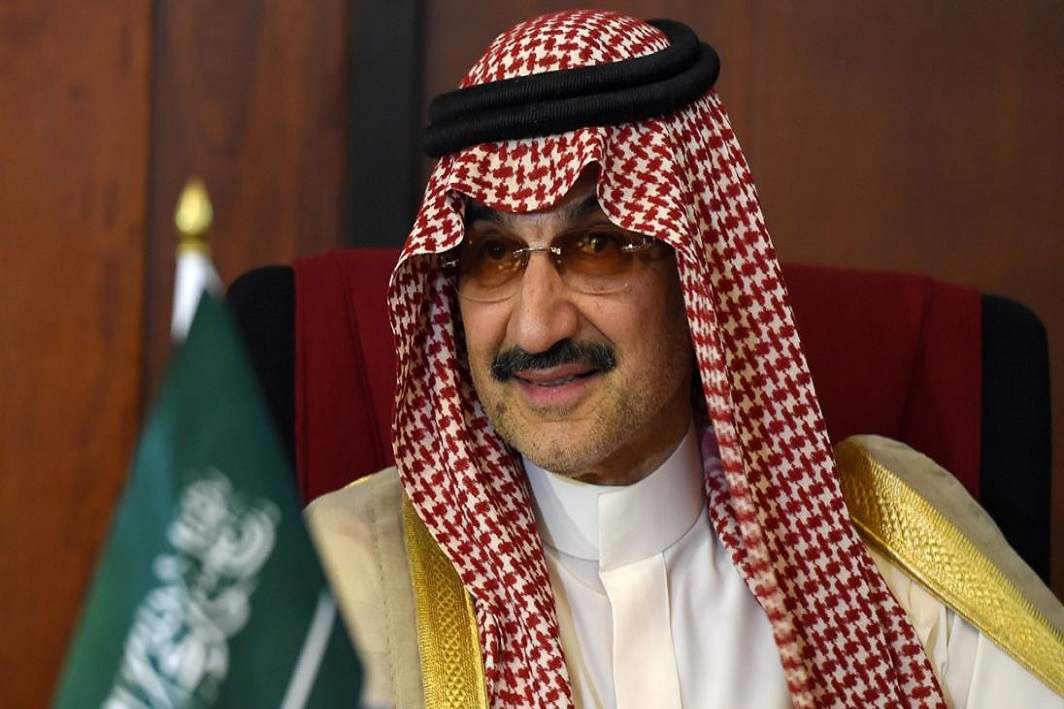 Alwaleed, one of the world’s richest men and owner of Kingdom Holding Company, was among 350 persons rounded in the crackdown. Reports say that most of them have been released after financial settlement with the kingdom.
None of the Saudi newspaper or news network has published report about Alwaleed release. However, information came out through the sources informing the details to foreign news reporters.
Earlier reports indicated that MbS was asking Alwaleed had been refusing MbS demand of giving -up ownership of the entire Kingdom Holding Company. If a settlement was not reached, Alwaleed was supposed to go through prosecution.
On Saturday, Alwaleed told Reuters on Saturday about his prospects of being released soon.
Earlier this week state news agency Al-Arabiya reported that “Only a couple of days till cases of corruption-related settlements are closed in preparation for referring remaining defendants to the public prosecution.” It confirmed that 95 people were still detained.
On Friday, the government released several detainees including Waleed al-Ibhrahim, head of the MBC news network, Khaled Tuwaijri, former chief of the Saudi royal court, and Turki bin Nasser, former head of the country’s meteorology agency. Earlier former National Guard chief Prince Miteb bin Abdullah was released after his “settlement” reportedly exceeding $1bn.
Saudi authorities consider they will be able to collect $100 billion from the detained who’s who of the country.
Finance Minister Mohammed al-Jadaan told Al Arabiya television in Davos on Wednesday that the “settlements” will help the government to finance a multi-million dollar package to help citizens cope with the rising cost of living.[/vc_column_text][/vc_column][/vc_row]






Latest world news
Magnitude 7 earthquake strikes Russia’s Kamchatka Peninsula
A magnitude 7 earthquake struck Russia’s Kamchatka Peninsula region on Friday. The initial report placed the earthquake at a depth of 140 kilometres.


Latest world news
S Jaishankar says India is a natural option for Russia amid Europe tensions
External Affairs Minister S Jaishankar said India remained a natural option for Russia as Moscow increasingly turned towards Asia amid strained relations with Europe. He highlighted the continuity of India-Russia ties and their significance for the balance of power in Asia.

Latest world news
Putin praises PM Modi, says he has very good ideas on Ukraine war
Russian President Vladimir Putin has praised Prime Minister Narendra Modi for repeatedly raising the need to end the Ukraine war, describing his ideas for a settlement as “very good”.


India-US trade deal first phase finalised, drafting underway

Election Commission orders voter roll revision in 17 states, UTs

Actor Imran Khan asked to leave India after CJP protest

Delhi Police offers 11-person limit for CJP’s Connaught Place protest

Mallikarjun Kharge’s ‘Your Friends’ jab at Rahul Gandhi over congress exits

Magnitude 7 earthquake strikes Russia’s Kamchatka Peninsula

Delhi deploys 25,000 personnel, installs CCTV cameras ahead of CJP march
Mallikarjun Kharge’s ‘Your Friends’ jab at Rahul Gandhi over congress exits
Delhi Police offers 11-person limit for CJP’s Connaught Place protest
Actor Imran Khan asked to leave India after CJP protest

Afghan Men Try To Hang With The Jet Engine Of The Aircraft in Kabul- Afghanistan News – Kabul News
Trending Top 10 News: 10000 Crore Fine on Flipkart, Apple to Launch Unique Feature, Hdfc Bank Job Ad

Trending Top 10 News: Nokia 6310, Apple sales, Bachpan ka Pyar Video Kid, Dainik Bhaskar IT Raid

Trending Top 10 News: Canada bans Indian flights, Rain in Delhi NCR, AIMIM Twitter hacked, Raj Kundra case

Trending Top 10 News: Shein India, Apple New Service, Pocket Oxygen, Oppo Launched New Phone
-
 India News23 hours ago
India-US trade deal first phase finalised, drafting underway
-
 India News21 hours ago
Election Commission orders voter roll revision in 17 states, UTs
-
 India News20 hours ago
Actor Imran Khan asked to leave India after CJP protest
-
 India News19 hours ago
Delhi Police offers 11-person limit for CJP’s Connaught Place protest
-
 India News8 hours ago
Mallikarjun Kharge’s ‘Your Friends’ jab at Rahul Gandhi over congress exits
-
 India News7 hours ago
Delhi deploys 25,000 personnel, installs CCTV cameras ahead of CJP march
-
 Latest world news7 hours ago
Magnitude 7 earthquake strikes Russia’s Kamchatka Peninsula
