
Latest world news
Saudi Extends Bail-Out- Package To Debt Ridden Pakistan


Imran Khan to mediate in Yemen War
Gulf crisis is being spilled over to Pakistan. Amidst Khashoggi murder allegations and faced with self-created Yemen crisis, Saudi Arabia has asked Pakistan Prime Minister Imran Khan to mediate to end Yemen conflict, triggered by Riyadh-led coalition in 2015, aimed to re-instate its favored President Abdrabbuh Mansur Hadi.
This was announced by not less than Pakistan’s Prime Minister Imran Khan, during his address to the nation on Wednesday evening, on his return from the Kingdom. He informed the nation of Saudi Arabia’s favor extending $ 6 billion bail-out package, a big relief for Pakistan.
The second major announcement he made was that cricket-turned politician would mediate between Saudi Arabia and Yemen to end their ongoing conflict. The Houthi Ansarullah fighters, who control most of the country’s territory, have been retaliating with missiles and drones for attacking Kingdom’s border areas as well as capital Riyadh during last few months.
Read More:- Pakistan Denies Saudi Arabia Investment in CPEC
He said that he expected Saudi Arabia-like monetary assistance from two other friendly countries after which the government might not need to seek as big a loan from the IMF, as has been planned earlier. He did name the two friendly countries, he is eyeing for help.

He expressed gratitude to Saudi leadership for helping Pakistan at a time of need. He travelled to the Kingdom along with his key cabinet members to Riyadh where he attended the Future Investment Initiative Conference. He said, “We could go into default but the ‘tremendous’ financial package from Saudi Arabia has relieved our burden.”
Dawn reports that it is believed that Imran Khan also discussed with the Saudi leaders the conflict in neighboring Yemen. He announced that Pakistan would play the role of a mediator in the war.
He reportedly said, “One more important thing I want to share with you that I will make all-out efforts to get resolved Saudi Arabia-Yemen conflict by acting as a mediator. We will also try our best to play a mediatory role in bringing all the Muslim nations together.”
Imran Khan criticized previous governments for heavy debt burden on the country. He said the country’s total foreign debt before 1970 stood at Rs30 billion. It swelled to Rs 6,000 billion in next 40 years, he said, adding that it surged to Rs30,000 billion only in the last decade.







Latest world news
S Jaishankar says India is a natural option for Russia amid Europe tensions
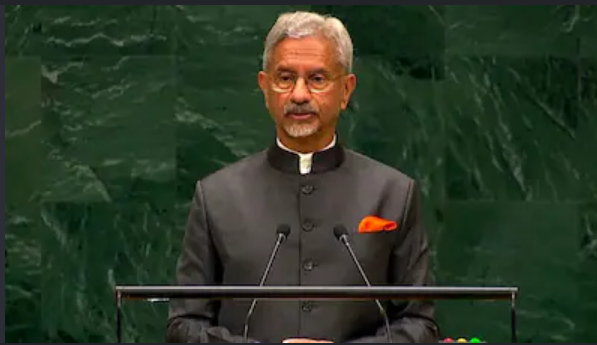
External Affairs Minister S Jaishankar said India remained a natural option for Russia as Moscow increasingly turned towards Asia amid strained relations with Europe. He highlighted the continuity of India-Russia ties and their significance for the balance of power in Asia.


Latest world news
Putin praises PM Modi, says he has very good ideas on Ukraine war
Russian President Vladimir Putin has praised Prime Minister Narendra Modi for repeatedly raising the need to end the Ukraine war, describing his ideas for a settlement as “very good”.

Latest world news
S Jaishankar calls Pakistan a “serial practitioner of terrorism” at UN
S Jaishankar criticised Pakistan at the UN General Assembly, referring to a “serial practitioner of terrorism” and warning against attempts to normalise terrorism.

CJP leaders Saurav Das, Ashutosh Ranka, Ajinkya Shinde sent to 5-day judicial custody

S Jaishankar says India is a natural option for Russia amid Europe tensions

PM Modi speaks to Mark Carney as India and Canada push to strengthen ties

Meerut murder: Muskaan Rastogi and Sahil Shukla get death sentence

Rahul Gandhi joins India Gate protest by Ankita Bhandari’s parents

Supreme Court questions EC over missing records in Sringeri election dispute
Rahul Gandhi joins India Gate protest by Ankita Bhandari’s parents
Meerut murder: Muskaan Rastogi and Sahil Shukla get death sentence
PM Modi speaks to Mark Carney as India and Canada push to strengthen ties
S Jaishankar says India is a natural option for Russia amid Europe tensions

Afghan Men Try To Hang With The Jet Engine Of The Aircraft in Kabul- Afghanistan News – Kabul News
Trending Top 10 News: 10000 Crore Fine on Flipkart, Apple to Launch Unique Feature, Hdfc Bank Job Ad

Trending Top 10 News: Nokia 6310, Apple sales, Bachpan ka Pyar Video Kid, Dainik Bhaskar IT Raid

Trending Top 10 News: Canada bans Indian flights, Rain in Delhi NCR, AIMIM Twitter hacked, Raj Kundra case

Trending Top 10 News: Shein India, Apple New Service, Pocket Oxygen, Oppo Launched New Phone
-
 India News23 hours ago
CJP leaders Saurav Das, Ashutosh Ranka, Ajinkya Shinde sent to 5-day judicial custody
-
 Latest world news23 hours ago
S Jaishankar says India is a natural option for Russia amid Europe tensions
-
 India News22 hours ago
PM Modi speaks to Mark Carney as India and Canada push to strengthen ties
-
 India News12 hours ago
Meerut murder: Muskaan Rastogi and Sahil Shukla get death sentence
-
 India News11 hours ago
Rahul Gandhi joins India Gate protest by Ankita Bhandari’s parents
-
 India News11 hours ago
Supreme Court questions EC over missing records in Sringeri election dispute
