
Latest world news
Saudi warship attacked by Yemen’s Houthis near Hudaydah


Yemen’s Houthi Ansarullah fighters have claimed of targeting a Saudi Arabian warship off the coast of Hudaydah province in retaliation to an airstrike on Monday, killing 16 civilians including women and children.
According to Yemeni sources, Saudi warplanes targeted a refugee camp in the al-Hali district of Yemen’s western coastal province of Hudaydah on Monday afternoon.
Gulf News report from Riyadh has confirmed the attack. However it claimed that a Saudi oil tanker was subjected to an attack in international waters on Tuesday by “Iranian Houthi militants”, that is how Saudi Arabia describes the country’s resistance force.
Colonel Turki Al Maliki, the spokesperson of the Saudi led Arab coalition has claimed that the attack was foiled due to the quick intervention of a coalition vessel. He said that the tanker sustained only a minor damage and was able to continue on its journey, sailing north while accompanied by coalition vessel.
Maliki further said that the attack represents a dangerous threat to freedom of navigation and global trade at the Bab El Mandeb Strait and Red Sea, and can also cause environmental damage and economic loss.
Earlier Houthi Ansarullah had fired long range missiles on Riyadh and several other destinations. Recently Saudi Arabia had claimed of intercepting seven missiles fired by Houthis before hitting their destinations.
Read More: Saudi Arabia claims intercepting Yemen’s Houthi missiles
Meanwhile, Saudi-supported internationally recognized government in exile, has on Tuesday reiterated its accusations that the Houthis were using the Hudaydah port for military purposes and to threaten international navigation and target ships that pass in the Red Sea. It has suggested that the port should be placed under the management of international observers.
Information Minister in the government in exile Muammar al-Eryani has also renewed calls to the international community to conduct a neutral investigation into the fire which erupted in the World Food Program warehouses in the Hudaydah port on Saturday.
Read More: Iran to continue support to people in Syria and Yemen
Yemen is besieged by Saudi led coalition cutting all civilian supplies pushing the whole population into hunger which has developed into a humanitarian catastrophe.
On March 25, the Yemeni Ministry of Human Rights (part of the Houthi run government, not the Saudi supported internationally recognized establishment), had announced that the Saudi-led war had left 600,000 civilians dead and injured during the past three years.
The United Nations says a record 22.2 million Yemenis are in need of food aid, including 8.4 million threatened by severe hunger.
Read More: UN criticise Saudi Arabia for human rights violations in Yemen
The Saudi-led coalition, having support from US, Israel, UK and several other western countries, began its air campaign against Yemen in March 2015. It was aimed to support former Saudi-friendly government and against Houthi Ansarullah. Houthis are now running the state affairs in the absence of an effective government.
The Saudi-supported “internationally recognized” government headed by Abd Rabbuh Mansur Hadi is based in Riyadh. Hadi is trying to establish a rival government in southern port city of Aden, the capital of erstwhile South Yemen.
Yemen crisis began in 2011-12 revolution against President Ali Abdullah Saleh, a Saudi ally, who led the country for more than two decades. After Seleh left office in early 2012 as part of mediated agreement, his deputy Abd Rabbuh Mansour Haid struggled to unite the political landscape. In 2014 Houthi Ansarullah swept into the capital Sana’a and forced Hadi to negotiate a “unity government” with other political factions. Hadi resigned along with his ministers in January 2015.
In February 2015 Houthis declared themselves in control of the government, dissolving parliament and installing an Interim Revolutionary Committee led by Mohammad Ali al-Houthi, cousin of Houthi leader Abdul Malik al-Houthi. On 27 March 2015 Hadi fled the country and arrived in Saudi Arabia’s capital Riyadh as Saudi-led coalition began air strikes on the country.
Since then, Abd Rabbuh Mansour Hadi has tried to return to Aden to run the government. However, Hadi’s government functioning in Yemeni territories has not confirmed for years.
Read More: Yemen: Houthi kills former President Saleh for ties with Saudi Arabia
Former president Ali Abdullah Saleh, who had joined Houthis against Hadi, but was allegedly spying for Saudi Arabia, was killed by Houthis in Sana’a in early December last year. He had announced to start a “new page” with Riyadh and called for rvence against the Iran-aligned Houthis.









Latest world news
Magnitude 7 earthquake strikes Tibet after floods
A magnitude 7 earthquake struck northern Tibet on Thursday, October 22. The tremor came weeks after deadly flash floods and landslides hit the mountainous region near the Nepal-China border. Initial reports did not confirm casualties or damage from the earthquake.


Latest world news
Macron rejects Trump’s immigration claims over France riots
French President Emmanuel Macron criticised Donald Trump and other foreign leaders over their comments on France’s recent unrest. Macron rejected claims that the country was being overrun by migrants and Islamists, calling such assertions false.

Latest world news
Marco Rubio says India and US share extraordinary alignment on key issues
US Secretary of State Marco Rubio said India and the United States share an extraordinary alignment on core issues, even though disagreements between the two countries may arise.


Om Prakash Mathur sworn in as Keralam Governor

PM Modi to inaugurate Rs 169-crore RBI data centre in Odisha on October 25

Delhi High Court rejects Neha Bora’s plea against peace bond notice

MEA responds after ITBP chief flags ongoing face-offs with China in Arunachal

Thousands bang utensils, beat drums in Manipur protest over continued killings

Congress seeks 175-200 seats in UP, Samajwadi Party stresses on winnability
Thousands bang utensils, beat drums in Manipur protest over continued killings
MEA responds after ITBP chief flags ongoing face-offs with China in Arunachal
Delhi High Court rejects Neha Bora’s plea against peace bond notice
PM Modi to inaugurate Rs 169-crore RBI data centre in Odisha on October 25

Afghan Men Try To Hang With The Jet Engine Of The Aircraft in Kabul- Afghanistan News – Kabul News
Trending Top 10 News: 10000 Crore Fine on Flipkart, Apple to Launch Unique Feature, Hdfc Bank Job Ad

Trending Top 10 News: Nokia 6310, Apple sales, Bachpan ka Pyar Video Kid, Dainik Bhaskar IT Raid

Trending Top 10 News: Canada bans Indian flights, Rain in Delhi NCR, AIMIM Twitter hacked, Raj Kundra case

Trending Top 10 News: Shein India, Apple New Service, Pocket Oxygen, Oppo Launched New Phone
-
 India News18 hours ago
Om Prakash Mathur sworn in as Keralam Governor
-
 India News17 hours ago
PM Modi to inaugurate Rs 169-crore RBI data centre in Odisha on October 25
-
 India News16 hours ago
Delhi High Court rejects Neha Bora’s plea against peace bond notice
-
 India News16 hours ago
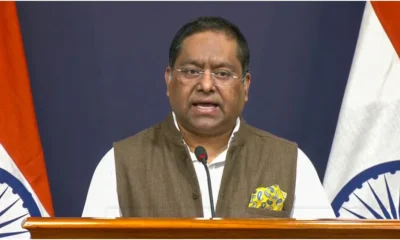
MEA responds after ITBP chief flags ongoing face-offs with China in Arunachal
-
 India News3 hours ago
Thousands bang utensils, beat drums in Manipur protest over continued killings
-
 India News2 hours ago
Congress seeks 175-200 seats in UP, Samajwadi Party stresses on winnability
