English हिन्दी
Connect with us

India News

Why the BJP is (over)confident that it will win in UP

Published

on

A blinkered view gives a pretty picture where the party accesses large sections except Muslims

[vc_row][vc_column][vc_column_text]A blinkered view gives a pretty picture where the party accesses large sections save Muslims

By Parsa Venkateshwar Rao Jr

There is little doubt that the Bharatiya Janata Party (BJP) is emotionally, ideologically and politically invested in Uttar Pradesh. The most populous state is at the heart of the Hindu heartland. BJP does not fight shy of the fact that it is a Hindi heartland party. As a matter of fact it wants to flaunt it even.

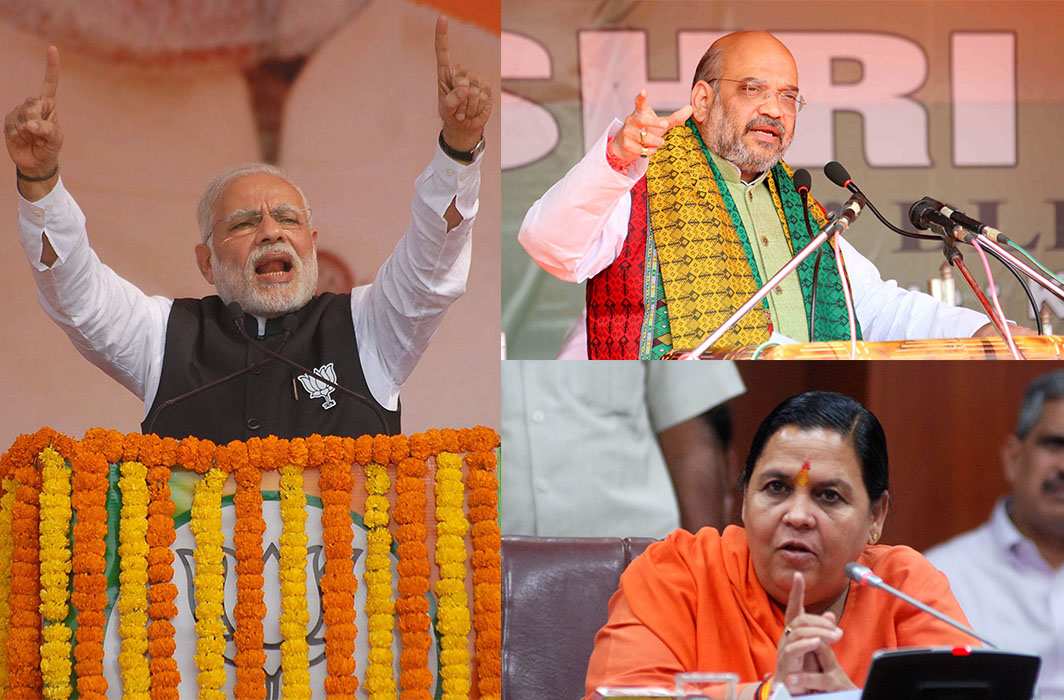
Prime Minister Narendra Modi has set his heart on UP from 2013 onwards when he was declared the prime ministerial candidate of the party in the 2014 Lok Sabha election. First, he chose to contest from Varanasi, with its unmistakable Hindu connection. Then he deputed Amit Shah, his Gujarat confidante to focus on UP in 2014. The strategy seemed to have paid off. The BJP won 73 of the 80 Lok Sabha seats in the state. It was natural that Shah was credited with the success of the BJP juggernaut in UP, and he was rewarded by making him the president of the party.

Now, both Modi and Shah want to prove that they have grown roots in UP. As one of Modi’s cabinet ministers said on condition of anonymity, “We (the BJP) want to prove that 2014 Lok Sabha election was no fluke.” So, Modi, Shah and the rest in the party are sparing no effort to win in the state. Shah’s constituency by constituency, booth by booth – BJP leaders lay much store by their booth management skills – approach which paid dividends in  2014 is ostensibly replicated this time round. And it is believed that it will work a second time round. What the BJP fails to understand is that it is not the thoroughness of the preparation alone that matters, and that it depends on more than anything else it depends on the preference of the people as such.

Apart from the desire and determination to win UP, the BJP strategists also seem to believe that they have been dealt a winning hand as it were when the electoral cards were shuffled. They think that the political appeal of Samajwadi Party (SP) is confined to its core constituency of Yadavs and not to the whole spectrum of the backward classes/castes, and that of Bahujan Samaj Party (BSP) to Jatavs and not to Dalits in general. Another Union minister, who gives the spin to the BJP thesis, says that half of the Muslim vote would go to the SP, and the other half to BSP.

In contrast, the minister arguing the case of electoral prospects of the party said that the upper castes are with the BJP, and so are the various segments of the other backward classes/castes and the remaining Dalits, the Valmikis. Of course, it is a big presumption. Even if it is assumed that many of backward class segments would not go with the SP, and therefore could vote for BJP because Congress, the other big national party in the fray in the state, is not a big players anymore and it has reduced itself to the status of a junior alliance partner to SP, the big local players. There is also the possibility that the BJP would want to choose a candidate from one of the non-Yadav backward classes as a chief ministerial candidate. But rivalries between the many non-Yadav backward classes/castes are conveniently ignored by the BJP spinmeisters. It is also not clear as to why the non-Jatav Dalits, the Valmikis, should choose BJP because they have not much to gain from the bargain. The BJP will not be able to please them all with the temptation of office.

What is interesting in the BJP is argument is that there is ideological thrust to the campaign though there is a subtle and not-so-subtle Hindutva or Hindu communalism at play here. The BJP is reconciled to the fact that Muslims will not vote for it, and so it does not factor in Muslims in its caste/community electoral calculus. If the BJP leaders are embarrassed about it, they do not show it. But they are displaying hard-nosed political realism by not counting on Muslims, but they are overstating their case by assuming that the Muslim would split, almost in half between the SP and BSP.

The other big assumption of the BJP, and even that of the pollsters, is that it is not a three-cornered contest where SP-Congress, BSP and BJP are all equal contenders and that that the vote would split three-ways. The complexity is simplified by reducing BSP into a distant third, and that it is essentially a contest between SP-Congress on the one hand and the BJP on the other. It is not even being contended that it could be a battle between BJP and BSP. This is a grudging recognition by the BJP that Akhilesh Yadav has clawed his way back into the contest.

Though there are some who are arguing that the BSP is the silent player which would steal the show on Saturday, there seems to be no reliable or tangible proof that the BSP outreach to the other castes and communities is gaining traction or not. This does not mean that BSP has failed to reach out beyond its core constituency. It just means that the pollsters have failed to detect it. Even the ardent supporters of BSP in media have not argued convincingly enough that a significant number of Muslims and Brahmins have been won over by party of Dalits. There is of course the plausible inference that Muslims are not too happy with SP post-Muzaffarnagar riots of 2013.

There are enough chinks in the constructed political armour of the BJP, which could turn out to be a sour point on Saturday.[/vc_column_text][/vc_column][/vc_row]

India News

PM Modi takes aim at critics with Dimagi Naxal remark at SRCC centenary address

PM Modi revived his dimagi Naxal remark at SRCC’s centenary celebrations and spoke about India’s development journey.

Published

on

PM Modi

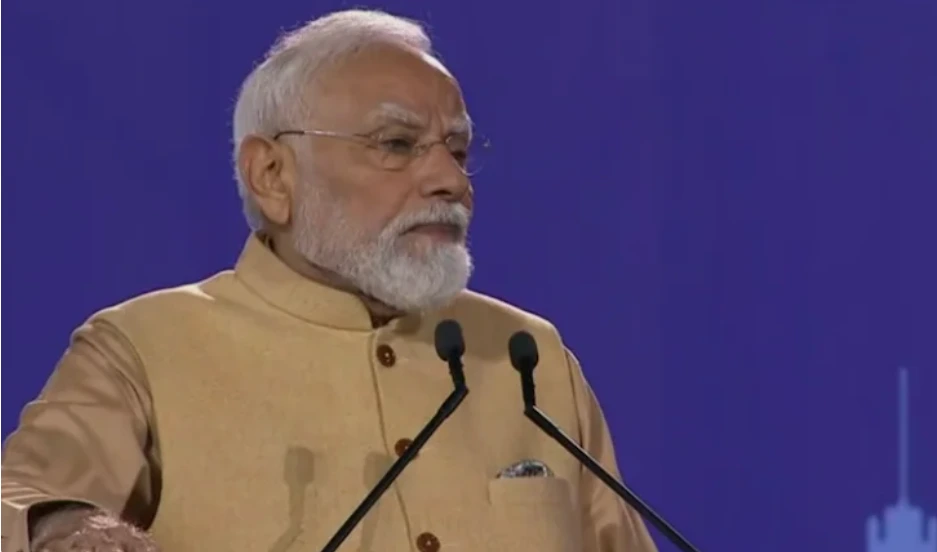
Prime Minister Narendra Modi revived his ‘dimagi Naxal’ remark while addressing the centenary celebrations of Shri Ram College of Commerce (SRCC) in Delhi on Saturday, using the term to criticise his opponents.

Speaking to students at the Delhi college, PM Modi described the phrase as a “homeopathic pill” and said it had prompted those he described as “dimagi Naxals” to come forward and reveal their views.

The prime minister also used his address to speak to Gen-Z about India’s development journey and asked students to consider the challenges the country had faced in the past.

PM Modi recalls past crises

During his speech, PM Modi referred to the 2013 Kedarnath disaster and the 2008 global financial crisis while criticising the handling of national emergencies by previous governments.

He said the government at the time of the Kedarnath disaster was shaken and questioned its ability to respond to the crisis.

Referring to the 2008 banking crisis, PM Modi alleged that the government of the time failed to effectively deal with the situation and claimed that India’s banking system was pushed close to collapse.

Prime minister lists challenges faced by his government

PM Modi also highlighted several major global crises that occurred during his government’s tenure.

He mentioned the COVID-19 pandemic, the Russia-Ukraine war, disruptions to global trade and supply chains, and the crisis in West Asia.

The prime minister said there had been concerns that India would struggle during these crises but argued that the country had continued to move forward.

PM Modi’s earlier SRCC visit

PM Modi had earlier visited SRCC in 2013, when he was the chief minister of Gujarat. His speech at the college received significant attention, particularly on social media, ahead of the 2014 Lok Sabha election.

His latest visit came during the college’s centenary celebrations, where his address focused on young people, India’s development ambitions and the challenges faced by the country.

Continue Reading

India News

India Metro Rail Network May Overtake US in 2 Years

India’s metro rail network has reached 1,170 km across 26 cities. Union minister Manohar Lal said the country could overtake the US in network length within two years.

Published

on

Manohar Lal Khattar

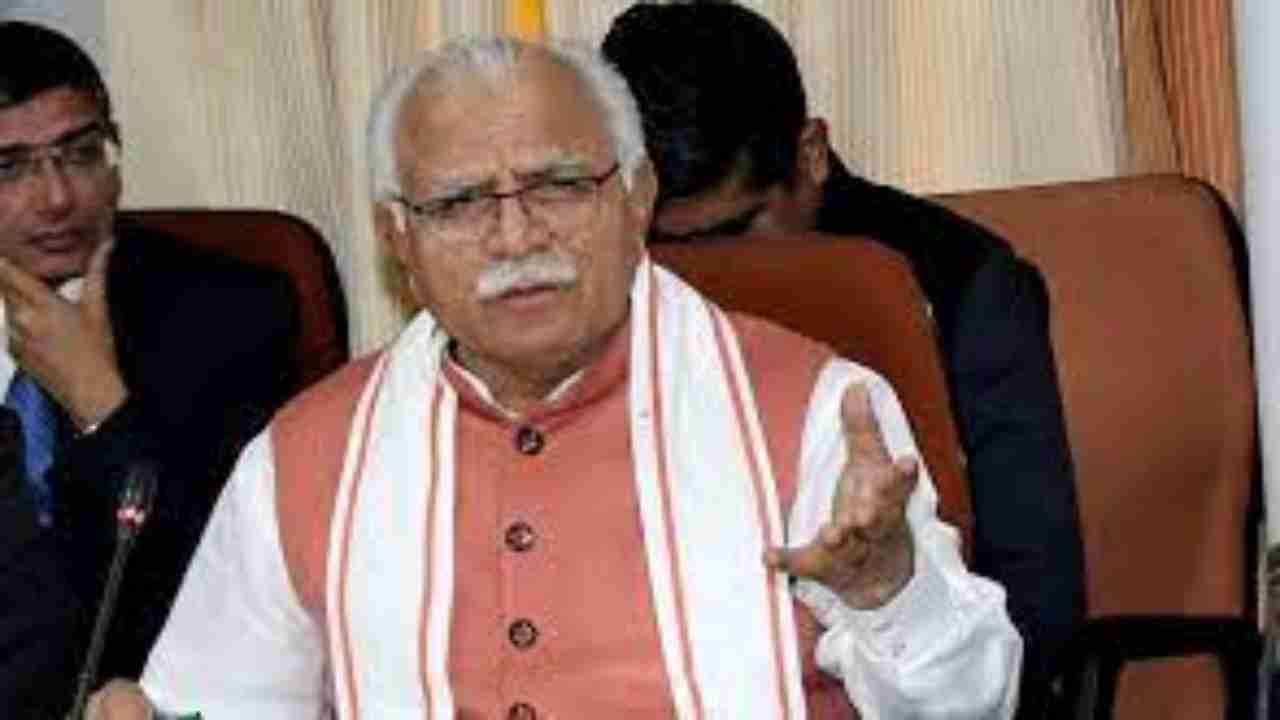
India is on track to become the country with the second-largest metro rail network in the world after China, with Union Minister Manohar Lal saying the country could overtake the United States within the next two years.

India’s metro rail network has now expanded to 1,170 km across 26 cities. The network is only 216 km shorter than the US metro rail network, which stands at 1,386 km, according to figures cited by the minister.

India’s metro network expands rapidly

Speaking after the inauguration of an extended metro service in Indore, Manohar Lal highlighted the pace at which metro connectivity has grown in India.

He said metro services were operational across just 245 km in five cities when Prime Minister Narendra Modi assumed office in 2014. The network has since expanded to 1,170 km across 26 cities.

The minister said India could overtake the US in terms of metro rail network length in the next two years and become the world’s second-largest country in this segment after China.

China currently has around 8,000 km of metro rail lines, according to the figures cited by the minister.

Indore metro extension inaugurated

The minister made the remarks after inaugurating an extended section of the Indore metro. The project was built at a cost of around Rs 2,850 crore.

The Indore metro was earlier operating commercially on a six-km stretch between Gandhi Nagar and Super Corridor-3 stations. Following the extension, the service will operate on a 17-km route between Gandhi Nagar and Malviya Nagar Chauraha.

Madhya Pradesh Chief Minister Mohan Yadav said the metro service would mark a new phase in Indore’s development. He also said the network would eventually be extended to Ujjain and other nearby areas.

India’s metro rail network: Key figures

  • India currently has 1,170 km of operational metro rail network.
  • Metro services are operational across 26 cities.
  • The US has around 1,386 km of metro rail network.
  • India is currently 216 km behind the US.
  • China has around 8,000 km of metro rail lines.
  • India’s operational network stood at 245 km across five cities in 2014.

Continue Reading

India News

PM Modi returns to SRCC after 13 years, revisits 2013 glass full speech

PM Narendra Modi returned to SRCC after 13 years for its centenary celebrations, revisiting themes from his landmark 2013 address.
Published

on

PM Narendra Modi

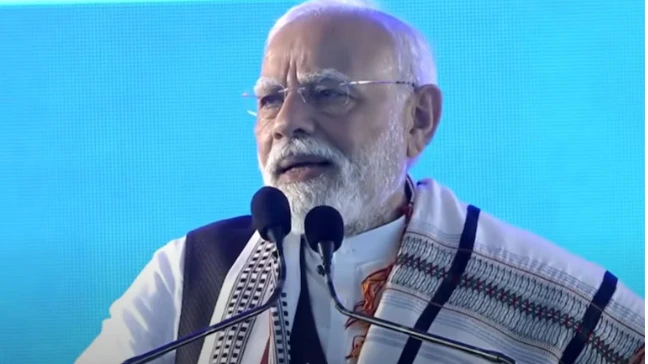
Prime Minister Narendra Modi returned to Delhi University’s Shri Ram College of Commerce (SRCC) on Saturday, 13 years after his previous visit to the institution as Gujarat chief minister. 

His latest visit came as SRCC marked its centenary celebrations. Modi’s 2013 address at the college had attracted significant attention as he spoke about India’s youth, governance and the country’s demographic potential.

In 2013, Modi was Gujarat chief minister and had not yet been named the BJP’s prime ministerial candidate. He returned to the same campus this year as Prime Minister, having completed 12 years as Prime Minister and serving his third consecutive term. 

What PM Modi said at SRCC in 2013

The 2013 lecture was titled Emerging Business Models in the Global Scenario. The address also covered governance and India’s young population.

He described India’s youth as a source of national strength rather than simply a group of new-age voters. He also highlighted India’s demographic advantage and argued that the country needed to make better use of its young population.

One of the notable moments from the speech involved a glass of water.  Modi contrasted the conventional descriptions of a glass as half full or half empty and said he viewed it as full, with half containing water and the other half air.

The speech also included his remarks on technology and young Indians. Referring to an anecdote from a visit to Taiwan, Modi used the phrase “mouse-charmers” to describe Indians using computers and suggested that young Indians had the ability to influence the world through technology.

‘Minimum government, maximum governance’

Modi’s 2013 address also touched on governance. He spoke about the role of government and the need for better governance.

He also spoke about India’s potential in the 21st century. 

Modi returns as PM for SRCC centenary

The September 5 visit coincided with Teachers’ Day and SRCC’s 100th anniversary. The Prime Minister’s Office had announced that Modi would participate in the college’s centenary celebrations and address the gathering. SRCC was established in 1926 by industrialist and philanthropist Sir Shri Ram.

Earlier this year, Modi also met the SRCC governing body at his residence in April in connection with the college’s centenary celebrations and released a commemorative postage stamp marking the occasion. 

The return to SRCC came 13 years after his 2013 appearance at the college, when he addressed students as Gujarat chief minister.

Continue Reading

Trending

© Copyright 2022 APNLIVE.com