English हिन्दी
Connect with us

India News

Delhi roads, metro stations shut a day after police-farmer clashes

The commuters were in for trouble on Wednesday as several Delhi roads and metro stations remained shut after violence in Republic Day tractor rally.

Published

on

delhi traffic

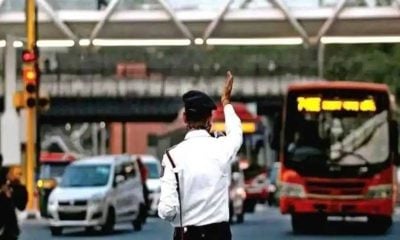
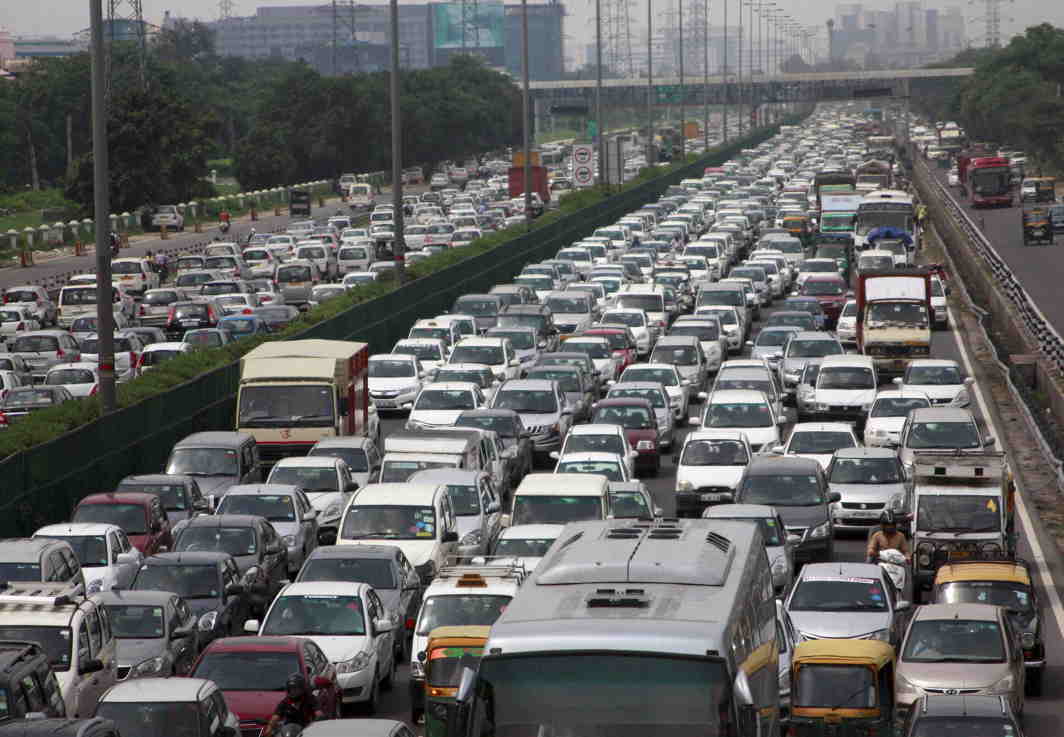
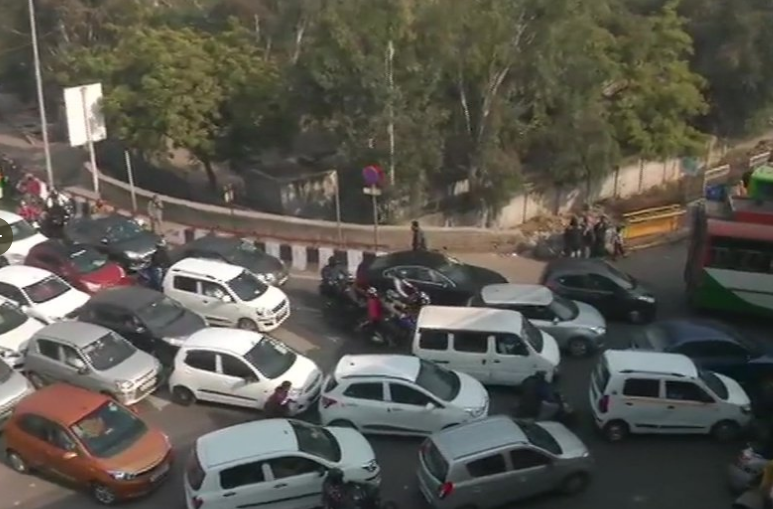
A day after national capital was marred by violence during tractor rally held by farmers to protest Centre’s farm laws, many roads in Delhi remained closed. the metro services were also affected in Delhi with several metro stations in Delhi being shut for the day. Meanwhile, ITO junction, which was witness to widespread violence on Tuesday has been opened this afternoon. Minto Road near Connaught Place has also been reopened for traffic. The roads linking Delhi to Ghaziabad including the Ghazipur Mandi road, NH-9 and NH-24 are still closed.

Due to blockage of several roads, huge traffic jams were seen on Wednesday morning in several areas of Delhi-NCR. The traffic police has issued advisories for commuters on the routes they must take. As for the metro, all entry/exit gates of the Lal Quila metro station have been closed. the entry gate of Jama Masjid metro station are also closed on Wednesday, the Delhi Metro Rail corporation informed on Twitter.

The national capital witnessed unprecedented violence on Republic day after a section of farmers broke barricades and refused to stick to the approved route. One farmers was killed when his tractor overturned, while hundred of Delhi police personnel were injured due to the clash between the police and the protesters. The attack was condemned by several political leaders and farmer leaders who said some elements tried to spark the tensions.

Also Read: Farmers’ protest: 22 FIRs registered for violence during tractor rally, farmer leaders to address protesters today

Meanwhile, the farmers leaders on Wednesday appealed protesters to maintain peace and not lose calm as the protest against the new legislations in a long one. They said they are in the process of identifying those behind the violence and alleged conspiracy to defame the protests. According to reports, the farmers might call off their planned march to Parliament on Budget Day following the mayhem in Tuesday’s tractor rally.

India News

Delhi schools receive bomb threats, emails claim city will become Khalistan

Nine schools across Delhi received bomb threat emails containing Khalistan-related messages, prompting immediate security action.

Published

on

Delhi School bomb threat

Several schools across Delhi received bomb threat emails on Monday morning, prompting immediate security action by authorities. According to the Delhi Fire Service (DFS), the first distress call was received at around 8:33 am, following which fire tenders and bomb disposal teams were rushed to the affected locations.

At least nine schools across different parts of the city reported receiving similar threat messages. Security checks were carried out as a precautionary measure, and students and staff were kept under close supervision.

The schools that received the bomb threats include Loreto Convent School in Delhi Cantonment, Cambridge School in Srinivaspuri, Venkateshwar School in Rohini, CM School in Rohini, Bal Bharati School in Rohini, Cambridge School in New Friends Colony, The Indian School in Sadiq Nagar, and DTA School in the INA area.

Threatening emails contain provocative messages

The emails reportedly carried disturbing and provocative content, claiming that “Delhi will become Khalistan” and referring to “Punjab as Khalistan” while invoking the memory of Afzal Guru. The messages also alleged that a blast would take place inside Parliament on February 13 at 1:11 pm.

Authorities treated the threats seriously and initiated standard operating procedures to ensure safety. More schools were reported to be receiving similar emails as the day progressed.

Further details are awaited as investigations continue.

Continue Reading

India News

BJP’s Ritu Tawde set to become Mumbai mayor, Shiv Sena’s Sanjay Ghadi named deputy

BJP’s Ritu Tawde is set to take charge as Mumbai mayor, marking the first break in Shiv Sena’s 25-year dominance of the post. Shiv Sena’s Sanjay Ghadi will serve as deputy mayor.

Published

on

BJP corporator Ritu Tawde is set to take over as the next Mumbai mayor, marking a significant political shift in the Brihanmumbai Municipal Corporation (BMC). This will be the first time in 25 years that the mayor’s post will not be held by the Shiv Sena.

Tawde, who represents Ghatkopar, has previously served as chairperson of the BMC’s education committee. Her name was announced by BJP leader Amit Satam on Saturday.

Shiv Sena to hold deputy mayor’s post

Shiv Sena leader Sanjay Shankar Ghadi will be the Deputy Mayor of Mumbai. Elected from Ward No. 5 in the January 15 civic elections, Ghadi will serve a 15-month term. The Shiv Sena has decided to rotate the deputy mayor’s post among four of its corporators.

Ghadi was among the leaders who joined Maharashtra Deputy Chief Minister Eknath Shinde’s faction in 2022, a move that led to the collapse of the Maha Vikas Aghadi government.

The Shiv Sena announced Ghadi’s candidature through party leader Rahul Shewale.

BJP-led alliance crosses majority mark

In the 227-member civic body, the BJP emerged as the single largest party with 89 seats, while the Shiv Sena secured 29 seats. Together, the ruling alliance has 118 corporators, comfortably crossing the majority mark of 114 and ensuring control over the mayoral post.

The Shiv Sena (UBT), which governed the BMC continuously since 1997, won 65 seats. Its allies, the Maharashtra Navnirman Sena (MNS) and the Nationalist Congress Party (Sharad Pawar faction), secured six and one seats, respectively.

The Congress won 24 seats, AIMIM eight, the NCP (Ajit Pawar faction) three, and the Samajwadi Party two seats.

Civic polls held after nine-year gap

The high-stakes BMC elections were conducted after a nine-year gap. The civic body had been under a state-appointed administrator since March 7, 2022, following the end of the previous term.

The BMC remains the country’s richest civic body, with its budget for the 2025–26 financial year pegged at Rs 74,450 crore.

Continue Reading

India News

Trump lifts additional 25% tariff on India after deal on Russian oil imports

The United States has lifted an extra 25% tariff on Indian goods after India committed to stopping Russian oil imports as part of a new trade agreement.

Published

on

trump

US President Donald Trump has moved to remove an additional 25 percent tariff imposed on Indian goods following a trade agreement between the two countries, according to an executive order signed on Friday.

The extra duty, which had been levied over India’s purchases of Russian oil, will be lifted at 12:01 am Eastern Time on Saturday. The order states that India has committed to stopping the direct or indirect import of oil from the Russian Federation.

The decision comes days after Trump announced a broader trade deal with India, saying Prime Minister Narendra Modi had assured Washington that New Delhi would halt Russian oil purchases amid the ongoing Ukraine war.

As part of the agreement, India has also committed to buying energy products from the United States. The executive order further noted that New Delhi has recently agreed to a framework aimed at expanding defence cooperation between the two countries over the next decade.

Tariff reduction still to be rolled out

While the additional 25 percent tariff is being removed immediately, the wider reduction in so-called reciprocal tariffs is yet to be implemented. Under the agreement, US duties on Indian products are expected to be reduced to 18 percent from the earlier level of 25 percent.

Other provisions of the deal include the removal of tariffs on certain aircraft and aircraft parts. A separate joint statement released by the White House said India intends to purchase goods worth $500 billion from the United States over the next five years. These purchases are expected to include energy products, aircraft and parts, precious metals, technology products and coking coal.

The move marks a sharp decline in US tariff levels on Indian goods, which had stood at as high as 50 percent late last year. The agreement also helps ease months of strain between the two countries over India’s oil imports, which Washington has argued help finance the conflict in Ukraine.

The deal signals a reset in ties between Trump and Prime Minister Modi, whom the US President has previously described as one of his closest friends.

Trade experts have noted that the proposed 18 percent tariff rate could offer Indian exporters a slight advantage in the US market compared to regional competitors facing duties of around 19 to 20 percent.

Continue Reading

Trending

© Copyright 2022 APNLIVE.com