English हिन्दी
Connect with us

Latest Politics News

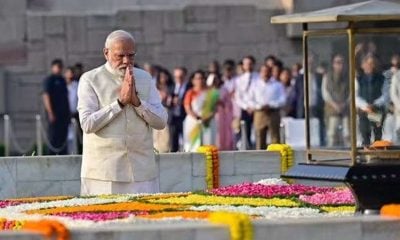
PM Modi says he’ll will end all games in reference to Mamata Banerjee’s Khela Hobe campaign

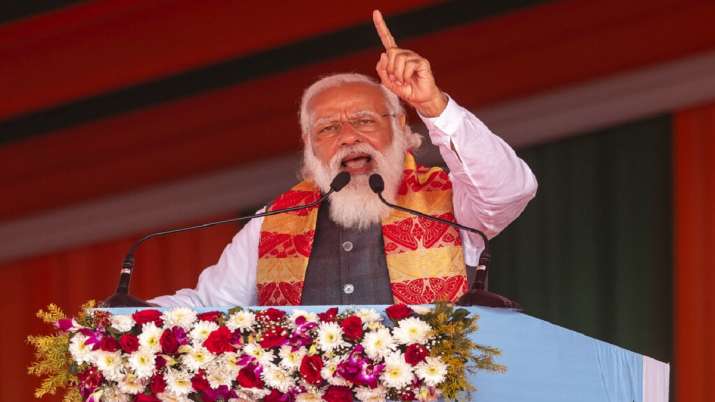
Days ahead of the Assembly elections in West Bengal, Prime Minister Narendra Modi on Thursday targeted West Bengal Chief Minister Mamata Banerjee by using her phrase Khela Hobe (game on) against her and said she played for 10 years.

Published

on

PM Modi

Days ahead of the Assembly elections in West Bengal, Prime Minister Narendra Modi on Thursday targeted West Bengal Chief Minister Mamata Banerjee by using her phrase Khela Hobe (game on) against her and said she played for 10 years. Now her game will be over and development will begin, he added.
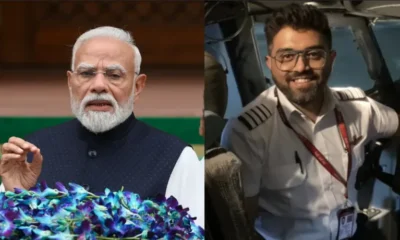
PM Modi was speaking at an event in Purulia ahead of the eight-phase Bengal election starting March 27, for which the saffron party has mounted an aggressive campaign to oust the two-time Chief Minister and her Trinamool Congress from power.

The PM targeted Mamata Banerjee government over corruption and lack of development. He said didi says khela hobe, BJP says jobs; Didi says khela hobe, BJP says education; Didi says khela hobe, BJP says development; Didi says khela hobe, BJP says the rise of women; Didi says khela hobe, BJP says jobs; Didi says khela hobe, BJP says you will get a pucca house, clean water and taps in every home, said the PM.

PM Modi also accused the TMC government of non-development of Industries. He said the kind of work that should’ve been done for irrigation, didn’t take place. He said he is aware of the problems faced in rearing livestock due to less water. TMC govt was busy in its khel by leaving farming on its own, he added.

The Prime Minister also accused Mamata Banerjee of encouraging Maoists.

In a wide-ranging takedown of the Trinamool Congress (TMC), PM Modi introduced his version of the party’s initials – Transfer My Commission. He said in Bengal, the BJP was doing DBT or Direct Benefit Transfer but TMC was doing Transfer my Commission.

Read Also: Akshay Kumar, Jacqueline Fernandez, Nushrratt Bharuccha begin mahurat shoot for Ram Setu in Ayodhya

Making a slew of promises to deliver development and governance to the state of West Bengal, PM Modi said the countdown has begun. On 2nd May Didi is going. Ashol Parivartan is coming. No fear.

India News

TMC faces fresh turmoil as signature controversy exposes internal divisions in Bengal

A political controversy has erupted in West Bengal after two TMC MLAs alleged their signatures were used without consent on a letter endorsing Sobhandeb Chattopadhyay as Leader of Opposition, leading to their expulsion from the party.

Published

on

Mamata Banerjee

The Trinamool Congress (TMC) has found itself at the centre of a fresh political controversy after allegations emerged that signatures of some party legislators were used without their consent on a letter related to the appointment of the Leader of Opposition in the West Bengal Assembly.

The row intensified after two TMC MLAs, Ritabrata Banerjee and Sandipan Saha, reportedly objected to their signatures appearing on a letter endorsing senior party leader Sobhandeb Chattopadhyay for the post of Leader of Opposition. The legislators alleged that they had not signed the document.

Allegations trigger political confrontation

The controversy gained prominence after opposition leader Suvendu Adhikari raised the issue and questioned the authenticity of the signatures submitted to the Assembly Secretariat. The allegations have fuelled a political confrontation between the ruling party and the opposition.

Authorities are examining the matter, with the authenticity of the disputed signatures becoming a key focus of the ongoing inquiry. The investigation is expected to determine whether any procedural irregularities occurred during the submission of the endorsement letter.

TMC expels two MLAs

Amid the controversy, the Trinamool Congress expelled Ritabrata Banerjee and Sandipan Saha from the party. TMC leaders cited anti-party activities as the reason for the action, while the expulsions have further intensified debate around the signature dispute.

The development has brought internal disagreements within the party into public view and added to the political tensions surrounding the issue.

Inquiry continues

Officials are continuing to examine the allegations and related documents. The outcome of the inquiry is expected to clarify the circumstances under which the endorsement letter was submitted and whether any irregularities took place.

Continue Reading

India News

K Annamalai likely to quit BJP after declining Rajya Sabha offer, sources say

Former Tamil Nadu leader K Annamalai is set to exit the BJP after rejecting a Rajya Sabha seat offer. Sources indicate he will launch a new public movement following strategic disagreements over assembly election alliances.

Published

on

K Annamalai

Former Tamil Nadu party chief K Annamalai is expected to resign from the Bharatiya Janata Party following a scheduled meeting with party president Nitin Nabin in Delhi. According to media sources, the former Indian Police Service (IPS) officer believes that his growth and opportunities within the national party have reached a dead end.

The developments follow a reported offer by the leadership to secure a Rajya Sabha seat for him, which he chose to decline. Instead of continuing his journey within the party, he is highly anticipated to introduce a fresh public movement in the state. This grassroots initiative will focus on mobilizing a broad network of volunteers and connecting with like-minded individuals across diverse professional and social spectrums. When questioned regarding the ongoing speculation about establishing his own political platform, he responded, “Please wait. We will sit down and talk in two days.”

The root of tactical disagreements

The impending departure highlights a growing divide concerning the party’s electoral approach leading up to the 2026 state assembly polls. He had strongly advocated for the party to contest the elections independently, relying on the significant grassroots momentum built during his tenure. Conversely, the central leadership opted to resurrect its alliance with the AIADMK, seeking to unite opposition votes against the governing DMK.

This strategic pivot coincided with structural alterations in the state unit’s administration. Media reports indicate that AIADMK general secretary Edappadi K Palaniswami explicitly requested structural changes in leadership as a prerequisite for the partnership, leading to his replacement as the state president. Consequently, he did not contest the assembly elections or play an active role in the frontline campaigning. The alliance ultimately managed to secure just a single seat in the assembly elections.

A rapid political trajectory

He entered the political sphere in 2020 after stepping away from the civil services, quickly advancing through the local party hierarchy. He was appointed as the state vice-president shortly after his entry and ascended to the position of state president within a single year.

As the state chief, he became one of the most prominent faces for the party in a region traditionally dominated by regional Dravidian parties. Through extensive mass outreach programs, aggressive digital campaigns, and high-visibility public interactions, he substantially enhanced the national party’s presence in the state. Despite the momentum, his opposition to traditional alliances and subsequent exclusion from national organizational roles created friction, paving the way for his expected departure.

Continue Reading

India News

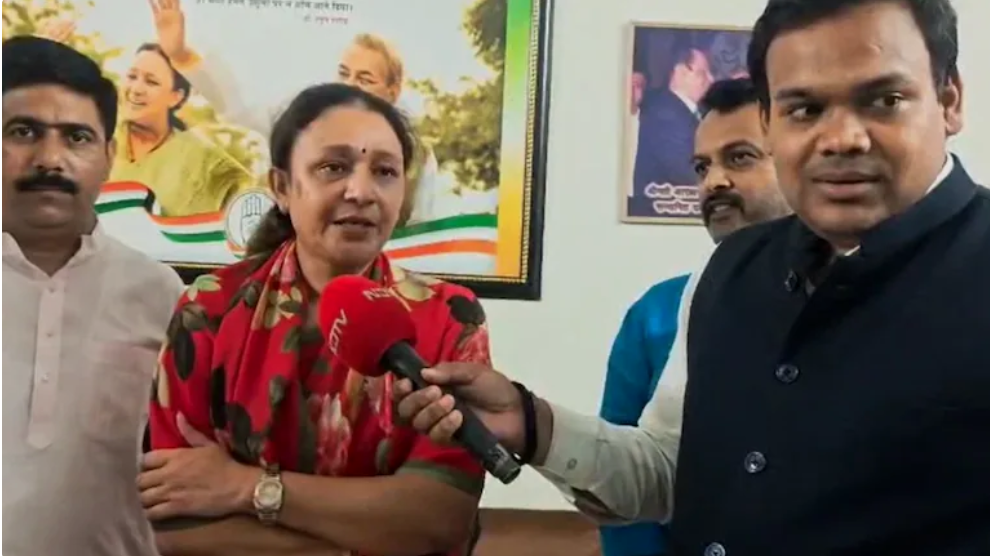
Maharashtra MLC Polls: MVA finalizes 15 seats, tussle remains over two key constituencies

The Maha Vikas Aghadi has ironed out differences across 15 Maharashtra Legislative Council seats, leaving Nashik and Nanded as the final points of contention between Congress and Shiv Sena (UBT).

Published

on

The Maha Vikas Aghadi (MVA) coalition, which includes Congress, Shiv Sena (Uddhav Balasaheb Thackeray), and the Nationalist Congress Party (Sharadchandra Pawar), has successfully reached a seat-sharing understanding for 15 out of 17 seats in the upcoming Maharashtra Legislative Council elections. While a major breakthrough has been achieved, the alliance is currently witnessing a stalemate over Nashik and Nanded, as multiple constituent partners assert their presence in these regions.

According to sources, the distribution plan was designed to prevent internal rifts by respecting the geographic and organizational strongholds of each party.

Congress secures maximum share of seats

Under the initial draft layout, Congress has come out as the largest stakeholder with seven seats in its quota. The party has been assigned constituencies across northern Maharashtra, western Maharashtra, and Vidarbha, where its ground-level network remains sturdy.

The locations likely allocated to Congress feature Solapur, Chandrapur, Yavatmal, Bhandara, Dharashiv, Amravati, and Ahilyanagar. To gear up for the electoral challenge, state party president Harshvardhan Sapkal has already designated senior leaders to observe and coordinate at the constituency level.

Five seats assigned to Uddhav Thackeray faction

The Uddhav Thackeray-led Shiv Sena (UBT) has been allotted five seats under the proposed arrangement, focusing its reach on the Konkan region and Marathwada. The seats projected for the party encompass Chhatrapati Sambhajinagar, Jalgaon, Hingoli, Raigad, and Parbhani.

Concurrently, the Sharad Pawar-led NCP faction is expected to field its candidates from three constituencies: Thane, Pune, and the joint Satara-Sangli seat. Even though Thane has been known as a core stronghold of the traditional Shiv Sena, evolving dynamics inside state politics led to this assignment during discussions.

Stalemate over two key constituencies

Despite finding common ground on most locations, Nashik and Nanded continue to be sources of disagreement. Media reports show that both Congress and Shiv Sena (UBT) want the Nashik seat, pointing to their local machinery. On the other hand, Nanded has traditionally stayed a bastion for Congress, but shifting political landscapes have led to claims from alliance partners too.

Leaders from the opposition have stressed that their core objective is to challenge the ruling Mahayuti coalition and prevent votes from splitting through friendly contests. Senior members are expected to hold more rounds of talks over the coming days to untangle the deadlock.

Ruling alliance formula takes shape

Sources close to the matter suggest that the ruling Mahayuti coalition has also neared completion of its election blueprint. Under their anticipated plan, the Ajit Pawar-led NCP faction might contest Pune and Raigad, whereas the Eknath Shinde-led Shiv Sena is tipped to take over Nashik, Thane, Parbhani, and Yavatmal. The remaining council seats are expected to be contested by the BJP.

Political experts are keeping a sharp watch on prospective inner rebellion inside the ruling camp, especially in regions like Nashik and Chhatrapati Sambhajinagar, where disgruntled figures might look to explore options alongside independent candidates.

Continue Reading

Trending

© Copyright 2022 APNLIVE.com