English हिन्दी
Connect with us

Latest business news

Cross cultural expansion a herculean task, says YourLibaas CEO Khalid Raza Khan

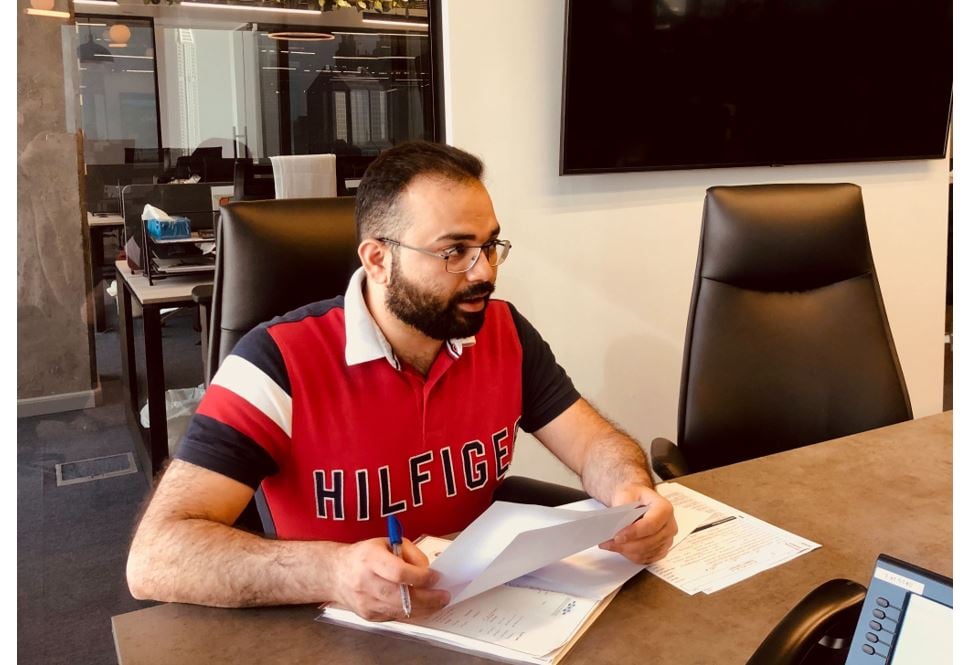
As part of our leadership series, we at APN News got in touch with Khalid Raza Khan, CEO & Founder of Indian eCommerce company YourLibaas which recently expanded into the UAE. The key learnings and insights from the excerpts shall be a model to consider during an expansion.

Published

on

Khalid Raza Khan

By Anil solanki

During the last decade, there has been an increasing trend of Indian startups expanding internationally. Earlier unheard of, global expansion is now on the cards even during initial rounds of funding as founders consider India as a launching pad for experimentation and testing product-market fit. Access to liquidity and efficient knowledge transfer are catalysts to expansion within the eCommerce and consumer-tech domain primarily – FirstCry, MakeMyTrip, Byju’s, OYO, the list goes on.

As part of our leadership series, we at APN News got in touch with Khalid Raza Khan, CEO & Founder of Indian eCommerce company YourLibaas which recently expanded into the UAE. The key learnings and insights from the excerpts shall be a model to consider during an expansion.

Khalid founded YourLibaas in 2014 and pioneered designer lawn apparel within India. The homegrown startup features International designers such as Sana Safinaz, Maria B, Gul Ahmed, Khaadi and so on. Post establishing a firm ground within the Indian market, they expanded to the UAE eyeing the customers within the MENA region.

What made you decide to expand internationally? Why UAE?

We have been operating YourLibaas in India since founding it in 2014. Primarily, the designers we feature at our platform are based in the UAE. During the last 7 years, we established a strong solid presence in the domestic market within the pakistani suits segment. The next logical step was backward integration which meant moving closer to the origin within the supply chain.


To top that, UAE also has a sizable diaspora from the Indian subcontinent that is familiar with the product we sell. Even prior to making the move, most of the international customers were from the MENA region. Specifically UAE because of the ease of doing business, friendly regulatory frameworks, higher consumer buying power, and a market ripe for disruption.

What are the key challenges and roadblocks during a global expansion?

The challenges for each individual are naturally going to be different, but there would be a common overarching scheme. From my experience, one key aspect is cross cultural management. The consumer behaviour, cultural differences, buying patterns, awareness about the tech environment, and expectations that drive customer satisfaction metrics were unexpected.

For instance, we learnt how express delivery was the bare minimum expectation when we initiated operations into the UAE. Consumers were habituated to deliveries within a matter of hours. It would only be possible with an efficient hyperlocal model, one which is only possible for grocery startups within India. We had to rethink our delivery model and initiate partnerships with hyperlocal logistics and warehousing companies. The key is sequencing the priorities and taking swift action to adopt the right strategy.

Another critical success factor is defining the goals of the expansion, both across strategic and financial terms and closely monitoring the KPIs to measure success towards achieving the slated goals. An oft-ignored step would be training – The domestic team we brought in had to be upskilled through collaborations with external agencies within the country. Execution is a different ball game within a new market. What worked well in India may not necessarily do so in the UAE. There are differences in regulation, cultures, consumer behaviour and the eCommerce landscape – all of which requires rethinking and revamp the approach.

What is your advice to entrepreneurs and founders planning to make the key move?

I would like to warn about where one could essentially go wrong. First and foremost, a successful product within the domestic market does not necessarily translate into success within the target market. That’s a myopic view one should take away – remember how consumer patterns are different.

We lost a sizable chunk of our initial investment learning it the hard way – the logistics and warehousing cost trying to replicate the Indian model here. External consultants or hiring from the host country would have saved us increasing the probability of success. If possible, local partnerships also go a long way establishing trust and credibility and a shorter time to market.

Starting small and scaling once an initial set of loyal customers are onboarded is another lesson. Focus on favorable demographics you clearly understand for those initial set of customers. The Indian diaspora is your best bet – they are literally in significant numbers round the globe.  Repeat the cycle and then scale up opening to the larger market. More likely than not, Indian founders shall have done that earlier given the amount of diversity within India itself. What works for you in Delhi might not in Tamil Nadu.

One can keep abreast with the latest updates from the company through @yourlibaas at Instagram.

By Anil Solanki

India News

Modi says right time to invest in Indian shipping sector; meets global CEOs

Published

on

Prime Minister Narendra Modi on Wednesday exhorted global investors to take bets on the Indian shipping sector, pointing out that this is the “right time” for such a move.

The Prime Minister also met a select chief executives of global majors, including DP World and APM, at a specially convened meeting on the sidelines of the India Maritime Week 2025 held here.

“For all of you hailing from different countries, this is the right time to work in the Indian shipping sector and also expand (your presence),” Modi said during a public address before the closed-door meeting with CEOs.

Modi listed several targets being chased by India in the maritime sector over the next few years, and underlined the importance of the global community in the same.

“You all are an important partner who will help us achieve all our aims. We welcome your ideas, innovations and investments,” Modi said.

He said that India allows 100 per cent foreign direct investment in the shipping and ports sector, and also provides incentives under the “Make In India, and Make For The World” vision.

Addressing an audience, including leaders of various companies, the Prime Minister affirmed India’s commitment to strengthening the supply chain resilience at a global level.

He also said that India is engaged in creating world-class mega ports, and cited the work undertaken on the Vadhavan Port to the north of the financial capital, which entered the top-10 firms in the world on the first day.

The government is also looking to grow the capacity at 12 major ports by four times and increase India’s share in containerised cargo at the global level.

Later, Modi held a meeting with top CEOs of shipping sector companies from across the world.

As per people in the know, he met AP Moller-Maersk Chairman Robert Maersk Uggla, DP World Group Chairman Sultan Ahmed bin Sulayem, Mediterranean Shipping Company Chief Executive Soren Toft, Adani Ports and SEZ Managing Director Karan Adani and French company CMA-CGM’s Senior Vice President Ludovic Renou.

The participation from over 85 countries in the IMW sends a strong message, Modi said, noting the presence of CEOs of major shipping giants, startups, policymakers, and innovators at the event.

The Prime Minister also thanked Port of Singapore (PSA) for the nearly Rs 8,000 crore investment in the Jawaharlal Nehru Port Authority’s fourth terminal, pointing out that this is also the largest FDI in the port sector in India.

Modi said more than 150 new initiatives have been launched under the ‘Maritime India Vision’, resulting in nearly doubling the capacity of major ports, a substantial reduction in turnaround time, and a new momentum in cruise tourism.

—PTI

Continue Reading

Economy news

ITR filing last date today: What taxpayers must know about penalties and delays

The deadline for ITR filing ends today, September 15. Missing it may lead to penalties, interest charges, refund delays, and loss of tax benefits.

Published

on

Income Tax Return

The deadline to file Income Tax Returns (ITR) for most taxpayers, including salaried individuals, pensioners, and small businesses not requiring audit, ends today, September 15. Those who miss the due date face penalties, interest charges, and loss of certain tax benefits.

Penalties for late filing

If the return is not filed by the deadline, taxpayers can still file a belated return until December 31. However, under Section 234F of the Income Tax Act, late filing attracts penalties.

  • For income up to Rs5 lakh: penalty is capped at Rs1,000.
  • For income above Rs5 lakh: penalty increases to Rs5,000.

Additionally, if any tax remains unpaid, Section 234A imposes an interest of 1% per month (or part thereof) until the return is filed.

Consequences of missing deadline

  • Loss of certain tax benefits: Belated filers cannot carry forward specific losses such as business or capital losses.
  • Restrictions on tax regime change: Taxpayers lose the option to switch between old and new tax regimes after the deadline.
  • Refund delays: Those eligible for refunds will face delays compared to timely filers.

Steps to file before time runs out

  • Gather documents: Form 16, Form 26AS, Annual Information Statement (AIS), bank interest certificates, and proofs of investments or deductions.
  • Use the e-filing portal: File immediately to avoid last-minute portal congestion.
  • Verify your return: Ensure the ITR is verified electronically or physically for it to be considered valid.

Continue Reading

Economy news

India’s GDP surges 7.8% in Q1, outpaces estimates and China

India’s GDP surged 7.8% in Q1 2025-26, the highest in five quarters, driven by strong services and agriculture sector growth, according to NSO data.

Published

on

GDP Growth

India’s economy recorded a sharp growth of 7.8% in the April-June quarter (Q1) of 2025-26, surpassing the earlier estimate of 6.5% and outpacing China’s 5.2% growth in the same period. The figure also marks a notable rise from the 6.5% growth in the corresponding quarter last year, making it the fastest expansion in the last five quarters.

Strong performance across key sectors

According to data released by the National Statistical Office (NSO), the surge was driven primarily by the services sector, which expanded 9.3% compared to 6.8% a year ago, and the agriculture sector, which rose 3.7% against 1.5% last year.

The construction sector, however, witnessed a slowdown, growing 7.6% compared to 10.1% in the same quarter of the previous fiscal.

RBI’s earlier forecast

Earlier this month, the Reserve Bank of India (RBI) had projected a more modest Q1 growth of 6.5%, with overall real GDP growth for 2025-26 expected at 6.5%. RBI Governor Sanjay Malhotra attributed the positive outlook to favorable conditions, including a good monsoon, lower inflation, and strong government capital expenditure.

He said, “The above normal southwest monsoon, lower inflation, rising capacity utilisation and congenial financial conditions continue to support domestic economic activity. The supportive monetary, regulatory and fiscal policies, including robust government capital expenditure, should also boost demand. The services sector is expected to remain buoyant, with sustained growth in construction and trade in the coming months.”

India remains fastest-growing major economy

With China reporting 5.2% growth in April-June, India has retained its position as the world’s fastest-growing major economy. The latest figures highlight resilience in the face of external pressures, including recent US tariffs on Indian imports.

Continue Reading

Trending

© Copyright 2022 APNLIVE.com