English हिन्दी
Connect with us

LATEST SPORTS NEWS

Pakistan looks to force majeure as India boycott threat looms in T20 World Cup

Pakistan’s decision not to take the field against India at the T20 World Cup could hand India two points, with ICC regulations leaving limited scope for exemptions.

Published

on

ind pak

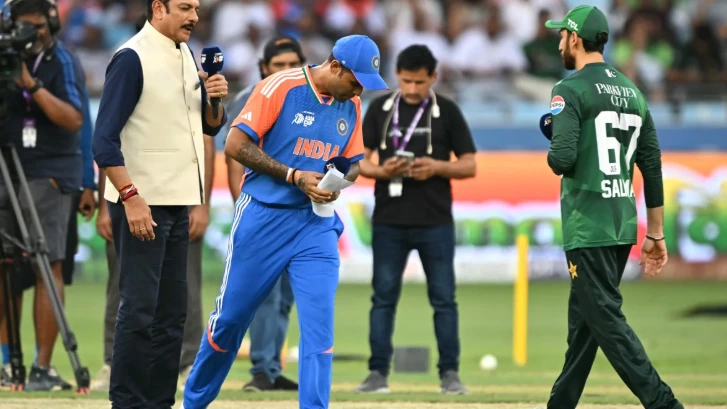
Pakistan’s declaration that it will not take the field against India at the T20 World Cup has pushed the tournament into an unusual and sensitive situation, with ICC playing conditions clearly outlining the sporting consequences of a refusal.

Matches between India and Pakistan carry political significance, but under World Cup regulations, the procedural outcome of a team declining to play is largely unambiguous. If India arrive in Colombo as scheduled, attend training and fulfil all pre-match formalities, the onus rests entirely on Pakistan.

Should Pakistan then refuse to take the field, the fixture would be officially forfeited. India would be awarded two points, while Pakistan would receive none. The forfeiture would also negatively affect Pakistan’s net run rate, a factor that has frequently proven decisive in tightly contested World Cup group stages.

Net run rate impact could prove costly

A forfeit is not treated as a neutral outcome under ICC rules. In a competitive tournament environment, the loss of points combined with a dent to net run rate can have long-term implications, potentially influencing qualification for the semi-finals.

There is only one alternative scenario outlined under the regulations. If India do not travel to the venue, the match would be considered cancelled rather than forfeited, resulting in points being shared by both teams. However, with India expected to meet all logistical and operational requirements, that possibility currently appears unlikely.

Past precedents at ICC events

While forfeitures at World Cups are rare, they are not unprecedented. During the 1996 ODI World Cup, Australia and the West Indies declined to play matches in Sri Lanka following a bomb blast in Colombo, resulting in Sri Lanka being awarded full points.

In the 2003 ODI World Cup, England forfeited their match against Zimbabwe in Harare citing political and security concerns, while New Zealand refused to play Kenya in Nairobi due to safety considerations.

More recent ICC events have also seen withdrawals, including Zimbabwe pulling out of the 2009 T20 World Cup and New Zealand’s Under-19 team exiting the 2022 Under-19 World Cup because of COVID-19 restrictions. In such cases, the ICC has consistently prioritised the integrity of the tournament framework.

Can force majeure apply?

Pakistan’s potential reliance on a force majeure clause forms the crux of the legal debate. Force majeure traditionally applies to unforeseen and unavoidable circumstances such as natural disasters or extreme situations that make participation impossible rather than undesirable.

According to ICC sources, invoking force majeure in this case would be difficult. Such clauses are interpreted narrowly, and political objections alone do not automatically qualify unless there is a demonstrable and immediate threat to safety or feasibility. Without meeting that threshold, a refusal to play would fall outside force majeure protections.

Beyond the immediate match

The implications may extend beyond the scorecard. ICC sources indicate that severe sanctions, including the possibility of suspension, could be considered if a refusal is deemed a breach of participation obligations. Any such action would follow due process rather than being immediate, but precedent exists for firm intervention when competition rules are undermined.

For now, the impact remains primarily sporting. India stand to gain two crucial points without play, while Pakistan risk compromising both their World Cup campaign and their standing within the ICC framework.

What was expected to be the tournament’s most watched fixture could instead become its most consequential non-match, shaped not by runs or wickets but by regulations that leave little room for interpretation.

India News

RSS chief Mohan Bhagwat says Gen Z protesters are our own people, not anti-national

RSS chief Mohan Bhagwat said Gen Z protesters should not be called anti-national, describing protests as a democratic form of dialogue and urging engagement with young people.

Published

on

Mohan Bhagwat

The Rashtriya Swayamsevak Sangh (RSS) chief Mohan Bhagwat on Thursday said members of Generation Z (Gen Z) should not be labelled anti-national merely because they participate in protests. Speaking at the Mumbai Conference titled ‘The Role of Youth in Uniting the World, the Indian Way’, he said young protesters are “our own people” and their concerns should be addressed through dialogue.

Bhagwat said that while protests are part of democracy, they should be carried out through democratic means. He also expressed confidence in the younger generation, describing Gen Z and Gen Alpha as more honest and receptive to the values of patriotism and public service.

Bhagwat calls dialogue essential in a democracy

Addressing the conference, Bhagwat said Gen Z should not be viewed as anti-national for raising concerns.

“If the Gen Z is agitating, they certainly aren’t anti-nationals; they are our own people, our next generation,” he said, adding that a sense of belonging and continuous dialogue are necessary to resolve differences.

He also said that while he would not discourage protests, democracy provides appropriate ways to express dissent.

Says protest is a legitimate form of dialogue

Bhagwat described protests as a democratic mechanism when regular communication fails to resolve issues.

He said that if discussions do not produce results, people naturally raise their voices to draw attention to unresolved concerns, calling protests another form of dialogue in a democratic society.

RSS chief compares Gen Z with earlier generations

Reflecting on generational differences, Bhagwat said today’s youth are more inclined to question authority than previous generations.

According to him, earlier generations generally accepted what elders said without questioning, whereas Gen Z and Gen Alpha seek logical explanations before accepting viewpoints.

He also remarked that he considers the younger generation more honest and said he would readily place his trust in Gen Z.

Remarks come after student protests in Delhi

Bhagwat’s comments come days after student protests in Delhi over alleged undergraduate medical entrance examination paper leaks. The demonstrations, led by the Cockroach Janta Party, resulted in the resignation of Education Minister Dharmendra Pradhan.

When asked whether earlier dialogue could have prevented the situation from escalating, Bhagwat said that if an undesirable situation develops, there must have been shortcomings somewhere that need to be identified and corrected.

On pellet gun allegations

Responding to a question about the reported use of pellet guns against protesting students, Bhagwat said he did not have complete information about the incident.

He said he would need to examine the facts before commenting on what happened or determining where responsibility lay.

Continue Reading

Cricket news

Ajit Agarkar’s future as BCCI chief selector uncertain amid Rohit Sharma ODI controversy, says report

Ajit Agarkar’s position as BCCI chief selector is reportedly under scrutiny, with a report claiming VVS Laxman is being considered as his successor amid the Rohit Sharma ODI controversy.

Published

on

The future of Ajit Agarkar as the chairman of the BCCI’s senior men’s selection committee is reportedly uncertain, with a media report claiming that the board is considering appointing former India batter VVS Laxman as his successor.

According to the report, Agarkar’s tenure as chief selector was originally scheduled to conclude in June 2026. However, he received a three-month extension from the Board of Control for Cricket in India (BCCI). While another extension until the end of the 2027 ODI World Cup was reportedly expected, recent developments surrounding Rohit Sharma’s ODI future have complicated the situation.

Rohit Sharma’s ODI future reportedly became a key issue

The report states that discussions over Rohit Sharma’s place in India’s ODI setup have emerged as a major factor in the ongoing developments.

It claims that ahead of India’s three-match ODI series against England, there were indications that the series could mark Rohit’s final appearance in the format. The report further alleges that the Agarkar-led selection committee had discussed with the Gautam Gambhir-led team management the possibility of leaving the veteran batter out of future ODI assignments.

However, the situation reportedly changed after speculation emerged that the third ODI at Lord’s would be Rohit’s last match. Rohit responded with a century in that game, a performance that, according to the report, put both the selectors and team management in a difficult position.

BCCI secretary issues clarification on Rohit’s future

Following the speculation, BCCI Secretary Devajit Saikia publicly dismissed suggestions that the Lord’s ODI would be Rohit’s final appearance in the format.

“Rohit is a regular member of the Indian ODI team, and he will continue to represent the country as long as he is in the scheme of things. In other words, the Lord’s ODI won’t be his last match,” Saikia told PTI.

The report also claims that some individuals involved in managing the Indian team do not favour Rohit’s participation in the 2027 ODI World Cup, though no official announcement has been made by the BCCI on the matter.

Review meeting yet to take place

According to the report, the BCCI had planned a review meeting after India’s tour of England following the team’s eight defeats in ten matches across the Ireland and England tours.

However, the meeting has reportedly not taken place. The Indian team has since travelled to Sri Lanka for a two-match Test series without the scheduled review being held.

As of now, the BCCI has not officially announced any decision regarding Ajit Agarkar’s tenure as chief selector or any appointment of VVS Laxman as his replacement.

Continue Reading

LATEST SPORTS NEWS

Harsh Singh, Asmita Dey script history with India’s first Commonwealth Games judo golds

Harsh Singh and Asmita Dey created Commonwealth Games history by becoming India’s first male and female judo gold medallists, while India’s boxing campaign gathered momentum in Glasgow.

Published

on

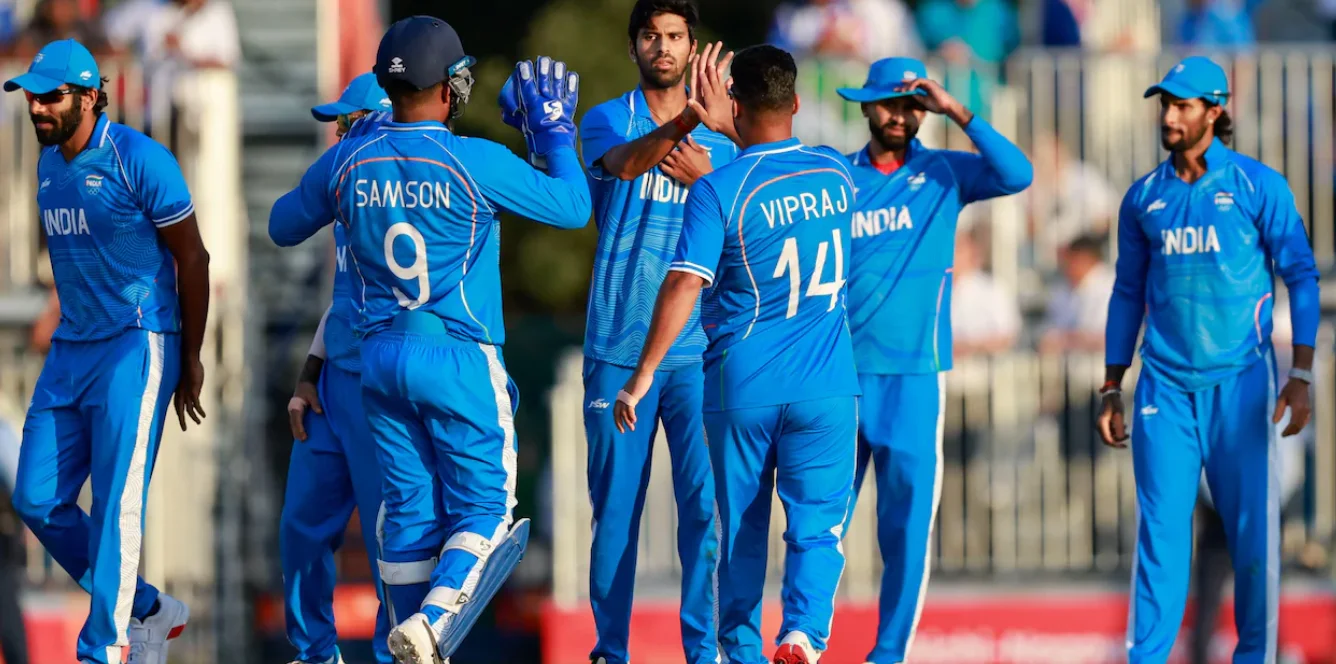
India celebrated a landmark day at the Commonwealth Games 2026 in Glasgow as Harsh Singh and Asmita Dey won historic gold medals in judo, becoming the country’s first-ever male and female Commonwealth Games champions in the sport.

The twin victories marked a breakthrough moment for Indian judo, ending the nation’s long wait for a gold medal at the Commonwealth Games.

Harsh Singh becomes first Indian male judoka to win CWG gold

Harsh Singh produced an impressive performance in the men’s 60kg final to defeat Australia’s Joshua Katz. The Indian judoka secured a decisive Waza-ari during the contest before holding his advantage to seal the gold medal.

With the victory, Harsh became the first Indian male judoka to stand on top of the Commonwealth Games podium.

Asmita Dey wins women’s 48kg title

Earlier in the day, Asmita Dey claimed gold in the women’s 48kg category after overcoming Canada’s Heidi Quach in a closely fought final.

The contest extended into the Golden Score period before the Indian judoka delivered the decisive move to secure the title. Her victory also made her the first Indian woman to win a Commonwealth Games gold medal in judo.

Asmita, who hails from Belonia in Tripura’s South Tripura district, has steadily progressed through the national and international ranks after beginning her sporting journey in athletics before switching to judo.

Indian boxing contingent continues impressive run

India’s boxing campaign also gathered momentum, with several boxers booking places in the finals.

Preeti Pawar, Ankush Panghal, Jaismine Lamboria, Jadumani Singh and Arundhati Choudhary advanced to Saturday’s title bouts, ensuring more medal opportunities for the Indian contingent.

Meanwhile, Priya Ghanghas, Lovlina Borgohain, Sachin Siwach and Narender Berwal were scheduled to compete in their respective semifinal bouts later in the day.

Neeraj Chopra headlines evening athletics action

Former Olympic champion Neeraj Chopra was set to lead India’s athletics campaign in the men’s javelin throw final later on Day 9.

Rohit Yadav and Yash Vir Singh were also entered in the event, while Tejaswin Shankar was due to complete the final discipline of the decathlon. Indian athletes Yashas Palaksha and Santhosh Kumar Thamilarasan were also scheduled to compete in the men’s 400m hurdles final.

Medal hopes remain alive

With historic success in judo and multiple boxing finalists confirmed, India remained in contention for several more medals as competition continued on Day 9 of the Commonwealth Games 2026 in Glasgow.

Continue Reading

Trending

© Copyright 2022 APNLIVE.com