English हिन्दी
Connect with us

India News

Now an app to help farmers practice precision agriculture

Published

on

Now an app to help farmers practice precision agriculture
[vc_row][vc_column][vc_column_text]~By T V Venkateswaran

New Delhi, June 14 (India Science Wire): Engineering students at Indian Institute of Technology Roorkee have developed a mobile app that can help farmers practice precision agriculture, particularly in application of precise amounts of fertilizers.

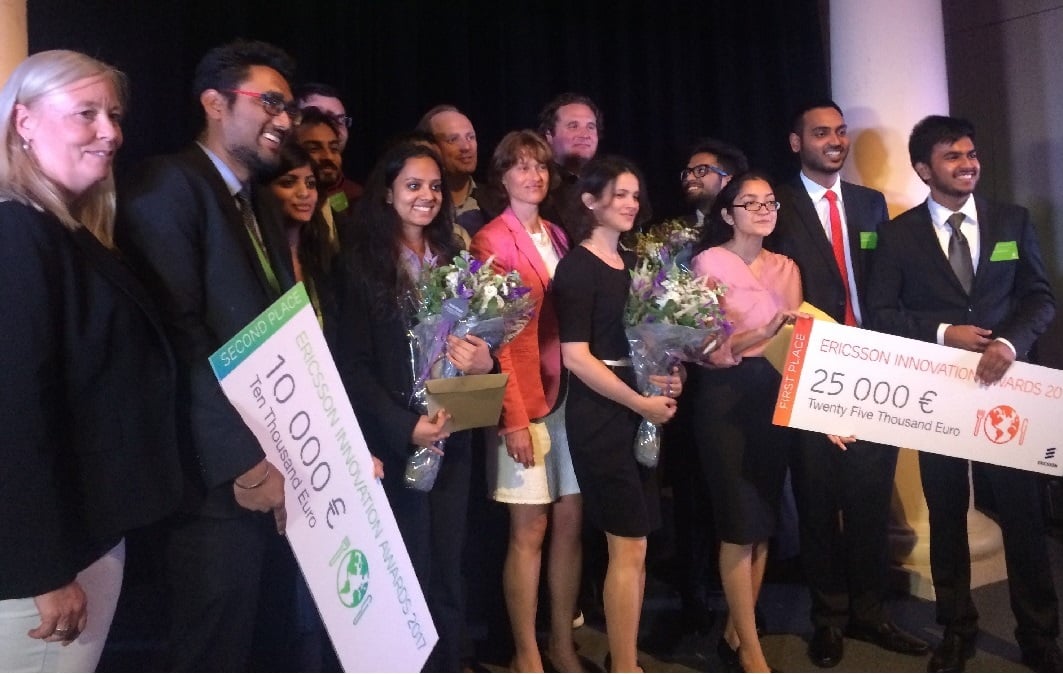
By determining health of the crops using hyperspectral imaging of crop leaves, the app could help in rational use of fertilizers. The development has won IIT Roorkee students the Ericsson Innovation Award 2017. Over 900 teams from 75 countries participated in the global contest for developing innovative ICT ideas on the theme of ‘Future of Food’.

Farmers apply fertilizer based on their experience rather than on any rational input. Therefore, if they chose not to apply fertilisers, perhaps they may be taking a risk and suffer economic losses. On the other hand, excessive application spoils the soil and damages the environment. “If only the farmers can know the health status of the plant, then they can make a more rational choice. The app developed by our students would be handy to the farmers. They would be able to know if the crops need fertilisers or not in just a snap,” says Prof Ajit Kumar Chaturvedi, Director, IIT Roorkee.

Named SNAP, the app uses a precision agriculture technology to determine the optimum fertiliser inputs for the crop and works on the principle of hyperspectral imaging of plant leaves. Spectral lines are like fingerprints that indicate presence or absence of a chemical by studying the light reflected by the leaf. Hyperspectral imaging combines conventional spectroscopy with imaging techniques to acquire both spectral and spatial information simultaneously for detecting physical, chemical, and biological attributes of the samples.

When the sunlight falls on a leaf, the reflected visible light and the near-infrared rays contain specific signals that tell about its chemical constituents. Water content, amount of macronutrients such as nitrogen (N), phosphorus (P), potassium (K), magnesium (Mg), calcium (Ca), as well as micronutrients such as sulfur (S), sodium (Na), iron (Fe), manganese (Mn), boron (B), copper (Cu), and zinc (Zn) and so on can be effectively measured using the hyperspectral imaging technology.

“The app uses mobile phone camera as the imaging device and hence could be profusely used in the field by the farmers,” pointed out Prof Chaturvedi.

The award winning team included Ekdeep Lubana, Anisha Godha Ankit Bagaria and Utkarsh Saxena with diverse expertise of electronics and communication, chemical and metallurgy. After an intense global competition, the team was one of the three global finalists to compete at Noble Museum in Stockholm, Sweden. The low-cost handheld imaging device for optimising fertiliser use in agricultural was declared the global winner and the team were awarded 25,000 Euro.

The jury was chaired by Sara Mazur, Head of Ericsson Research, had Caleb Harper, MIT Media Lab, Dr Catherine Mulligan, Imperial College London, Mattias Fyrenius, CEO Nobel Media, and Johan Jörgensen, Founder Stockholm FoodTech as members.

India Institute of Technology Delhi’s ICT product ‘Enigma’ that seeks to reduce weevil infestations in rice crop storage won the second place while  students of Aalto University, Finland who developed  ‘Foodgrid’, an attempt at minimizing the distance between farm and table by building a social and commercial platform to connect urban farmers, landowners with green space, and consumers won the third place. (India Science Wire)[/vc_column_text][/vc_column][/vc_row]

India News

Delhi deploys 25,000 personnel, installs CCTV cameras ahead of CJP march

More than 25,000 police and paramilitary personnel have been deployed in Delhi ahead of the CJP’s planned protest march at Connaught Place. Authorities have also imposed restrictions and stepped up CCTV surveillance.

Published

on

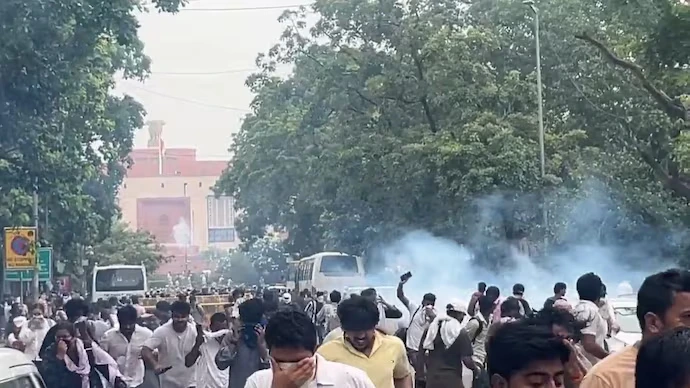
Delhi has stepped up security ahead of a planned protest march by the Cockroach Janta Party (CJP), with more than 25,000 police and paramilitary personnel deployed and additional surveillance measures introduced in parts of the national capital.

The planned “Lehra Do Tiranga” march is scheduled to take place at Central Park in Connaught Place on Friday, October 16. Authorities have also imposed prohibitory orders in Connaught Place and surrounding areas as part of the security arrangements.

Security tightened across Connaught Place

The security arrangements include the deployment of police and paramilitary personnel, along with the installation of additional CCTV cameras at Central Park and Rajiv Chowk Metro Station.

Prohibitory orders have been imposed under Section 163 of the Bharatiya Nagarik Suraksha Sanhita (BNSS) in Connaught Place and nearby areas. Central Park is also scheduled to remain closed for two days, with authorities advising the public to avoid the area during the arrangements.

A high-level meeting chaired by Delhi Police Commissioner Anurag Kumar, attended by senior police officers, was held on Thursday to review preparations ahead of the planned demonstration.

Why CJP is planning the march

The CJP has called the march to protest the arrest of its leaders Saurav Das and Ashutosh Ranka and to demand the resignation of Chief Election Commissioner Gyanesh Kumar over alleged irregularities in voter rolls.

The party’s protest is centred on its allegations concerning the electoral roll revision process. These are the protesters’ claims and should not be treated as independently established findings.

With Jantar Mantar no longer designated as a protest site, Central Park in Connaught Place has emerged as the proposed location for the fresh demonstration. The protest has also received support from the Aam Aadmi Party and the All India Students’ Association, according to the report.

Traders raise concerns over business disruptions

The heightened security measures have also prompted concerns among traders in the area.

Traders at Palika Bazaar have expressed concern about disruptions during the festive season, pointing to losses associated with previous protests. The concerns reflect the potential impact of repeated demonstrations and security restrictions on commercial activity in central Delhi.

Delhi Police has said it will facilitate peaceful demonstrators selectively while maintaining public order and protecting property.

Continue Reading

India News

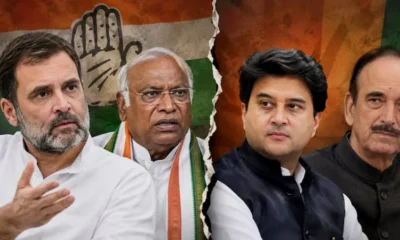
Mallikarjun Kharge’s ‘Your Friends’ jab at Rahul Gandhi over congress exits

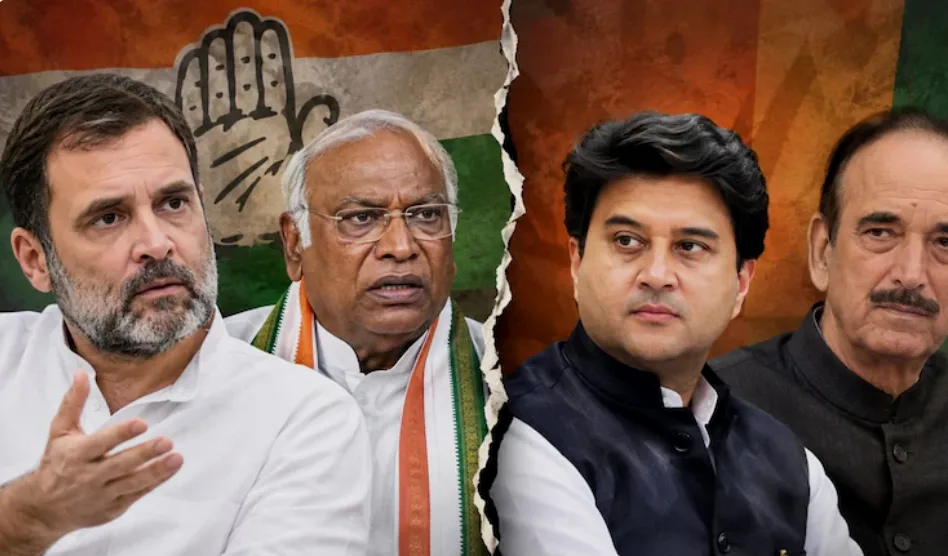
Congress president Mallikarjun Kharge took a dig at Rahul Gandhi after the Leader of the Opposition reportedly described former party leaders Jyotiraditya Scindia and Ghulam Nabi Azad as among those who had left the Congress.
Published

on

Congress president Mallikarjun Kharge made a pointed remark about former Congress leaders after Rahul Gandhi reportedly described some of those who left the party as people who had been driven by personal interests or fear. The exchange took place during an informal interaction involving young Congress workers, according to a report published on October 15.

Rahul Gandhi, the Leader of the Opposition in the Lok Sabha, reportedly referred to former Congress leaders Jyotiraditya Scindia and Ghulam Nabi Azad while discussing people who had left the party. Kharge responded with a quip that drew attention to Rahul Gandhi’s earlier association with the leaders.

What Rahul Gandhi said about leaders who left Congress

During the interaction, Rahul Gandhi reportedly said that the Congress was now left with committed workers, describing those who remained in the party as ‘babbar sher’ or lions. He alleged that people who were greedy or afraid had left, citing Scindia and Azad as examples.

His reported remarks referred to people who, he suggested, had left because of the attraction of positions and security or fear of investigative agencies such as the Enforcement Directorate (ED) and the Central Bureau of Investigation (CBI).

These were Rahul Gandhi’s political characterisations of the leaders who left the Congress, rather than independently established explanations for their departures.

Kharge’s response to Rahul Gandhi

Reacting to Rahul Gandhi’s account, Kharge remarked, “They were all your friends.”

The comment referred to the association Rahul Gandhi had previously shared with some of the leaders who later left the Congress. Rahul Gandhi responded by saying that his sister, Priyanka Gandhi Vadra, was present and knew that Scindia was not his friend.

He subsequently reflected on the difficulty of identifying friends and opponents in politics, saying that people who appear to be friends may not necessarily be so, and the reverse may also be true.

Why Jyotiraditya Scindia and Ghulam Nabi Azad were mentioned

Jyotiraditya Scindia left the Congress in 2020 and joined the Bharatiya Janata Party (BJP). His departure was followed by a political crisis in Madhya Pradesh that resulted in the fall of the Congress government led by Kamal Nath.

Ghulam Nabi Azad, a veteran Congress leader, resigned from the party in August 2022. In his resignation letter, he criticised Rahul Gandhi’s leadership and the functioning of the party’s internal decision-making process.

Both leaders subsequently became prominent examples in political discussions about senior figures leaving the Congress, although their reasons and circumstances differed.

Rahul Gandhi’s message to young Congress workers

The interaction also focused on protests and political mobilisation. Rahul Gandhi reportedly told young Congress workers that demonstrations and struggles were part of their political training and encouraged them to explore new and creative ways of protesting.

He also suggested holding protests at Jantar Mantar, according to the report.

Congress president Kharge and Priyanka Gandhi Vadra were present during the interaction. Rahul Gandhi also claimed that the government led by Prime Minister Narendra Modi was dependent on the next eight to 10 months, though the report did not establish this as an independently verified assessment.

The exchange between Kharge and Rahul Gandhi offered a glimpse into the Congress leadership’s informal discussions, while bringing the departures of Scindia and Azad back into the political conversation.

Continue Reading

India News

Delhi Police offers 11-person limit for CJP’s Connaught Place protest

Delhi Police has offered to facilitate a group of 11 people at Central Park in Connaught Place for the Cockroach Janata Party’s October 16 protest, while warning that violations of prohibitory orders could invite legal action.
Published

on

CJP protest to continue

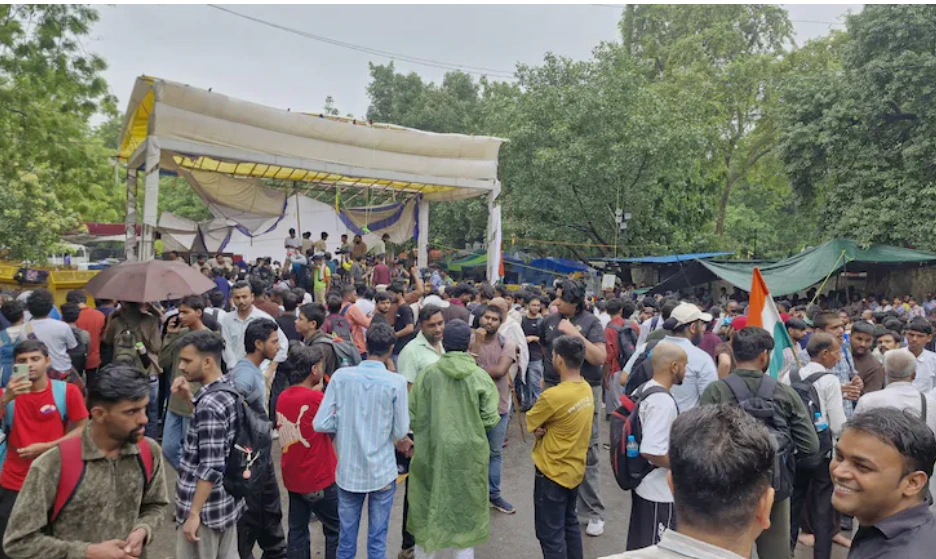
Delhi Police has proposed allowing a group of 11 people to carry the national flag and sing the national anthem at Central Park in Connaught Place on October 16, ahead of a protest called by the Cockroach Janata Party (CJP) over alleged electoral fraud.

The police said it could facilitate the group at a suitable place in the park, while appealing to the public not to join the proposed gathering in large numbers. The offer comes amid prohibitory orders in Connaught Place and adjoining areas under Section 163 of the Bharatiya Nagarik Suraksha Sanhita (BNSS).

CJP founder Abhijeet Dipke has called on people to assemble at Central Park at 5 pm on Friday with the national flag. The proposed demonstration, named “Lehra Do Tiranga”, follows the detention of CJP members Saurav Das and Ashutosh Ranka during an earlier protest.

Why Delhi Police proposed limiting the gathering

In its statement, Delhi Police cited the prevailing security and law-and-order situation in the area. It also referred to information from the New Delhi Municipal Council (NDMC) that Central Park would remain closed on October 16 and 17 for administrative reasons.

Deputy Commissioner of Police Neha Yadav said the NDMC had informed the police about the closure and had asked that no gathering be allowed near the park.

The police also cited representations from trader and market associations in Connaught Place and surrounding areas. According to the police, the associations had raised concerns about unlawful assemblies and their impact on businesses, particularly during the festive season.

Police warned that violations of Section 163 BNSS would invite appropriate legal action. It also stressed that the national flag must be displayed and carried, and the national anthem sung, in the prescribed manner with due respect and dignity.

Delhi High Court declines to stop CJP protest

The proposed gathering reached the Delhi High Court after a vendor sought intervention over concerns about disruption to businesses and public movement in Connaught Place.

On Thursday, the court declined to restrain the CJP from holding the protest. It recorded the police’s assurance that all possible measures under the law would be taken to regulate the gathering and maintain peace.

The petition was filed by a vendor at Palika Bazar in Connaught Place, who raised concerns about the potential impact of the demonstration on traders and others working in the area.

Additional Solicitor General Chetan Sharma, appearing for the authorities, told the court that steps had already been taken to regulate the proposed protest.

CJP’s protest call follows detention of party members

Dipke’s October 16 protest call follows earlier demonstrations over alleged electoral fraud. CJP members Saurav Das and Ashutosh Ranka are in jail on trespass charges after raising the national flag at Jantar Mantar earlier this week, according to the report.

The party has been protesting over alleged electoral fraud and has raised questions about the Election Commission.

Dipke has urged people to gather at Central Park with the national flag, arguing that raising the Tricolour should not be treated as a crime.

The police’s proposal to facilitate a group of 11 people came as the authorities sought to prevent a larger gathering at the site. The CJP’s response to the police’s offer was still awaited in the report published on October 15.

Continue Reading

Trending

© Copyright 2022 APNLIVE.com