English हिन्दी
Connect with us

India News

Media: Trumping Government in US; Modified in India

Published

on

Media: Trumping Government in US; Modified in India
[vc_row][vc_column][vc_column_text]By Ranjona Banerji

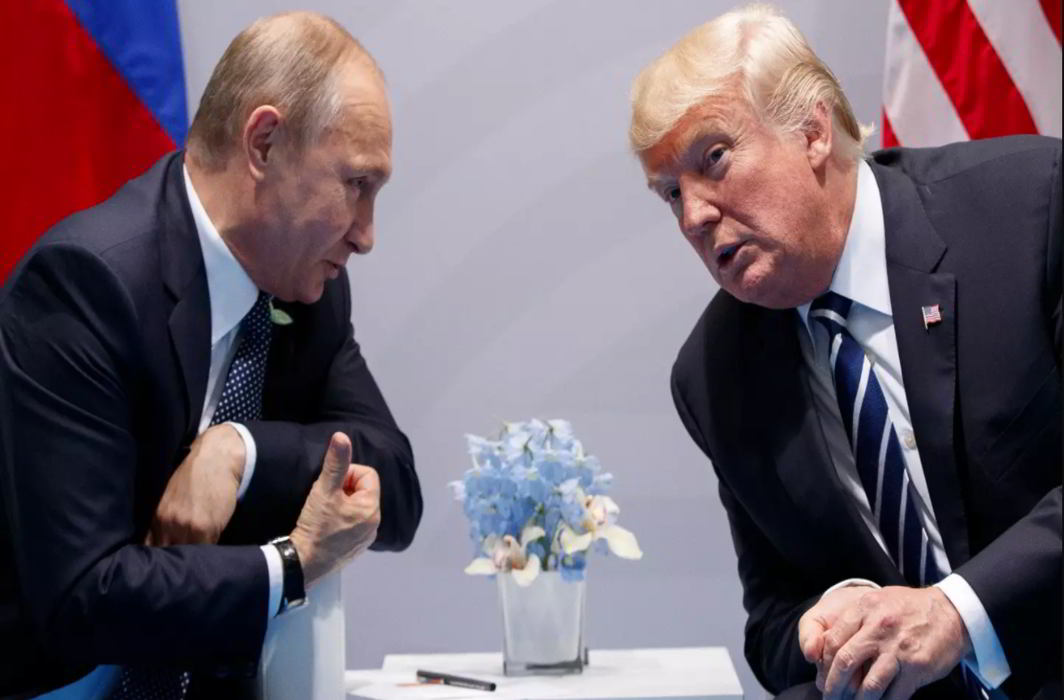
Six months into Donald Trump’s presidency and the standoff with the bulk of the American media continues. The President continues to whine on Twitter and elsewhere about how badly he is being treated and the media explains to the people why he is being treated as he deserves. His failed executive orders, his exaggerations and lies, his possible Russia connections, his firing of the FBI chief, his inexplicable tweets – they are all excoriated, mocked and examined by mainstream journalists, comedians, actors, talk show hosts and more.

There has also been, from day one, open discussion about the White House denying access to journalists. Some publications and news channels were banned for a while. Some boycotted the regular briefings. Most recently, White House press secretary Sean Spicer has taken to conducting no-camera no-audio press briefings. The logic is that the President will say things himself but that argument hardly stands at a press briefing where the president is not present. At a discussion on this subject broadcast on CNN, journalists were clear that Spicer did not want his explanations of what the President was saying or doing to be recorded for posterity.

The American media, for the most part, see it as their duty to bring every aspect of the American presidency and government to the public. In their minds, denying access to journalists is like denying access to the people of America. It is a notion of democracy that could not be more different from what we have become used to in India.

Here too, the administration at the Centre is closed and inaccessible. But this lack of news emitting from Union government departments is discussed in press clubs and newsrooms. It is not laid bare in front of the public. The lack of information is evident from the recent BJP pick for President of India after Pranab Mukherjee’s term ends. For months, political journalists in Delhi have been waving names in front of the public – LK Advani, then not Advani after the Babri demolition case re-appeared, Murli Manohar Joshi, Sushma Swaraj, Narayana Murthy, Draupadi Murmu, some fantastic out of the box name and so on. No one got close to the candidate chosen by the BJP because the decision was made only by Narendra Modi and Amit Shah. It is well known in Delhi circles that all decisions, in fact, are made by the Prime Minister and the BJP president and few are in the know – except perhaps Union finance minister Arun Jaitley more than any other.

The immediate reaction from a media prone to genuflection was to tell the people how the choice of Ram Nath Kovind, whom no one had really heard of, in spite of being governor of Bihar, was a masterstroke (if only the media had thought of this) which has stumped the opposition – the main purpose in choosing a candidate.

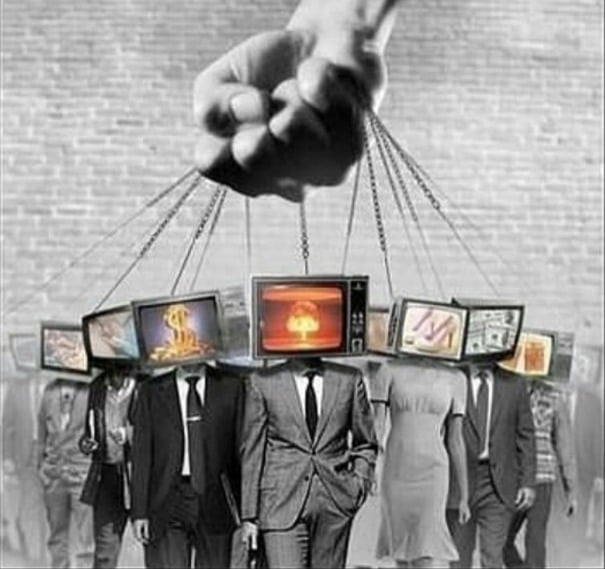
But instead of sharing the problems of reporting on a closed, secretive government with the people of India, journalists have pretended that all is well and let off steam through gossip. Some media outlets have turned themselves into government spokespersons, others have attacked the Opposition because they are too scared of the government to take it to task when it falters or makes a mistake.

This has been most evident when Kashmir exploded last year spiralling into one of the worst crises in recent times, when Dalits were being picked on and killed, when murderous groups were lynching and beating people in the name of cow protection and now when farmers are out on the streets in anger: some sections of the media looked to protect the government from any blowback and blame the opposition instead.

The worst instance was when demonetisation was unleashed on India. It took our courageous news channels weeks to realise that the currency crunch was causing havoc across India. Although the impact is still being felt on falling economic indicators, few of our television heroes have had the courage to take the government on. After the CBI raids on NDTV recently, some may think there is good reason for this discretion.

But the US President attacking the New York Times and Washington Post for instance and accusing them of publishing “fake news” has only brought these two rival newspapers closer. Nor has the rest of the media backed down regardless of the rage of the presidency. How many media houses in India have been that brave?

The sad, sad lesson to Indian journalists and their bosses continues.[/vc_column_text][/vc_column][/vc_row]

India News

Rahul Gandhi faces FIR order as Allahabad High Court acts on dual citizenship plea

High Court allows plea in Rahul Gandhi citizenship case, paving the way for further legal process.

Published

on

Rahul Gandhi

The Lucknow bench of the Allahabad High Court has allowed a petition seeking legal action in connection with allegations related to Congress leader Rahul Gandhi’s citizenship status, marking a fresh development in the case.

The petition was filed by a political worker, who had approached the court seeking directions for registration of a case over claims that Gandhi may have held foreign citizenship. The High Court, while hearing the matter, passed directions for further proceedings in accordance with law.

The development comes after a special MP/MLA court in Lucknow had earlier declined to order registration of an FIR, reportedly observing that it lacked jurisdiction in matters concerning citizenship.

Background

The case is linked to allegations that Rahul Gandhi may have held British citizenship. Under Indian law, dual citizenship is not permitted. However, these claims remain part of the petitioner’s submissions and have not been established by any court.

During earlier hearings, the High Court had sought records and considered material presented by the parties involved.

What happens next

With the High Court allowing the plea, the matter is expected to proceed as per due legal process. This may involve examination by the appropriate authority and further judicial review at subsequent stages.

The case carries both legal and political significance given Rahul Gandhi’s role as Leader of the Opposition in the Lok Sabha.

Continue Reading

India News

Pawan Khera faces fresh setback as Supreme Court refuses relief in passport row case

Congress leader Pawan Khera faces fresh setback as Supreme Court refuses interim relief and directs him to seek bail from Guwahati High Court.

Published

on

Pawan Khera

Congress leader Pawan Khera suffered another legal setback on Friday after the Supreme Court of India declined to extend protection in a case linked to his remarks about Himanta Biswa Sarma’s wife.

A bench of the apex court refused to interfere with an earlier order that had stayed the transit anticipatory bail granted to Khera by the Telangana High Court. This decision leaves the Congress leader open to possible arrest by Assam Police in connection with the case.

During the hearing, Khera’s counsel sought interim protection, but the court declined the request and advised him to approach the appropriate court in Assam for relief. The bench clarified that the Guwahati High Court should decide any bail plea independently and on its merits.

“Am I a terrorist?” remark during hearing

While seeking protection, Khera’s legal team expressed concern over the urgency of the situation. In court, his counsel remarked, “Am I a terrorist?” highlighting the plea for temporary relief until a fresh bail application could be filed.

The Supreme Court also raised concerns over the submission of incorrect documents during the proceedings, adding another layer to the legal complications faced by the Congress leader.

Case linked to remarks on CM’s wife

The case stems from a press conference held earlier this month, where Khera made allegations regarding the citizenship status and financial assets of the Assam Chief Minister’s wife, Riniki Bhuyan Sharma.

He had claimed that she possessed multiple passports and owned undisclosed overseas properties. These allegations were strongly denied by the Chief Minister’s family, who termed them fabricated and misleading.

Legal battle intensifies

Earlier, the Telangana High Court had granted Khera temporary transit anticipatory bail, allowing him time to seek relief from a competent court in Assam. However, the Supreme Court stayed that order following a challenge by Assam authorities, escalating the legal battle.

With the latest ruling, Khera is now expected to move the Guwahati High Court for anticipatory bail as the case continues to unfold.

Continue Reading

India News

Congress suspends 5 Haryana MLAs over cross-voting in Rajya Sabha polls

Congress suspends five Haryana MLAs for cross-voting in Rajya Sabha elections, citing serious indiscipline and anti-party activities.

Published

on

The Congress has suspended five of its MLAs in Haryana for cross-voting during the recent Rajya Sabha elections, taking disciplinary action over what it described as “anti-party activities”.

The move came after the state unit reviewed the conduct of certain legislators during the polls, where some were found to have voted against the party’s authorised candidate.

Five MLAs suspended after disciplinary process

According to party sources, the MLAs were issued show-cause notices seeking an explanation for their actions. After reviewing their responses, the Congress disciplinary committee recommended suspension.

The decision was approved by the party leadership, including Congress president Mallikarjun Kharge, and has been implemented with immediate effect.

Party calls it ‘grave indiscipline’

Haryana Congress chief Udai Bhan said the action was necessary to uphold party discipline, stressing that defying the official party line during elections weakens organisational unity.

He said the party takes such violations seriously and will continue to act against any form of indiscipline.

Leadership backs strict action

Senior Congress leader and Leader of Opposition Bhupinder Singh Hooda supported the decision, saying it was taken after due consideration.

He noted that while Rajya Sabha elections are conducted through an open ballot system, allowing legislators some flexibility, the party retains the authority to initiate internal disciplinary action in cases of deviation.

Background

The action follows cross-voting reported during the recent Rajya Sabha elections in Haryana, which led to internal concerns within the party. The development has highlighted organisational challenges and prompted the leadership to take corrective steps to reinforce discipline.

Continue Reading

Trending

© Copyright 2022 APNLIVE.com