English हिन्दी
Connect with us

Latest world news

Trans fats cause heart disease, not Saturated fats like those in Coconut oil

Published

on

Trans fats cause heart disease, not Saturated fats like those in Coconut oil
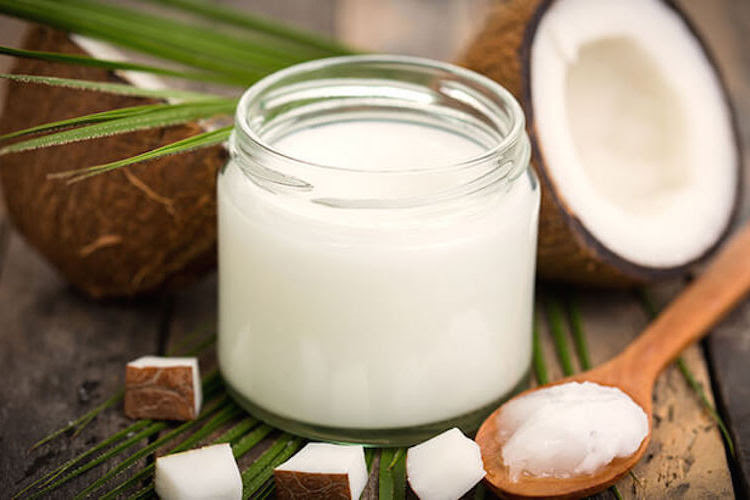
[vc_row][vc_column][vc_column_text]In the wake of a review paper condemning coconut oil as a bad-for-you saturated fat, news media around the world, including ScienceAlert, have jumped on the anti-saturated fat bandwagon led by none other than the American Heart Association (AHA). The AHA published its statements in the journal Circulation, mostly repeating the decades-old refrain that saturated fats like those in coconut oil cause heart disease. And of course, without looking beyond the press release, news media were quick to report it.

The AHA’s timing for this is interesting, considering that a man who studied this very topic for 80 years, and who actually sued the US Food and Drug Administration (FDA) to stop blaming saturated fat for heart disease, and to remove trans fats from processed foods, died on June 2, 2017, at 102 years old. Dr. Fred Kummerow spent most of life trying to get the science world to accept the truth about artery-clogging trans fats.

Shortly before his death, Kummerow, a comparative biosciences professor at the University of Illinois, succeeded in his quest, which started with a petition to the FDA in 2009, using his own, science-based research as his proof. The agency’s failure to respond led to his lawsuit against the agency in 2013. Two years later, the FDA agreed to start the process of banning all synthetic trans fats from food. The ban is set to go into effect in 2018.

Kummerow was one of the first to suggest a possible link between processed foods and heart disease, and in his lawsuit, asked the FDA to simply be more responsible for the decisions they made that could (and did) make or break the health of consumers.

The truth is saturated fats and cholesterol were wrongly vilified as the central culprit of heart disease and stroke, leading manufacturers to substitute trans fats in food products, while it’s actually sugar, refined carbohydrates, trans fats and processed vegetable oils found in many processed foods that are the real enemy.

The science is real. Research in Denmark, the first country to act following research demonstrating the dangerous health effects from trans fats, found a reduction in cardiovascular disease in the population several years after trans fats was limited in food production. Other research concluded a mere 2 percent increase in calories from trans fats can double your risk of heart attack.

And the vegetable oils that are being promoted by the AHA to replace trans fats aren’t really better: When heated they may degrade to even more dangerous toxic oxidation products, including cyclic aldehydes. Many of the vegetable oils produced today — peanut, corn and soy — are products of genetic engineering and are a significant source of glyphosate exposure, too, not to mention that they are also high in omega-6 fats, creating an imbalance in your omega-3 to omega-6 ratio, which can trigger or contribute to cardiovascular problems, diabetes, arthritis, cognitive decline and specific cancers.

Interestingly, Kummerow — remember, he lived to 102 — noted that his own diet included whole milk, red meat and eggs scrambled in butter. His book, “Cholesterol is Not the Culprit: A Guide to Preventing Heart Disease,” tells it all, and shows clearly why it’s unconscionable that the AHA would spew their disinformation now. – Dr. Joseph Mercola, Waking Times[/vc_column_text][/vc_column][/vc_row]

Latest world news

Trump issues fresh Iran warning at UN General Assembly, signals deal after midterms

US President Donald Trump issued a fresh warning to Iran during his UN General Assembly address, saying he faces a choice between a deal and further escalation.

Published

on

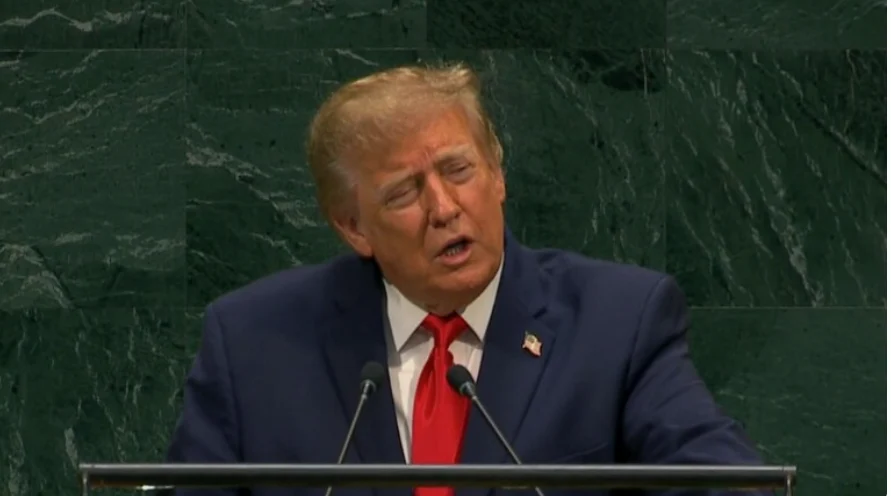
US President Donald Trump used his address to the United Nations General Assembly on Tuesday to outline what he described as a major decision over Iran, putting the possibility of a deal against further military escalation.

Speaking at the UN in New York, Trump said he had a “big decision” to make. He questioned whether the United States should pursue an agreement that would allow Iran to rebuild or instead take further action against the Islamic Republic.

Trump later indicated that he believed an agreement with Iran could be reached after the US midterm elections, which are scheduled for November 3.

Trump says deal with Iran remains possible

During his speech, Trump presented two possible paths. He said a deal could allow Iran to rebuild and become a stronger country, while also raising the possibility of destroying the Islamic Republic if an agreement was not reached.

Trump said he believed a deal could eventually be reached, arguing that Iran was waiting to see the outcome of the US midterm elections.

His comments came amid the continuing US-Iran conflict and renewed diplomatic activity surrounding the confrontation. Trump’s UN appearance came as Washington was also engaged in discussions with multiple international leaders over the Iran conflict and other global issues.

Iranian delegation walks out during Trump’s speech

The Iranian delegation reportedly left the General Assembly chamber as Trump began describing the military confrontation with Iran.

According to the report, only one person from the Iranian delegation remained seated as Trump spoke about the conflict and the military strikes of the past six months.

The walkout came as tensions between Washington and Tehran remained high, with both sides facing pressure over the continuation of the conflict.

Trump’s latest warning follows earlier comments

Trump’s UN remarks came days after he said he was approaching a major decision over whether to intensify military action against Iran or pursue another route.

He had also indicated before his UN appearance that he could be open to meeting Iranian President Masoud Pezeshkian during the UN General Assembly in New York.

The possibility of renewed negotiations comes against the backdrop of continuing military and diplomatic tensions between the two countries.

Continue Reading

Latest world news

Visegrad Group backs India’s bid for permanent UN Security Council seat

India’s bid for a permanent UN Security Council seat received collective backing from the four Visegrad Group countries at a meeting in New York.
Published

on

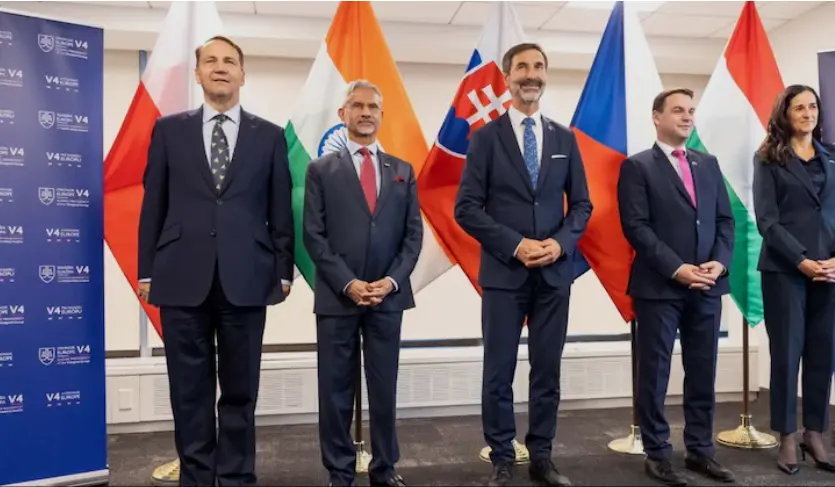
India’s campaign for a permanent seat on the United Nations Security Council received fresh backing from four Central European countries at a meeting on the sidelines of the 81st UN General Assembly in New York.

The Visegrad Group, comprising Poland, Hungary, Slovakia and the Czech Republic, backed India’s call for permanent membership of the UN Security Council.

The support came during the first V4+India foreign ministers’ meeting involving External Affairs Minister S Jaishankar and his counterparts from the four-member grouping.

What Slovakia said on India’s UNSC bid

Slovak Foreign and European Affairs Minister Juraj Blanar said the four Visegrad countries agreed that India should have a permanent place on the UN Security Council.

Blanar described India as a country from the Global South and an emerging power in the Indo-Pacific region while expressing the group’s support for India’s permanent membership.

The statement was made after the meeting with Jaishankar in New York.

India has been seeking reform of the Security Council, including permanent membership, arguing for greater representation of today’s global political landscape.

India and V4 agree to deepen cooperation

The meeting was not limited to the Security Council issue. Jaishankar said India and the four Visegrad countries agreed to strengthen cooperation across several areas.

The countries agreed to hold annual meetings of foreign ministers and establish an annual business forum to deepen economic engagement.

The discussions also covered technology and innovation, research and education, defence, space, connectivity, culture and people-to-people relations.

Jaishankar described the first V4+India meeting as a “new historic occasion” and said India had very good relations with the four countries.

The ministers also discussed major international developments, including the conflict in Ukraine and developments in the Gulf.

What is the Visegrad Group?

The Visegrad Group, also known as V4, is a regional grouping of four Central European countries — Poland, Hungary, Slovakia and the Czech Republic.

The group was established in 1991 and provides a platform for cooperation in areas including political, economic, security and other matters.

India seeks permanent seat on UN Security Council

The UN Security Council currently has 15 members, including five permanent members — China, France, Russia, the United Kingdom and the United States — and 10 non-permanent members elected for two-year terms.

India has been seeking comprehensive reform of the Security Council and a permanent seat as part of that process.

The backing from the Visegrad Group adds four more countries to the list of nations supporting India’s permanent-membership demand. However, the V4 countries’ support by itself does not change the existing structure of the Security Council or complete the UN reform process. Any expansion would require the necessary agreement among UN member states and changes to the UN Charter.

Continue Reading

Latest world news

Trump signs Russia sanctions bill, India faces 100% tariff threat

Donald Trump has signed the Russia sanctions bill into law, giving the US president authority to impose tariffs of up to 100% on countries buying Russian oil and gas, including India and China.
Published

on

Donald Trump

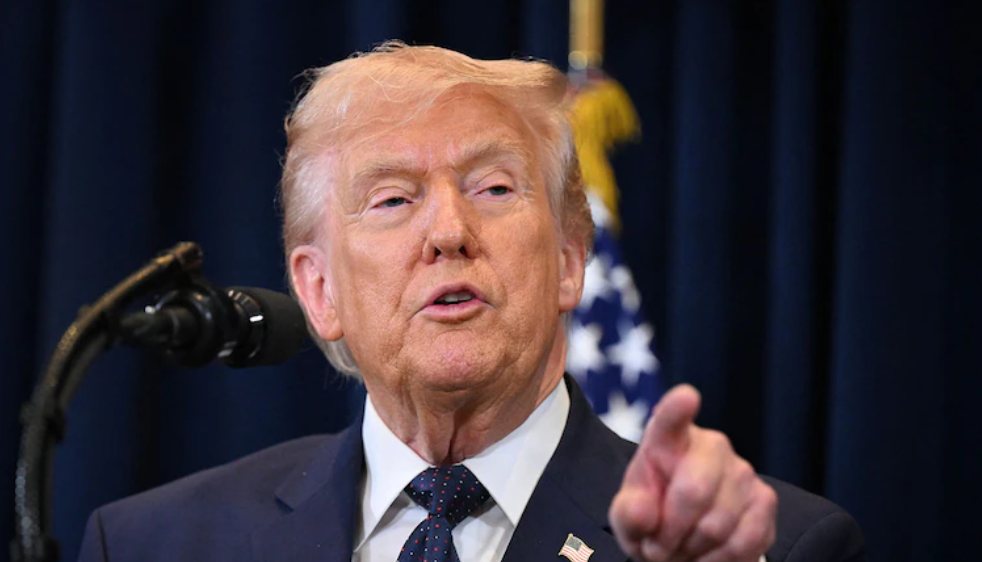
US President Donald Trump has signed a Russia sanctions bill into law, giving his administration the authority to impose tariffs of up to 100 per cent on countries that buy Russian oil and gas.

The legislation puts major Russian energy buyers, including India and China, at risk of additional US tariffs. However, the law does not automatically impose a 100 per cent tariff on either country. The actual tariff would depend on whether Trump chooses to exercise the authority granted under the legislation.

The signing came two days after the Republican-led US House of Representatives passed the sweeping sanctions package by 262-159.

The legislation, known as the Lindsey O Graham Sanctioning Russia and Iran Act of 2026, is aimed at reducing the financial resources supporting Russia’s war against Ukraine.

What does the Russia sanctions bill contain?

The new law targets Russian officials, banks, energy interests and foreign entities accused of supporting Moscow’s military operations.

It also provides for tariffs of up to 500 per cent on Russian goods. Separately, countries covered by provisions targeting purchases of Russian oil and gas could face duties of up to 100 per cent.

The legislation also includes sanctions against Russian President Vladimir Putin and senior members of the Russian government.

Why India faces a 100% tariff threat

India is among the major buyers of Russian crude oil and could therefore be affected by the new tariff authority.

An amendment proposed by Democratic Congressman Steny Hoyer sought to explicitly identify 10 countries — China, India, the UAE, Turkiye, Singapore, Azerbaijan, Kazakhstan, Hungary, Kyrgyzstan and Slovakia — as eligible for tariffs of up to 100 per cent under the secondary tariff provisions.

However, the amendment itself does not impose a 100 per cent duty on India.

Instead, the legislation gives Trump the power to impose such tariffs if he decides to use it. The eventual impact on Indian exports will depend on the tariff rate, if any, announced by the US administration.

What India said on Russian oil purchases

India had responded to the passage of the sanctions bill by reiterating its focus on energy security.

The Ministry of External Affairs said India remains committed to ensuring energy security for its 1.4 billion people and would continue to diversify its sources of energy based on changing market conditions.

The ministry also said India’s oil trade with Russia had been discussed at high levels with US officials in recent months and that New Delhi had clearly conveyed the potential implications for bilateral relations and the international energy market.

Previous US tariffs on India

The latest development comes after earlier tariff tensions between India and the US over Russian crude imports.

According to the report, Trump had previously imposed an additional 25 per cent tariff on Indian imports of Russian crude, on top of a 25 per cent reciprocal tariff. The additional tariff was removed in February 2026, while the reciprocal tariff was reduced to 18 per cent under a US-India trade framework.

The new law therefore creates another potential source of pressure on India-US trade relations, although the final effect will depend on how the Trump administration uses the tariff authority.

Continue Reading

Trending

© Copyright 2022 APNLIVE.com