English हिन्दी
Connect with us

India News

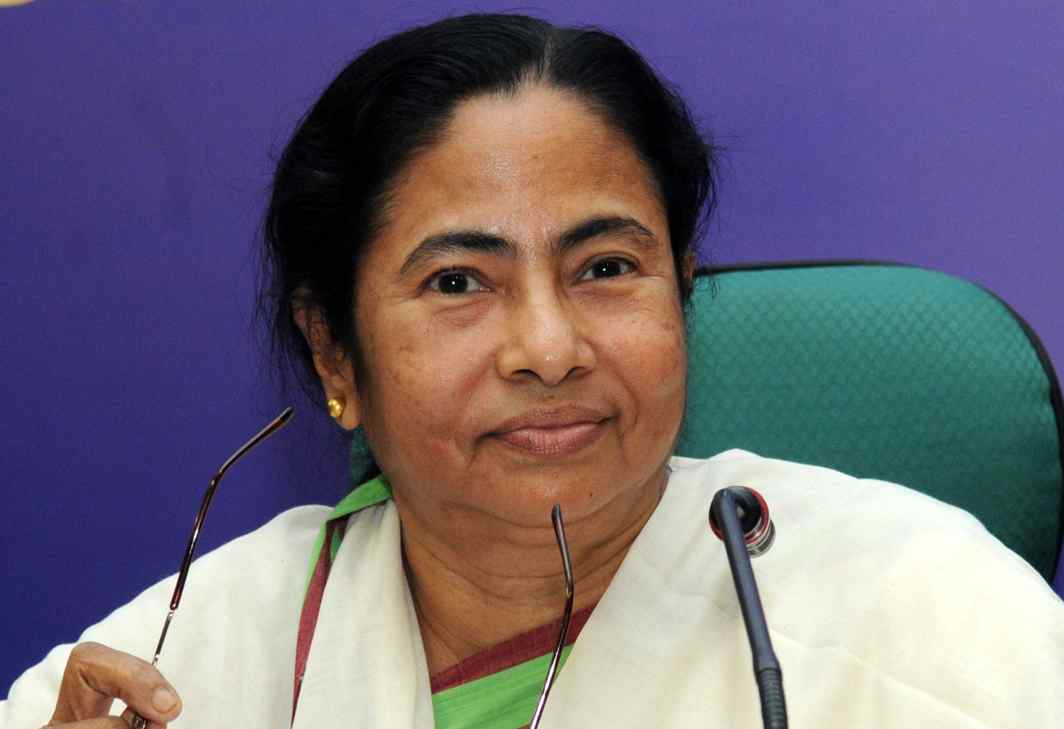
Enemy’s Enemy Is My Friend: BJP, CPM Target Mamata

Published

on

MAMATA BANERJEE

By Saeed Naqvi

On the eve of the May 2016, West Bengal Assembly elections, Arun Jaitley shared his campaign experiences with some editors. When he attacked Mamata Bannerjee and the Left-Congress Front in equal measure, the crowd’s response was tepid. When he attacked TMC for 60 percent of his speech, there was some applause. But when his speech was 75 percent invective against the TMC, the applause was thunderous.

The editor who passed on these “findings” to me was then a key figure in the Kolkata establishment. He was amplifying something he liked to believe. So opposed to Mamata was he that he claimed some credit for helping stitch together what was patently an absurd arrangement: Congress and the CPM would hold hands in Bengal, but fight each other in Kerala. They were trounced.

Jaitley’s unflattering report about Mamata’s electoral fortunes can be easily explained. His meetings, obviously organized by RSS cadres consisted of crowds who were presumably anti Mamata. His narrative also revealed that, in charting out a future in Bengal, the BJP saw Mamata as a much more formidable obstacle than the Congress-Left combine.

That outcome is precisely what the BJP is up against now that Amit Shah is preparing the turf for the 2019 elections.

In this framework, how does the communal violence following Bashirhat play itself out? First, it must be registered that there have been a dozen or so clashes in the state after Mamata’s reelection. It must be said to the credit of CPM’s 36 year rule: Communal riots were almost non- existent. Some of what is happening now is clearly part of the BJP’s effort to create an atmosphere conducive to communal polarization.

It is difficult to see how the BJP can profit from efforts at Hindu consolidation in a state with anywhere between 30 to 35 percent Muslim population. In the absence of a reliable census, these are the figures most parties privately cite. Promoting communalism would leave this bloc vote consolidated exactly where it is: behind Mamata.

Considering that this very same vote stood four square behind the CPM for 34 years, mostly under the charismatic Chief Ministership of Jyoti Basu, its support for Mamata need not theoretically be seen as permanent.

This probably is the desperate hope the CPM nurses. To enhance Mamata’s vulnerabilities it has thrown its lot with the BJP: an enemy’s enemy is my friend.

Just as the self defeating formula, CPM + Congress, for May, 2016 elections was credited to the CPM secretary General Sitaram Yechury, the strategy of attacking TMC just when it is in RSS-BJP line of fire, is widely believed to be the line enunciated by former party Secretary General Prakash Karat.

Quite clearly the party has not yet digested the harsh reality that it was trounced by TMC, that Buddhadeb Bhattacharjee was West Bengal’s Gorbachev. In the rush to reform both had lost control.

The Marxist government’s conflict with peasants in Nandigram in March, 2007, set into motion a series of events which ultimately dethroned the CPM. Karat’s diagnosis was that the anger of Muslim peasants had been stoked by a combination of Jamiat, TMC and Naxalities.

Muslim peasants,  fearful of losing their lands for a Special Economic Zone, was the basis on which CPML groups worked hard to mobilize a powerful movement. Jamiat may have played a role since the peasants were Muslim. The only party in the fray to take electoral advantage was the TMC.

It was a masterstroke of political opportunism by Mamata. Having lost the 2006 assembly election, she turned her fortunes around using Singur and Nandigram as fulcrums.

A leader’s political durability in Kolkata can sometimes be measured by political currents in neighbouring states – Tripura for instance.

Possibly inspired by Mamata’s rise, the President of the Congress in Tripura, Sudip Roy Burman switched to the TMC. But when he saw the Modi wave sweeping across UP and the TV channels, he turned up in Guwahati to promise support the BJP’s Presidential candidate Ram Nath Kovind.

Now, Agartala is rife with rumors that six TMC MLAs are likely to join the BJP in the coming weeks. In other words, the BJP, which had no member in the Assembly, will suddenly have six.

This sudden inflation of BJP legislators will have ample moral support from the rabidly anti Muslim Governor Tathagata Roy. His recommendation on how Muslim terrorists should be punished, borders on the Macabre:  “Wrap them in pigskin and bury them face down in Pig’s excreta.”

Tripura has been under CPM rule for the past 32 years. But the anti CPM vote mostly rallied around the Congress in the past. As elsewhere in the country (West Bengal too) the Congress has reduced itself to a virtual non entity in the state. At the grassroots, this space is being occupied by the energetic BJP cadres. Taking a holistic view, these must be seen as some of the chinks in the TMC armour.

India News

Women’s quota bill fails in Lok Sabha as it falls short of two-thirds majority

Women’s reservation proposal failed in Lok Sabha after securing 298 votes, below the required two-thirds majority

Published

on

Parliament

Government secures 298 votes in favour, 230 against; proposal does not pass constitutional threshold

The proposed amendment related to women’s reservation failed to pass in the Lok Sabha on Friday after the government could not secure the required two-thirds majority.

The bill received 298 votes in favour and 230 against, falling short of the constitutional threshold needed for passage. As a constitutional amendment, it required the support of at least two-thirds of members present and voting.

Despite securing a simple majority, the government was unable to gather sufficient support to meet this requirement.

Debate continues over two days

The discussion on the bill extended late into Thursday and continued on Friday, with members from both sides participating in the debate on women’s representation in legislative bodies.

Prime Minister Narendra Modi urged members to support the proposal, calling for wider consensus on the issue.

Implications of the outcome

The failure of the bill underscores the challenges in securing broad political agreement on constitutional amendments, especially those related to representation and electoral reforms.

The proposal was aimed at advancing women’s representation in the Lok Sabha and state assemblies, an issue that has remained under discussion for several years.

Continue Reading

India News

Rahul Gandhi faces FIR order as Allahabad High Court acts on dual citizenship plea

High Court allows plea in Rahul Gandhi citizenship case, paving the way for further legal process.

Published

on

Rahul Gandhi

The Lucknow bench of the Allahabad High Court has allowed a petition seeking legal action in connection with allegations related to Congress leader Rahul Gandhi’s citizenship status, marking a fresh development in the case.

The petition was filed by a political worker, who had approached the court seeking directions for registration of a case over claims that Gandhi may have held foreign citizenship. The High Court, while hearing the matter, passed directions for further proceedings in accordance with law.

The development comes after a special MP/MLA court in Lucknow had earlier declined to order registration of an FIR, reportedly observing that it lacked jurisdiction in matters concerning citizenship.

Background

The case is linked to allegations that Rahul Gandhi may have held British citizenship. Under Indian law, dual citizenship is not permitted. However, these claims remain part of the petitioner’s submissions and have not been established by any court.

During earlier hearings, the High Court had sought records and considered material presented by the parties involved.

What happens next

With the High Court allowing the plea, the matter is expected to proceed as per due legal process. This may involve examination by the appropriate authority and further judicial review at subsequent stages.

The case carries both legal and political significance given Rahul Gandhi’s role as Leader of the Opposition in the Lok Sabha.

Continue Reading

India News

Pawan Khera faces fresh setback as Supreme Court refuses relief in passport row case

Congress leader Pawan Khera faces fresh setback as Supreme Court refuses interim relief and directs him to seek bail from Guwahati High Court.

Published

on

Pawan Khera

Congress leader Pawan Khera suffered another legal setback on Friday after the Supreme Court of India declined to extend protection in a case linked to his remarks about Himanta Biswa Sarma’s wife.

A bench of the apex court refused to interfere with an earlier order that had stayed the transit anticipatory bail granted to Khera by the Telangana High Court. This decision leaves the Congress leader open to possible arrest by Assam Police in connection with the case.

During the hearing, Khera’s counsel sought interim protection, but the court declined the request and advised him to approach the appropriate court in Assam for relief. The bench clarified that the Guwahati High Court should decide any bail plea independently and on its merits.

“Am I a terrorist?” remark during hearing

While seeking protection, Khera’s legal team expressed concern over the urgency of the situation. In court, his counsel remarked, “Am I a terrorist?” highlighting the plea for temporary relief until a fresh bail application could be filed.

The Supreme Court also raised concerns over the submission of incorrect documents during the proceedings, adding another layer to the legal complications faced by the Congress leader.

Case linked to remarks on CM’s wife

The case stems from a press conference held earlier this month, where Khera made allegations regarding the citizenship status and financial assets of the Assam Chief Minister’s wife, Riniki Bhuyan Sharma.

He had claimed that she possessed multiple passports and owned undisclosed overseas properties. These allegations were strongly denied by the Chief Minister’s family, who termed them fabricated and misleading.

Legal battle intensifies

Earlier, the Telangana High Court had granted Khera temporary transit anticipatory bail, allowing him time to seek relief from a competent court in Assam. However, the Supreme Court stayed that order following a challenge by Assam authorities, escalating the legal battle.

With the latest ruling, Khera is now expected to move the Guwahati High Court for anticipatory bail as the case continues to unfold.

Continue Reading

Trending

© Copyright 2022 APNLIVE.com