English हिन्दी
Connect with us

India News

WATCH: Arundhati Roy demands one PM for one term in viral video, sparks outrage on social media

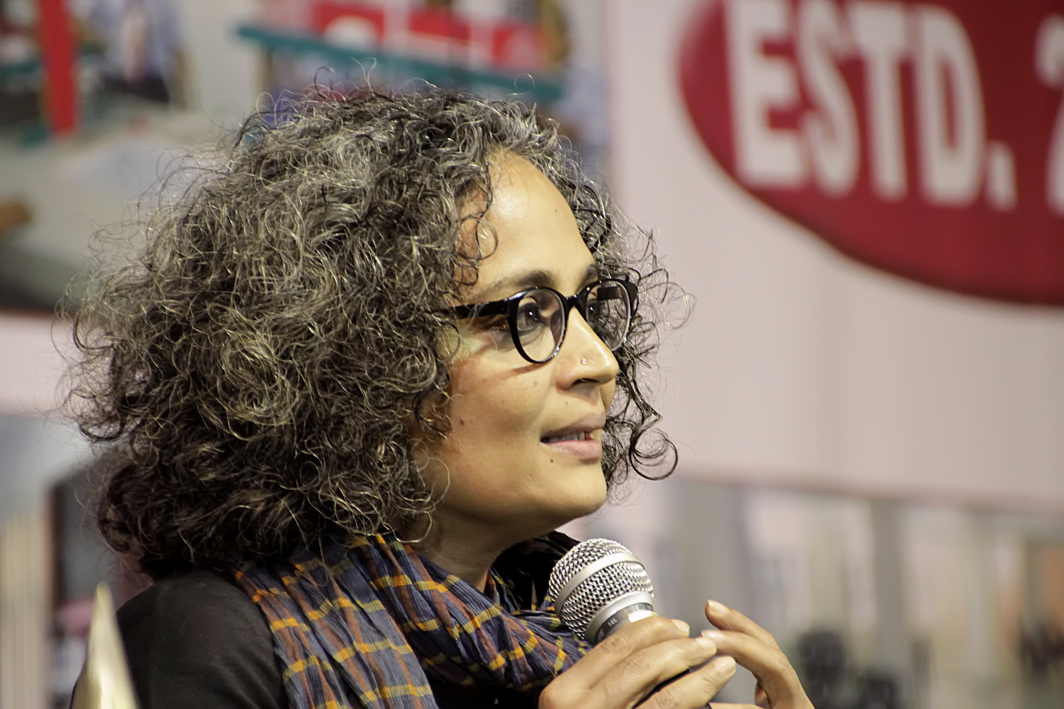
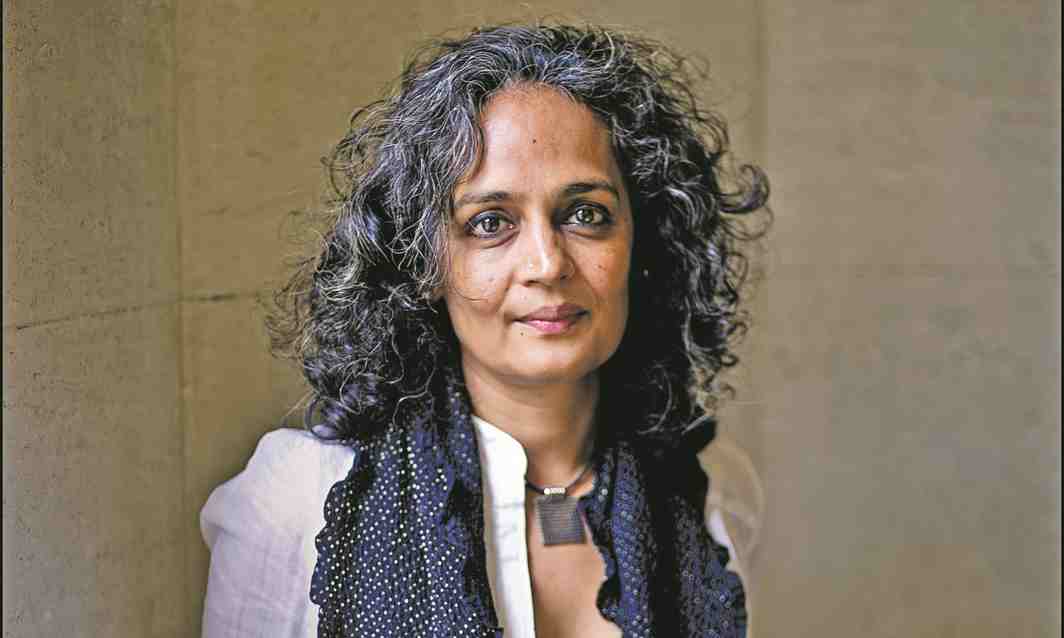
Celebrated Indian author Arundhati Roy has sparked outrage on social media after her video, wherein she is demanding one Prime Minister for one term went viral on Saturday, December 18.


Published

on

Arundhati Roy

Celebrated Indian author Arundhati Roy has sparked outrage on social media after her video, wherein she is demanding one Prime Minister for one term, went viral on Saturday, December 18.

Interacting with the media at Delhi Press Club, the God of Small Things author can be heard demanding that our nation should have one Prime Minister only for one term. We want one individual prime minister of one term. She also equated a prime minister to a maharajah.

Arundhati Roy demands one PM for one term

The now-viral video was shared by popular Indian filmmaker Ashoke Pandit. Sharing the video on Twitter, he called Roy another frustrated liberal, Urban Naxal, paid agent who keeps spreading poison against the country but gets defeated miserably. Targeting the opposition, he further wrote that the author sounds like Priyanka Gandhi.

Watch the video here:

https://twitter.com/ashokepandit/status/1472060340972122112

The video has created a buzz on social media wherein users are bashing Arundhati Roy. Taking it to Twitter, popular journalist Tarek Fatah slammed the author and wrote that she will never get elected to even a village council. He urged her to spare her silly political philosophy that equates a PM to a maharajah.

One user wrote that India is good with Narendra Modi and we should work on preventing non-Indian and anti-Indians to talk about India. Another user questioned her demand and asked if she is explaining the rules for appointing the class monitor of primary school?

Check Twitter reactions here:

Read Also: Rohini court blast case: Delhi police arrests DRDO scientist for planting tiffin bomb to kill lawyer

https://twitter.com/JaiAadishakti/status/1472127478600667136
https://twitter.com/niteshharne/status/1472121462701977601
https://twitter.com/BossBabyKrishna/status/1471905943080165379

India News

PM Modi takes a dig at Congress after zero wins in MLC bypolls

Prime Minister Narendra Modi took a swipe at Congress after the party failed to win a single seat in Legislative Council by-elections across four states. He highlighted that the elections were conducted using ballot papers.

Published

on

PM Modi

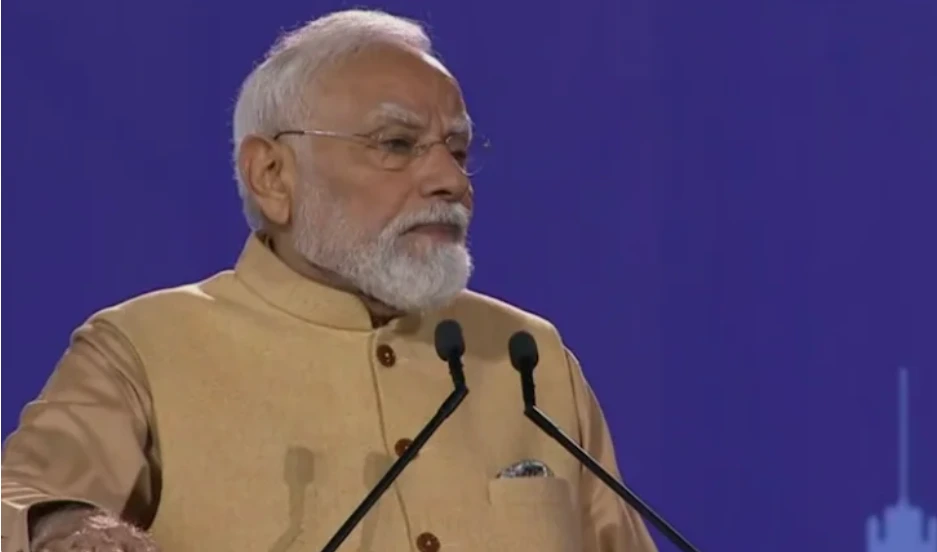
Prime Minister Narendra Modi took a swipe at the Congress on Wednesday after the party failed to win any seats in Legislative Council by-elections held across four states. Referring to the use of ballot papers in the elections, the Prime Minister questioned the party’s performance in the contests.

The by-elections covered 28 Legislative Council seats across Uttar Pradesh, Maharashtra, Bihar and Karnataka. Congress contested 12 seats, including four that it had previously held, but failed to secure a victory in any of them, according to the reported results.

The setback was particularly notable in Karnataka, where Congress is in power but did not win any of the four Legislative Council seats contested in the state.

What PM Modi said about the MLC election results

In a post on X, Modi referred to the elections held across the four states and highlighted that ballot papers had been used for voting.

“MLC elections in 28 seats across 4 big states – Uttar Pradesh, Maharashtra, Bihar and Karnataka. Elections held using ballot papers. Guess how many seats Congress won?” the Prime Minister wrote.

He accompanied the post with a monocle emoji, adding a mocking tone to his question about the party’s performance.

The reference to ballot papers came amid the Congress’s broader objections to electronic voting machines and its demands for a return to paper ballots. Modi’s post drew attention to the party’s failure to win any of the seats it contested in these particular elections.

Congress draws a blank across four states

The Legislative Council by-elections covered constituencies in Uttar Pradesh, Maharashtra, Bihar and Karnataka.

Congress contested 12 of the 28 seats but could not secure a win. Four of the seats it contested had previously been held by the party.

Karnataka emerged as a significant setback for Congress, which governs the state. The party failed to win any of the four seats contested there.

The overall outcome provided the context for Modi’s remarks, which linked the election results to the use of ballot papers rather than electronic voting machines.

Why the ballot paper reference matters

Congress has raised concerns about the use of electronic voting machines and called for a return to ballot papers. Modi’s post drew a contrast between those demands and the party’s performance in elections conducted using paper ballots.

However, the results of these Legislative Council by-elections relate to the specific seats contested across the four states. They do not, by themselves, establish any broader conclusion about the integrity of other elections or the merits of different voting systems.

The Prime Minister’s remarks were a political swipe at Congress following its performance in the MLC bypolls.

Continue Reading

India News

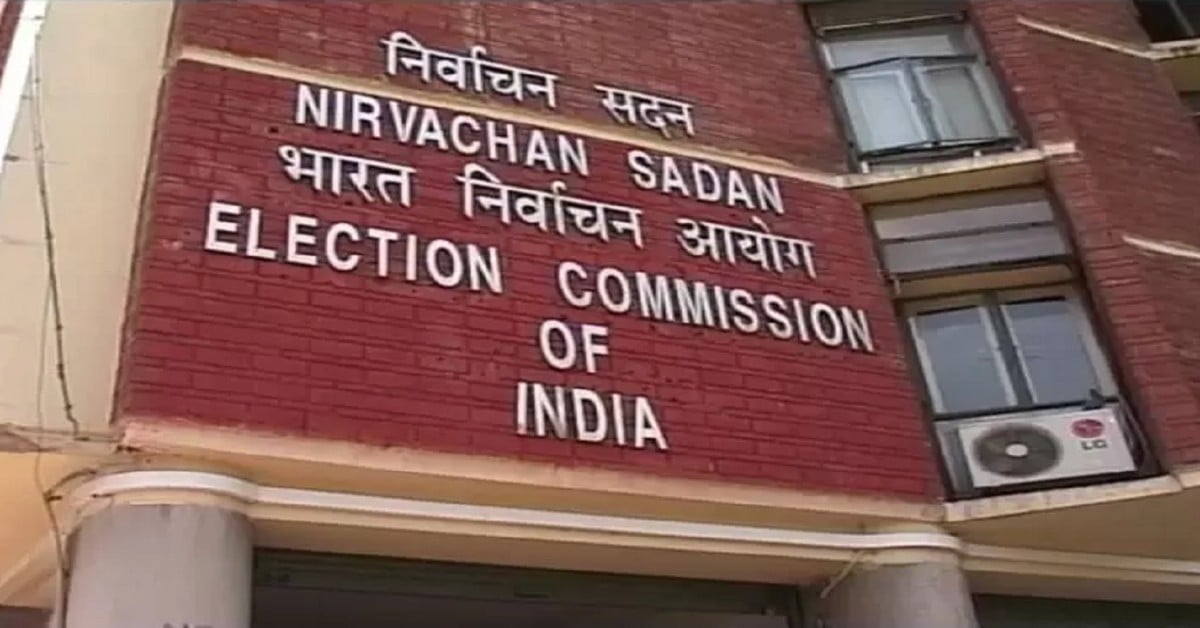
Election Commission orders transfers ahead of 2027 polls in 5 states

The Election Commission has directed five states heading for Assembly elections in 2027 to transfer election-related officials posted in their home districts or those who meet the prescribed tenure criteria. The states have been asked to submit compliance reports by November 30, 2026.
Published

on

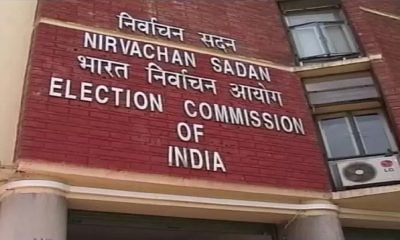
Election Commission of India

The Election Commission of India (ECI) has directed five states to transfer officials directly involved in election-related duties ahead of the 2027 Assembly elections. The directive applies to Goa, Manipur, Punjab, Uttar Pradesh and Uttarakhand, where the terms of the existing legislative assemblies are due to expire next year.

In a letter dated October 27, 2026, the Commission instructed the chief secretaries and chief electoral officers of the five states to implement its transfer and posting guidelines. The exercise covers officials posted in their home districts and those who have completed, or are due to complete, three years in a district during the past four years, subject to the prescribed cut-off dates.

The Commission has also set November 30, 2026, as the deadline for submitting compliance reports on the action taken.

Which officials will be covered by the transfer rules?

The guidelines cover district-level administrative officers directly connected with election management, including District Election Officers, Returning Officers, Assistant Returning Officers, Additional District Magistrates, Sub-Divisional Magistrates, tehsildars and Block Development Officers.

Divisional commissioners and municipal commissioners are also covered by the directive.

In the police department, the rules apply to specified officers from the rank of inspector and sub-inspector to senior officers, including those at the range level. The guidelines also cover designated officers in the excise and transport departments.

The Commission’s instructions are intended to ensure that officials directly involved in conducting elections do not remain posted in their home districts or continue in districts where they have served for an extended period.

Three-year tenure rule and cut-off dates

The Commission has prescribed different cut-off dates for calculating the three-year tenure in the five states.

For Goa, Manipur, Punjab and Uttarakhand, the cut-off date is March 31, 2027. For Uttar Pradesh, it is May 31, 2027.

Officials who have completed three years in a district during the preceding four years, or who will complete that period by the applicable cut-off date, are covered by the transfer requirements.

The guidelines also specify that promotions to posts within the same district will be counted while calculating the three-year tenure. Services rendered at the state headquarters during the preceding four years are not to be included in the calculation, even if the headquarters is located within the same revenue district.

Officials cannot return to previous election postings

The Commission has also directed that designated election officials must not be posted back to, or allowed to continue in, the Assembly constituency or district where they served during the previous Assembly election or a subsequent by-election, as applicable.

This provision covers District Election Officers, Returning Officers, Assistant Returning Officers and specified police personnel.

The rules form part of the Commission’s instructions governing the posting of officials responsible for election-related work in the five states.

November 30 deadline for compliance reports

The chief secretaries and directors general of police of the five states have been directed to submit compliance reports to the Election Commission by November 30, 2026.

The reports are intended to communicate the action taken by the respective state administrations to implement the transfer guidelines.

The directive comes ahead of the scheduled end of the current Assembly terms in the five states in 2027. The terms of the Goa, Manipur, Punjab and Uttarakhand Assemblies are due to expire in March, while the Uttar Pradesh Assembly’s term ends in May.

The transfer instructions mark a step in the Election Commission’s preparations for the next round of Assembly elections in these states.

Continue Reading

India News

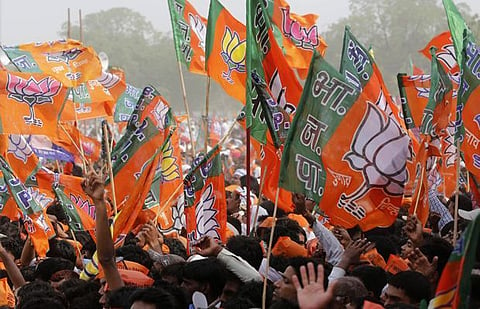
Karnataka MLC election results 2026: NDA wins all 4 Seats

The BJP-JD(S) alliance won all four seats in the Karnataka Legislative Council elections held on October 23, 2026. The BJP secured three seats, while the JD(S) won one, dealing a setback to the ruling Congress.
Published

on

BJP

The BJP-led National Democratic Alliance (NDA) has won all four seats in the Karnataka Legislative Council elections, with the Bharatiya Janata Party (BJP) securing three seats and its ally Janata Dal (Secular), or JD(S), winning one.

The results are a setback for the ruling Congress, which failed to win any of the four seats contested in the elections held on October 23.

The contest was closely watched as a test of coordination between the BJP and JD(S), which fought the elections as alliance partners. The outcome also drew attention to the Congress’s support among voters in teachers’ and graduates’ constituencies.

BJP wins three seats, JD(S) secures one

The BJP won the North-East Teachers’ constituency, the South-East Graduates’ constituency and the West Graduates’ constituency. The JD(S), meanwhile, won the Bengaluru Teachers’ constituency.

The Bengaluru Teachers’ constituency contest was particularly significant because the JD(S) candidate, A P Ranganath, defeated sitting Congress MLC Puttanna. Ranganath had previously contested the constituency against Puttanna, who had switched to the Congress before the previous Assembly elections.

The results demonstrated the electoral outcome of the BJP-JD(S) alliance in these four constituencies. However, the results alone do not establish how the outcome will affect the parties’ performance in future state-wide elections.

BJP leader targets Congress government

Reacting to the results, BJP leader Ashok Gowda described the outcome as a success for the NDA and criticised the Congress government in Karnataka.

“This is a success for the NDA and all the narratives spread by the Congress have been exposed,” Gowda told media.

He also alleged that the Congress government had failed in the state and claimed that the results reflected public dissatisfaction with the ruling party.

These remarks were Gowda’s political assessment of the election outcome and should be understood as statements by a BJP leader.

Election tests BJP-JD(S) coordination

The elections were seen as an important test of whether the BJP and JD(S) could coordinate their campaigns and consolidate support behind their respective alliance candidates.

The JD(S) was allocated the Bengaluru Teachers’ constituency, while the BJP contested the other three seats. The alliance’s victory across all four constituencies gave both parties a favourable result in this round of Legislative Council elections.

The Congress, which governs Karnataka, did not win any of the four seats. Nevertheless, the Legislative Council results should be distinguished from a state Assembly election, as the contests involved specific teachers’ and graduates’ constituencies rather than the entire electorate.

Continue Reading

Trending

© Copyright 2022 APNLIVE.com