
India News
Hyderabad CFSL confirms powder found in UP Assembly wasn’t an explosive

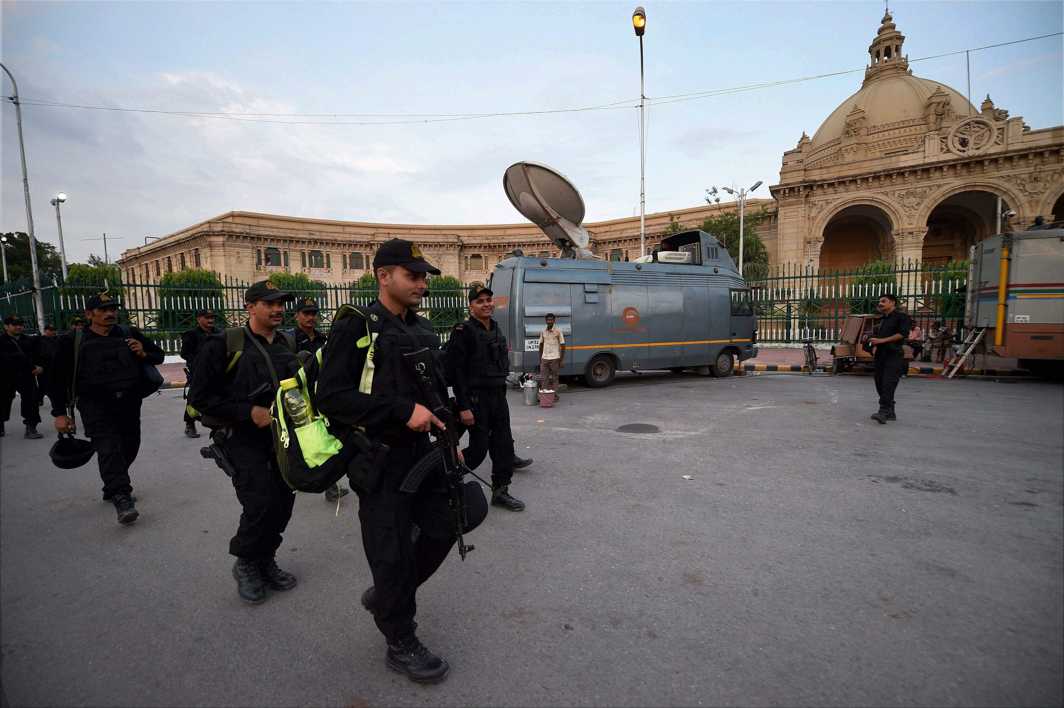
Major embarrassment for Yogi Adityanath government which had hurriedly sought an NIA probe, ordered slew of restrictions on vehicular entry in Assembly premises
In a major embarrassment for the Yogi Adityanath government, the Hyderabad-based Central Forensic Science Laboratory (CFSL) has confirmed that the ‘high-intensity explosive’ powder found in the UP Assembly on July 12 was actually a harmless silicon oxide or silica powder, one of the most commonly used substances in construction and sand-casting!
On July 14, two days after the so-called explosive was found stuck under a seat in the Opposition benches, UP chief minister Yogi Adityanath had informed the state Assembly that there was a “dangerous terror conspiracy” and that tests conducted by the state forensic science laboratory in Lucknow had concluded that the powder was PETN – Pentaery-thritol Tetranitrate – one of the most powerful explosives, colourless and hard to detect in a sealed container.
The chief minister had gone on to announce a slew of new security measures for the Assembly, including deployment of quick-reaction teams inside the Vidhan Sabha premises and a ban on MLAs to enter the assembly with their cell phones or bags. Adityanath had then referred the case for an investigation by the National Investigation Agency (NIA), while claiming: “500 grams of the substance (PETN) is enough to blow up the entire Vidhan Sabha, and this was 150 grams… this can be called nothing less than a direct infiltration and now the NIA must probe it immediately.”
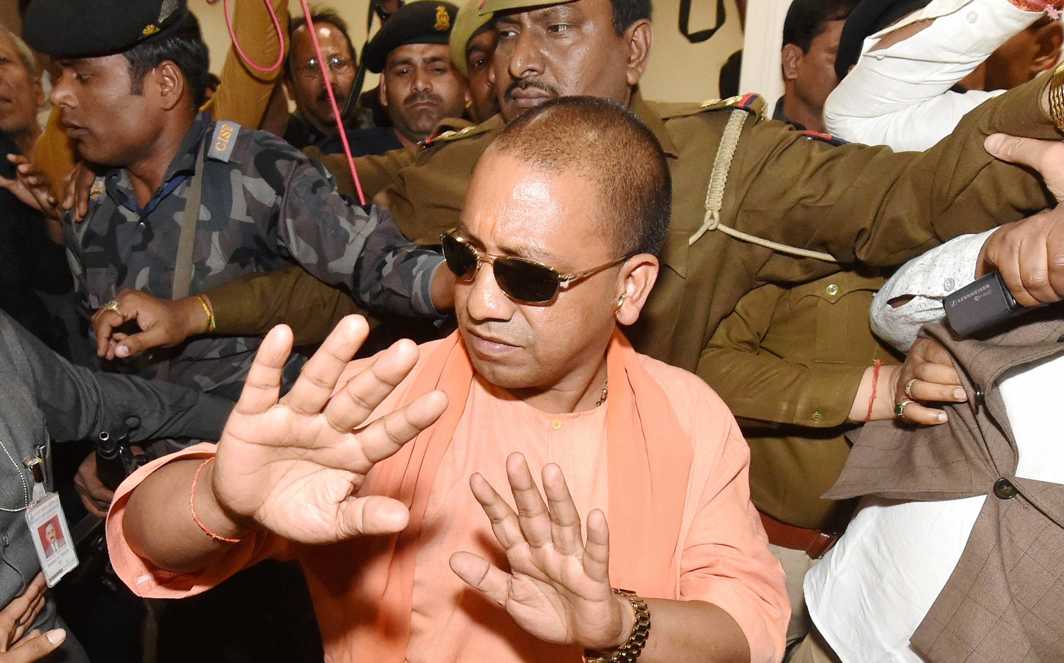
Yogi Adityanath
However, days after the high drama unfolded in the Vidhan Sabha, chinks began appearing in Adityanath’s story, with several independent forensic experts and some media organisations claiming that the state FSL had no expertise or apparatus to test PETN. The Adityanath government, however, continued to insist that the powder was indeed an explosive while the state’s Anti-Terrorism Squad summoned two Samajwadi Party MLAs for questioning as the powder had been found from under their seat.
Now, with the Hyderabad CFSL conclusively demolishing the PETN, a different narrative is being built by the Adityanath government.On Monday, the Dr SB Upadhyay, director of the UP FSL which had concluded the powder to be PETN, was suspended by the government citing a laundry list of charges.
UP Principal Secretary (Home) Arvind Kumar told The Indian Express, “Upadhyay has been suspended on various charges, including giving unconfirmed, incorrect and incomplete laboratory report on the powder found inside the UP Assembly. He was also misguiding the government.” Sources also said that the kit that was used to test the powder’s contents by the UP FSL on July 12 had actually expired in March while the analysts who conducted these tests too didn’t belong to the lab’s explosives section.
Predictably, no explanation has been given by the UP government yet on why these issues were probed by the state when initial doubts had been raised on the report of the UP FSL.
It may be recalled that within a week of the UP FSL and Adityanath claiming that the powder was PETN, the Agra-based Forensic Science Laboratory – the only lab in UP which is equipped to test explosives – had said that the powder was not an explosive. However, the UP government had then gone in an overdrive to refute the Agra FSL report, claiming that no sample of the powder found in the Assembly premises had been sent to the Agra lab for testing.
The UP government is also claiming that the now-suspended UP FSL chief also faces complaints of financial irregularities during his tenure as acting director of a laboratory in Patna between 2008 and 2012. Arvind Kumar, principal secretary (home), said that the Bihar government had written to the UP government, seeking action against Upadhyay, and that the complaint by the Nitish Kumar government had also been included in the chargesheet filed against the UP FSL chief. However, Kumar failed to answer why Upadhyay was appointed the UP FSL chief in the first place if there were complaints of financial irregularities pending against him when he was selected for the role.










India News
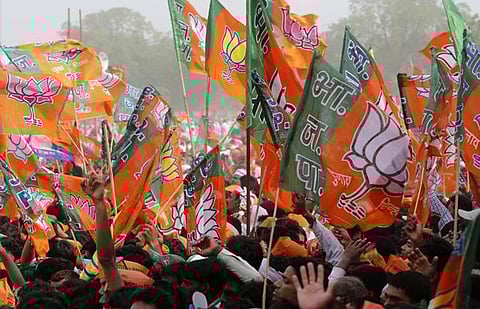
BJP may drop over 100 UP MLAs, focus shifts to voters and fix internal rifts
The BJP is considering major changes to its Uttar Pradesh candidates, with more than 100 sitting MLAs potentially facing ticket cuts as the party works to address internal rifts and voter concerns.

India News
8 Pune students drown at Diveagar beach in Maharashtra’s Raigad
Eight students from a private coaching academy in Pune drowned at Diveagar beach in Maharashtra’s Raigad district during a picnic on Thursday. All eight bodies were recovered.

India News
CJP announces protests in Goa, Bengaluru, Kolkata over Gyanesh Kumar
CJP’s Abhijeet Dipke has announced protests in Goa, Bengaluru and Kolkata as the organisation continues its campaign demanding Chief Election Commissioner Gyanesh Kumar’s resignation.


PM Modi praises captain Smit Machchhar after flydubai plane incident

India beat West Indies by 8 wickets, Gill hits record 223

CJP announces protests in Goa, Bengaluru, Kolkata over Gyanesh Kumar

Jasprit Bumrah becomes first Indian to play T20Is in 13 countries

8 Pune students drown at Diveagar beach in Maharashtra’s Raigad

BJP may drop over 100 UP MLAs, focus shifts to voters and fix internal rifts
8 Pune students drown at Diveagar beach in Maharashtra’s Raigad
Jasprit Bumrah becomes first Indian to play T20Is in 13 countries
CJP announces protests in Goa, Bengaluru, Kolkata over Gyanesh Kumar
India beat West Indies by 8 wickets, Gill hits record 223

Afghan Men Try To Hang With The Jet Engine Of The Aircraft in Kabul- Afghanistan News – Kabul News
Trending Top 10 News: 10000 Crore Fine on Flipkart, Apple to Launch Unique Feature, Hdfc Bank Job Ad

Trending Top 10 News: Nokia 6310, Apple sales, Bachpan ka Pyar Video Kid, Dainik Bhaskar IT Raid

Trending Top 10 News: Canada bans Indian flights, Rain in Delhi NCR, AIMIM Twitter hacked, Raj Kundra case

Trending Top 10 News: Shein India, Apple New Service, Pocket Oxygen, Oppo Launched New Phone
-
 India News17 hours ago
PM Modi praises captain Smit Machchhar after flydubai plane incident
-
 Cricket news17 hours ago
India beat West Indies by 8 wickets, Gill hits record 223
-
 India News8 hours ago
CJP announces protests in Goa, Bengaluru, Kolkata over Gyanesh Kumar
-
 Cricket news8 hours ago
Jasprit Bumrah becomes first Indian to play T20Is in 13 countries
-
 India News7 hours ago
8 Pune students drown at Diveagar beach in Maharashtra’s Raigad
-
 India News5 hours ago
BJP may drop over 100 UP MLAs, focus shifts to voters and fix internal rifts
