English हिन्दी
Connect with us

India News

Economic Survey 2022: Why is it presented a day before Union Budget? What changes India will witness in this year’s Economic Survey? All you need to know

Union Finance Minister Nirmala Sitharaman will table the Economic Survey for 2021-22 today. Do you know why it is not presented with Union Budget? Do you know what the Economic Survey 2022 is all about? Read here.

Published

on

economic survey 2022

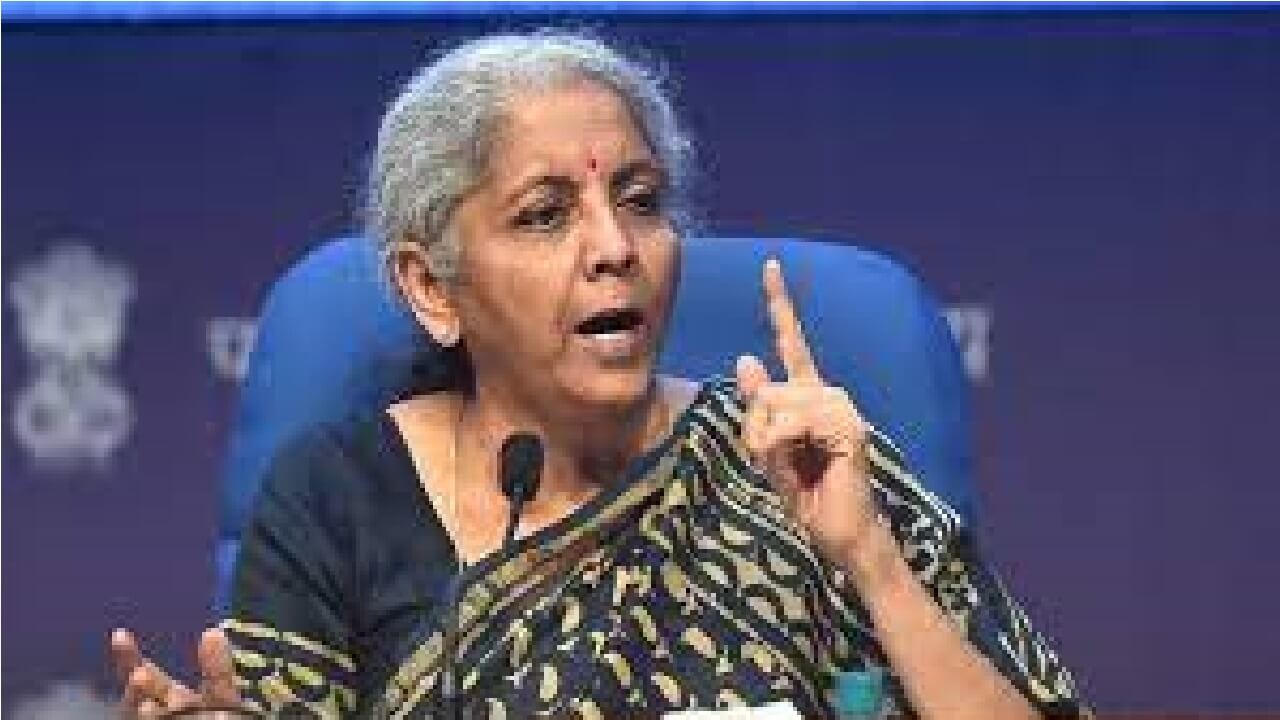
Union Finance Minister Nirmala Sitharaman will table the Economic Survey for 2021-22 today, January 31, in the Lok Sabha. The Economic Survey will be presented in the Lok Sabha after the president’s address to both houses of Parliament. The Economic Survey is released a day before the Union Budget is presented in Parliament.

This year’s Economic Survey is expected to predict a growth rate of around 9 percent for the next fiscal year, FY22-23. Last year, the Economic Survey for 2020-21 predicted that the current fiscal year, which ends on March 31, 2022, will see a GDP growth of 11 percent.

What is the Economic Survey?

The Economic Survey is a financial document that is presented annually to review the economic development in the country over the past financial year. The survey provides detailed statistical data of all the sectors including agricultural, industrial, employment, industrial production, exports, prices, among others. Besides this, it also evaluates changes in other areas of the Indian economy, such as the money supply and foreign exchange reserves.

The Economic Survey is divided into two parts- Volume 1 and Volume 2. Volume 1 is about the economic challenges that the country is facing whereas Volume 2 gives an analysis of the previous fiscal year.

Who prepares the Economic Survey?

The Economic Survey is prepared by the Economics Division of the Department of Economic Affairs of the Finance Ministry under the overall guidance of the Chief Economic Adviser (CEA). It is only released after it is approved by the Finance Minister.

What changes India will witness in this year’s Economic Survey?

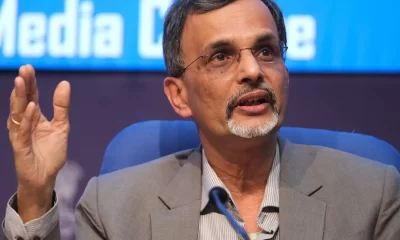
CEA generally prepares the document but this year’s Economic Survey has been prepared by the principal economic adviser and other officials as the post remained vacant following Krishnamurthy Subramaniam’s term that ended in December. This will be the first Economic Survey to be presented by V Anantha Nageswaran. The government has appointed economist V Anantha Nageswaran as the next CEA just days before the release of the Economic Survey.

This year the Economic Survey is likely to be presented in a single volume. Volume 1 which tells about the economic challenges that the country is facing may not be presented in Parliament today. Volume 2 contains a sectoral analysis of the economy of the previous fiscal year that will be tabled today at 3:45 pm.

What is the significance of the Economic Survey?

Union Ministry of Finance presents the Economic Survey every year. The Economic Survey is regarded as the flagship annual document of the Finance Ministry that provides a summary of all the economic development across the country that happened in a particular financial year. It not only examines the country’s macroeconomic status over the prior fiscal year but also provides an outline for the upcoming fiscal year.

Why Economic Survey is presented a day before Union Budget and not on the same day?

Economic Survey maps out a roadmap for India’s economy going into the next financial year. The reason for presenting an Economic Survey is to review the overall economic performance of the country during the year in order to give a better understanding of the Union Budget.

Read Also: Indian Railways cancel 447 trains, reschedule and divert 18 trains, check the full list here

The survey is largely used to determine the country’s priorities for the coming fiscal year, as well as which sectors in the Union Budget require additional focus. In 1964, the Economic Survey was separated from the Budget and released ahead of time to provide a context of the latter.

When was the first Economic Survey of India presented?

In 1950-51, the first Economic Survey was presented. It was introduced with the Union Budget up to 1964. From 1964 onwards, it has separated from the Union Budget and presented a day before.

Entertainment

Kriti Sanon’s Raksha Bandhan ad draws criticism over modern festive look

Kriti Sanon’s Raksha Bandhan advertisement has sparked an online debate, with some social media users questioning her contemporary festive outfit and the campaign’s concept.

Published

on

Kriti Sanon’s latest festive appearance has triggered a debate on social media after the actor featured in a Raksha Bandhan advertisement wearing a contemporary outfit.

In the advertisement, Kriti Sanon is seen in an off-white bralette-style blouse paired with a cape and a draped skirt. While the actor has previously experimented with contemporary interpretations of traditional fashion, some social media users criticised her look in the festive campaign.

The criticism was directed particularly at the choice of outfit for a Raksha Bandhan-themed advertisement, with several users questioning whether the look was appropriate for the occasion.

Advertisement’s pet dog sequence also draws reactions

The concept of the advertisement also became a point of discussion online. In the campaign, Kriti is seen tying a traditional rakhi on a dog after the pet barks at her.

The advertisement presents the ritual as a way of including the pet in the family’s Raksha Bandhan celebrations. However, several social media users questioned the decision to include the dog in the festive ritual.

Some commenters accused the brand of making a mockery of Indian festivals, while others said they disagreed with the overall concept of the advertisement.

Social media users criticise Kriti Sanon’s festive look

Kriti Sanon’s outfit became one of the main talking points among those criticising the advertisement. Some users described the outfit as inappropriate for a Raksha Bandhan campaign.

One social media user wrote that Kriti was tying rakhi in a “bra kinda attire” and questioned the use of such an outfit during the festival.

Another commenter compared the treatment of Raksha Bandhan with other festivals and criticised the advertisement’s presentation of the celebration.

Other reactions focused on traditional elements associated with Raksha Bandhan. One user questioned the absence of a puja thali and tilak while also criticising Kriti’s outfit.

A separate comment objected to the inclusion of the dog, arguing that the campaign was not representative of the traditional spirit of Raksha Bandhan.

These comments reflect the views of individual social media users and do not establish a broader consensus about the advertisement.

Kriti Sanon yet to respond to criticism

The Raksha Bandhan advertisement continues to receive mixed reactions on social media. While some users have criticised the actor’s outfit and the campaign’s concept, Kriti Sanon is yet to respond to the criticism.

The debate comes as brands increasingly use contemporary interpretations of traditional festivals in advertising, with the campaign’s presentation becoming a subject of discussion among social media users.

Continue Reading

India News

Rahul Gandhi’s T-shirt style gets a colourful twist for Gen Z outreach

Rahul Gandhi has adopted colourful shirts during his nationwide “Chhatron Ki Goonj” programme as the Congress steps up its outreach to Gen Z.

Published

on

Congress leader Rahul Gandhi has added a new twist to his public image as he steps up outreach to Gen Z through the nationwide “Chhatron Ki Goonj” programme.

The Leader of the Opposition in the Lok Sabha, who became known for wearing T-shirts during the 2022 Bharat Jodo Yatra, has recently been seen in brightly coloured shirts at several student-focused events.

The change marks a departure from the white T-shirts that became closely associated with his appearance during the Bharat Jodo Yatra, when he walked from Kanyakumari to Kashmir.

From white T-shirts to colourful shirts

Rahul Gandhi wore white T-shirts during the Bharat Jodo Yatra, including during its winter leg. He subsequently continued to appear in T-shirts at party programmes and political events.

The style also became a subject of political criticism, with the BJP repeatedly targeting Gandhi over his choice of attire and describing him as “non-serious”.

Gandhi, however, continued with the T-shirt look and it was also adopted by some Congress leaders who had traditionally appeared in kurta-pyjamas.

His latest appearances have brought a more colourful wardrobe into focus.

Rahul Gandhi’s colourful appearances

Gandhi wore a blue shirt at the first “Chhatron Ki Goonj” event in Kota, where he addressed the issue of paper leaks.

In Dehradun, he was seen wearing a shirt instead of his usual T-shirt. At an event in Allahabad, he wore a pink shirt while interacting with students, drawing discussion on social media.

He later appeared in a yellow shirt at an event in Pune.

The Pune programme focused specifically on female students and working women, with Gandhi addressing issues related to women’s safety, freedom and rights.

Congress steps up Gen Z outreach

The “Chhatron Ki Goonj” programme is part of Rahul Gandhi’s outreach to young people, with paper leaks and issues affecting students among the subjects being highlighted.

The Congress is also seeking to engage young women through programmes and interactions focused on issues concerning them.

Youth and women remain important voter groups in elections, and the Congress is increasingly focusing its outreach on Gen Z as it seeks to strengthen its connection with younger voters.

Gandhi’s colourful shirts have consequently become an additional talking point during his latest student and youth engagements.

Continue Reading

India News

MK Stalin announces major DMK organisational Changes in Tamil Nadu

MK Stalin has announced a major DMK organisational overhaul, introducing age and term limits and expanding party districts from 77 to 110.

Published

on

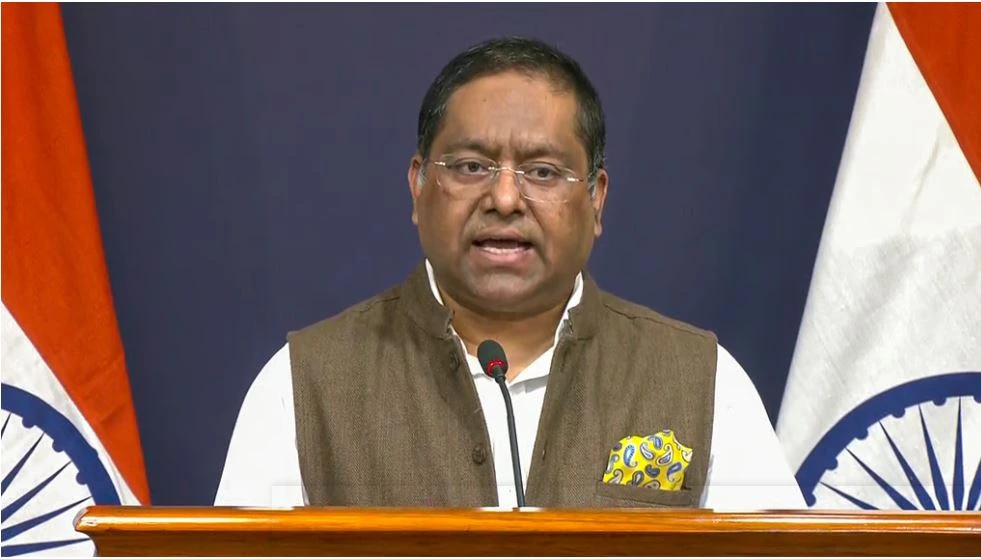
DMK chief MK Stalin has announced a major overhaul of the party’s organisational structure, months after the party lost the Tamil Nadu assembly election.

Acknowledging the defeat, Stalin said the party must openly recognise its mistakes. He also pointed to the functioning of party office-bearers as one of the factors behind the electoral loss.

“Although there are several reasons for our defeat, the functioning of our party office-bearers is also one of them,” Stalin said, stressing that the party must acknowledge its shortcomings and ensure better performance at every level.

Stalin also described the DMK as a “specialist” in making comebacks and said the party would return stronger.

Age and term limits for party posts

Among the major changes announced by Stalin are age and tenure limits for party positions.

Stalin said the changes would involve a significant restructuring of the DMK’s administrative system, with priority being given to new faces. He said the measures were intended to make the party sustainable for the next 100 years and help restore the trust of young people and women.

Under the new rules, branch secretaries must be aged 45 or below and can hold the position for a maximum of two terms.

District secretaries, meanwhile, must be below 70 years of age and can serve for a maximum of three terms.

DMK to increase party districts from 77 to 110

The DMK executive committee has approved increasing the number of party districts from 77 to 110.

The expansion will be implemented as part of the party’s 16th organisational elections. Revenue districts will generally be reorganised so that each party district covers two assembly constituencies.

Where only one constituency remains after the reorganisation, it will be attached to another suitable party district within the same revenue district as a third constituency.

Stalin has been authorised to determine and announce the constituencies that will form the 110 party districts.

New branch structure planned in urban areas

The DMK will also introduce a new branch-level structure in urban areas, along with the post of branch secretary.

The new system will initially be implemented in Chennai, Coimbatore, Madurai, Tiruchirappalli and Salem. It may subsequently be extended to other corporations.

Once the new party districts are announced, district executive committees will have to meet and establish the union, city, area, town, ward and branch-level units within 15 days.

The organisational changes come as the DMK seeks to restructure its party machinery and prepare for its political comeback following its assembly election defeat.

Continue Reading

Trending

© Copyright 2022 APNLIVE.com