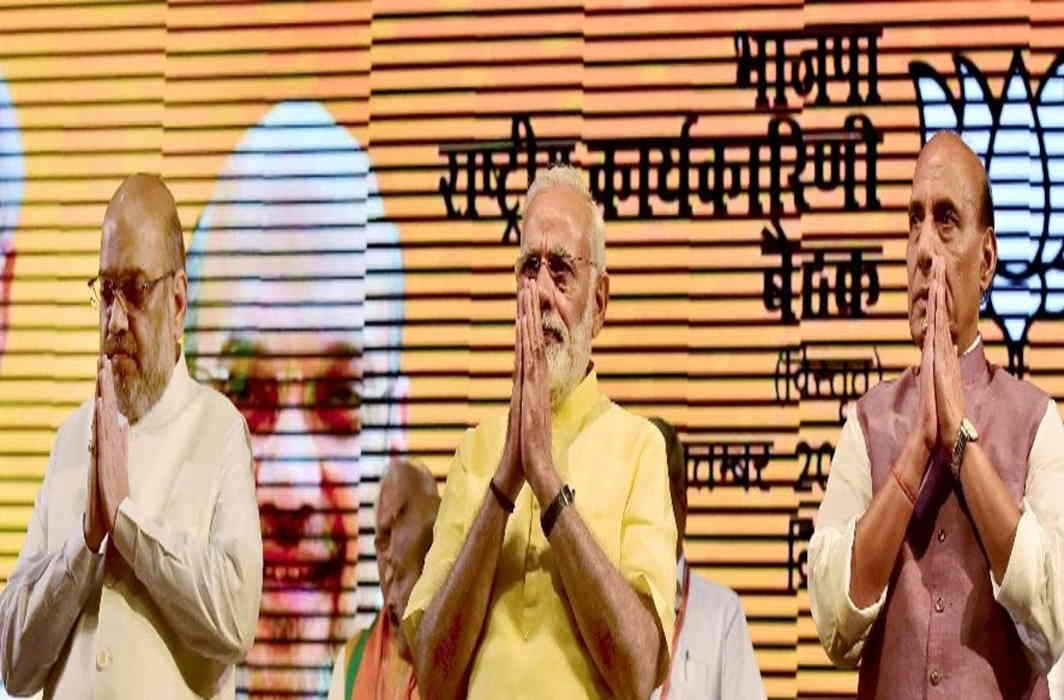
[vc_row][vc_column][vc_column_text]Meeting in the backdrop of a slowing economy, growing joblessness and rising food and fuel prices, the BJP national executive in the Capital on Monday – the last before the Gujarat assembly election later this year – sought to project a rosy picture of the national situation.
With BJP chief Amit Shah already pushing the Mission 2019 – the mobilisation drive for next Lok Sabha elections – the meet sought to infuse energy in its lawmakers from across the country, all of whom have been called for the event for the first time. Union Finance Minister Arun Jaitley said 13 CMs, 6 Deputy CMs, 232 state min, 1500 MLA, 334 MPs were present in BJP National Executive Meeting.
The end of the session on Monday was followed by launch of what was called a mega-pro-poor scheme by Prime Minister Narendra Modi, the Pradhan Mantri Sahaj Bijli Har Ghar Yojana (Saubhagya yojana), aimed at providing free electricity to poor households. He also inaugurated ONGC’s new office, Deendayal Urja Bhavan (the erstwhile Rajiv Gandhi Urja Bhavan), dedicating it to BJP’s icon and ideologue on his 100th birth anniversary.
In the run-up to the executive meeting, senior BJP leaders had said the meeting would pass a resolution on economic issues. However, the party eventually decided to pass one standalone resolution that addressed both political and economic issues.
The BJP has also had a rethink on allowing a live telecast of the PM’s speech at the national executive. The speech remained a closed-door affair, with Finance Minister Arun Jaitley briefing the media on the speech.
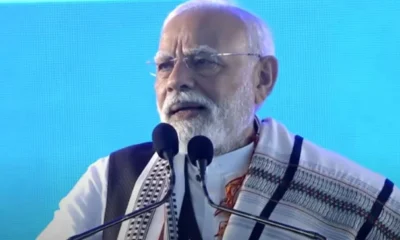
The focus of speeches stayed on the key propaganda themes of the party. PM Narendra Modi in his national executive meet laid out the achievements of his government. PM Modi promised complete electrification, saying India was now a power surplus country and the poor will have complete access to power.
He also lashed out at the opposition for using harsh language and urged his party members to work together to create New India by 2022.
In a strong message, PM said that there will not be any compromise with corruption. He said that the government managed to solve the Doklam stand-off peacefully, and many were surprised by it. He also said that he believes in governance with public participation. Outlining his agenda, PM said that party is second, India is first. He also appealed BJP cadres to politically fight the ongoing tussle in Kerala.
Union finance minister Arun Jaitley shared the key points of the PM’s speech at the meet, where the party also adopted a six-point agenda to rid the country of poverty, terrorism, casteism, communalism and corruption.
Prime Minister Narendra Modi reiterated his firm stand against corruption. Highlighting that he himself has “no relatives” to benefit, the PM promised strict action against the corrupt. “My battle against corruption is uncompromising. Anyone caught indulging in corruption will not be spared. I have no relatives (to benefit),” the PM said.
Jaitley said the step against black money and corruption was never on UPA’s agenda and, therefore, the grand old party got uneasy when the present dispensation launched such a move.
Anti-corruption agenda will never have UPA’s backing, said Jaitley. “Corruption and elimination of black money was never on UPA’s agenda in 10 years. So it’s obvious our efforts to do so wouldn’t have the support of UPA leaders. Those on the receiving end of our government’s anti-corruption stance are uneasy,” says Arun Jaitley. Jaitley said that no effort has been made by Congress in the past to bring back black money.
Arun Jaitley said that most macroeconomic data has been sounder than never before, except the GDP figures in the last quarter. Earlier, party president Amit Shah also sought to make the same point. Meanwhile, reports came that another RBI survey done recently on consumer confidence found people’s income growth and employment prospect lower than in 2013. Official RBI survey says small companies (turnover less than Rs.25 cr) suffered 58% fall in sales Jan-March 2017.
PM also highlighted several schemes like savings from Aadhaar. PM in his speech highlighted that his government will continue to be tough on terror.
He emphasised the idea of mass participation “to improve people’s quality of life.”
“Democracy must be seen beyond elections,” the PM said. He said that “conventional politics like winning elections is ongoing, but the faith reposited in us by the people is a means to take democracy forward.” “The main point of PM Modi’s speech was that we should make the BJP an instrument of mass participation to improve people’s quality of life,” Jaitley said.
The PM went on to outline the idea of a ‘New India’ where “all schemes will be taken to the public” and “party workers would act as a bridge between the BJP and the people.”
Jaitley said the PM charged the Opposition with the use of “harsh language” in the absence of any concrete charges against the government. “Harsh language can’t be a substitute for any substantive charge against the government,” PM Modi said.
Speaking about the Doklam stand-off and its resolution, Jaitley said, “The Doklam crisis was a serious concern to country. The government’s handling of the issue de-escalated the crisis.”
In his speech, PM Modi also touched upon terrorism and his party’s fight against it, the minister said.
He went on to say, “We’re certain of victory in 2019. And we’re certain of building a ‘New India’ by year 2022.”
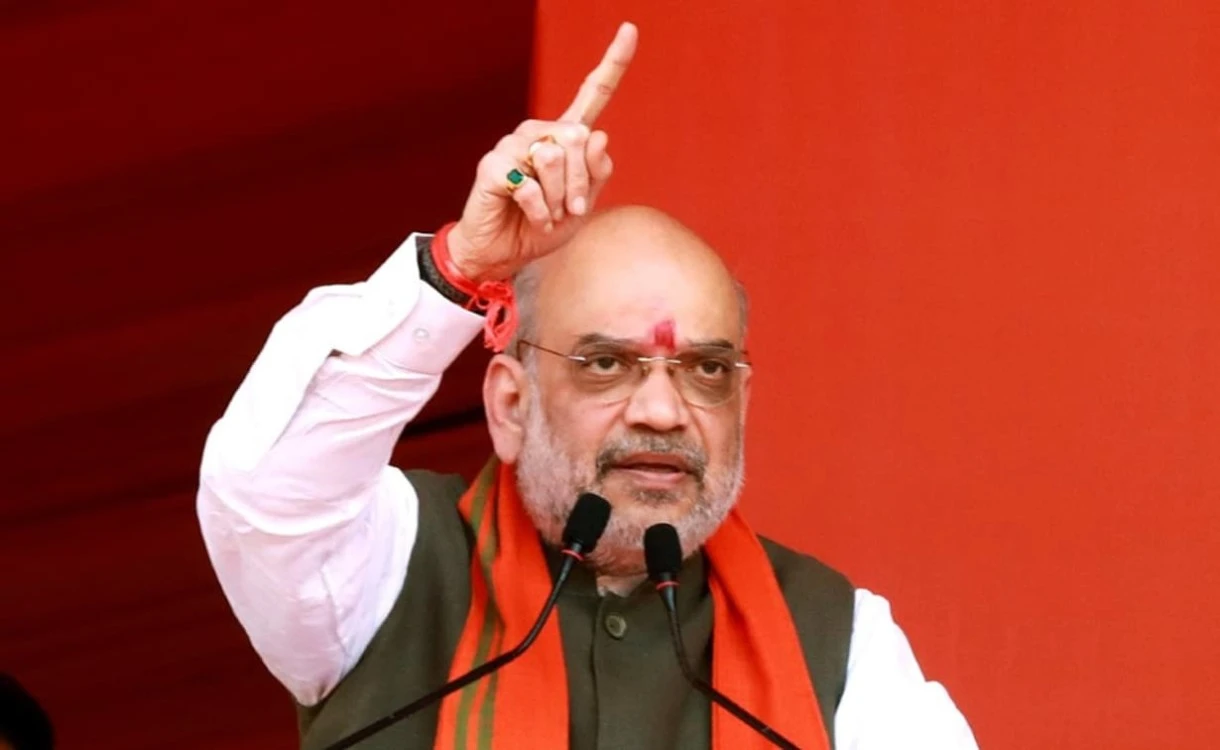
Earlier in the day, BJP President Amit Shah said, “BJP will keep expanding its base for the next five years under vistarak scheme. 4862 party functionaries are engaged day and night for this work”.
He hit out at Rahul Gandhi for his dynasty comment. “President, Vice President, Prime Minister reached their position due to performance,” said Shah taking a dig at Gandhi. Shah also said that the BJP believes in politics of performance and Congress in dynasty and politics of appeasement. “Politics of appeasement will not be acceptable,” he said.
Union Minister Piyush Goyal, who briefed the media on Shah’s address, said the party president has announced BJP plans to go aggressive against “violent politics” in Left-ruled Kerala. The party is holding a campaign from October 3 -17 during which all the top leaders of BJP will visit the state to take part in it
When asked why BJP leaders kept taking up Gandhi’s comments, Goyal said: “Rahul Gandhi’s leadership is of our interest. The longer Rahul Gandhi practices his politics it’s better for BJP.”
On Sunday, BJP President Amit Shah had inaugurated the two-day national executive and then held a meeting with office-bearers, state chiefs and organisational leaders to finalise agenda items. Shah also reviewed the performance of the party’s expansion drive in the last one year during the office bearers’ meeting.[/vc_column_text][/vc_column][/vc_row][vc_row css=”.vc_custom_1506351950503{border-bottom-width: 20px !important;padding-top: 20px !important;padding-bottom: 20px !important;background-color: #b2b1bf !important;}”][vc_column][vc_column_text]Key points of the resolution passed at BJP National Executive meet
The Bharatiya Janata Party (BJP) National Executive on Monday unanimously passed a resolution to support Prime Minister Narendra Modi’s vision of making a ‘New India’ by 2022, even as it conceded the teething troubles with the rollout of the Goods and Services Tax (GST) and recognised the need for the government to take steps to meet the challenges of economic slowdown.
The resolution focused on the foreign policy successes of the Modi government, congratulated the PM and Jaitley on the rollout of GST, bringing the issue of terrorism on the international agenda and economic issues.
The resolution has said the Modi government observed the centenary year of Jan Sangha leader Deendayal Upadhyaya as the ‘year for the welfare of the downtrodden’. It resolved to pursue economic policies inspired by Upadhyaya’s commitment to ‘garib kalyan’, or welfare of the poor, and construct a ‘New India’ by 2022.
It identified a six point programme for building this ‘New India’. These include – poverty free India, clean India, an India without terrorism and separatism, an India without casteism and communalism and corruption free India.
Gadkari said the lathicharge on women students at the Banaras Hindu University needed to be criticized in strongest possible words. He said the PM and BJP chief Amit Shah have spoken with Uttar Pradesh CM Yogi Adityanath on the issue and an inquiry committee is being set up.
The resolution has congratulated the PM for the amicable resolution of the Doklam military standoff with China, inauguration of the Sardar Sarovar Project and the ‘bhumi poojan’ of the ‘Bullet’ or high speed Ahmedabad-Mumbai train.[/vc_column_text][/vc_column][/vc_row]