English हिन्दी
Connect with us

Latest Politics News

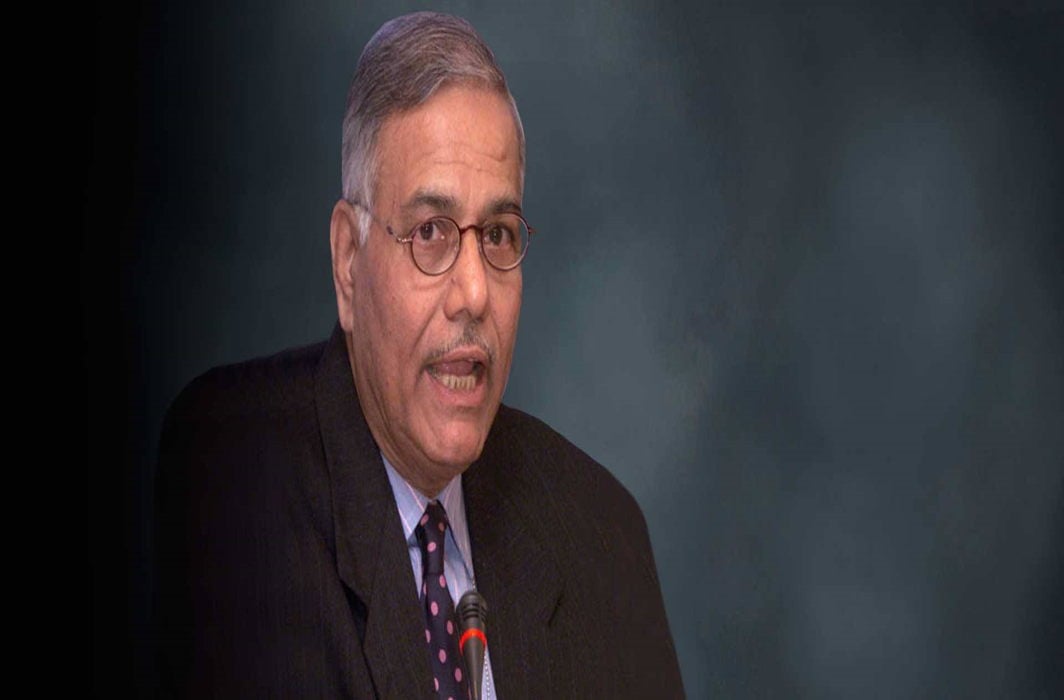
Yashwant Sinha sticks to his guns as BJP rebuts his criticism of economy

Published

on

sinha yashwant

[vc_row][vc_column][vc_column_text]Yashwant Sinha on Thursday stood by the article in which he had criticised Finance Minister Arun Jaitley for making a mess of the economy and followed it up with further, specific details of lapses on the part of the government.

Sinha, speaking to ANI on Thursday, said, “We have all known for many days that the Indian economy has been seeing a decline… This process has been going for the past one-and-a-half years… Even then I kept silent.. The latest GDP figures came out and growth rate fell below 6% and the concerns grew deeper. The government didn’t say anything for over a week, then I felt that I should bring the issue to the public domain.”

“Before 2014, I was the party [BJP) spokesperson when it came to economic affairs. We used to call then United Progressive Alliance [UPA] government situation ‘Policy Paralysis’. This government is not paralysed as many decisions are being taken. But, there is confusion in the government that development can be done through welfare schemes, which is not right,” he said to news agency ANI.

“I am not talking just based on one quarter’s numbers, the economy has been falling for six straight quarters,” said Sinha.

The biggest culprit that made a bad situation near-catastrophic is demonetisation, said Sinha who had called the move “an unmitigated economic disaster” in his column.

“The biggest culprit for growth slowing is the note ban. A thorough study should have been done on its effects to the economy, to jobs and it should have been introduced when the economy was in a healthy state, not in the manner it was introduced,” said Sinha.

As for GST, Sinha had written that its rollout was “badly conceived and poorly implemented”. He reiterated that today. “After the demonetisation shocker, GST was another one. What was the need to hurry? They could have launched it in October,” said Sinha.

“Demonetisation shouldn’t have been brought when economy was weak. Its effects were yet to subside and GST served as second big blow,” Sinha said. “I was a supporter of GST. Govt was in a hurry to implement it from July. Now, GSTN which is the backbone is failing,” he said.

Responding to Union Home Minister Rajnath Singh and Railway Minister Piyush Goyal’s comments on Wednesday, saying that India was one of the fastest growing economies of the world, he said, “maybe Rajnath Singh and Piyush Goyal know the economy better so they think India is the backbone of the world economy. I politely disagree.”

“If you leave out Congress finance ministers then I am the only person who presented 7 budgets,” he said.

When asked about his son, Minister of State for Civil Aviation Jayant Sinha’s editorial in the Times of India on Thursday being seen as a rebuttal of his own position, Yashwant Sinha said, “There is no family feud over this. I haven’t spoken to him recently. So I don’t know whether he was asked to write this or he wrote it on his own. In any case it is a demonstration that he is being trusted to put forward the government’s view on policy. Well and good, then why was he removed from the Finance Ministry.”

“It is not a father and son issue. If Jayant Sinha has written what he has, its his own sweet will. …If he has been asked, I would say it was a cheap trick to pit father against son. Haven’t spoken to him today,” he told NDTV.

His own prescriptions for the recovery of the Indian economy, he said, was to start from strengthening the banking system and weeding out the Non-Performing Assets (NPAs). “Apart from everything else, the first and foremost goal of the government is to strengthen the banks, but we are awaiting actions in this regard,” he said.

On claims by the government that its work would benefit the country in the long run, he responded by quoting John Maynard Keynes that “In the long run, we are all dead.”

Sinha, a veteran leader of the Bharatiya Janata Party, earlier said poorly executed policy shifts had stalled growth. “Economies are destroyed more easily than they are built,” he wrote in The Indian Express on Wednesday.

He also absolved the previous, UPA government of responsibility for the current situation. “We can’t blame the government before us as we got the full chance,” he said.

Sinha told NDTV he had sought to meet Prime Minister Narendra Modi a year ago, but was yet to hear back from his office about the appointment. “I had sought an appointment to meet the PM a year ago. He has not met me. Should I be sitting in protest outside his house,” Sinha said.

“No one is willing to listen to us in the government and the party,” he added.

Fielded to defend the government against him, Yashwant Sinha’s son Jayant Sinha said in a TOI piece on Thursday that conclusions drawn from a narrow set of facts simply missed the fundamental structural reforms transforming the economy. “We are creating a robust new economy that will power longterm growth and job creation”.

Jayant Sinha’s rebuttal piece talks about the ‘New India’ which will be built on the foundation of Modi’s economic policies. It argues that measures such as demonetisation and introduction of goods and services tax (GST) will act as building blocks by bringing in formalisation in the economy as a result of which a) tax collections will go up and more resources will be made available to the state; b) friction will reduce in the economy and GDP will rise; and c) citizens will be able to establish credit more effectively as transaction records are digitised.

He also talks about the improvement in FDI inflows from $36 billion in 2013-14 to $60 billion in 2016-17, the government’s various policy initiatives such as bankruptcy code, energy sector initiatives, subsidy reforms through Jan Dhan-Aadhaar-Mobile backed direct benefit transfer (DBT). Further, Sinha talks about the progress made on rural electrification, infrastructure push, employment promotion programmes of the Modi government.

But Jayant Sinha’s rebuttal does not answer his father’s criticism on specific issues which are borne out by data: “Private investment has shrunk as never before in two decades, industrial production has all but collapsed, agriculture is in distress, construction industry, a big employer of the work force, is in the doldrums, the rest of the service sector is also in the slow lane, exports have dwindled, sector after sector of the economy is in distress, demonetisation has proved to be an unmitigated economic disaster, a badly conceived and poorly implemented GST has played havoc with businesses and sunk many of them and countless millions have lost their jobs with hardly any new opportunities coming the way of the new entrants to the labour market.”[/vc_column_text][/vc_column][/vc_row]

India News

PM Modi assures no discrimination in women’s quota, delimitation debate intensifies in Parliament

PM Narendra Modi has assured that women’s reservation will be implemented without discrimination, amid a heated debate over delimitation in Parliament.

Published

on

PM modi

Prime Minister Narendra Modi has assured that there will be no discrimination in the implementation of women’s reservation, as Parliament witnessed a sharp debate over the proposed linkage between the quota and delimitation exercise.

During the ongoing special session, the government reiterated its commitment to ensuring fair representation while addressing concerns raised by opposition parties regarding the timing and structure of the legislation.

The proposed framework aims to reserve 33 percent of seats for women in the Lok Sabha and state assemblies. However, its implementation is tied to a fresh delimitation exercise, which is expected after the next census.

Opposition questions timing and intent

Opposition leaders have raised concerns that linking the women’s quota to delimitation could delay its implementation. They argue that the process of redrawing constituencies may push the actual rollout further into the future.

The issue has triggered a broader political confrontation, with multiple parties questioning whether the move could alter representation across states.

Some critics have also alleged that the delimitation exercise could disproportionately benefit certain regions based on population, a charge the government has rejected.

Government reiterates commitment to fair implementation

Responding to these concerns, the Centre has maintained that the reforms are necessary to ensure accurate and updated representation based on population data.

Leaders from the ruling side have repeatedly emphasized that the process will be carried out transparently and without bias. The assurance that there will be “no discrimination” is aimed at addressing fears among states and opposition parties.

The debate marks a key moment in Parliament, with both sides engaging in intense exchanges over one of the most significant electoral reforms in recent years.

Continue Reading

India News

Give all tickets to Muslim women, Amit Shah says, attacking Akhilesh Yadav on sub-quota demand

A sharp exchange between Amit Shah and Akhilesh Yadav in Parliament over sub-quota for Muslim women highlights key divisions on women’s reservation implementation.

Published

on

A heated exchange broke out in Parliament during discussions on the women’s reservation framework, with Union Home Minister Amit Shah and Samajwadi Party chief Akhilesh Yadav locking horns over the demand for a sub-quota for Muslim women.

The debate unfolded as the government pushed forward key legislative measures to implement 33% reservation for women in the Lok Sabha and state assemblies.

Akhilesh Yadav argued that the proposed reservation must ensure representation for women from marginalised communities, including Other Backward Classes (OBCs) and Muslim women. He said that without such provisions, large sections could remain excluded from political participation.

He also questioned the timing of the bill, alleging that the Centre was avoiding a caste census. According to him, a census would lead to renewed demands for caste-based reservations, which the government is reluctant to address.

Government rejects religion-based quota

Responding to the demand, Amit Shah made it clear that reservation based on religion is not permitted under the Constitution.

He stated that any proposal to provide quota to Muslims on religious grounds would be unconstitutional, firmly rejecting the idea of a separate sub-quota for Muslim women within the broader reservation framework.

The government has maintained that the existing framework already includes provisions for Scheduled Castes (SC) and Scheduled Tribes (ST) women within the overall reservation structure.

Wider political divide over implementation

The issue of sub-categorisation within the women’s quota has emerged as a major flashpoint, even as most opposition parties broadly support the idea of women’s reservation.

Samajwadi Party leaders reiterated that their support for the bill depends on inclusion of OBC and minority women, while the government continues to defend its constitutional position.

The debate is part of a broader discussion during the special Parliament session, where multiple bills linked to delimitation and implementation of the women’s quota are being taken up.

Continue Reading

India News

Raghav Chadha’s security withdrawn by Punjab amid AAP rift, Centre steps in with cover

Punjab withdraws Raghav Chadha’s security amid party tensions, Centre offers fresh protection.

Published

on

The Punjab government has withdrawn the Z+ category security cover provided to Raghav Chadha, amid an ongoing rift within the Aam Aadmi Party.

According to sources, the security personnel deployed by Punjab Police have been asked to report back, marking a significant development in the political dispute involving the Rajya Sabha MP.

The move comes shortly after Chadha was removed from his position as deputy leader of the party in the Rajya Sabha, signalling deepening differences between him and the party leadership.

Centre offers fresh security arrangement

Soon after the withdrawal, the Ministry of Home Affairs stepped in to provide security cover to Chadha.

Sources indicate that he will now receive Z-category security in Delhi and Punjab, while a Y-category cover may be provided in other parts of the country.

This shift ensures continued protection for the MP despite the withdrawal of state-provided security.

Fallout linked to political disagreement

The development is part of a broader fallout between Chadha and his party. He was recently replaced as deputy leader in the Rajya Sabha, with the party reportedly expressing dissatisfaction over his political approach and conduct in Parliament.

Chadha, however, has denied the allegations, calling them baseless and asserting that his focus has been on raising public issues rather than engaging in political confrontation.

Growing divide within party ranks

Once considered a close associate of Arvind Kejriwal and a prominent face of the party, Chadha’s recent removal from key roles and the withdrawal of his security underline a widening internal divide.

He is among the few leaders in the party who have recently found themselves at odds with the leadership, indicating shifting dynamics within the organisation.

Continue Reading

Trending

© Copyright 2022 APNLIVE.com