English हिन्दी
Connect with us

Top Stories

Delhi, some parts of NCR to get slight relief from scorching temperatures, here’s what IMD said

The weather department on Monday also reported that a cyclonic circulation over Haryana and Punjab will induce pre-monsoon activity which will provide some relief from the intense heatwave from Monday or Tuesday onwards.

Published

on

Delhi's temperature

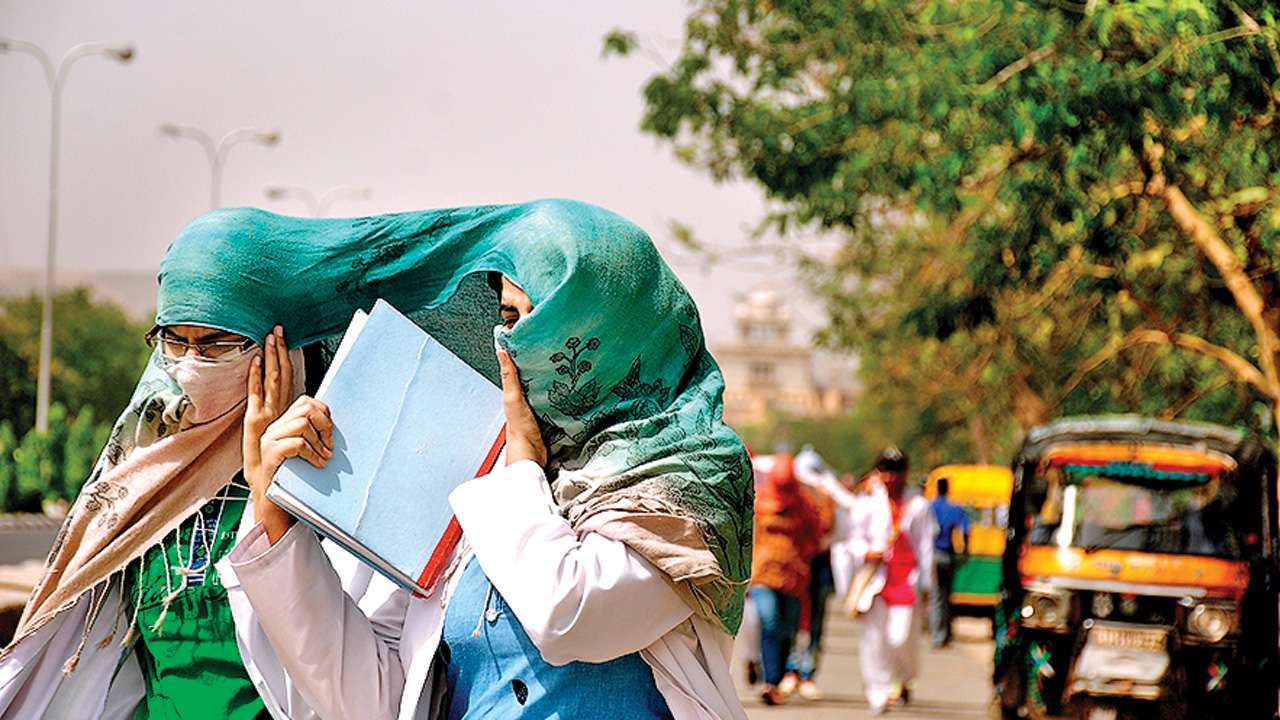
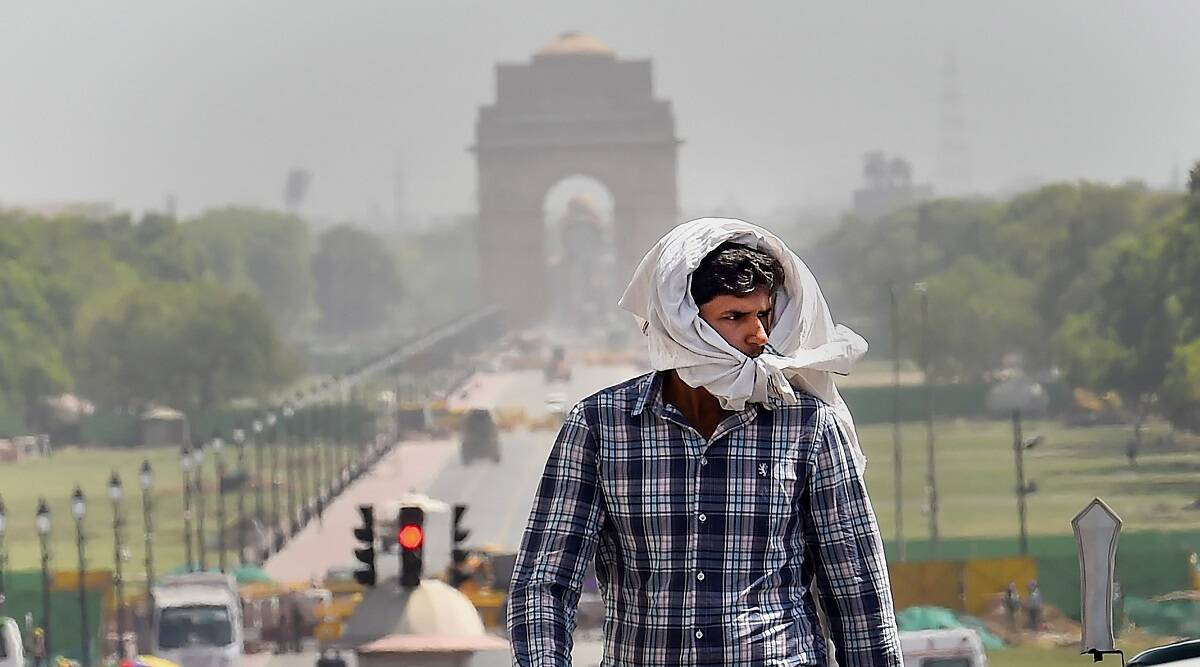
Delhi and parts of NCR are facing scorching heat for the past few weeks and the temperature continuously kept on rising. Amid this, the India Meteorological Department (IMD) on Monday shared the good news, where it said that there are high chances of relief with a slight dip in the temperatures.

The weather department on Monday also reported that a cyclonic circulation over Haryana and Punjab will induce pre-monsoon activity which will provide some relief from the intense heatwave from Monday or Tuesday onwards. It further reported that a dust storm in the national capital is expected on Monday due to which the Delhiites will be able to witness temporary relief from the sweltering heat.
Meanwhile, the city has witnessed the minimum temperature on Monday morning at 30.8 degrees Celsius, which is still four notches above the normal. The maximum temperature is likely to settle around 41 degrees Celsius. Talking about the relative humidity, it stood at at 22 percent.

Read Also: Temperature in Delhi might drop, thunderstorm likely on Monday and Tuesday, says IMD

IMD’s senior scientist Naresh Kumar said they have already issued a Red Alert for Rajasthan for an intense spell of the heatwave in the upcoming days. He added, that an Orange alert also has been issued for Haryana, Punjab, Uttar Pradesh, eastern Madhya Pradesh and Delhi

Meanwhile, on Sunday, Delhi and some parts of the NCR witnessed a scorching heatwave, where the temperature reportedly crossed the 49.2 degrees Celsius mark at Mungeshpur in northwest Delhi and 49.1 degrees Celsius mark at Najafgarh in the southwest parts of the city.  The maximum temperatures were recorded as high as 48.4 degrees Celsius at Sports Complex, 47.5 degrees Celsius at Jafarpur, 47.3 degrees Celsius at Pitampura and 47.2 degrees Celsius at Delhi Ridge.

Gyanvapi Mosque Case: Shivling found in well in masjid complex after Hindu petitioners claim, Varanasi court orders closes off area

Delhi CM Kejriwal wakes up! Slams BJP over anti-encroachment drive

India News

8 Tamil Nadu engineering students killed in Kerala car-lorry crash

Eight engineering students from Tamil Nadu were killed after their car collided with a parked lorry on NH-66 in Kerala’s Thrissur district.


Published

on

Eight engineering students from Tamil Nadu were killed after the car they were travelling in crashed into a parked lorry on NH-66 in Kerala’s Thrissur district late Friday night, police said.

The accident took place at around 11.40 pm at Panambikkunnu in Kaipamangalam. The students were travelling from Guruvayur towards Kodungallur when their car collided with the rear of the lorry.

What happened in the Thrissur accident

According to the FIR, the lorry was parked illegally on the right side of the highway near a barricaded section where traffic had been diverted because of ongoing construction work.

Police said the car was travelling at high speed and its driver apparently failed to notice the diversion barricade before the vehicle crashed into the rear of the lorry.

The lorry was registered in Maharashtra.

Six students died at the accident spot, while two others were declared dead on arrival at a nearby hospital, police said.

Six victims identified

The victims were students of an engineering college in Dindigul and were travelling towards Kodungallur along NH-66.

Police have identified six of the eight victims. Four of them — Surya, Yuvasanjith, Vishva and Johua — were from Dindigul. The other two identified victims were Santhosh and Prasanna from Madurai.

The identities of the remaining two students are yet to be confirmed.

Residents, fire and rescue personnel and police took part in the rescue operation and pulled the students from the badly damaged car. The bodies were subsequently taken to the mortuary of Thrissur Medical College.

Case registered against lorry driver

Kaipamangalam police have registered a case against the lorry driver under Section 105 of the Bharatiya Nyaya Sanhita for culpable homicide.

Police said the driver went into hiding shortly after the accident.

The families of the victims were contacted using student identity cards recovered from the bodies. Police said some families were unaware that their children had travelled to Kerala.

Postmortem examinations will begin after the families reach Thrissur Medical College, police said.

Continue Reading

India News

Air India sacks Phuket-Delhi flight pilot after failing drug test

Air India has terminated the Phuket-Delhi flight pilot after a confirmatory test found a psychoactive substance following the August 4 incident.
Published

on

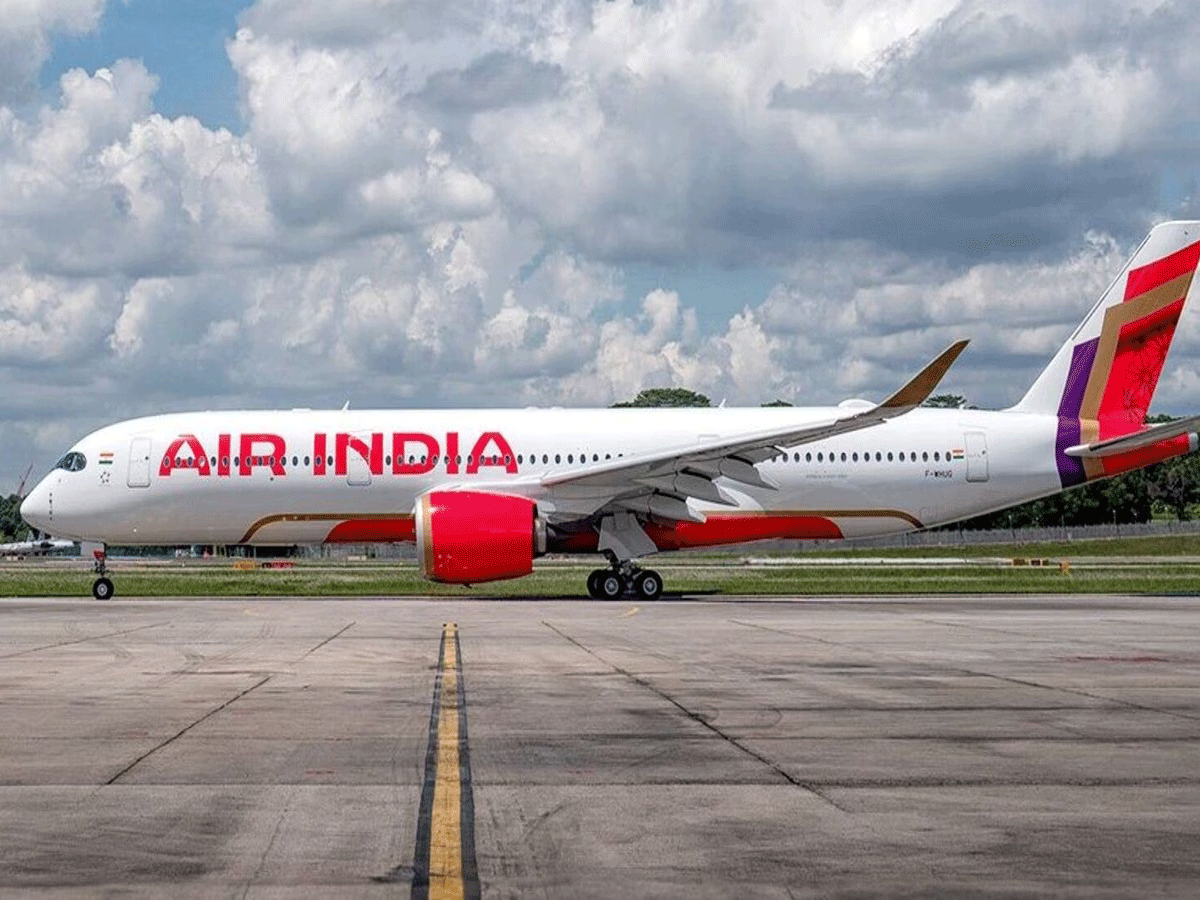
Air India has terminated the employment of the pilot-in-command of a Phuket-Delhi flight after he tested positive for a psychoactive substance.

The pilot was in command of flight AI2379, which was travelling from Phuket to Delhi on August 4 when the aircraft suddenly lost altitude over Odisha. The incident left 24 passengers injured.

Air India said the termination was in line with its zero-tolerance policy regarding safety violations and regulatory requirements.

Air India terminates pilot with immediate effect

In a statement, the Tata-owned airline said the pilot-in-command had tested positive for a psychoactive substance.

The airline said that, considering its zero-tolerance approach to violations related to safety, fitness and regulatory requirements, the pilot’s employment had been terminated with immediate effect.

Air India also said it continues to cooperate fully with the investigation into the incident and has provided access to relevant operational, maintenance and technical records.

What happened on the Phuket-Delhi flight?

According to the preliminary findings of the Aircraft Accident Investigation Bureau (AAIB), the Airbus A320 was carrying 145 people when it experienced the near-simultaneous loss of all three hydraulic systems while cruising at around 36,000 feet.

The technical failure resulted in the autopilot disconnecting and triggered a brief stall warning. The aircraft subsequently lost altitude, resulting in injuries to 24 passengers.

The preliminary report also noted that the pilot tested non-negative for a psychoactive substance in a confirmatory test.

However, the report did not establish that the pilot’s drug-test result caused or contributed to the hydraulic system failure or the subsequent loss of altitude.

AAIB recommends action over psychoactive substance finding

The AAIB described the confirmation of psychoactive substance use as a serious concern and recommended that the Directorate General of Civil Aviation (DGCA) take appropriate action against the pilot on priority.

The investigation into the technical and other aspects of the incident is still underway.

The preliminary report also noted that the co-pilot was flying the aircraft when the incident occurred and attempted to bring the situation under control.

Air India said safety remains its highest priority and that its pilots undergo training, proficiency checks, medical examinations and other regulatory assessments in accordance with applicable requirements.

Continue Reading

Latest world news

S Jaishankar defends Russian oil imports, says it won’t end Ukraine war

S Jaishankar defended India’s Russian oil purchases, saying the Ukraine war can only be resolved through dialogue, diplomacy and negotiations

Published

on

External Affairs Minister S Jaishankar has defended India’s continued purchase of Russian crude oil, saying that stopping the trade would not bring an end to the war in Ukraine.

Speaking to the media during his official visit to Kyiv, Jaishankar said the conflict, now in its fifth year, can only be resolved through dialogue, diplomacy and negotiations. He was responding to questions about Western pressure on India to reduce its purchases of Russian energy.

“This conflict, which is today in its fifth year, will not be solved because somebody is buying or not buying oil or alumina or minerals or metals or fertiliser,” Jaishankar said. He added that dialogue, diplomacy and negotiation were the way to resolve the conflict.

Jaishankar stresses India’s energy security

Jaishankar also highlighted the challenge of ensuring energy security for India’s 1.4 billion people amid difficult global energy conditions.

He said India respects Ukraine’s perspective on the issue but expects other countries to respect New Delhi’s position as well.

India imports around 88 per cent of its crude oil requirement from overseas. According to the report, about one-third of those imports currently come from Russia.

Western pressure over Russian oil

Jaishankar’s comments came amid continued pressure from Western countries over India’s purchases of Russian crude.

The United States and the United Kingdom have backed the argument that restricting Russia’s energy revenues could reduce the funds available to support its military operations in Ukraine.

Last month, the US Senate passed a bipartisan bill that could allow President Donald Trump to impose tariffs of up to 100 per cent on goods from countries, including India and China, that continue importing Russian oil and gas.

India remains a major buyer of Russian crude

Russia has remained India’s largest source of crude oil despite pressure from Washington. However, Indian imports of Russian crude declined in August after reaching record levels in June and July.

Before Russia’s invasion of Ukraine in February 2022, Russian crude accounted for only around 0.2 per cent of India’s crude imports. After Western countries moved away from Russian oil following the invasion, India emerged as the largest buyer of discounted Russian crude.

India imported around 2.1 million barrels of Russian crude per day in August, according to data cited in the report. That represented more than 40 per cent of India’s crude imports, down from around 2.6 million barrels per day in June and July.

Russian exporters increasingly rely on Asian buyers

Russia has also become more dependent on Asian markets after European sanctions disrupted its traditional energy trade.

Countries such as India and China have emerged as important buyers of Russian crude. Continued demand from Indian refiners has helped Russian exporters maintain significant volumes despite restrictions affecting Western shipping, insurance and financial services.

Jaishankar, meanwhile, maintained that the Ukraine conflict requires a diplomatic solution rather than an attempt to resolve it through decisions by individual countries over oil purchases.

Continue Reading

Trending

© Copyright 2022 APNLIVE.com