
MustRead
A LONG WAY TO GO


Why is India lagging behind in children’s education?
The reason we are backward is that there are too many programs functioning independent of each other and there is poor budgetary commitment

By Keerty Nakray
The past two decades have been marked by several social policy innovations across India. At the national level, the Sarva Shiksha Abhiyan (SSA) and the Rashtriya Madhyamik Shiksha Abhiyan (RMSA) have been initiated by the government to universalize primary and secondary education across the country. SSA is being implemented in partnership with states to cover the entire country and address the needs of 192 million children in 1.1 million habitations. UNICEF and the State Council Education, Research and Training will roll out RMSA by 2015-16. For girls living under the Below Poverty Line (BPL), the Kasturba Gandhi Balika Vidyalaya is available which provides them residential education along with training in skills development. And yet, a lot needs to be done to raise education levels.
Several state governments have also initiated specific programs such as Bihar’s Mukhyamantri Bicycle Scheme which is a conditional cash transfer and welfare scheme that awards Rs 2,000 to every student enrolled in Class IX in a government high school and is meant to purchase a bicycle. In 2005-2006, free bicycles were distributed to students belonging to the Scheduled Castes, Scheduled Tribes, and those below the poverty line. In West Bengal, the Department of Education has initiated several schemes such as separate girls’ toilets under the Nirmal Bharat Abhiyan.
RTE ACT
However, several bottlenecks remain in the implementation of the Right of Children to Free and Compulsory Education Act (RTE) in terms of quality of education, poor school results and poor rates of completion of upper primary education amongst socially marginalized groups such as girls, children in rural areas and those belonging to minority groups and from the poorest sections of society.
According to UNICEF (2014), an estimated 8.1 million children are still out of school, the majority belonging to disadvantaged groups. Despite achieving close to universal enrolment at the primary level, 27 percent of children drop out between classes I and V, 41 percent before reaching Class VIII, and 49 percent before Class X. These figures are higher for children from Scheduled Castes (27 percent, 43 percent and 56 percent respectively) and Scheduled Tribes (36 percent, 55 percent and 71 percent, respectively).

Gender discrimination too persists in education as, for every 100 boys enrolled in secondary education there are only 81 girls enrolled. Worse, less than half (47 percent) of Class V students can read textbooks from Class V. Children’s attendance rate in rural primary schools has shown a decline from 73 percent in 2007 to 71 percent in 2012. Forty-one percent of primary schools have a pupil-teacher ratio (PTR) of more than 30, and 31 percent of upper primary schools have a PTR of more than 35. Other concerns include safety issues in conditions of civil unrest and use of corporal punishment across the country.
On the surface, the presence of so many schemes seems to indicate that India has embarked towards a more child-friendly approach to social policy. However, much of the government’s focus has been on schemes to ensure bare minimal nutritional needs of pregnant and lactating mothers or provision of pre-natal and post-natal care in terms of nutritional support, encouraging women to give birth in hospitals and immunization.
REDUCED ALLOCATION
The Integrated Child Development Scheme receives the bulk of government spending apart from polio immunization funds. In terms of expenditure on social well-being of children, that on the SSA, a supplementary education program, has seen a marginal increase in budget from Rs 10,671 crore to Rs 15,000 crore. According to HAQ Centre for Child Rights, an NGO, in spite of the staggering number of orphan children, there was a 74.6 percent reduction in the budget allocation for the Central Adoption Resource Agency. The scheme—Inclusive Education for Disabled at Secondary Stage—has also seen a decline in budgetary allocations.
The International Labour Organization’s World Social Protection Report, “Building Economic Recovery, Inclusive Development and Social Justice 2014-2015”, has drawn attention yet again to the poor provision of social protection for children in developing economies. Globally, governments allocated 0.4 percent of their GDP to children and family benefits, ranging from 2.2 percent in western Europe to 0.2 percent in Africa and Asia and the Pacific. In UNICEF’s State of the World’s Children 2014 report, India has the poorest children’s outcomes among BRICS countries.
The Sustainable Development Goals (2015) list a range of goals that include reduction in poverty, hunger, quality education, gender equality, clean water and sanitation, and reduction of inequalities which have serious implications for achieving universal health and education among children. In order, to meet these targets, the government will have to shift its focus to not only improving food security, education and health but also address other domains of well-being such as access to recreation and freedom from abuse.

India News
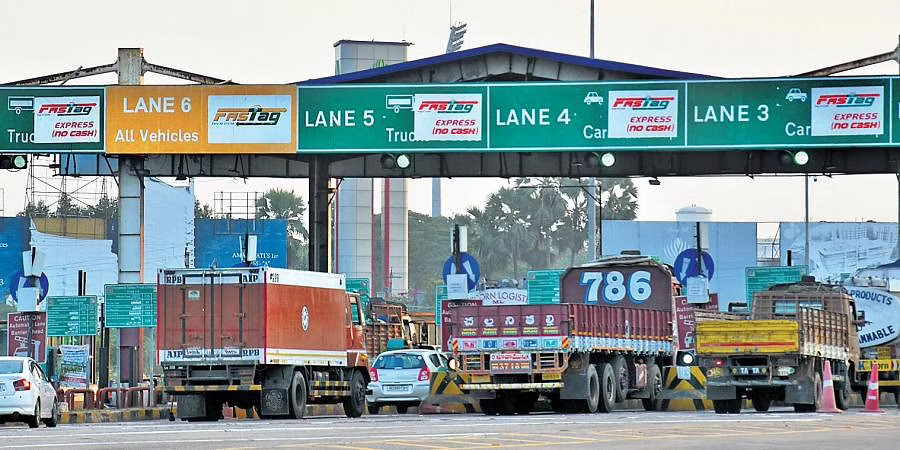
FASTag won’t be discontinued from May 1: Govt clears rumours on new tolling technology
While new technological approaches are under consideration, MoRTH clarified that the ongoing pilot tests featuring Automatic Number Plate Recognition (ANPR) systems at selected toll plazas are meant to enhance, not replace, FASTag functionalities.

India News
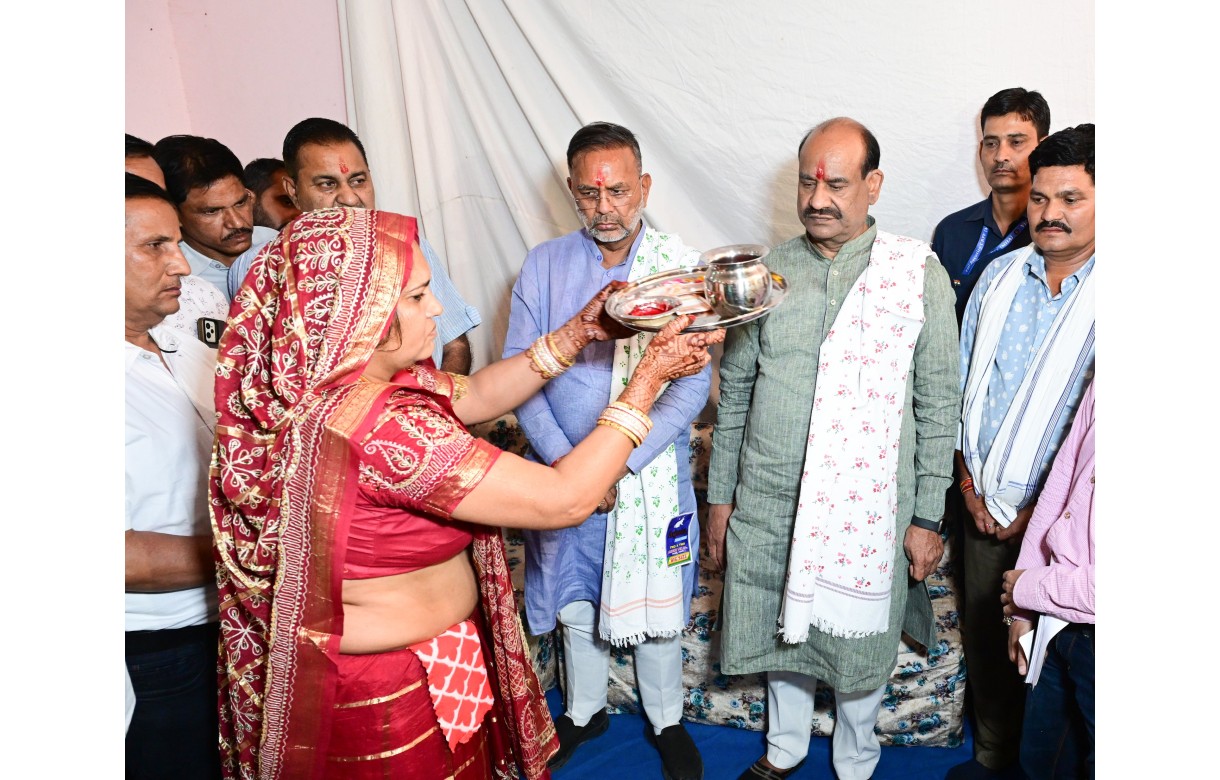
Who was Hemraj Meena, the Pulwama martyr whose daughter’s wedding was attended by Lok Sabha Speaker Om Birla?
Birla took on the role of the uncle for Reena’s mother, Madhubala, and performed the Hindu wedding custom known as ‘mayra’.
Bollywood news
Celebrating a milestone: Oscars to launch Best Stunt Design category for 100th Academy Awards in 2027
Indian filmmaker SS Rajamouli, celebrated for RRR, expressed his excitement on social media


Mallikarjun Kharge’s ‘Your Friends’ jab at Rahul Gandhi over congress exits

Magnitude 7 earthquake strikes Russia’s Kamchatka Peninsula

Delhi deploys 25,000 personnel, installs CCTV cameras ahead of CJP march

Abhijeet Dipke detained ahead of CJP’s national flag march in Delhi

Mallikarjun Kharge seeks all-party meeting with PM Modi on delimitation

Centre sends 3 letters to Punjab government after anti-drug activist’s killing
Mallikarjun Kharge seeks all-party meeting with PM Modi on delimitation
Abhijeet Dipke detained ahead of CJP’s national flag march in Delhi
Magnitude 7 earthquake strikes Russia’s Kamchatka Peninsula
Delhi deploys 25,000 personnel, installs CCTV cameras ahead of CJP march

Afghan Men Try To Hang With The Jet Engine Of The Aircraft in Kabul- Afghanistan News – Kabul News
Trending Top 10 News: 10000 Crore Fine on Flipkart, Apple to Launch Unique Feature, Hdfc Bank Job Ad

Trending Top 10 News: Nokia 6310, Apple sales, Bachpan ka Pyar Video Kid, Dainik Bhaskar IT Raid

Trending Top 10 News: Canada bans Indian flights, Rain in Delhi NCR, AIMIM Twitter hacked, Raj Kundra case

Trending Top 10 News: Shein India, Apple New Service, Pocket Oxygen, Oppo Launched New Phone
-
 India News21 hours ago
Mallikarjun Kharge’s ‘Your Friends’ jab at Rahul Gandhi over congress exits
-
 Latest world news20 hours ago
Magnitude 7 earthquake strikes Russia’s Kamchatka Peninsula
-
 India News21 hours ago
Delhi deploys 25,000 personnel, installs CCTV cameras ahead of CJP march
-
 India News11 hours ago
Abhijeet Dipke detained ahead of CJP’s national flag march in Delhi
-
 India News10 hours ago
Mallikarjun Kharge seeks all-party meeting with PM Modi on delimitation
-
 India News9 hours ago
Centre sends 3 letters to Punjab government after anti-drug activist’s killing
