English हिन्दी
Connect with us

Latest world news

Trump appreciates India as leading global power, asks Pakistan to take action against terror

Published

on

donald-trump

[vc_row][vc_column][vc_column_text]In another pull and push exercise in US policy towards south Asia, Trump administration has described  India as a “leading global power” while it asked Pakistan  to take “decisive action” against terrorist groups operating from its soil through its new National Security Strategy (NSS) unveiled on Tuesday.

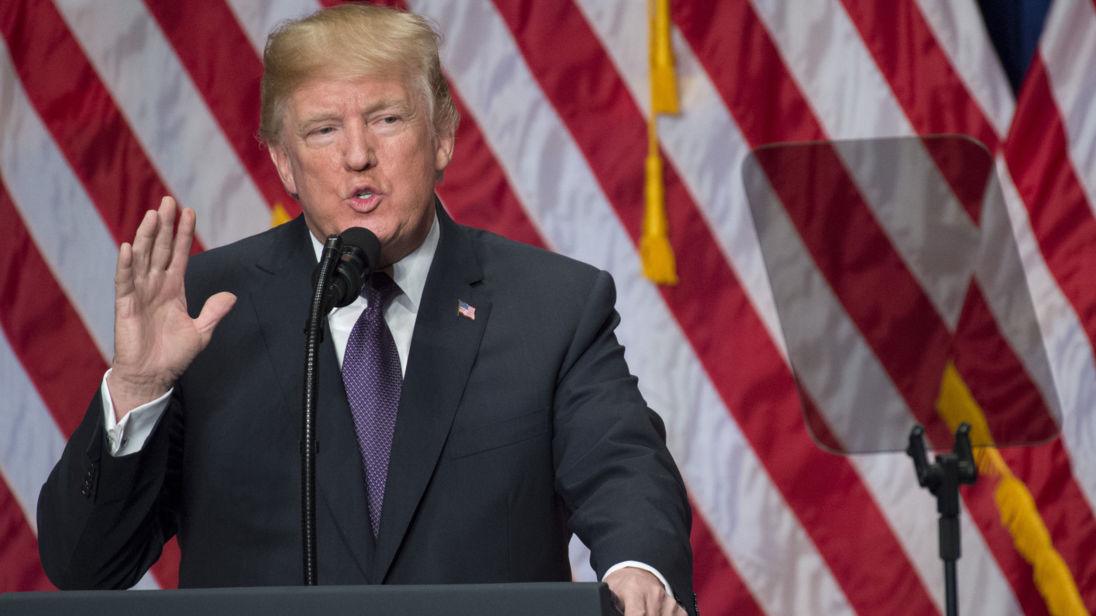
According to reports received from Washington the 68-page document was released by President Donald Trump. It said, “We will expand our defence and security cooperation with India, a Major Defence Partner of the United States, and support India’s growing relationships throughout the region.”

“We welcome India’s emergence as a leading global power and stronger strategic and defence partner.We will deepen our strategic partnership with India and support its leadership role in Indian Ocean security and throughout the broader region,” the document said.

India-US defence relationship was referred in the context of Indo-Pacific region, whereas it gave a “very prominent role to India” in South and Central Asia.

Meanwhile new strategy seeks a Pakistan which is not engaged in destabilising behaviour.  The US, it said, continues to face threats from transnational terrorists and militants operating from within Pakistan.[/vc_column_text][vc_raw_html]JTNDYmxvY2txdW90ZSUyMGNsYXNzJTNEJTIydHdpdHRlci10d2VldCUyMiUyMGRhdGEtbGFuZyUzRCUyMmVuJTIyJTNFJTNDcCUyMGxhbmclM0QlMjJlbiUyMiUyMGRpciUzRCUyMmx0ciUyMiUzRVdpdGglMjB0aGUlMjBzdHJhdGVneSUyMHRoYXQlMjBJJTIwYW5ub3VuY2VkJTIwdG9kYXklMkMlMjB3ZSUyMGFyZSUyMGRlY2xhcmluZyUyMHRoYXQlMjBBTUVSSUNBJTIwaXMlMjBpbiUyMHRoZSUyMGdhbWUlMjBhbmQlMjBBTUVSSUNBJTIwaXMlMjBERVRFUk1JTkVEJTIwdG8lMjBXSU4lMjElM0NiciUzRSUzQ2JyJTNFT1VSJTIwRk9VUiUyMFBJTExBUlMlMjBPRiUyME5BVElPTkFMJTIwU0VDVVJJVFklMjBTVFJBVEVHWSUzQSUyMCUzQ2ElMjBocmVmJTNEJTIyaHR0cHMlM0ElMkYlMkZ0LmNvJTJGQjNQT2FNVklEOCUyMiUzRXBpYy50d2l0dGVyLmNvbSUyRkIzUE9hTVZJRDglM0MlMkZhJTNFJTNDJTJGcCUzRSUyNm1kYXNoJTNCJTIwRG9uYWxkJTIwSi4lMjBUcnVtcCUyMCUyOCU0MHJlYWxEb25hbGRUcnVtcCUyOSUyMCUzQ2ElMjBocmVmJTNEJTIyaHR0cHMlM0ElMkYlMkZ0d2l0dGVyLmNvbSUyRnJlYWxEb25hbGRUcnVtcCUyRnN0YXR1cyUyRjk0MjkwNDY4NjEyNTk2NTMxMiUzRnJlZl9zcmMlM0R0d3NyYyUyNTVFdGZ3JTIyJTNFRGVjZW1iZXIlMjAxOCUyQyUyMDIwMTclM0MlMkZhJTNFJTNDJTJGYmxvY2txdW90ZSUzRSUwQSUzQ3NjcmlwdCUyMGFzeW5jJTIwc3JjJTNEJTIyaHR0cHMlM0ElMkYlMkZwbGF0Zm9ybS50d2l0dGVyLmNvbSUyRndpZGdldHMuanMlMjIlMjBjaGFyc2V0JTNEJTIydXRmLTglMjIlM0UlM0MlMkZzY3JpcHQlM0UlMEE=[/vc_raw_html][vc_column_text]In his remarks President Trump said, “We have made clear to Pakistan that while we desire continued partnership, we must see decisive action against terrorist groups operating on their territory. And we make massive payments every year to Pakistan. They have to help.”

“We will press Pakistan to intensify its counterterrorism efforts, since no partnership can survive a country’s support for militants and terrorists who target a partner’s own service members and officials,” he said. 

“The United States will also encourage Pakistan to continue demonstrating that it is a responsible steward of its nuclear assets,” it said, adding the US will continue to partner with Afghanistan to promote peace and security in the region.

In an apparent reference to China’s One Belt One Road (OBOR) and the China-Pakistan Economic Corridor (CPEC), the NSS said, “We will help South Asian nations maintain their sovereignty as China increases its influence in the region”.

India has opposed the CPEC as the corridor passes through Pakistan-occupied Kashmir (PoK). New Delhi refused to participate in OBOR Summit in Beijing held in May this year. India considers PoK as its own territory under the illegal occupation of Pakistan.

“The prospect for an Indo-Pakistani military conflict that could lead to a nuclear exchange remains a key concern requiring consistent diplomatic attention,” NSS said.

Meanwhile, Trump addressed his domestic constituency in downtown Washington. He said, “For many years, our citizens watched as Washington politicians presided over one disappointment after another; too many of our leaders — so many — who forgot whose voices they were to respect, and whose interest they were supposed to defend.”

“We know that American success is not a foregone conclusion. It must be earned and it must be won. Our rivals are tough. They’re tenacious and committed to the long term, but so are we,” he said. “To succeed, we must integrate every dimension of our national strength, and we must compete with every instrument of our national power.”

“With this strategy, we are calling for a great reawakening of America, a resurgence of confidence, and a rebirth of patriotism, prosperity and pride,” he said.

Meanwhile Kevin Liptak, CNN White House producer says that new NSS was “an extension of his populist economic message, lambasting last presidents and trumpeting his own achievements during a speech meant to outline the guiding principles of his NSS.

He further said that, “In a speech that closely resembled a campaign address, Trump offered a laundry list of accomplishments and a reiteration of his view that Americans have been left behind as a result of decisions made by past administrations, including immigration, the Iran nuclear deal and trade pacts.”

White House says that the “new strategy sets a positive strategic direction for the US that will restore America’s advantages in the world and build upon our country’s great strengths.”

National security aides to Trump began working on the strategy statement immediately after he occupied White House. President formally endorsed the document at a cabinet meeting last week.[/vc_column_text][/vc_column][/vc_row]

Latest world news

Israel-Lebanon ceasefire to begin within hours as Trump announces 10-day truce

Israel and Lebanon may begin a 10-day ceasefire within hours after a proposal announced by Donald Trump amid ongoing tensions.

Published

on

Donald Trump

A temporary halt in hostilities between Israel and Lebanon is expected to begin within hours after US President Donald Trump announced a proposed 10-day ceasefire between the two sides, amid ongoing tensions in the region.

According to his statement, the ceasefire is likely to take effect around 5 p.m. Eastern Time, although independent confirmation from both sides is still awaited.

The development follows discussions involving Israeli Prime Minister Benjamin Netanyahu and Lebanese President Joseph Aoun, with mediation efforts led by the United States.

Officials indicated that the proposed truce is aimed at creating a limited window to reduce violence and potentially pave the way for broader diplomatic engagement. The situation along the Israel-Lebanon border has remained tense in recent weeks, with escalation linked to the activities of Hezbollah.

Diplomatic efforts have intensified in recent days, with discussions facilitated by the United States, including the involvement of US Secretary of State Marco Rubio. However, details of the agreement and the extent of coordination between the parties remain unclear.

The situation remains fluid, and the success of the ceasefire will depend on adherence by all sides involved. The conflict has already led to significant humanitarian and geopolitical consequences, including displacement and disruption in affected areas.

While the proposed ceasefire is being seen as an important step toward de-escalation, broader negotiations involving regional stakeholders are expected to be necessary for any lasting resolution.

Continue Reading

Latest world news

US ends oil sanctions waiver for Iran and Russia, impact likely on India’s energy imports

The US decision to end the Iran and Russia oil waiver may impact India’s oil imports, fuel prices and global energy markets.

Published

on

US oil tanker

The United States has decided not to extend a temporary sanctions waiver that allowed limited trade in Iranian and Russian oil, marking a shift towards stricter enforcement of economic restrictions.

The waiver, introduced in March 2026, had permitted the sale of oil already loaded on ships to stabilise global supply during heightened geopolitical tensions. However, it is now set to expire around mid-April without renewal.

US officials have indicated that the move is part of a broader strategy to increase pressure on both Iran and Russia amid ongoing conflicts and geopolitical tensions.

What the waiver did and why it mattered

The short-term waiver allowed millions of barrels of oil—estimated at around 140 million barrels—to enter global markets, helping ease supply shortages and prevent sharp price spikes.

It also enabled countries like India to purchase discounted crude oil from Russia and resume limited imports from Iran after years of restrictions.

Impact on India

India, one of the world’s largest oil importers, is expected to feel the impact of the decision in several ways:

  • Reduced access to discounted oil
    India had been buying cheaper Russian crude and recently resumed Iranian imports under the waiver. Its end may limit these options.
  • Potential rise in fuel costs
    With fewer discounted supplies available, India may need to rely more on costlier sources, which could increase domestic fuel prices.
  • Supply diversification pressure
    India may need to explore alternative suppliers in the Middle East, Africa, or the US to maintain energy security.
  • Geopolitical balancing challenge
    The move adds pressure on India to align with US sanctions while managing its own economic interests.

Global energy market concerns

The end of the waiver comes at a time when global oil markets are already under stress due to conflict in West Asia and disruptions in key routes like the Strait of Hormuz.

Analysts warn that tightening sanctions could:

  • Reduce global oil supply
  • Increase price volatility
  • Intensify competition among major buyers like India and China

Bigger picture

The US decision reflects a broader shift from temporary relief measures to stricter enforcement of sanctions, even if it risks tightening global energy markets.

For India, the development highlights a recurring challenge—balancing affordable energy access with geopolitical realities.

Continue Reading

Latest world news

Sanctioned tanker fails to breach US blockade, turns back near Strait of Hormuz

A US-sanctioned tanker failed to cross the Hormuz blockade and turned back, underscoring rising tensions and disruption in global shipping routes.

Published

on

A US-sanctioned oil tanker failed to break through a newly imposed American naval blockade and was forced to turn back near the Strait of Hormuz, highlighting growing tensions in the region.

The vessel, identified as the Rich Starry, reversed its course after attempting to exit the Gulf, according to shipping data. The development comes just days after the United States enforced restrictions on ships linked to Iranian ports.

The blockade was announced by Donald Trump following the collapse of recent diplomatic talks with Iran. The move aims to restrict maritime traffic associated with Iranian trade.

Officials said that during the first 24 hours of enforcement, no vessel successfully crossed the blockade. Several ships, including the sanctioned tanker, complied with instructions from US forces and turned back toward regional waters.

The tanker is reported to be linked to a Chinese company previously sanctioned for dealing with Iran. It was carrying a cargo of methanol loaded from the United Arab Emirates at the time of the incident.

The situation underscores the rising risks in one of the world’s most critical oil transit routes. The Strait of Hormuz typically handles a significant share of global energy shipments, but traffic has sharply declined due to ongoing geopolitical tensions.

The blockade, which applies specifically to vessels travelling to or from Iranian ports, has added further uncertainty for shipping companies, insurers and global energy markets.

Continue Reading

Trending

© Copyright 2022 APNLIVE.com