English हिन्दी
Connect with us

Top Stories

VIRAL: Unnao orphans appeal to CM Yogi Adityanath to release their father’s pending pension

After the death of their father, their mother, who was suffering from Covid, had also died untimely, the orphans said.

Published

on

unnao orphans

Even after 2 years of the father’s death during Covid second wave, the children orphaned after the death of their father, a government employee, have not been able to get the benefits of government schemes. They have been facing financial difficulties due to their father’s pension put on hold.

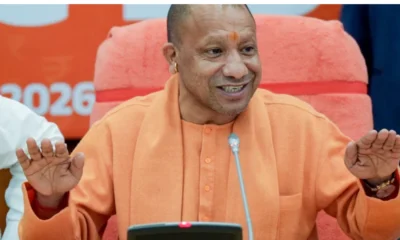
The son and daughter of the deceased government employee have appealed to Uttar Pradesh Chief Minister Yogi Adityanath for help via social media. The video of orphans’ emotional appeal to UP CM has gone viral on social media.

The two siblings have made an emotional appeal to Uttar Pradesh Chief Minister Yogi Adityanath to release the pending pension of their father, who had died during Covid second wave.

In the video, the orphans also called for disciplinary action against employees and officers, who have been putting their father’s pension on hold till now. The children have also made serious allegations against a government employee posted in the collectorate office in their video.

The siblings Virat Mishra and Pari Mishra are the residents of the Bighapur village of Unnao district.

After the story surfaced in the media, the local administration took cognizance. The kids met Unnao DM Apoorva Dubey, who assured them that their problem will be resolved at the earliest.

Speaking with reporters, Unnao DM has also assured that action will be taken in two days only. She has already met the children and assured them of their protection, the DM said.

After the death of the parents, both the children are living with their maternal grandfather and he is taking care of them, the DM also said.

After the death of their father during Covid second wave, their mother, who was suffering from Covid, had also died untimely, the children said.

Latest world news

Suicide bombing at Islamabad shrine kills 10, over 20 injured

A suicide bombing at a Shia shrine in Islamabad’s Shehzad Town area killed at least 10 people and injured over 20, prompting a city-wide emergency.

Published

on

Suicide bombing at Islamabad Shrine

At least 10 people were killed and around 20 others sustained injuries after a suicide bomber detonated explosives at a Shia shrine in Pakistan’s capital, Islamabad, on Friday afternoon.

The explosion took place at Tarlai Imambargah, located in the Shehzad Town area, when the attacker set off the device at the main entrance of the place of worship, where devotees had gathered.

Bomber stopped at entrance, say officials

Security officials said alert guards intercepted the attacker at the gate, preventing him from entering the main hall of the shrine. The timely action is believed to have reduced the scale of casualties inside the premises.

However, the blast caused significant damage to the gate structure. Visuals from the site showed shattered windows of nearby buildings and debris scattered across the road following the explosion.

Emergency declared across Islamabad

In the aftermath of the attack, the Islamabad Inspector General of Police declared a city-wide emergency. Rescue teams and law enforcement personnel rushed to the site amid concerns that the casualty count could rise.

The injured were shifted to Pakistan Institute of Medical Sciences (PIMS) and Polyclinic Hospital for treatment.

Recent history of suicide attacks in the capital

The incident comes less than three months after a suicide bombing outside a district and sessions court building in Islamabad on November 11, 2025, which killed 12 people and injured more than 30 others, raising renewed concerns over security in the capital.

Continue Reading

Latest world news

Bangladesh rushes to finalise US trade deal after India secures lower tariffs

Bangladesh is accelerating talks with the US to finalise a trade agreement after India secured lower tariffs, raising concerns over export competitiveness and transparency.

Published

on

Bangladesh is moving quickly to finalise a trade agreement with the United States after India concluded a deal with Washington that lowered tariffs on Indian goods to 18 per cent. The development has triggered concern in Dhaka that Bangladesh could lose market share in the US if it fails to secure comparable or better terms.

The US and Bangladesh are expected to sign the agreement on February 9, just three days before the country’s national election scheduled for February 12. The timing and lack of transparency surrounding the deal have drawn criticism from economists, business leaders and political observers.

Bangladesh’s economy is heavily dependent on ready-made garment exports, which account for nearly 90 per cent of its exports to the US. Any tariff disadvantage compared to India could significantly impact export orders and employment in the sector.

Tariff cuts under negotiation

The proposed agreement follows a series of tariff revisions imposed by Washington. In April 2025, the US imposed a steep 37 per cent tariff on Bangladeshi goods. This was reduced to 35 per cent in July and further lowered to 20 per cent in August.

According to reports, the upcoming deal is expected to bring tariffs down further to around 15 per cent. Officials see this as critical to keeping Bangladeshi exports competitive against Indian products in the US market.

Secrecy around negotiations raises concerns

Concerns have intensified due to the confidential nature of the negotiations. In mid-2025, the interim government led by Muhammad Yunus signed a formal non-disclosure agreement with the US, committing to keep tariff and trade discussions confidential.

No draft of the agreement has been shared with the public, parliament or industry stakeholders. A commerce adviser had earlier stated that the deal would not go against national interests and could be made public with US consent.

Policy experts, however, argue that the lack of disclosure prevents meaningful debate on the agreement’s long-term implications.

Conditions reportedly linked to the deal

Media reports suggest that the agreement may include several conditions. These include reducing imports from China, increasing military procurement from the US, and allowing American goods easier access to the Bangladeshi market.

It is also reported that Bangladesh may be required to accept US standards and certifications without additional scrutiny. Inspections on US vehicle imports and parts could reportedly be eased to facilitate smoother entry into the local market.

A senior policy analyst described the process as opaque, noting that signing the agreement just days before elections could bind the hands of the next elected government.

Garment industry left in the dark

Bangladesh exports garments and textiles worth between $7 billion and $8.4 billion annually to the US, accounting for nearly 96 per cent of its total exports to the American market. In comparison, Bangladesh imports around $2 billion worth of goods from the US.

With India and Bangladesh exporting similar apparel products, lower tariffs for India could shift US buyers towards Indian suppliers. Industry leaders warn that this could put millions of jobs at risk in Bangladesh’s garment sector, which employs 4 to 5 million workers, most of them women.

The sector contributes over 80 per cent of Bangladesh’s export earnings and nearly 20 per cent of its GDP.

A senior garment exporters’ association official said the agreement carries major implications and should ideally have been signed after the election to allow broader political and public discussion.

Political timing draws criticism

Economists and analysts have also questioned why an unelected interim administration is finalising a major trade agreement so close to national elections. They argue that responsibility for implementing the deal will fall on the incoming elected government.

A prominent economist criticised the process as lacking transparency and warned that the country could be pushed into long-term commitments without adequate scrutiny or public consent.

Meanwhile, US diplomats have indicated openness to engaging with various political forces in Bangladesh, including Jamaat-e-Islami, which has been banned multiple times in the country’s history.

Continue Reading

India News

Punjab AAP leader Lucky Oberoi shot dead in daylight attack in Jalandhar

AAP leader Lucky Oberoi was killed in a daylight shooting in Punjab’s Jalandhar after attackers fired multiple bullets at him while he was inside his car.

Published

on

AAP LEADER Lucky oberoi

AAP leader Lucky Oberoi was shot dead in a broad daylight attack in Punjab’s Jalandhar on Friday after unidentified assailants opened fire at him near a gurdwara in the city.

According to initial information, Oberoi was inside his car near the Gurdwara Sahib in the Model Town area when attackers arrived on a two-wheeler and fired multiple rounds at him. Five bullets reportedly hit him during the attack.

He was rushed to a private hospital immediately after the shooting, but doctors declared him dead due to the severity of his injuries.

Attack near gurdwara, police launch investigation

As per preliminary details, Oberoi was parking his vehicle outside the gurdwara when the attackers struck. The shooting triggered panic in the area, prompting an immediate response from the local police.

A police team reached the spot soon after receiving information and has launched an investigation into the incident. Efforts are underway to identify the attackers and determine the motive behind the killing.

Political reactions after killing

Following the incident, Leader of Opposition in the Punjab Legislative Assembly, Partap Singh Bajwa, strongly criticised the state government, alleging a collapse of law and order in Punjab.

In a post on X, Bajwa said the daylight killing of an AAP leader outside a gurdwara reflected the deteriorating security situation in the state. He questioned the government’s ability to protect citizens, claiming that fear and gang violence were gripping Punjab under the current administration.

Background

Lucky Oberoi was associated with the Aam Aadmi Party in Punjab. His wife had earlier contested municipal elections as an AAP candidate but did not win.

Continue Reading

Trending

© Copyright 2022 APNLIVE.com