
Latest world news
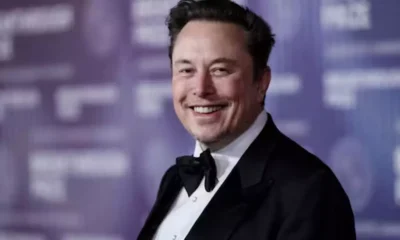
Elon Musk lists Twitter strategy for parody accounts, says will be suspended without a warning
In Elon Musk’s first significant update to the social media site, Twitter updated its app on Saturday and started charging $8 for coveted blue check verification marks.


In a fresh set of tweets, Elon Musk, the new owner of Twitter, said that anyone using a parody account on Twitter, engaging in impersonation without making it obvious that it is one will have their account permanently suspended without notice.
Since Elon Musk bought Twitter, there have been numerous updates regarding operations, restructuring, and adjustments the social network will undergo.
Elon Musk on Sunday tweeted that any Twitter account accounts involved in impersonation without explicitly stating it is parody will have their accounts permanently suspended.

This happened when a user who was mimicking Musk had their account suspended, but Musk made no mention of any such incident in his writings. The account, which had over 90,000 followers, also featured a blue tick and Musk’s photo and profile. It included references to Bhojpuri music and many posts that were published in Hindi.
Read Also: At least 2 killed, 10 injured as bus collides with truck on Yamuna Expressway
The tech billionaire has also stated that such accounts would not be forewarned. He tweeted that in the past, a prior notice was issued before suspension, but, since we are doing widespread verification, there will be no notice. This will be made clear as a requirement for joining Twitter Blue, he added.
In another tweet, Musk emphasised that widespread verification will democratise journalism and empower the voice of the people, adding that any name change will entail temporary loss of the verified checkmark for any account.
In Elon Musk’s first significant update to the social media site, Twitter updated its app on Saturday and started charging $8 for coveted blue check verification marks.
Musk stated last week that banned accounts won’t be let back on Twitter unless the social media site has a clear method for doing so.
Elon Musk is still being questioned in the meanwhile since he announced charging $8 for blue tick verification, which was previously free. About 50 per cent of Twitter’s employees were sacked last week, which was likewise met with harsh criticism.
Police personnel lathi charge woman in UP, video viral | Watch









Latest world news
Magnitude 7 earthquake strikes Russia’s Kamchatka Peninsula
A magnitude 7 earthquake struck Russia’s Kamchatka Peninsula region on Friday. The initial report placed the earthquake at a depth of 140 kilometres.


Latest world news
S Jaishankar says India is a natural option for Russia amid Europe tensions
External Affairs Minister S Jaishankar said India remained a natural option for Russia as Moscow increasingly turned towards Asia amid strained relations with Europe. He highlighted the continuity of India-Russia ties and their significance for the balance of power in Asia.

Latest world news
Putin praises PM Modi, says he has very good ideas on Ukraine war
Russian President Vladimir Putin has praised Prime Minister Narendra Modi for repeatedly raising the need to end the Ukraine war, describing his ideas for a settlement as “very good”.


Election Commission orders voter roll revision in 17 states, UTs

Actor Imran Khan asked to leave India after CJP protest

Delhi Police offers 11-person limit for CJP’s Connaught Place protest

Mallikarjun Kharge’s ‘Your Friends’ jab at Rahul Gandhi over congress exits

Delhi deploys 25,000 personnel, installs CCTV cameras ahead of CJP march

Magnitude 7 earthquake strikes Russia’s Kamchatka Peninsula
Delhi deploys 25,000 personnel, installs CCTV cameras ahead of CJP march
Mallikarjun Kharge’s ‘Your Friends’ jab at Rahul Gandhi over congress exits
Delhi Police offers 11-person limit for CJP’s Connaught Place protest
Actor Imran Khan asked to leave India after CJP protest

Afghan Men Try To Hang With The Jet Engine Of The Aircraft in Kabul- Afghanistan News – Kabul News
Trending Top 10 News: 10000 Crore Fine on Flipkart, Apple to Launch Unique Feature, Hdfc Bank Job Ad

Trending Top 10 News: Nokia 6310, Apple sales, Bachpan ka Pyar Video Kid, Dainik Bhaskar IT Raid

Trending Top 10 News: Canada bans Indian flights, Rain in Delhi NCR, AIMIM Twitter hacked, Raj Kundra case

Trending Top 10 News: Shein India, Apple New Service, Pocket Oxygen, Oppo Launched New Phone
-
 India News22 hours ago
Election Commission orders voter roll revision in 17 states, UTs
-
 India News22 hours ago
Actor Imran Khan asked to leave India after CJP protest
-
 India News21 hours ago
Delhi Police offers 11-person limit for CJP’s Connaught Place protest
-
 India News9 hours ago
Mallikarjun Kharge’s ‘Your Friends’ jab at Rahul Gandhi over congress exits
-
 India News9 hours ago
Delhi deploys 25,000 personnel, installs CCTV cameras ahead of CJP march
-
 Latest world news9 hours ago
Magnitude 7 earthquake strikes Russia’s Kamchatka Peninsula
