English हिन्दी
Connect with us

India News

Supreme Court recommends 5 names for elevation as High Court Chief Justices

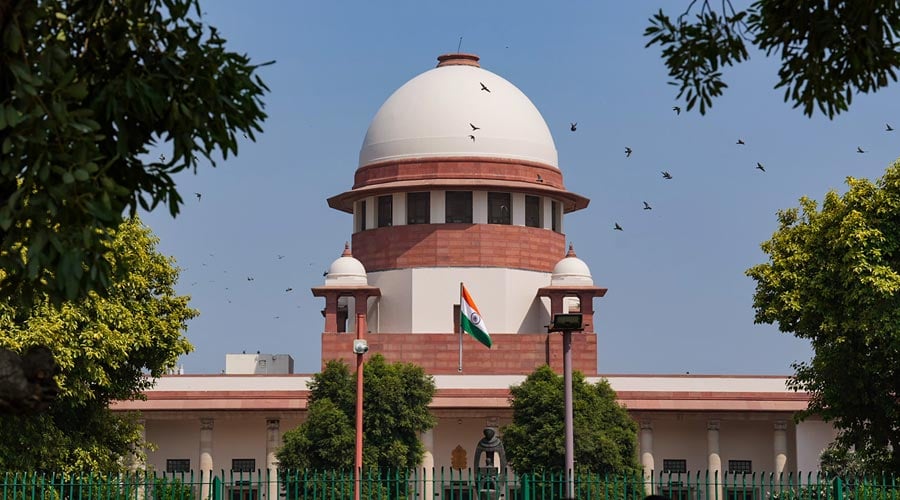
The Supreme Court, Thursday, recommended names of five judges for elevating them as Chief Justices of various High Courts.

Published

on

supreme-court-collegium

The Supreme Court, Thursday, recommended names of five judges for elevating them as Chief Justices of various High Courts.
The Supreme Court Collegium has recommended Justice TS Sivagnanam to Calcutta High Court, Justice Pritinker Diwaker to Allahabad High Court, Justice Ramesh Sinha to Chhattisgarh High Court, Justice Sonia G Gokani to Gujarat High Court and Justice Dhiraj Singh Thakur to Manipur High Court.

Justice Thakur, whose parent High Court is the Jammu and Kashmir and Ladakh High Court, is the brother of former Chief Justice of India TS Thakur. He has been a judge of the Bombay High Court since June 10, 2022.

A resolution by the Collegium noted that the Jammu and Kashmir and Ladakh High Court does not have representation amongst Chief Justices of High Courts since the retirement of Justice AM Margret.

The Collegium noted that no judge from Jammu and Kashmir origin has been elevated as Chief Justice of a High Court or as a judge of the Supreme Court for the longest period, hence it considered that Justice Dhiraj Singh Thakur is “fit and suitable in all respects” for being appointed as the Chief Justice of the High Court of Manipur.

Read Also: BJP minister removes kurta, washes himself at event due to itching, video viral | Watch

The apex court recommended Justice Pritinker Diwaker as the Chief Justice of the Allahabad High Court and noted that the position of Chief Justice at the Allahabad High Court would be falling vacant once the Collegium’s earlier recommendation to elevate incumbent Chief Justice Rajesh Bindal to the Supreme Court is cleared by the Central government.

The Collegium recommended the appointment of Justice TS Sivagnanam as the next Chief Justice of the Calcutta High Court.

It also recommended the appointment of Justice Sonia G Gokani as the Chief Justice of the Gujarat High Court. The recommendation was made in light of the fact that current Chief Justice Aravind Kumar was recommended for elevation to the Supreme Court last month.

The Collegium has recommended the name of Justice Ramesh Sinha, the senior most puisne Judge from the High Court of Allahabad, as the Chief Justice of Chhattisgarh High Court.

Turkey-Syria earthquake: Death toll tops 21,000, biting cold hampers rescue operations

Reserves of lithium, a key battery component, found in Jammu and Kashmir, first in India

India News

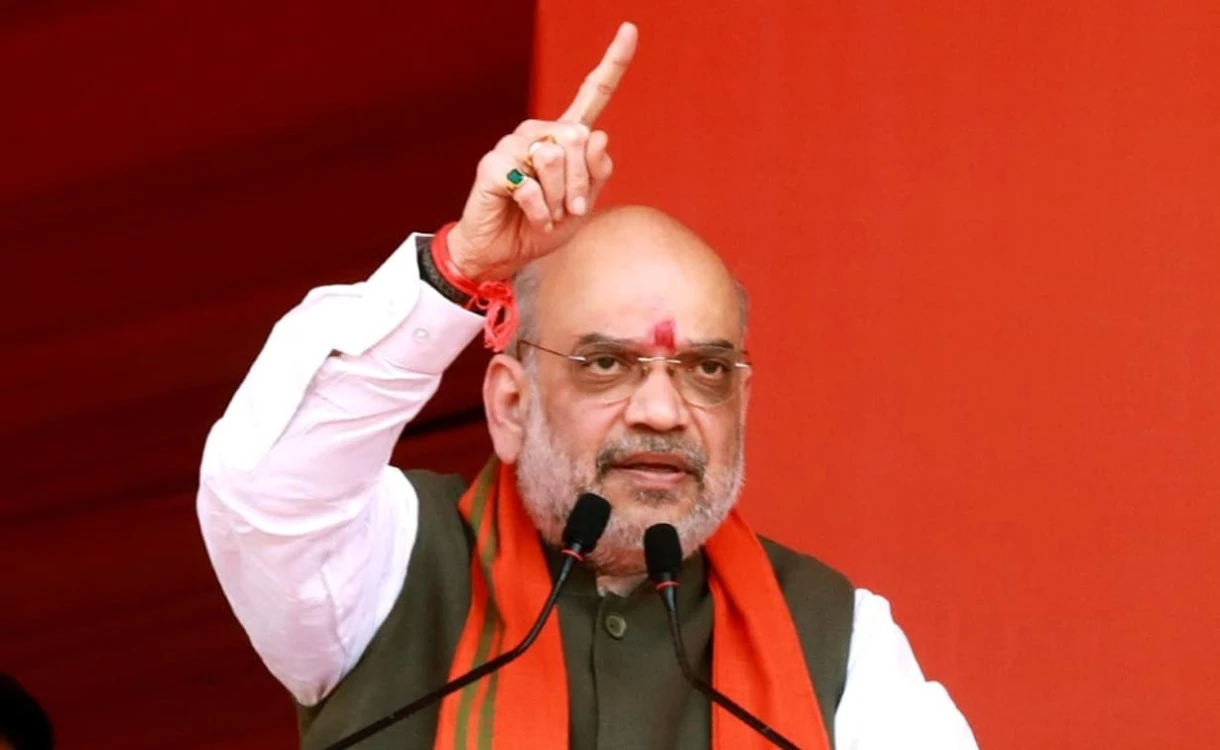
Amit Shah says Naxalism is over, vows to end Punjab drug trade by 2029

Amit Shah said the Centre would work to eliminate Punjab’s drug trade by December 31, 2029. He also called for CBI investigations into two additional cases involving people whose deaths were linked to the fight against drugs.

Published

on

Amit Shah

Union Home Minister Amit Shah has reiterated the Centre’s commitment to eliminating the drug trade in Punjab by December 31, 2029, drawing a parallel with the government’s claim that it has ended Naxalism.

Speaking at a Vijayadashami event in Ludhiana on Tuesday, Shah said the fight against narcotics would continue until the drug trade was eliminated. He also called on the Punjab government to transfer two additional cases involving people who had opposed the drug menace to the Central Bureau of Investigation (CBI).

Shah’s remarks came during his visit to Punjab, where he met families affected by deaths linked to the state’s drug problem.

Amit Shah sets 2029 deadline for drug-free Punjab

Addressing the gathering in Ludhiana, Shah said the government had fulfilled several of its commitments, citing the removal of Article 370 and Article 35A, progress against terrorism and the end of Naxalism.

He said the next priority was to eliminate the drug trade.

Shah reiterated his resolve to eliminate Punjab’s drug trade by December 31, 2029, describing the commitment as a tribute to three people whose families he met during his visit.

The Home Minister urged people to share information about the drug trade through the Narcotics Control Bureau’s toll-free helpline, assuring them that the Modi government would take action on the information received.

Shah seeks CBI probes into two more cases

During his Punjab visit, Shah met the families of Bikramjit Singh in Gurdaspur, Gulzar Singh in Sangrur and Parwinder Singh Jhota in Mansa.

Shah met the families and assured them that action would be taken in the cases.

Shah referred to the case involving Parwinder Singh Jhota in Mansa, which had been transferred to the CBI. He urged Chief Minister Bhagwant Mann to transfer the two other cases, associated with Sangrur and Gurdaspur, to the central agency as well.

The Home Minister said the investigations should establish accountability, adding that influential people involved in the cases would not be spared.

Shah criticises Punjab government over drug menace

Shah accused the Aam Aadmi Party-led government in Punjab of failing to control the drug trade. He also criticised the state administration over the treatment of people who had raised concerns about narcotics.

Referring to the spread of ‘chitta’, a term commonly used for heroin in Punjab, Shah said the drug trade had reached villages across the state.

He argued that people speaking out against the menace were facing serious consequences, including death and suicide, and called for stronger action against those responsible.

The Punjab government and the individuals referred to in the allegations should be given an opportunity to respond to specific accusations.

Shah maintained that the Centre would use its available resources to pursue the cases and work towards ending the drug trade in Punjab by the end of 2029.

Continue Reading

India News

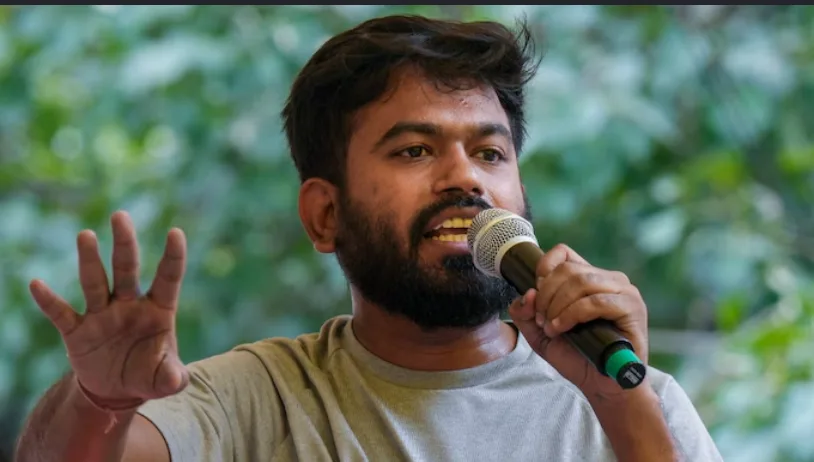
Abhijeet Dipke thanks Delhi organisers for cockroach effigy publicity

Abhijeet Dipke, founder of the Cockroach Janta Party, thanked organisers for what he called free publicity after a 30-foot cockroach effigy was burned alongside Ravana in Delhi. The organisers said the effigy was meant to highlight filth and promote cleanliness.
Published

on

Abhijit Dipke

Cockroach Janta Party (CJP) founder Abhijeet Dipke has responded to the burning of a giant cockroach effigy during Dussehra celebrations in Delhi, thanking the organisers for what he described as “free publicity”.

A 30-foot cockroach effigy was burned alongside the traditional effigies of Ravana, Kumbhakarna and Meghnad at the DDA ground in Netaji Subhash Place, Pitampura, on Tuesday evening. The unusual addition attracted attention on social media, with many interpreting it as a reference to Dipke’s pressure group.

Dipke shared a video of the effigy on X and responded with a brief message thanking those behind the display for the publicity.

Why was a cockroach effigy burned in Delhi?

The Shri Keshav Ramlila Committee, which organised the event, said the cockroach effigy was intended to highlight the problem of filth and encourage cleanliness.

Ashok Goel Devraha, the Bharatiya Janata Party’s Model Town MLA and president of the committee, said the initiative was aimed at raising awareness about unhygienic conditions and associated health problems.

He maintained that the effigy was not intended as a dig at any individual, political party, institution or organisation. The organisers said the initiative supported the Swachh Bharat and Swachh Delhi campaigns.

The display came amid speculation online that the cockroach was a reference to the Cockroach Janta Party, which has been involved in protests against the Centre.

CJP leaders react to the effigy

Ratna Singh, the CJP’s head of legal affairs, also criticised the move in posts on X. Describing the episode as a “tamasha”, she suggested that the display reflected concern over the group’s growing impact.

In another post, Singh said burning a cockroach effigy during Dussehra showed that the ruling party was rattled, adding that the group appeared to be viewed as a competitor.

Her remarks reflected the group’s interpretation of the display, while the organisers denied that it was aimed at any political organisation.

CJP’s protest against Chief Election Commissioner

The effigy controversy comes as the Cockroach Janta Party continues its agitation against the Centre, including its demand for the resignation of Chief Election Commissioner Gyanesh Kumar.

Dipke has faced detention amid the group’s protests this month. Two of its members, spokesperson Saurav Das and Ashutosh Ranka, have also been in custody since October 13 in connection with an alleged violation of a peace bond signed with the authorities.

In a video message, Dipke acknowledged the difficulties faced by the group’s volunteers and their families during the agitation. He urged supporters to spend time with their families during the festive period.

The cockroach effigy has consequently become another point of public attention surrounding the group, with Dipke presenting the incident as publicity and the organisers maintaining that their message was about cleanliness.

Continue Reading

India News

Manipur shutdown disrupts normal life after killing of 3 civilians

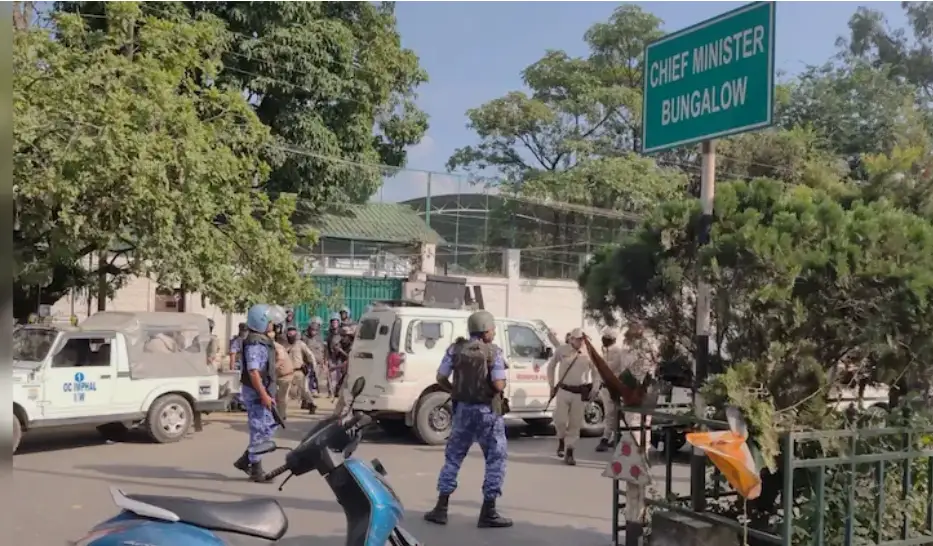
Normal life was disrupted across Manipur on October 20 as a 48-hour shutdown over the killing of three Meitei firewood collectors led to deserted roads and protests in several areas.
Published

on

Normal life was disrupted across Manipur on Tuesday as a 48-hour statewide shutdown called in protest against the killing of three Meitei civilians severely disrupted vehicular movement and daily activities in several areas. The strike began at midnight following the attack on firewood collectors near the Khongbal Tangkhul foothills.

Roads remained deserted in several locations, while shutdown supporters staged protests in different parts of the state. Demonstrations were reported at Canchipur, Khurai and Patsoi, among other places, amid public anger over the killings. Night protests had also taken place in areas including Lamlong, Singjamei, Kwakeithel and Chingmeirong.

The shutdown was called by the Native People Committee Manipur (NPC), which demanded action against the armed groups allegedly responsible for the attack. The incident has renewed concerns over civilian safety, particularly for people who depend on forest areas for their livelihoods.

Three firewood collectors killed in attack

The attack took place near the Khongbal Tangkhul foothills, in the area around Uyumpok and Nongshum in Imphal East district. Three civilians collecting firewood were killed, while three others were injured.

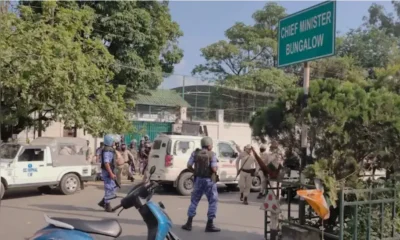
The deceased were identified as Lairenpakpam Inaobi Meitei, 40, and Aribam Noni Meetei, 35, both residents of Nongshum, and Ksh. Sushil Singh, 30, from Uyumpok Mamang Leikai. The killings prompted protests, with grieving villagers and family members bringing the bodies of two victims to the gates of Chief Minister Yumnam Khemchand Singh’s residence on Monday to demand accountability and stronger security measures.

Individuals detained by police in connection with bringing and placing the two bodies outside the Chief Minister’s residence were subsequently released on Monday, the report said.

Committee demands action and stronger security

The Native People Committee Manipur has called for immediate and decisive action against the armed groups it alleges were responsible for the killings.

Its demands include identifying and vacating unauthorised armed camps near the Khongbal Tangkhul foothills and Khamenlok, deploying additional security personnel in vulnerable areas, and conducting a transparent investigation within a fixed timeframe.

The committee has also sought a time-bound decision on the Suspension of Operations (SoO) agreement. In addition, it has demanded the resignation of Deputy Chief Minister Nemcha Kipgen, citing alleged political interference in security operations, and called for lawful action against KNF(P) chairman SS Thangboi Kipgen.

These are demands and allegations made by the committee and should not be treated as independently established findings.

Essential services exempted from shutdown

While the strike has affected movement and everyday activities, health services, religious activities and institutions, and essential services have been exempted. The committee has appealed to people to maintain peace and ensure that ambulances, emergency medical care and essential supplies are not obstructed.

The shutdown comes amid continuing ethnic tensions in Manipur. The killings and the protests that followed have raised concerns about civilian security, with the incident threatening to further aggravate the state’s fragile situation.

Continue Reading

Trending

© Copyright 2022 APNLIVE.com