English हिन्दी
Connect with us

Latest world news

US asks its citizens to depart Russia immediately or risk harassment, arrest

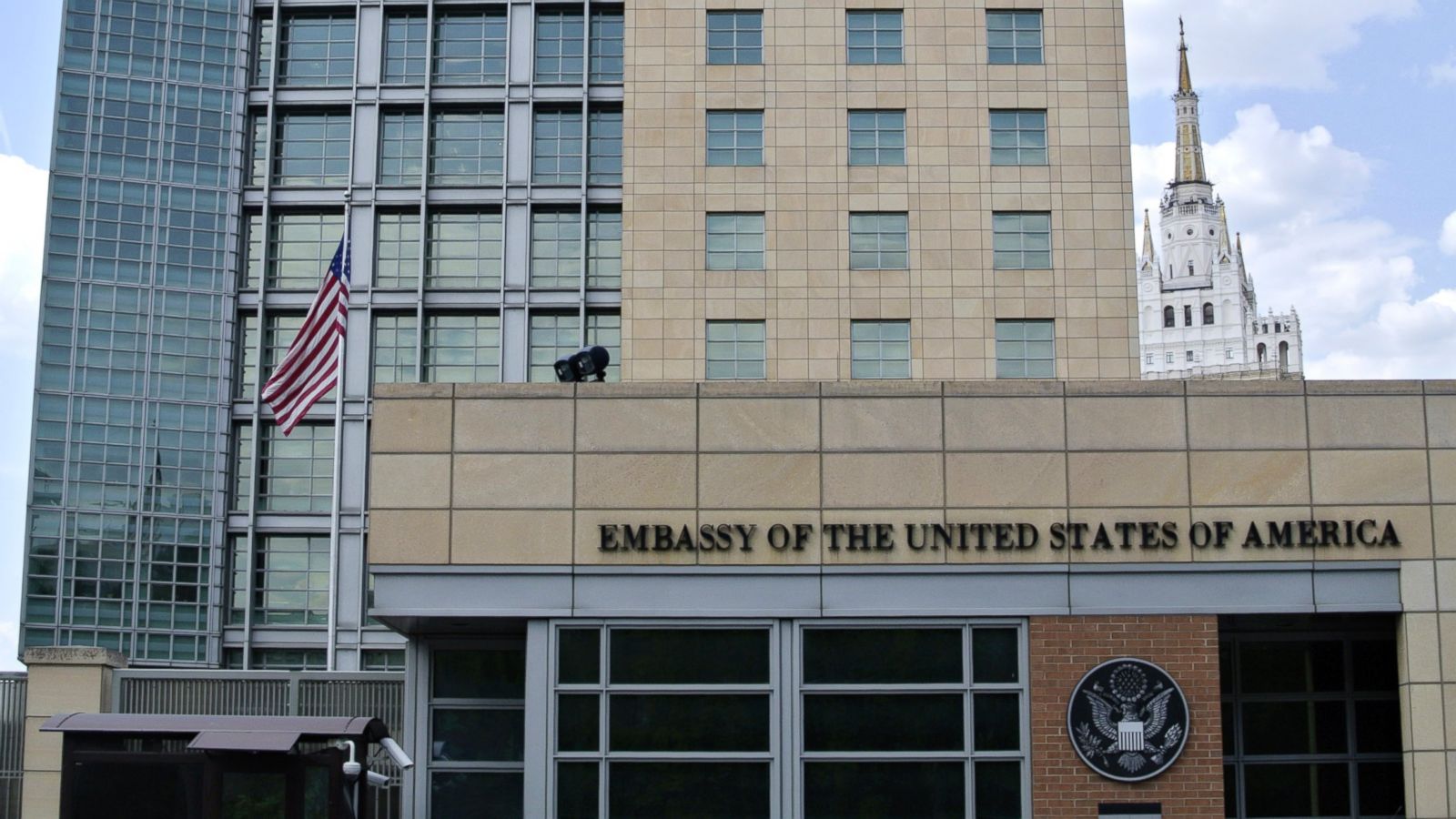
The United States has issued an advisory to its citizens asking them to leave Russia immediately or risk wrongful detentions and/or harassment by Russian law enforcement agencies.

Published

on

US asks its citizens to depart Russia

The United States has issued an advisory to its citizens asking them to leave Russia immediately or risk wrongful detentions and/or harassment by Russian law enforcement agencies.

In an advisory, the US embassy in Moscow warned US citizens to “exercise increased caution due to the risk of wrongful detentions” while in Russia.

The US embassy urged its citizens who are residing or travelling in Russia to depart immediately and asked them to not travel to Russia.

In the advisory, the embassy claimed that Russian security services have arrested US citizens on “spurious charges”. It also alleged that US citizens in Russia have been singled out, harassed and detained without being given a fair and transparent trial.

The US embassy claimed that Russia has brushed aside legal procedures and convicted US citizens in secret trials or without presenting credible evidence.

It also claimed that the Russian authorities arbitrarily enforce local laws against US citizen religious workers and have opened questionable criminal investigations against some US citizens engaged in religious activity.

The embassy added that the U.S. government’s ability to provide routine or emergency services to its citizens in Russia is severely limited, particularly in areas far from the U.S. Embassy in Moscow, due to Russian government limitations on travel for embassy personnel and staffing, and the ongoing suspension of operations, including consular services, at U.S. consulates.

Since the war with Ukraine broke out, the United States has repeatedly warned its citizens to leave Russia with the last such public warning issued in September, 2022 after President Vladimir Putin ordered a partial mobilisation.

Read Also: Bigg Boss 16 winner: MC Stan wins the show, Shiv Thakare is runner up

The advisory warned its citizens that Russia may refuse to acknowledge dual nationals’ U.S. citizenship, deny their access to U.S. consular assistance, subject them to mobilization, prevent their departure from Russia, and/or conscript them.

It informed the citizens that US credit and debit cards no longer work in Russia, and options to electronically transfer funds from the United States are extremely limited “due to sanctions imposed on Russian banks”, adding “that there are reports of cash shortages within Russia.”

The advisory asked citizens to make independent arrangements if they wish to depart Russia as commercial flight options are extremely limited and often unavailable on short notice, adding the US Embassy has severe limitations on its ability in assisting them to depart the country.

Russia has opened a criminal case against a United States citizen on suspicion of espionage, the Federal Security Service(FSB) said in January.

Shehnaaz Gill breaks the internet in a pink saree | Watch

Entire ecosystem in full swing, can’t treat India as personal fiefdom anymore: Kiren Rijiju’s dig at Congress’s criticism over Justice Nazeer’s appointment as governor

Latest world news

PM Modi and Netanyahu pledge deeper defence, trade ties during Israel visit

PM Narendra Modi and Benjamin Netanyahu pledged to deepen defence, trade and connectivity ties during Modi’s visit to Israel, with missile deals and IMEC discussions on the agenda.

Published

on

Prime Minister Narendra Modi and Israeli Prime Minister Benjamin Netanyahu have reaffirmed their commitment to strengthening defence, trade and security cooperation, marking a significant step forward in India-Israel relations during Mr Modi’s visit to Tel Aviv.

Addressing Israel’s parliament, the Knesset, Mr Modi described defence cooperation as an “important pillar” of the bilateral partnership and stressed the need for closer collaboration in an increasingly uncertain global environment.

“In today’s uncertain world, a strong defence partnership between trusted partners like India and Israel is of vital importance,” he said.

Defence deal likely on agenda

During the visit — Mr Modi’s first to Israel in nine years — discussions are expected to include a major order for Israeli-made missile systems. An official in New Delhi familiar with the matter indicated that details of the potential deal may not be publicly disclosed, as both governments are keen to keep the spotlight on broader strategic ties.

India’s Ministry of External Affairs has not commented on the reported missile purchase.

Israel has long been among India’s key arms suppliers. Over the years, the defence relationship has evolved into joint manufacturing projects, including drones and missile systems. Ahead of the visit, Israel’s Ambassador to India, Reuven Azar, said both sides are working towards a more comprehensive defence and security framework that could open doors for cooperation on more sensitive projects.

Focus on trade and investment

Trade and investment featured prominently in the leaders’ discussions. Mr Modi said both governments are committed to expanding bilateral trade, boosting investment flows and promoting joint infrastructure projects.

Israeli negotiators recently travelled to India to begin formal talks on a proposed free-trade agreement, building on terms agreed in November. Such a pact could provide Israel greater access to one of the world’s fastest-growing economies.

According to Israel’s Economy and Industry Ministry, India is Israel’s second-largest trading partner in Asia, with bilateral trade estimated at $5 billion in 2025, excluding defence transactions.

India is also the largest buyer of Israeli defence equipment, accounting for up to 34% of Israel’s total arms exports, according to data from the Stockholm International Peace Research Institute.

Regional security and Gaza ceasefire

The visit comes amid shifting regional alliances and ongoing security challenges. Referring to last year’s ceasefire in Gaza, Mr Modi said the truce created an opportunity for closer cooperation.

He also welcomed the US-brokered peace plan for Gaza, later endorsed by the United Nations, saying it holds the promise of a just and durable peace, including progress on the Palestine issue. However, uncertainty remains over the future of the truce with Hamas, with key governance and security questions yet to be resolved.

Strategic observers note that both leaders see their countries as operating in complex neighbourhoods marked by security threats and geopolitical shifts.

Connectivity push through IMEC

Connectivity initiatives also featured in the discussions. Mr Netanyahu told the Knesset that India and Israel are working on developing a maritime and land corridor linking India to Israel’s port of Haifa and onward to Europe.

The plan builds on the India-Middle East-Europe Economic Corridor initiative unveiled in September 2023. Although the outbreak of the Israel-Hamas conflict soon after raised concerns about the project’s future, Israeli officials have indicated that the corridor remains viable.

Haifa port, partly acquired by India’s Adani Group, is expected to play a key role as the Mediterranean endpoint of the corridor.

As India and Israel seek to reinforce strategic, economic and security ties, the visit underlines the growing convergence between New Delhi and Tel Aviv in defence, trade and regional connectivity.

Continue Reading

Latest world news

Canada softens stance on alleged Indian interference ahead of PM Carney’s India visit

Canada appears to ease its earlier allegations of Indian interference as PM Mark Carney heads to India to strengthen trade and strategic ties.

Published

on

Canada appears to be easing its earlier allegations of Indian interference as Prime Minister Mark Carney prepares for a key visit to India aimed at rebuilding commercial and diplomatic ties.

Senior officials in Ottawa indicated that the Canadian government maintains “mature and robust discussions” with the Government of India on concerns related to foreign interference. They also emphasised that Canada has strong safeguards in place to protect its democratic institutions.

According to officials quoted by media, the Prime Minister would likely not be travelling to India if Ottawa believed New Delhi was actively interfering in Canada’s democratic processes. The remarks suggest a noticeable shift from the strong accusations levelled last year.

Officials said there has been sustained engagement with the government of Narendra Modi at multiple levels, including senior officials, ministers and leadership-level interactions. They expressed confidence that the discussions provide a foundation for further constructive dialogue.

At the same time, a senior official reiterated that Canada maintains “no tolerance” for foreign interference in its domestic affairs.

From allegations to engagement

The recent comments contrast with statements made last June by the Canadian Security Intelligence Service (CSIS), which accused India of being among the primary actors involved in foreign interference and espionage activities in Canada.

CSIS had also described alleged links between Indian authorities and the 2023 killing of Hardeep Singh Nijjar in Vancouver as a “significant escalation” in India’s actions against the Khalistan movement.

India firmly rejected those accusations. The dispute triggered a diplomatic standoff, with both countries expelling senior diplomats from Ottawa and New Delhi in a tit-for-tat move.

Carney’s push to rebuild ties

Prime Minister Carney’s visit to India is being positioned as part of a broader Indo-Pacific outreach and a more pragmatic foreign policy approach. His trip will begin in Mumbai before he heads to New Delhi for talks with Prime Minister Modi.

The visit comes as both nations seek to stabilise relations that deteriorated sharply following Canada’s allegations over Nijjar’s killing — claims that New Delhi strongly denied.

Carney’s office has said discussions will centre on expanding cooperation in trade, energy, technology, artificial intelligence, talent mobility, culture and defence.

Growing trade partnership

India is currently Canada’s seventh-largest trading partner in goods and services. Annual bilateral trade exceeds $21 billion, according to Canadian government data.

The two sides had previously agreed to resume negotiations on a proposed free-trade agreement, targeting bilateral trade of $50 billion by 2030.

More than 600 Canadian companies operate in India across sectors such as information technology, banking, health sciences and financial services. Key Indian exports to Canada include pharmaceuticals, gems and jewellery, precious stones and seafood.

Diplomatic ties show signs of recovery

Canada hosts approximately 2.8 million people of Indian origin. Nearly 400,000 Indian students are enrolled in Canadian universities, making them the largest group of international students in the country.

Canada is also home to the largest Sikh population outside India, including some fringe separatist elements advocating for Khalistan.

Relations between the two countries began to improve after Carney assumed office in March 2025, with envoys restored and diplomatic engagement gradually resuming.

The upcoming visit is being viewed as a significant step toward stabilising ties and advancing economic cooperation amid shifting global trade dynamics and uncertainties linked to policies under US President Donald Trump.

Continue Reading

Latest world news

PM Modi reaffirms support for Israel, recalls 26/11 victims in Knesset address

Addressing Israel’s parliament, PM Narendra Modi reaffirmed India’s support for Israel, condemned terrorism, and recalled the 26/11 Mumbai attacks.

Published

on

Prime Minister Narendra Modi on Wednesday addressed the Knesset, expressing solidarity with Israel and condemning terrorism, while highlighting the growing partnership between the two nations.

Calling it a rare honour, Mr Modi said he brought greetings from 1.4 billion Indians and described his address as a symbol of the warmth between the two democracies.

Condolences over October 7 attack

The Prime Minister conveyed condolences for the lives lost in the October 7 attack by Hamas. He said India shares Israel’s grief and stands firmly with the country “with full conviction in this moment and beyond”.

“Nothing can justify terrorism,” Mr Modi said, adding that India too has suffered from terror attacks for decades. He recalled the 26/11 Mumbai attacks and the innocent lives lost, including Israeli citizens, and reiterated India’s policy of zero tolerance towards terrorism without double standards.

Reference to Abraham Accords and regional hope

Referring to the Abraham Accords, Mr Modi said India had applauded the vision and courage shown at the time. While noting that the regional situation has since become more challenging, he stressed the importance of sustaining hope for peace.

Historic ties and expanding partnership

The Prime Minister said he was the first Indian Prime Minister to visit Israel nine years ago and expressed happiness at returning. He also noted that he shares his birth date — September 17, 1950 — with the day India formally recognised Israel.

Recalling his earlier visit to Israel as Gujarat Chief Minister in 2006 and his 2017 trip as Prime Minister, Mr Modi said bilateral ties were elevated to a Strategic Partnership during the latter visit. Since then, he added, engagement has broadened across sectors.

He pointed to cooperation in innovation, mentioning the inauguration of the iCreate Technology Business Incubator in 2018 with then Prime Minister Benjamin Netanyahu. The incubator, he said, has since supported nearly 900 start-ups.

Shared civilisational values

Mr Modi said Jewish communities have lived in India without fear of persecution and have preserved their faith while participating fully in society. He described this as a matter of pride.

Highlighting philosophical parallels, he referred to the Israeli concept of “Tikkun Olam”, meaning healing the world, and India’s belief in “Vasudhaiva Kutumbakam”, which sees the world as one family. Both traditions, he said, call for compassion and moral courage beyond immediate boundaries.

He also acknowledged the contribution of Indian caregivers and skilled workers in Israel, noting their courage and dedication, including during the October 7 crisis.

Continue Reading

Trending

© Copyright 2022 APNLIVE.com