
Latest world news
UN: Saudi-led coalition killed over 550 children in Yemen


United Nations has revealed that Saudi Arabia-led coalition was responsible for more than half of 1,316 child killings and injuries in war-torn Yemen during 2017.
Qatar based Al-Jazeera network has claimed to see the UN’s annual “Children and Armed Conflict” report, which shines the spotlight on child victims around the world.
Saudi Arabia-led coalition launched a military campaign in 2015 in support of the virtually ousted internationally recognised Hadi government and crush Houthi Ansarullah Movement armed rebels after they controlled much of the country in 2014.
According to reports, most of the partner countries in the coalition have withdrawn their forces. Only Saudi Arabia and the United Arab Emirates are currently conducting attacks in Yemen. Severe war is continuing in different parts of the country, more recently in Hudaidah western port city situated on Read Sea coast.
Read More: Houthi warns: US and Saudi Arabia will regret in Yemen
The UN report on the impact of conflict on the children was compiled by the staff of Antonio Guterres, the Secretary-General and submitted to the Security Council on Monday night. It verified that out of the 552 children killed (398 boys, 154 girls), the majority – 370 – were attributed to the Saudi-led coalition, which was also blamed for 300 child injuries.

The UN report further said that Houthi rebels were responsible for the killings of 83 children and wounding 241children; the pro-government Popular Resistance group for 41 casualties; other international forces fighting for Yemen’s government for 19 casualties; al-Qaeda in the Arabian Peninsula (AQAP) for 10 casualties; and the Yemeni Armed Forces, among other parties, for four casualties. More than half of the total 1,316 casualties were caused by air strikes.
The second leading cause was ground fighting, including shelling and shooting (136 killed, 334 injured), followed by explosive remnants of war and mines (27 killed, 119 injured).
Read More: Saudi warship attacked by Yemen’s Houthis near Hudaydah
Al Jazeera’s diplomatic correspondent James Bays, who is based in New York said that the report also condemns lots of different armed groups and some governments.
“What is most notable is that the Saudi-led coalition is listed as one of the parties that commit grave violations affecting children in situations of armed conflict,” Bays said.
Moreover, he said, “Fifteen children were killed by Israeli security forces in 2017 but Israel does not significantly get a listing as one of those parties that should be put in this blacklist.”
Read More: Iran alleges US complicity in Saudi-led war crimes in Yemen
Dozens of Palestinians, including children and women, have been killed by Israeli forces during the “Right to Return” protests commenced in March this year. Palestinians hit Israeli forces with stones, explosive kites and balloons while Israeli forces hit the protesters with rubber bullets and live ammunition.






Latest world news
S Jaishankar says India is a natural option for Russia amid Europe tensions
External Affairs Minister S Jaishankar said India remained a natural option for Russia as Moscow increasingly turned towards Asia amid strained relations with Europe. He highlighted the continuity of India-Russia ties and their significance for the balance of power in Asia.


Latest world news
Putin praises PM Modi, says he has very good ideas on Ukraine war
Russian President Vladimir Putin has praised Prime Minister Narendra Modi for repeatedly raising the need to end the Ukraine war, describing his ideas for a settlement as “very good”.

Latest world news
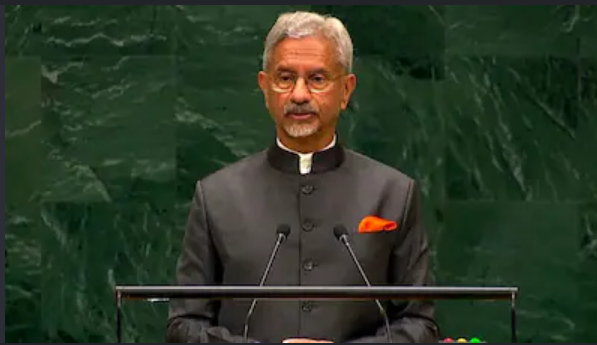
S Jaishankar calls Pakistan a “serial practitioner of terrorism” at UN
S Jaishankar criticised Pakistan at the UN General Assembly, referring to a “serial practitioner of terrorism” and warning against attempts to normalise terrorism.

Dhruv Rathee gets fresh summons in 2018 BJP IT cell video case

Nobody can browbeat judiciary, Chief Justice warns over Rahul Gandhi’s march

India-US trade deal first phase finalised, drafting underway

Election Commission orders voter roll revision in 17 states, UTs

Actor Imran Khan asked to leave India after CJP protest

Delhi Police offers 11-person limit for CJP’s Connaught Place protest
Actor Imran Khan asked to leave India after CJP protest
Election Commission orders voter roll revision in 17 states, UTs
India-US trade deal first phase finalised, drafting underway
Nobody can browbeat judiciary, Chief Justice warns over Rahul Gandhi’s march

Afghan Men Try To Hang With The Jet Engine Of The Aircraft in Kabul- Afghanistan News – Kabul News
Trending Top 10 News: 10000 Crore Fine on Flipkart, Apple to Launch Unique Feature, Hdfc Bank Job Ad

Trending Top 10 News: Nokia 6310, Apple sales, Bachpan ka Pyar Video Kid, Dainik Bhaskar IT Raid

Trending Top 10 News: Canada bans Indian flights, Rain in Delhi NCR, AIMIM Twitter hacked, Raj Kundra case

Trending Top 10 News: Shein India, Apple New Service, Pocket Oxygen, Oppo Launched New Phone
-
 India News12 hours ago
Dhruv Rathee gets fresh summons in 2018 BJP IT cell video case
-
 India News9 hours ago
Nobody can browbeat judiciary, Chief Justice warns over Rahul Gandhi’s march
-
 India News4 hours ago
India-US trade deal first phase finalised, drafting underway
-
 India News2 hours ago
Election Commission orders voter roll revision in 17 states, UTs
-
 India News2 hours ago
Actor Imran Khan asked to leave India after CJP protest
-
 India News43 mins ago
Delhi Police offers 11-person limit for CJP’s Connaught Place protest
