
Latest world news
Israeli missiles strike Damascus, US airlifts Daesh terrorists


Two Israeli missiles fell in the vicinity of Damascus international airport on Monday night, while US-led coalition airlifted two high ranking Daesh commanders from Dayr al-Zawr province.
Describing the Israeli missile attack in Damascus the Syrian official SANA news agency reports, “This aggression comes in the framework of the support provided by the Zionist entity (Israel) to the terrorist organizations to raise their collapsed morals due to the big losses inflicted upon the Syrian army over the last few days.”
Israel’s leading newspaper Jerusalem Post quoted Syrian state TV report about the two missile strikes without confirming from Israeli authorities.
It also quoted Al-Masdar News citing reports stating that missiles targeted an Iranian cargo plane being unloaded at the airport. It said that Syrian forces aid-defense systems subsequently intercepted an Israeli drone in southwestern Syrian airspace.
SANA further reports that Syrian army, over the past few days regained control over hundreds of square kilometers in Al-Lajat area in the countryside of Daraa and Sweida and Syrian Badiya (desert) extending in the countryside of Homs, Damascus and Deir al-Zawr.
Rami Abdulrahman, the head of London based Syrian Observatory for Human Rights told Associated France Press (AFP) that “Israeli missiles hit arms depots fro Hezbollah near the airport” adding that Syrian air defense systems failed to prevent the “alleged” air strikes.
The daily said that Israel has regularly refused to confirm or deny mounting overnight raids in Syria, but has repeatedly stated that it is unwilling to accept Iranian military presence in Syria. However, Syria denies presence of Iranian army on its soil except military advisors from Tehran.
On Monday, SANA reported from Hasaka, “In framework of the US divulged support to the terrorist groups which aims at prolonging terrorist war on Syria, two helicopters of the US-led ‘International Coalition’ evacuated two of Daesh (IS) leaders from the area of Twimin on the Syrian-Iraqi borders”.
The Syrian news agency quoted sources saying that the airdrop and the evacuation were carried out without any clashes and in coordination and cooperation with the US-backed Qasad groups in the region.
Al-Masdar News reports from Damascus that the US-led coalition has reportedly airlifted two senior IS commanders from a small cillage in the northeast Syria near the Iraqi borders in coordination with the Kurdish allies controlling the area.
It also quoted local sources confirming that the two helicopters of the US coalition landed in Twimin village in order to transport two senior commanders from the Islamic State (IS) terror group to the US base in Al-Shaddadah town, located 127 km northeast of Deir al-Zawr.
The Israeli and US moves came amidst continuing successful fight against Daesh (IS) and other terrorist groups by Syrian forces, supported by Russian Air Force and Iranian military advisors. Israel and US seems to be in close coordination in their efforts otherwise, observers believe.
In September 2017, Syrian foreign minister Walid al-Muallem said the US-led coalition was trying to destroy his country and prolong the armed conflict. He further stated that Damascus would demand the dissolution of the military contingent stressing that thousands of women and children had been killed by coalition airstrikes in Raqqah and Dair al-Zawr provinces.
Syria’s top diplomat further noted that Pentagon was using the coalition to cover up its destruction campaign in Syria. He further asserted that US backed militiamen from the so-called Syrian Democratic Forces (SDF) are fighting Syrian army forces to gain control over the oil-rich areas of the country.
In August last year, London based opposition sponsored Syrian Observatory for Human Rights had reported that US-led choppers had transported four Daesh members and a civilian from a house used as an arms depot in Beqres, a sub-urban area east of Dair al-Zawr to a safe area.
The US-led coalition has been conducting airstrikes against, what they call to be Daesh targets in Syria since September 2014 without invitation or authorization from the Damascus or a UN mandate.









Latest world news
S Jaishankar says India is a natural option for Russia amid Europe tensions
External Affairs Minister S Jaishankar said India remained a natural option for Russia as Moscow increasingly turned towards Asia amid strained relations with Europe. He highlighted the continuity of India-Russia ties and their significance for the balance of power in Asia.


Latest world news
Putin praises PM Modi, says he has very good ideas on Ukraine war
Russian President Vladimir Putin has praised Prime Minister Narendra Modi for repeatedly raising the need to end the Ukraine war, describing his ideas for a settlement as “very good”.

Latest world news
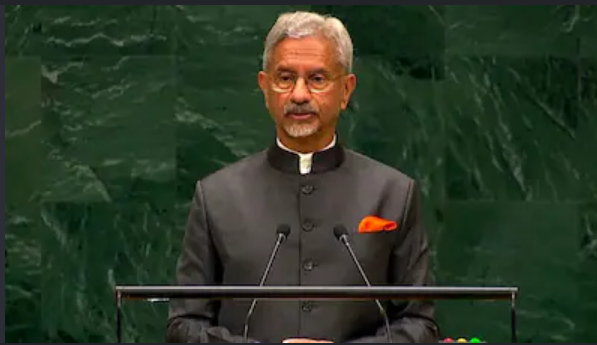
S Jaishankar calls Pakistan a “serial practitioner of terrorism” at UN
S Jaishankar criticised Pakistan at the UN General Assembly, referring to a “serial practitioner of terrorism” and warning against attempts to normalise terrorism.

Dhruv Rathee gets fresh summons in 2018 BJP IT cell video case

Nobody can browbeat judiciary, Chief Justice warns over Rahul Gandhi’s march

India-US trade deal first phase finalised, drafting underway

Election Commission orders voter roll revision in 17 states, UTs

Actor Imran Khan asked to leave India after CJP protest

Delhi Police offers 11-person limit for CJP’s Connaught Place protest
Actor Imran Khan asked to leave India after CJP protest
Election Commission orders voter roll revision in 17 states, UTs
India-US trade deal first phase finalised, drafting underway
Nobody can browbeat judiciary, Chief Justice warns over Rahul Gandhi’s march

Afghan Men Try To Hang With The Jet Engine Of The Aircraft in Kabul- Afghanistan News – Kabul News
Trending Top 10 News: 10000 Crore Fine on Flipkart, Apple to Launch Unique Feature, Hdfc Bank Job Ad

Trending Top 10 News: Nokia 6310, Apple sales, Bachpan ka Pyar Video Kid, Dainik Bhaskar IT Raid

Trending Top 10 News: Canada bans Indian flights, Rain in Delhi NCR, AIMIM Twitter hacked, Raj Kundra case

Trending Top 10 News: Shein India, Apple New Service, Pocket Oxygen, Oppo Launched New Phone
-
 India News13 hours ago
Dhruv Rathee gets fresh summons in 2018 BJP IT cell video case
-
 India News10 hours ago
Nobody can browbeat judiciary, Chief Justice warns over Rahul Gandhi’s march
-
 India News6 hours ago
India-US trade deal first phase finalised, drafting underway
-
 India News3 hours ago
Election Commission orders voter roll revision in 17 states, UTs
-
 India News3 hours ago
Actor Imran Khan asked to leave India after CJP protest
-
 India News2 hours ago
Delhi Police offers 11-person limit for CJP’s Connaught Place protest
