Latest world news
US Defence Secretary meets South Korean Defence Minister


North Korea skips anti-US imperialism rally in Pyongyang
Amidst contradictory statements from US President Donald Trump after his meeting with North Korean leader Kim Jong-un on June 12 in Singapore, top defence leadership of US and South Korea have pledged to tighten security readiness in a peaceful manner for complete denuclearization of the Korean Peninsula.
According to Korea Times, US defence Secretary James Mattis and South Korea’s Minister of National Defence Song Young-moo met in Seoul on Thursday. This was the third meeting between to defence officials of South Korea and US.
South Korean Minister of National Defence said in opening remarks during talks with his U.S. counterpart James Mattis, “If North Korea continues to take action to realize its pledge for denuclearization, Seoul and Washington will come up with measures to show peace and trust to Pyongyang.”
Read More: West meets the East in historic summit in Singapore
Mattis also spoke highly of the bilateral decision to suspend the drill, pledging to fulfill a shared goal for peace here. He said, “The recent decision to suspend the exercise creates an increased opportunity for our diplomats to negotiate, increasing the prospects for a peaceful solution on the peninsula.”

He also said Washington has no plans to downsize the U.S. Forces Korea (USFK), at least for the time being.
The meeting between the two top defence leaders comes at a time when inter-Korean relations are showing signs of a rapid thaw, with North Korean leader Kim Jong-un pledging to scrap his nuclear arsenal.
As part of the landmark diplomatic moves there have been two summit meetings between South Korean President Moon Jae-in and North Korean leader Kim Jong-un before holding summit with President Donald Trump on June 12 in Singapore. North Korean leader also met with Chinese President Xi Jinping in Beijing before and after meeting with Donald Trump.
Read More: China Assures Key Role in North Korea’s Denuclearization
Earlier this month, South Korea and US had decided to suspend the large-scale Ulchi Freedom Guardian (UFG) joint military exercise scheduled for autumn in response to Kim’s rare peace gestures.
US Secretary of State further said, “We are reinforced by shared democratic values and by common security interests. The U.S. commitment to South Korea remains ironclad and the U.S. will continue to use a full range of diplomatic and military capabilities to uphold this commitment. This includes maintaining the current U.S. forces levels on the peninsula.”
Despite the latest peace momentum on the peninsula, Song and Mattis also pledged to enhance the Seoul-Washington alliance by communicating closely with each other.
Meanwhile, North Korea Times reports that Washington based North Korea monitoring group, 38North has released commercial satellite images taken on June 21, days after the Trump-Kim summit, which show rapid improvement at North Korea’s main nuclear research facility. It pointed out that North Korea is rapidly upgrading its Yongbyon Nuclear Scientific Research Centre.
Read More: Trump change stance: say North Korea a threat to US security
Earlier on Tuesday, Pyongyong has decided to skip its annual anti-US imperialism rally this year, which is considered to be the strongest sign that Kim Jong-un’s government is toning down its rhetoric in a bid for peace and progress. The rally was supposed to be held on Wednesday, July 27, a national holiday celebrated as the day of “Victory in the Fatherland Liberation War.”





Latest world news
Putin praises PM Modi, says he has very good ideas on Ukraine war
Russian President Vladimir Putin has praised Prime Minister Narendra Modi for repeatedly raising the need to end the Ukraine war, describing his ideas for a settlement as “very good”.


Latest world news
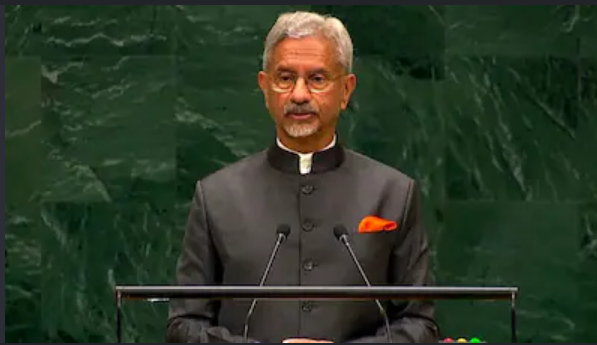
S Jaishankar calls Pakistan a “serial practitioner of terrorism” at UN
S Jaishankar criticised Pakistan at the UN General Assembly, referring to a “serial practitioner of terrorism” and warning against attempts to normalise terrorism.
Latest world news
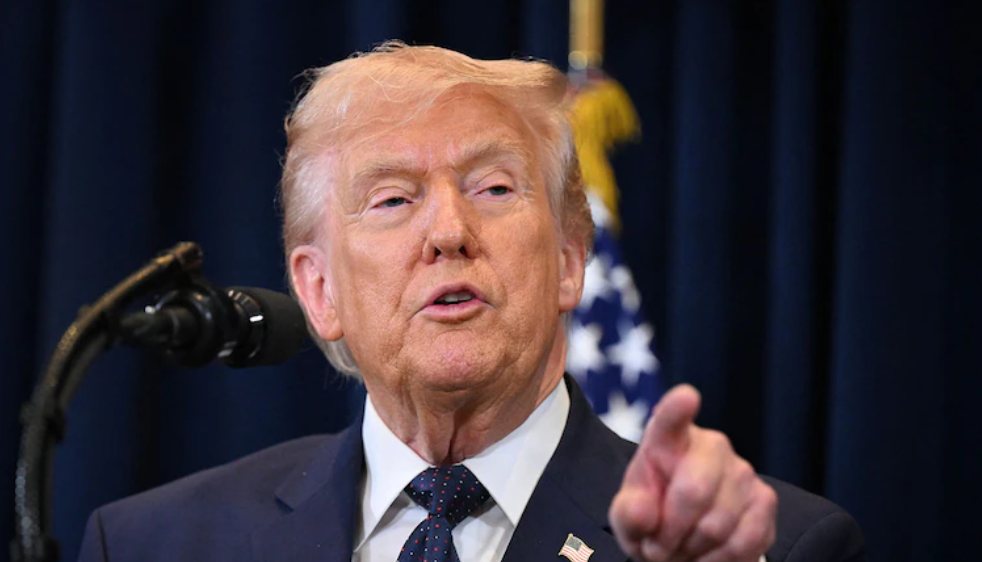
Trump rejects Iran’s 7-day peace plan, says deal can come after US polls
US President Donald Trump rejected Iran’s seven-day proposal to end hostilities and indicated that a deal could come after the US midterm elections in November.

INDIA Bloc protest intensifies, Opposition MPs plan Rajghat march

Tomorrow’s security shutdown to turn Delhi into a city of barricades
Tomorrow’s security shutdown to turn Delhi into a city of barricades
INDIA Bloc protest intensifies, Opposition MPs plan Rajghat march

Delhi Building Collapse: Many trapped as 5-storey structure comes down

Bhagwant Mann hits back at BJP over CBI search in Sangrur

India’s 3-part peace plan to end Russia-Ukraine war explained

Afghan Men Try To Hang With The Jet Engine Of The Aircraft in Kabul- Afghanistan News – Kabul News
Trending Top 10 News: 10000 Crore Fine on Flipkart, Apple to Launch Unique Feature, Hdfc Bank Job Ad

Trending Top 10 News: Nokia 6310, Apple sales, Bachpan ka Pyar Video Kid, Dainik Bhaskar IT Raid

Trending Top 10 News: Canada bans Indian flights, Rain in Delhi NCR, AIMIM Twitter hacked, Raj Kundra case