
Latest world news
Syrian Forces Recapture Areas in Dara’a, Civilians Flee


UN Chief calls for immediate cessation of army operations
The Syrian government forces have managed to regain control over several towns and villages in the strategic southern Dara’a Province and killed scores of remaining terrorists. Israel has raised alert level in occupied two-thirds of Golan Heights, under its occupation since six-day war in 1987.
According to Syrian official SANA news agency’s Friday report, the army has retaken al-Herak, Rakham, al-Soura, Alma, al-Mliha al-Sharqia and al-Mliha al-Gharbia in Dara’a countryside.
The Syrian military’s engineering units later started combing the area in order to dismantle mines and IEDs planted by terrorists before they fled towards neighbouring areas. Army would continue its operations in Dara’a until the eradication of terrorism; a military official was reported saying.
A Syrian war correspondent reported that the army units secured the families in their houses and enhanced military points in the liberated villages and towns to use them as a launch pad for continued military operations “to eradicate terrorist presence” in the entire Dara’a province.
Read More: US airstrikes on Syrian army near Daesh frontline
Meanwhile AFP reports that UN Secretary General Antonio Guterres issued a new call on Friday for ‘an immediate cessation” to military operations in southwest Syria “where the government forces are attacking rebel-held areas”.
Stephane Dujarric, the spokesman for the UN chief, said in a statement that Guterres is “deeply alarmed by the military offensive in south-western Syria and its devastating toll on civilians.”

He further said, “The secretary-general recalls that the southwest area of Syria is part of a de-escalation agreement between Jordan, Russia and the United States. Guterres calls on all parties to respect their obligations under international humanitarian law and human rights law to protect civilians and facilitate safe, unimpeded and sustained humanitarian access.”
Read More: Iraqi jets hit Daesh targets in Syrian territory
On June 19, the head of the world body made a similar call after Syrian forces began attacking opposition-held parts of Dara’a province.
Separately, SANA reported that foreign-backed militants in the villages of Um Walad, Jbib and al-Aslaha in Dara’a’s eastern countryside had agreed to lay down arms and reconcile with the Syrian government.
A Syrian military commander, who was speaking on condition of anonymity, stressed that the army’s gains had left the anti-Damascus militants with “no choice” but to surrender. “The terrorist groups are heading towards settlement and reconciliation,” he added.
Read More: Bashar say US, French, Turks, Israeli troops occupying Syria
In another development, Zeid Ra’ad al-Hussein, the head of UN Human Right Commission, has on Friday, warned of a looming “catastrophe” in southern Syria as it raised the number of people fleeing a fierce government offensive to 160,000.
He said that there was a “grave risk that intensified fighting will see many civilians trapped”, condemning “[how] civilians in Syria continue to be used a s pawns by the various parties”.
Qatar based Al-Jazeera network, which has been allegedly supportive of the Syria’s rebel forces, reports, “With backing by Russian air support, forces loyal to President Bashar al-Assad have retaken territory and continue to progress southwards where the last pocket of opposition remains”.
Read More: Israel and Syria exchange most extensive missile strikes
Israel’s leading newspaper Jerusalem Post has reported that fleeing Syrians near the Golan have pleaded for Israel’s help. It said that a child held a sign reading “Assad, ISIS, Iran and Hezbollah gangsters are the heads of terrorism in the world”.
It referred to a video post, having a doctors’ speech along with a dozen men and children holding signs calling help from Israel and the US, saying they had been abandoned by the world. One of the signs requested that the UN forces return to their bases near the demilitarized zone between Israeli forces and Syria.
Jerusalem Post further reports, “Up to 60,000 civilians have fled fighting in southern Syria in the last week as the Syrian regime, backed by Russian airpower, has launched a major offensive. Thousands arrived at the border with Israel over the last 48 hours.” It further said that Israeli Defence Forces (IDF) has “delivered 300 tents and tons of food and humanitarian supplies for children on Thursday night”.

In another important development, Russian foreign minister Sergei Lavrov, in an exclusive interview with British Channel 4, on Friday said that Syrian president Bashar al-Assad isn’t just defending Syria, he is defending the entire region against terrorism.
SANA reports that Lavrov said that Assad is defending Syria’s sovereignty and unity, and on a wider scale he is defending the entire region against terrorism.
Read More: Saudi Crown Prince, Trump Together Staring At Syrian Exit Door
According to Russian official TASS news agency, Lavrov also said that Moscow sets no artificial deadlines for the withdrawal of its troops from Syria as this process depends on the situation on the ground. He said, “We don’t like artificial deadlines. We have been consistently reducing our military presence in Syria”.
Speaking about the situation in southern region in Syria, Russian top diplomat said, “Some remnants o f ISIL (Daesh) are still there. Jabhat al-Nusra is still there. They are now preventing the deal on Syria’s southern de-escalation area to be implemented fully.”
On Thursday, President Vladimir Putin said that Russia had withdrawn 13 warplanes, 14 helicopters and 1,140 troops from Syria in the past few days.
Russian has supported the internationally recognised government headed by Bashar al-Assad since the beginning of the conflict in 2011, politically with military aid, and since September 2015 through direct military involvement.






Latest world news
S Jaishankar says India is a natural option for Russia amid Europe tensions
External Affairs Minister S Jaishankar said India remained a natural option for Russia as Moscow increasingly turned towards Asia amid strained relations with Europe. He highlighted the continuity of India-Russia ties and their significance for the balance of power in Asia.


Latest world news
Putin praises PM Modi, says he has very good ideas on Ukraine war
Russian President Vladimir Putin has praised Prime Minister Narendra Modi for repeatedly raising the need to end the Ukraine war, describing his ideas for a settlement as “very good”.
Latest world news
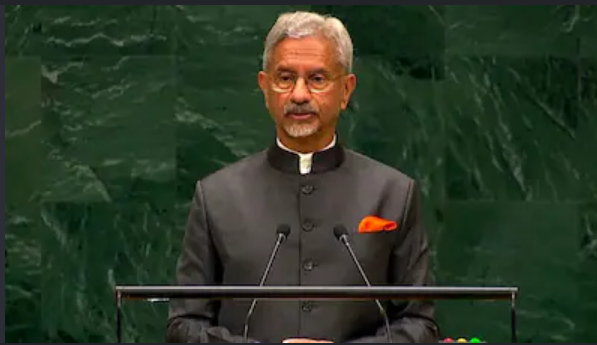
S Jaishankar calls Pakistan a “serial practitioner of terrorism” at UN
S Jaishankar criticised Pakistan at the UN General Assembly, referring to a “serial practitioner of terrorism” and warning against attempts to normalise terrorism.

CJP leaders Saurav Das, Ashutosh Ranka, Ajinkya Shinde sent to 5-day judicial custody

S Jaishankar says India is a natural option for Russia amid Europe tensions

PM Modi speaks to Mark Carney as India and Canada push to strengthen ties

Meerut murder: Muskaan Rastogi and Sahil Shukla get death sentence

Rahul Gandhi joins India Gate protest by Ankita Bhandari’s parents

Supreme Court questions EC over missing records in Sringeri election dispute
Rahul Gandhi joins India Gate protest by Ankita Bhandari’s parents
Meerut murder: Muskaan Rastogi and Sahil Shukla get death sentence
PM Modi speaks to Mark Carney as India and Canada push to strengthen ties
S Jaishankar says India is a natural option for Russia amid Europe tensions

Afghan Men Try To Hang With The Jet Engine Of The Aircraft in Kabul- Afghanistan News – Kabul News
Trending Top 10 News: 10000 Crore Fine on Flipkart, Apple to Launch Unique Feature, Hdfc Bank Job Ad

Trending Top 10 News: Nokia 6310, Apple sales, Bachpan ka Pyar Video Kid, Dainik Bhaskar IT Raid

Trending Top 10 News: Canada bans Indian flights, Rain in Delhi NCR, AIMIM Twitter hacked, Raj Kundra case

Trending Top 10 News: Shein India, Apple New Service, Pocket Oxygen, Oppo Launched New Phone
-
 India News21 hours ago
CJP leaders Saurav Das, Ashutosh Ranka, Ajinkya Shinde sent to 5-day judicial custody
-
 Latest world news20 hours ago
S Jaishankar says India is a natural option for Russia amid Europe tensions
-
 India News20 hours ago
PM Modi speaks to Mark Carney as India and Canada push to strengthen ties
-
 India News10 hours ago
Meerut murder: Muskaan Rastogi and Sahil Shukla get death sentence
-
 India News9 hours ago
Rahul Gandhi joins India Gate protest by Ankita Bhandari’s parents
-
 India News8 hours ago
Supreme Court questions EC over missing records in Sringeri election dispute
