
Latest world news
Trump writes to NATO leaders to share defence cost


Continuing his “America First” populist move the US President Donald Trump has recently written sharply worded letters to the leaders of several NATO allies: including Germany, Belgium, Norway and Canada taking them to task for spending too little on their own defence and warning that the US is losing patience with their failure to meet security obligations shared by the alliance.
According to New York Times, the letters, sent in June, are the latest sign of acrimony between Mr. Trump and US allies as he heads to a NATO summit next week in Brussels.
While writing the letters to heads of the NATO states, Trump has repeatedly questioned it’s value and has claimed that its members are taking advantage of the US.
NYT journalist Julie Hirschfeld Davis says that Trump’s criticism raised the prospect of another confrontation involving the president and American allies after a blow-up by Trump at the G-7 summit last month in Quebec, Canada and increased concerns that far from projecting solidarity in the face of threats from Russia.
It further observed that the NATO meeting will highlight divisions within the alliance. Such a result could play into the hands of President Vladimir Putin of Russia, who is to meet with Trump in Helsinki, Finland, after the NATO meeting, and whose primary goal is sowing divisions within the alliance.
In his letters, the president hinted that after more than a year of public and private complaints that allies have not done enough to share the burden of collective defence, he may be considering a response, including adjusting the US’ military presence around the world.

In his letter to German Chancellor Angela Markel, Trump said, “As we discussed during your visit in April, there is growing frustration in the United States that some allies have not stepped up as promised. The United States continues to devote more resources to the defence of Europe when the Continent’s economy; including Germany’s, are doing well and security challenges abound. This is no longer sustainable for us. Growing frustration is not confined to our executive branch. The United States Congress is concerned, as well.”
Donald Trump’s complaint is that many NATO allies are not living up to the commitment they made at their Wales summit meeting in 2014 to spend 2 percent of their gross domestic product on national defence.
American presidents have long complained about the lack of burden-sharing by NATO member countries, but Mr. Trump has taken that criticism much further.
The NYT report says that Trump administration has been reportedly analyzing a large-scale withdrawal of American forces from Germany, after he expressed surprise that 35,000 active-duty troops are stationed there.
In his critical remarks to German Chancellor, Trump further said, “Continued German under-spending on defence undermines the security of the alliance and provides validation for other allies that also do not plan to meet their military spending commitments, because others see you as a role model.”
“It will, however, become increasingly difficult to justify to American citizens why some countries do not share NATO’s collective security burden while American soldiers continue to sacrifice their lives overseas or come home gravely wounded,” Mr. Trump wrote to Ms. Merkel.
He also wrote letters to Canadian PM Justin Trudeau, Norwegian PM Erna Solberg of Norway and Belgian PM Charles Michel, saying, he understands the “domestic political pressure” brought to bear by opponents of boosting military expenditures, noting that he has expended “considerable political capital to increase our own military spending.”
Meanwhile, CNN reports that White House has declined to comment on presidential correspondence.
However the National Security Council spokesman was quoted saying, “The President is committed to the alliance, as he has stated repeatedly. The President has also been clear we expect our allies to shoulder their fair share of our common defence burden and to do more in areas that most affect them. There is no better way to signal NATO’s resolve than for every ally to allocate the resources necessary to share their burden of our collective defence.”
During May 2017 NATO meeting Trump reportedly said, “Members of the alliance must finally contribute their fair share and meet their financial obligations, Twenty-three of the 28 member nations are still not paying what they should be paying and what they are supposed to be paying for their defence. This is not fair to the people and taxpayers of the United States.”
The North Atlantic Treaty Organization (NATO) is an intergovernmental military alliance between 29 North American and European countries. It constitutes a system of collective defence whereby its independent member states agree to mutual defence in response to an attack by any external party. Its headquarters are located in Brussels.




Latest world news
S Jaishankar says India is a natural option for Russia amid Europe tensions
External Affairs Minister S Jaishankar said India remained a natural option for Russia as Moscow increasingly turned towards Asia amid strained relations with Europe. He highlighted the continuity of India-Russia ties and their significance for the balance of power in Asia.


Latest world news
Putin praises PM Modi, says he has very good ideas on Ukraine war
Russian President Vladimir Putin has praised Prime Minister Narendra Modi for repeatedly raising the need to end the Ukraine war, describing his ideas for a settlement as “very good”.

Latest world news
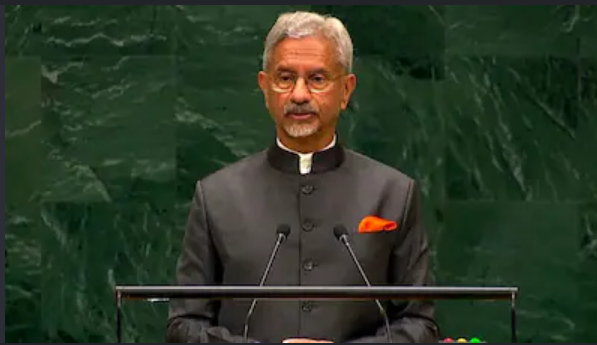
S Jaishankar calls Pakistan a “serial practitioner of terrorism” at UN
S Jaishankar criticised Pakistan at the UN General Assembly, referring to a “serial practitioner of terrorism” and warning against attempts to normalise terrorism.

Dhruv Rathee gets fresh summons in 2018 BJP IT cell video case

Nobody can browbeat judiciary, Chief Justice warns over Rahul Gandhi’s march

India-US trade deal first phase finalised, drafting underway

Election Commission orders voter roll revision in 17 states, UTs

Actor Imran Khan asked to leave India after CJP protest

Delhi Police offers 11-person limit for CJP’s Connaught Place protest
Actor Imran Khan asked to leave India after CJP protest
Election Commission orders voter roll revision in 17 states, UTs
India-US trade deal first phase finalised, drafting underway
Nobody can browbeat judiciary, Chief Justice warns over Rahul Gandhi’s march

Afghan Men Try To Hang With The Jet Engine Of The Aircraft in Kabul- Afghanistan News – Kabul News
Trending Top 10 News: 10000 Crore Fine on Flipkart, Apple to Launch Unique Feature, Hdfc Bank Job Ad

Trending Top 10 News: Nokia 6310, Apple sales, Bachpan ka Pyar Video Kid, Dainik Bhaskar IT Raid

Trending Top 10 News: Canada bans Indian flights, Rain in Delhi NCR, AIMIM Twitter hacked, Raj Kundra case

Trending Top 10 News: Shein India, Apple New Service, Pocket Oxygen, Oppo Launched New Phone
-
 India News17 hours ago
Dhruv Rathee gets fresh summons in 2018 BJP IT cell video case
-
 India News13 hours ago
Nobody can browbeat judiciary, Chief Justice warns over Rahul Gandhi’s march
-
 India News9 hours ago
India-US trade deal first phase finalised, drafting underway
-
 India News6 hours ago
Election Commission orders voter roll revision in 17 states, UTs
-
 India News6 hours ago
Actor Imran Khan asked to leave India after CJP protest
-
 India News5 hours ago
Delhi Police offers 11-person limit for CJP’s Connaught Place protest
