English हिन्दी
Connect with us

India News

Nirbhaya case: Dec 16 rapists to hang, Supreme Court rejects review petitions of death row convicts

Published

on

Nirbhaya case accused

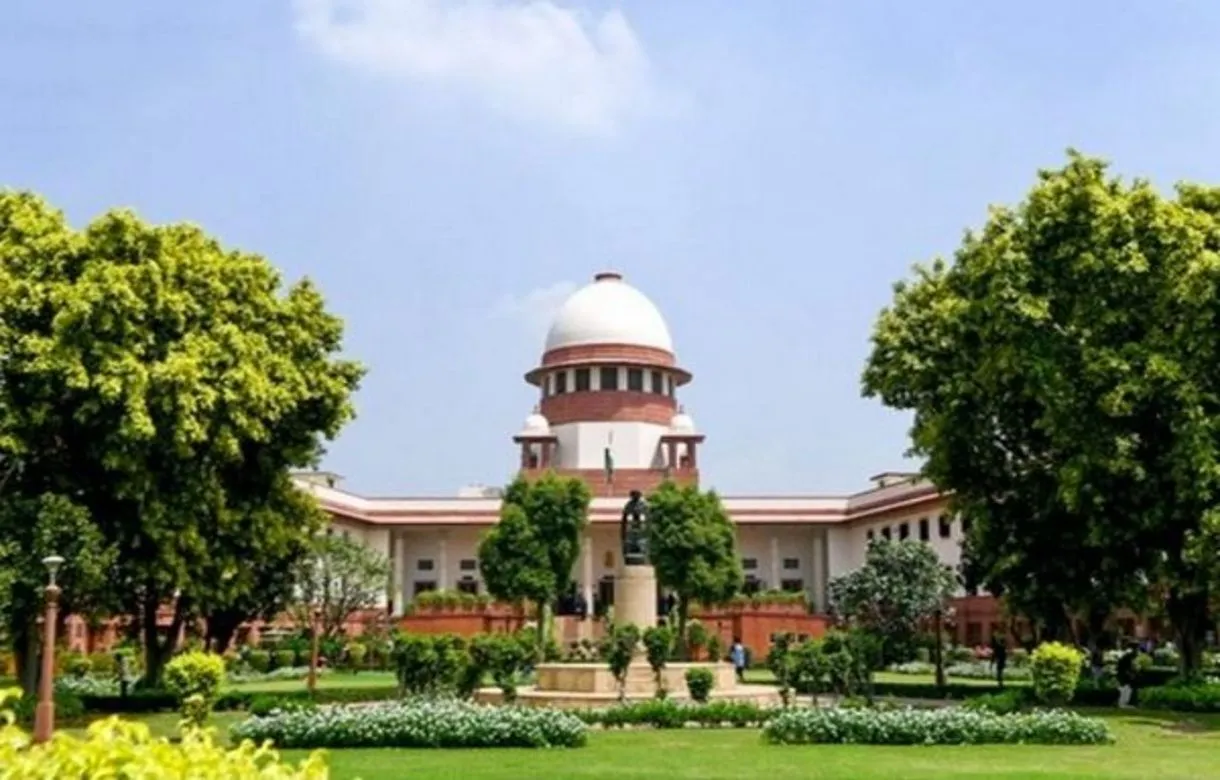
The Supreme Court on Monday upheld its judgment on the death sentence of three of the four convicts in the December 16, 2012 Delhi gangrape case that came to called also as the ‘Nirbhaya’ case after the name given to the victim.

A bench headed by Chief Justice Dipak Misra and comprising Justices Ashok Bhushan and R Banumathi, delivering its verdict on the pleas filed by Mukesh (31), Pawan Gupta (31) and Vinay Sharma (25), said the convicts had failed to point out “error” in the judgment. The court added that the convicts were heard elaborately during appeals and no grounds were made out for review of the verdict.

The fourth convict, Akshay Thakur (31), did not file a review plea. Advocate AP Singh, representing Akshay Thakur, had told PTI, “Akshay has not filed a review petition yet. We will be filing it.” He has been granted three weeks by the top court to do so.

Last year, the top court had upheld the death sentence awarded to the four convicts by the Delhi High Court and the trial court in the gangrape and murder of a 23-year-old paramedic student on December 16, 2012, in the national capital. The 23-year-old paramedic student, returning from a movie, boarded a chartered bus in New Delhi’s Saket area and was subsequently brutally raped and murdered by six people.

While one of the accused, Ram Singh, allegedly committed suicide in Tihar jail, another accused, a juvenile, was convicted by the juvenile justice and sent to three years in probation to a reform home. The juvenile, whose name is not known (legally, he cannot be named) is already out and has melted into the population, carrying his criminal mind and past. Ironically, the juvenile, who was said to be the most cruel of the lot in the murder, has also been given enough vocational training to support himself independently.

Backgrounder

While the 2012 Nirbhaya case has become the centrepiece of all judgments related to violence on women in India, the first instance of the Supreme Court’s capital punishment (to all four accused) verdict, delivered on May 5, 2017, went through several petitions.

While the Nirbhaya case saw expression of massive outrage, protests and a movement, in the six years since things appear to have taken a turn for the worse with gang rapes, torture and murders, even on girls as young as 8 (the Kathua gang rape and murder case) as horrific as the Nirbhaya case and more, have been reported from across the country.

The general perception was that deterrent legal action was so slow in India that the fear of punishment has all but vanished. Today’s judgment could be one in a series of final verdicts that the public wants to be fast-tracked.

Timeline

December 16, 2012: 23-year-old paramedic student, now known as Nirbhaya, returning home with her friend in Delhi got a lift from a chartered bus (empty, except for driver and helpers) and is gang-raped, brutally assaulted by six men and dumped in a grievously injured state. Her friend was brutally beaten up and left for dead.

December 17, 2012: Delhi Police identify four men who raped and assaulted her — bus driver Ram Singh, his brother Mukesh, Vinay Sharma and Pawan Gupta. Doctors declared the woman suffered grave internal injuries.

December 18, 2012: Ram Singh and three others are arrested.

December 29, 2012: Nirbhaya succumbs to her injuries at Mount Elizabeth Hospital in Singapore where she was transported by the government for further treatment.

December 21, 2012: Accused juvenile is arrested from Anand Vihar bus terminal in Delhi. The woman’s friend identifies Mukesh as one of the culprits. Police conduct raids in Haryana and Bihar to nab the sixth accused, Akshay Thakur.

December 22, 2012: Akshay Thakur is arrested in Bihar and brought to Delhi. Victim records her statement before the SDM in hospital.

January 2, 2013: The then Chief Justice of India Altamas Kabir inaugurates fast track court for speedy trial in sexual offence cases.

January 3, 2013: Police files charge-sheet against five adult accused for offences including murder, gang rape, attempt to murder, kidnapping, unnatural offences and dacoity.

February 28, 2013: Juvenile Justice Board (JJB) frames rape, murder charges against the juvenile accused.

March 11, 2013: Bus driver Ram Singh is found hanging in his cell in Tihar jail.

August 31, 2013: JJB convicts the juvenile for gang rape and murder and awards three years term at a probation home.

September 13, 2013: Fast track court awards death to all four convicts. Trial court refers the case to Delhi High Court for confirmation of death sentence.

March 13, 2014: The Delhi High Court justices Reva Khetrapal and Pratibha Rani uphold the death sentences awarded to the four convicts.

December 18, 2015: Delhi High Court refuses to stay the release of the juvenile. He walks out of a correction home after spending three years.

April 3, 2016: Supreme Court begins hearing in the case.

April 8, 2016: Senior advocates Raju Ramchandran and Sanjay Hegde appointed amicus curiae.

May 5, 2016: SC upholds death penalty of four accused – Akshay Thakur, Vinay Sharma, Pawan Gupta and Mukesh Singh.

November 7, 2016: Advocate Raju Ramchandran argues for sentencing order to be set aside.

November 28, 2016: Advocate Sanjay Hegde argues against reliability of evidence in the case.

February 3, 2017: Supreme Court decides to rehear the case on the sentencing aspect, after the petitioners contend that there has been violation in procedure.

March 6, 2017: All the accused submit additional affidavits in court.

March 27, 2017: The SC reserves verdict after nearly a year of hearing the case.

May 5, 2017: The Supreme Court pronounces judgement in the case upholding the death sentence of all 4 accused.

November 13, 2017: The convicts appeal to the Supreme Court to review their sentence claiming that it was cold-blooded killing in the name of justice.

May 4, 2018: Supreme Court upholds the order on the plea of two convicts seeking a review of its 2017 verdict upholding the death penalty awarded to them.

India News

Congress suspends 5 Haryana MLAs over cross-voting in Rajya Sabha polls

Congress suspends five Haryana MLAs for cross-voting in Rajya Sabha elections, citing serious indiscipline and anti-party activities.

Published

on

The Congress has suspended five of its MLAs in Haryana for cross-voting during the recent Rajya Sabha elections, taking disciplinary action over what it described as “anti-party activities”.

The move came after the state unit reviewed the conduct of certain legislators during the polls, where some were found to have voted against the party’s authorised candidate.

Five MLAs suspended after disciplinary process

According to party sources, the MLAs were issued show-cause notices seeking an explanation for their actions. After reviewing their responses, the Congress disciplinary committee recommended suspension.

The decision was approved by the party leadership, including Congress president Mallikarjun Kharge, and has been implemented with immediate effect.

Party calls it ‘grave indiscipline’

Haryana Congress chief Udai Bhan said the action was necessary to uphold party discipline, stressing that defying the official party line during elections weakens organisational unity.

He said the party takes such violations seriously and will continue to act against any form of indiscipline.

Leadership backs strict action

Senior Congress leader and Leader of Opposition Bhupinder Singh Hooda supported the decision, saying it was taken after due consideration.

He noted that while Rajya Sabha elections are conducted through an open ballot system, allowing legislators some flexibility, the party retains the authority to initiate internal disciplinary action in cases of deviation.

Background

The action follows cross-voting reported during the recent Rajya Sabha elections in Haryana, which led to internal concerns within the party. The development has highlighted organisational challenges and prompted the leadership to take corrective steps to reinforce discipline.

Continue Reading

India News

Harivansh set to be elected Rajya Sabha Deputy Chairperson unopposed

Harivansh is set to be elected unopposed as Rajya Sabha Deputy Chairman after no opposition nominations were filed before the deadline.

Published

on

Former Rajya Sabha Deputy Chairman Harivansh is set to be re-elected to the same post unopposed in the election due to be held later today.
The date has been fixed by the Chairman under the relevant rules governing the conduct of business in the Upper House.
According to sources, the deadline for submitting motions for the election was 12 noon on April 16. A total of five notices were received within the stipulated time, all proposing Harivansh for the post.

Multiple nominations, single candidate
The motions were submitted by members across parties, including Jagat Prakash Nadda, Nitin Nabin, Nirmala Sitharaman, Sanjay Kumar Jha, and Jayant Chaudhary, each backed by seconding members.
All five motions explicitly state that Harivansh be chosen as the Deputy Chairman of the Rajya Sabha.

No opposition nomination filed

Notably, no motion was submitted by the Opposition before the deadline. This effectively clears the path for a unanimous election, as there is no contest for the position.
As per parliamentary procedure, motions will be taken up one by one. Once any one motion is adopted by the House, the remaining motions will not be put to vote.

Likely to be elected by voice vote
In line with established practice, the first motion — expected to be moved by Nadda — may be adopted through a voice vote. Following this, the Chairman will formally declare Harivansh as elected Deputy Chairman.
After the declaration, Harivansh will be escorted to the Chair by members from both the Treasury and Opposition benches, adhering to parliamentary convention.

Continue Reading

India News

Amit Shah counters delimitation concerns, says southern states to gain Lok Sabha seats

Amit Shah assures Parliament that southern states will gain Lok Sabha seats after delimitation, countering opposition criticism during the women’s reservation debate.

Published

on

Amit Shah

Union Home Minister Amit Shah on Thursday addressed concerns over the proposed delimitation exercise, asserting in the Lok Sabha that southern states will not lose representation but instead see an increase in their number of seats.

His remarks came during a heated debate linked to the implementation of women’s reservation, where opposition parties have raised fears that population-based delimitation could reduce the political weight of southern states.

Shah rejected these claims, calling them misleading, and said the proposed framework ensures fairness while expanding the overall strength of the Lok Sabha.

Seat count to rise with expansion of Lok Sabha

The government has indicated that the total number of Lok Sabha seats could increase significantly as part of the delimitation process. In this expanded House, the combined representation of southern states is expected to rise from 129 seats at present to around 195 seats.

Shah emphasised that no state will lose seats in absolute terms, and the exercise is designed to reflect population changes while maintaining balance across regions.

State-wise projections shared in Parliament

During his address, Shah also provided indicative figures for individual southern states, suggesting notable increases in representation. According to the projections:

  • Tamil Nadu could see its seats rise substantially
  • Kerala, Telangana, and Andhra Pradesh are also expected to gain additional seats
  • Karnataka’s representation may increase as well

These figures were presented to counter the argument that delimitation would disproportionately favour northern states.

Political debate intensifies over linkage with women’s quota

The delimitation exercise has been closely linked to the rollout of women’s reservation, which proposes one-third seats for women in Parliament and state assemblies.

Opposition leaders have questioned this linkage, arguing that tying reservation to delimitation could delay its implementation and raise federal concerns. Some leaders have also warned that the move could impact national unity if apprehensions among states are not addressed.

The government, however, maintains that the reforms are necessary to ensure equitable representation and to align the electoral system with demographic realities.

Centre dismisses ‘false narrative’ on southern states

Shah reiterated that concerns about southern states losing influence are unfounded. He said the delimitation process will increase representation across regions and described the criticism as a “false narrative” aimed at creating confusion.

The issue is expected to remain a key flashpoint as Parliament continues discussions on the women’s reservation framework and related legislative changes.

Continue Reading

Trending

© Copyright 2022 APNLIVE.com