
India News
Gangs of Jaunpur: Munna Bajrangi’s life and killing give a glimpse into UP crime and politics


Dreaded Uttar Pradesh gangster Prem Prakash Singh alias Munna Bajrangi was shot dead in Baghpat jail on Monday, hours before he was to be produced in a district court this morning.
Just a week earlier, his wife had alleged a threat to his life.
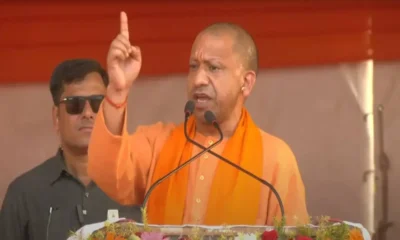
Chief Minister Yogi Adityanath said: “I have ordered a judicial inquiry and suspension of the jailor. Such an incident occurring inside jail premises is a serious matter. Will conduct an in-depth investigation and strict action to be taken against those responsible.”
The jailor and his deputy and two others have been suspended.
Arrested in Mumbai in October 2009, Munna was wanted in several cases of murder, loot, extortion and other crimes, most notably for the murder of BJP MLA Krishnanand Rai in 2005. Rai was ambushed while he and his associates were travelling on Lucknow highway in two vehicles. Munna and his men sprayed the vehicles with AK47 and Rai was shot more than 100 times. Six others with him were killed in the attack
Bajrangi was accused in more than 40 murder and extortion cases and once carried a reward of 7 lakh on his head.
The gangster was also wanted in the murder of BJP MLA Krishnanand Rai in 2005. In 2012, he had also contested Assembly Elections from inside the jail as a joint candidate of Apna Dal and Peace Party from Madiyahu seat, reported NDTV. Though, he did not win the elections but stood at third place and secured 12% votes.
Rai’s wife Alka Rai, a BJP MLA from Mohammadabad expressed relief and happiness at the news of Munna’s killing, saying she was living in constant fear for her children due to him. Some days ago, she, said, her children were accused of being involved in killing Munna Bajrangi’s wife’s brother.
In various jails since his arrest, the gangster had been transferred to the prison in Baghpat from Jhansi on Sunday for being produced in the district court in a case for demanding extortion money from BJP MLA Lokesh Dixit, said media reports.
According to Additional Director General (ADG), Prison, Chandra Prakash, gangster Sunil Rathi, lodged in the same prison, opened fire on Bajrangi in the early hours of Monday. Sources say around 6.30 am in the Baghpat prison, when the inmates were having tea, another prisoner Sunil Rathi, fired at Bajrangi, killing him instantly, said media reports. While Rathi has been detained, jailer, deputy jailer, warden and head warden have been suspended.
“However, the larger question, which police will investigate, is how did an inmate managed to get a firearm inside the jail,” he added.
Bajrangi’s wife Seema Singh had said on June 29, “STF wants my husband to be killed inside the jail. The Special Task Force inspector had visited Jhansi jail recently to hatch a conspiracy to kill my husband. They are constantly inquiring about my husband’s health. I have informed the court about it and I also request chief minister Yogi Adityanath to intervene in the matter.”
A report by ANI quoted ADG Prison as saying: “There was altercation b/w Sunil Rathi&him after which he shot him dead. He has been detained&is being interrogated. Jailor,Dy Jailor,Warden&Head Warden have been suspended.Have requested judicial&magisterial inquiry”
There was altercation b/w Sunil Rathi&him after which he shot him dead. He has been detained&is being interrogated. Jailor,Dy Jailor,Warden&Head Warden have been suspended.Have requested judicial&magisterial inquiry: ADG Prison on Gangster Munna Bajrangi shot dead at Baghpat Jail pic.twitter.com/Vijh6exi4K
— ANI UP (@ANINewsUP) July 9, 2018
SP Baghpat told ANI UP: “Sunil Rathi has been accused of killing Gangster Munna Bajrangi; Body sent for postmortem, fair investigation will be done.”
Forensic Unit team arrives at District Jail Baghpat where Gangster Munna Bajrangi was shot dead earlier today. SP Baghpat says, “Sunil Rathi has been accused of killing Gangster Munna Bajrangi; Body sent for postmortem, fair investigation will be done.” pic.twitter.com/Bzg6mzlb0f
— ANI UP (@ANINewsUP) July 9, 2018
V Srivastava,advocate of gangster Munna Bajrangi, told ANI UP: “He was brought to District Jail Baghpat from Jhansi,last night. At 6;30am today,a convict lodged in the jail shot him dead&hid the pistol in a gutter. Few days ago,we had made UP CM aware of threat to gangster Munna Bajrangi’s life”
He was brought to District Jail Baghpat from Jhansi,last night. At 6;30am today,a convict lodged in the jail shot him dead&hid the pistol in a gutter. Few days ago,we had made UP CM aware of threat to gangster Munna Bajrangi’s life:V Srivastava,advocate of gangster Munna Bajrangi pic.twitter.com/dDLv0298k6
— ANI UP (@ANINewsUP) July 9, 2018
Bajrangi, accused in as many as 40 cases of murder and extortion, had once survived an encounter with the police in 1998 after he was shot nine times.
Life and crimes of Munna Bajrangi – and the political linkages
Born in 1967 to a family in Jaunpur, Munna Bajrangi alias Prem Prakash Singh was a school dropout – he had quit studies after Class V and by adolescence had developed criminal tendencies. Fond of keeping weapons, he was booked for being involved in a fight and possessing illegal arms when he was just about 17 years old.
That was only the beginning of his career in crime. With ambitions of making a name in crime, he got patronage of local strongman Gajraj Singh. In 1984, still 17 years of age, he murdered a businessman during a robbery. After that he killed a BJP leader of Jaunpur. With this explosive start, he went on to commit several other murders.
Seeking to increase his clout and influence in eastern UP, Poorvanchal, he joined the gang of criminal-politician Mukhtar Ansari. The gang became even more powerful after Ansari got elected as an MLA from Mau on Samjawadi Party ticket. Munna now directly started controlling allocation of government contracts.
Around this time, BJP MLA Krishnanand Rai started emerging as a challenge. His gang was backed by Mukhtar Ansari’s arch rival Brijesh Singh. Irked by Rai’s rising influence, Mukhtar gave Munna the job of getting rid of him. On November 29, 2005, he ambushed Rai who was travelling with two vehicles on Lucknow highway. Over 400 rounds were sprayed on the vehicles with AK47. Krishnanand Rai and six others were killed in the attack, each hit by 60 to 100 bullets.
Munna now becae the most dreaded, most wanted gangster. UP Police, STF and CBI were after him and a reward of Rs.7 lakh announced for him. Hunted in UP and Delhi, Munna moved to Mumbai. He also managed to travel abroad and developed more contacts in the underworld. He started handling his gang members over phone from Mumbai.
Munna also tried his hand in politics and tried to get a BJP ticket for a woman from Ghazipur Lok Sabha seat. This was not liked by Mukhtar who stopped helping Munna’s men. After failing to make any headway with BJP, Munna went to a Congress leader who was from Jaunpur but practices politics in Mumbai. Munna Bajrangi had backed him in Maharashtra assembly polls.
Munna was wanted in several cases in many states, the largest number being in UP. Munna is said to have boasted of committing 40 murders in his crime career of 20 years. He was nabbed from Malad in Mumbai by Delhi Police in a dramatic operation on October 29, 2009. It is said that Munna got himself arrested out of fear of getting killed in encounter. Delhi Police was reported to have said that Munna was a suspect in the killing of the controversial encounter specialist Rajbir Singh.






India News
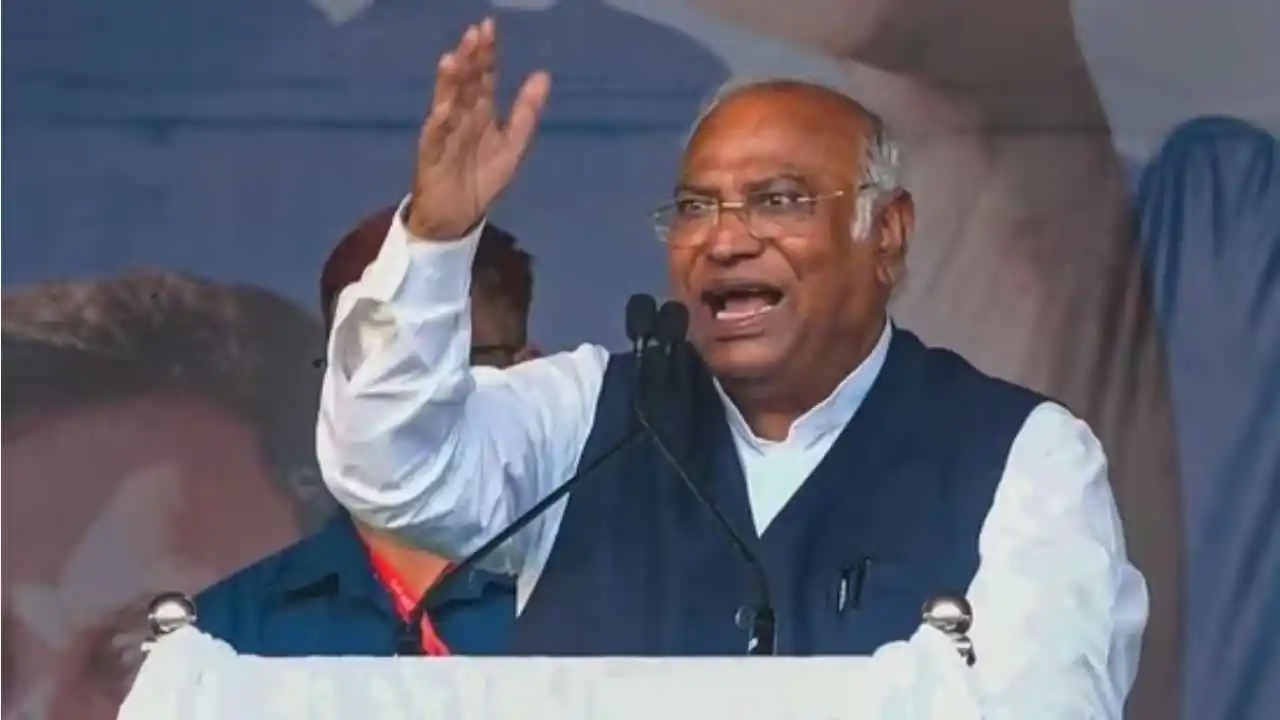
Mallikarjun Kharge seeks all-party meeting with PM Modi on delimitation
Congress president Mallikarjun Kharge has written to Prime Minister Narendra Modi for the fourth time, seeking an all-party meeting on delimitation. He also flagged the 64-day delay in proroguing Parliament’s Monsoon Session.

India News
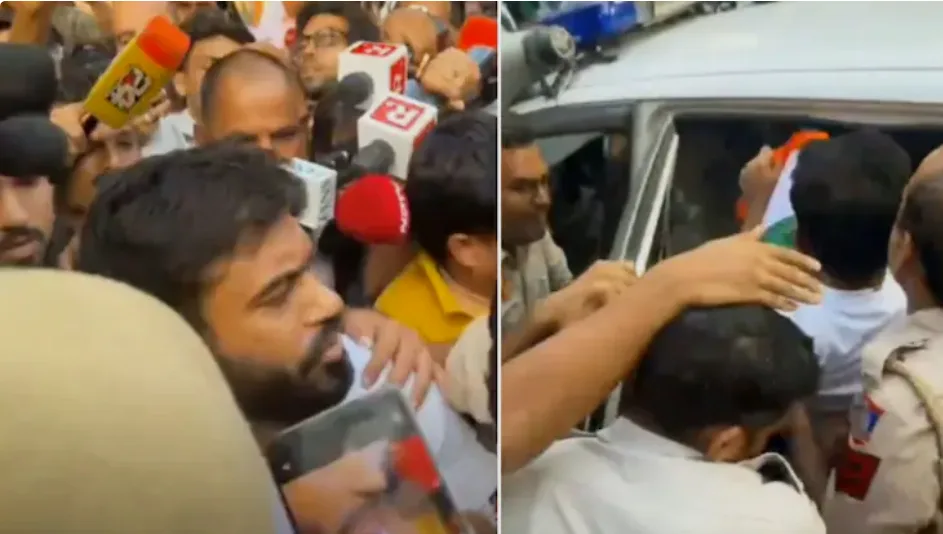
Abhijeet Dipke detained ahead of CJP’s national flag march in Delhi
Cockroach Janta Party founder Abhijeet Dipke was detained by Delhi Police on October 16, 2026, shortly before a planned national flag march. The proposed rally followed the judicial custody of two CJP members who had waved the Tricolour at Jantar Mantar.
India News
Delhi deploys 25,000 personnel, installs CCTV cameras ahead of CJP march
More than 25,000 police and paramilitary personnel have been deployed in Delhi ahead of the CJP’s planned protest march at Connaught Place. Authorities have also imposed restrictions and stepped up CCTV surveillance.

Delhi Police offers 11-person limit for CJP’s Connaught Place protest

Mallikarjun Kharge’s ‘Your Friends’ jab at Rahul Gandhi over congress exits

Magnitude 7 earthquake strikes Russia’s Kamchatka Peninsula

Delhi deploys 25,000 personnel, installs CCTV cameras ahead of CJP march

Abhijeet Dipke detained ahead of CJP’s national flag march in Delhi

Mallikarjun Kharge seeks all-party meeting with PM Modi on delimitation
Abhijeet Dipke detained ahead of CJP’s national flag march in Delhi
Magnitude 7 earthquake strikes Russia’s Kamchatka Peninsula
Delhi deploys 25,000 personnel, installs CCTV cameras ahead of CJP march
Mallikarjun Kharge’s ‘Your Friends’ jab at Rahul Gandhi over congress exits

Afghan Men Try To Hang With The Jet Engine Of The Aircraft in Kabul- Afghanistan News – Kabul News
Trending Top 10 News: 10000 Crore Fine on Flipkart, Apple to Launch Unique Feature, Hdfc Bank Job Ad

Trending Top 10 News: Nokia 6310, Apple sales, Bachpan ka Pyar Video Kid, Dainik Bhaskar IT Raid

Trending Top 10 News: Canada bans Indian flights, Rain in Delhi NCR, AIMIM Twitter hacked, Raj Kundra case

Trending Top 10 News: Shein India, Apple New Service, Pocket Oxygen, Oppo Launched New Phone
-
 India News23 hours ago
Delhi Police offers 11-person limit for CJP’s Connaught Place protest
-
 India News11 hours ago
Mallikarjun Kharge’s ‘Your Friends’ jab at Rahul Gandhi over congress exits
-
 Latest world news11 hours ago
Magnitude 7 earthquake strikes Russia’s Kamchatka Peninsula
-
 India News11 hours ago
Delhi deploys 25,000 personnel, installs CCTV cameras ahead of CJP march
-
 India News2 hours ago
Abhijeet Dipke detained ahead of CJP’s national flag march in Delhi
-
 India News39 mins ago
Mallikarjun Kharge seeks all-party meeting with PM Modi on delimitation
