
Top Stories
Police discovers blood stained cloth, knife at gangster Atiq Ahmed’s demolished office, see photos
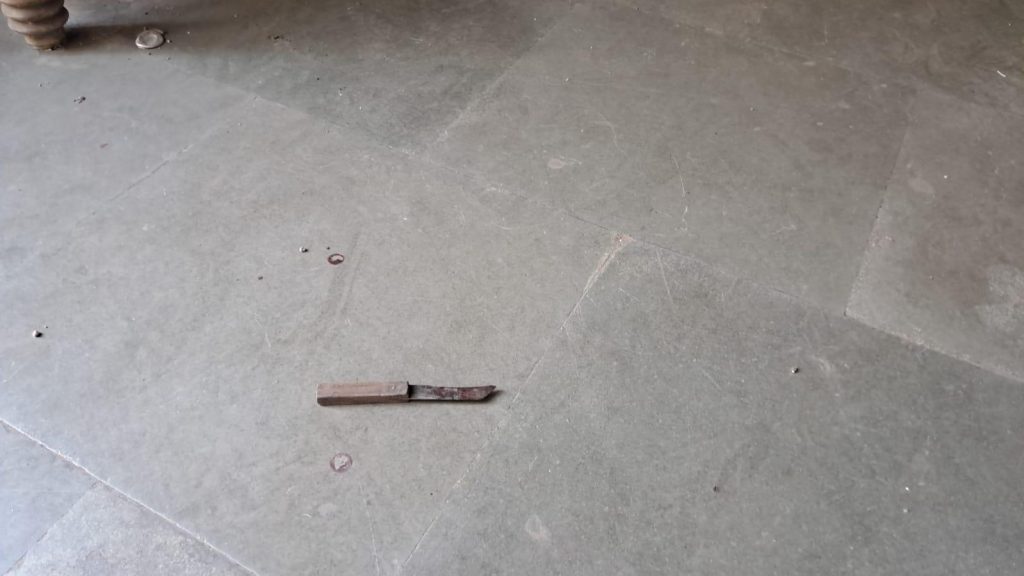
A knife was also found in the demolished office covered with blood stains.

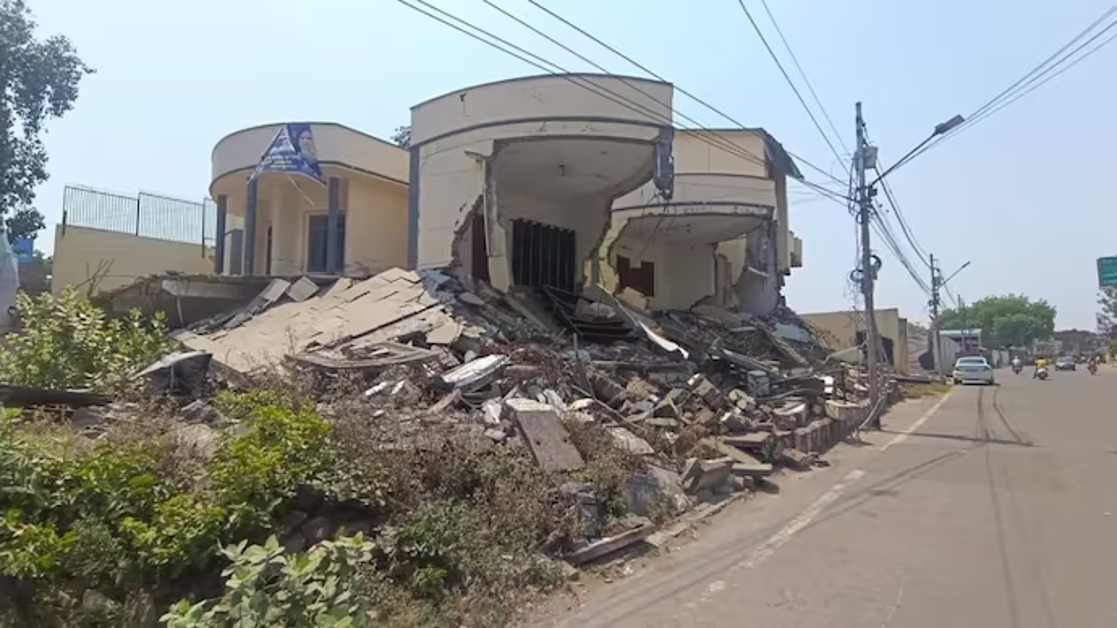
The Prayagraj Police on Monday has discovered blood stains inside the premises of gangster turned politician Atiq Ahmed’s partially demolished Prayagraj office.
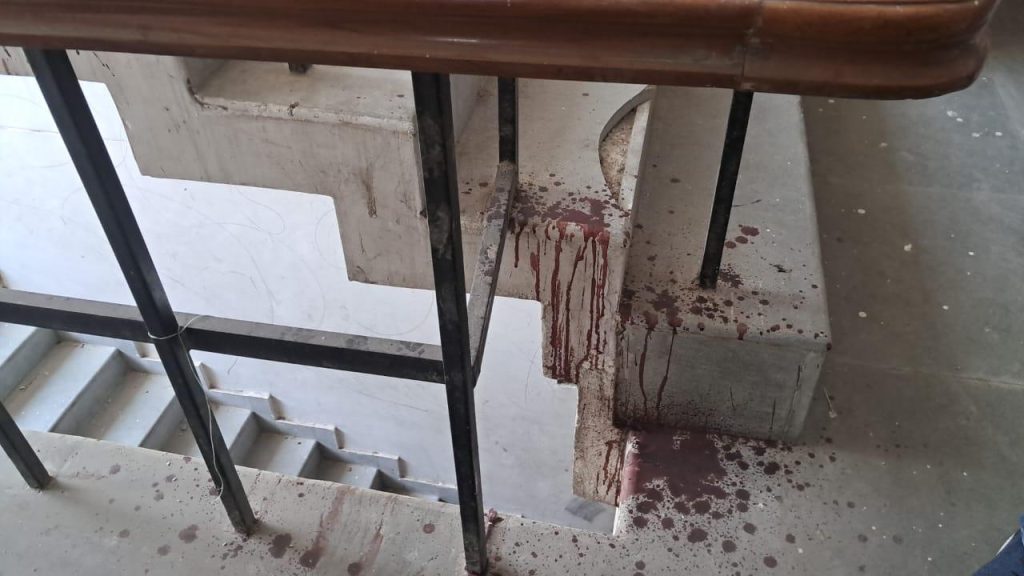
Stains of blood were found splashed at the stairs inside the office, also as per the reports some stains of blood were found a white piece of cloth which lied in a couch inside the office.
A knife was also found in the demolished office covered with blood stains.
As per reports, a police investigation in the matter of the found items with blood is underway.
Atiq Ahmed was a dreaded gangster who was shot dead at point blank range on April 15 along with his brother Ashraf Ahmed while they were being taken for a medical check-up inside a medical complex in Prayagraj.
Read Also: Maharashtra man kills father for beating up his mother, arrested
Three assailants posing as media personnel, approached the gangster brothers who were in a police custody and fired several rounds at them which took down the lives of the Ahmed brothers.
Atiq and his brother Ashraf were the prime accused involved in the killing of Umesh Pal, the key witness of former BSP MLA Raju Pal murder case, 2005.
Soon after the incident of Umesh Pal murder, the administration in the Uttar Pradesh swung into its bulldozer action and demolished the residences, offices, and various other buildings that were attached to the gangster’s property.
Atiq’s son Asad ahmed, who was a key shooter in the Umesh Pal shootout case was gunned down in an encounter by the UP Special Task Force (STF) team on April 13, Asad was on a run since Umesh Pal murder and the UP Police along with the STF team were in regular action to nab Asad and his aides involved in the shootout.
The killings of Atiq and his brother Ashraf has questioned the law and order situation of the state.
NCP chief Sharad Pawar breaks silence over talks of Ajit Pawar joining BJP







India News
Meerut murder: Muskaan Rastogi and Sahil Shukla get death sentence
A Meerut court has sentenced Muskaan Rastogi and Sahil Shukla to death in the blue drum murder case involving the killing of merchant navy officer Saurabh Rajput in March 2025.

India News
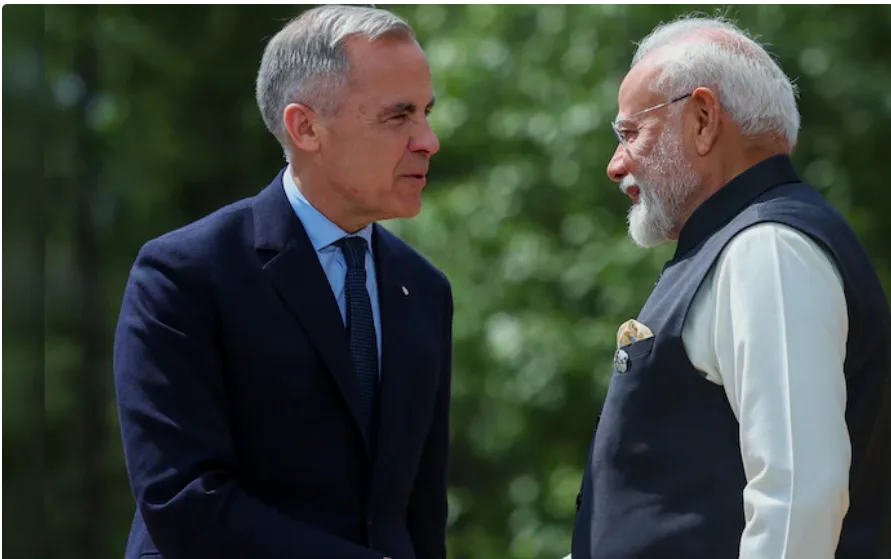
PM Modi speaks to Mark Carney as India and Canada push to strengthen ties
Prime Minister Narendra Modi held a telephone conversation with Canadian Prime Minister Mark Carney on October 13, with both leaders agreeing to strengthen India-Canada ties and pursue concrete outcomes across key areas of their strategic partnership.
Latest world news
S Jaishankar says India is a natural option for Russia amid Europe tensions
External Affairs Minister S Jaishankar said India remained a natural option for Russia as Moscow increasingly turned towards Asia amid strained relations with Europe. He highlighted the continuity of India-Russia ties and their significance for the balance of power in Asia.


CJP leaders Saurav Das, Ashutosh Ranka, Ajinkya Shinde sent to 5-day judicial custody

PM Modi speaks to Mark Carney as India and Canada push to strengthen ties

S Jaishankar says India is a natural option for Russia amid Europe tensions

Meerut murder: Muskaan Rastogi and Sahil Shukla get death sentence

Rahul Gandhi joins India Gate protest by Ankita Bhandari’s parents

Supreme Court questions EC over missing records in Sringeri election dispute
Rahul Gandhi joins India Gate protest by Ankita Bhandari’s parents
Meerut murder: Muskaan Rastogi and Sahil Shukla get death sentence
PM Modi speaks to Mark Carney as India and Canada push to strengthen ties
S Jaishankar says India is a natural option for Russia amid Europe tensions

Afghan Men Try To Hang With The Jet Engine Of The Aircraft in Kabul- Afghanistan News – Kabul News
Trending Top 10 News: 10000 Crore Fine on Flipkart, Apple to Launch Unique Feature, Hdfc Bank Job Ad

Trending Top 10 News: Nokia 6310, Apple sales, Bachpan ka Pyar Video Kid, Dainik Bhaskar IT Raid

Trending Top 10 News: Canada bans Indian flights, Rain in Delhi NCR, AIMIM Twitter hacked, Raj Kundra case

Trending Top 10 News: Shein India, Apple New Service, Pocket Oxygen, Oppo Launched New Phone
-
 India News19 hours ago
CJP leaders Saurav Das, Ashutosh Ranka, Ajinkya Shinde sent to 5-day judicial custody
-
 India News19 hours ago
PM Modi speaks to Mark Carney as India and Canada push to strengthen ties
-
 Latest world news19 hours ago
S Jaishankar says India is a natural option for Russia amid Europe tensions
-
 India News8 hours ago
Meerut murder: Muskaan Rastogi and Sahil Shukla get death sentence
-
 India News7 hours ago
Rahul Gandhi joins India Gate protest by Ankita Bhandari’s parents
-
 India News7 hours ago
Supreme Court questions EC over missing records in Sringeri election dispute
