
India News
Congress confirms Rahul Gandhi’s “Muslim Party” remark


Amidst raging controversy on Rahul Gandhi’s recent remark about Congress being Muslims’ party, Nadeem Javed, the Chairman of party’s minority department and former MLA from Jaunpur has confirmed Urdu daily Inquilab report saying that there was nothing wrong in party president’s statement or reporting of the same.
In an exclusive interview with Mumtaz Alam Rizvi, the journalist who originally reported on Rahul Gandhi’s meeting with Muslim scholars and leaders, Nadeem Javed said that neither Rahul Gandhi said something wrong nor Inquilab has misreported the remarks. Nadeem’s interview was prominently published by the daily, owned by Jagran group, as front-lead story on Monday.
Nadeem Javed had coordinated Rahul Gandhi’s meeting with Muslim scholars held at 12 Tughlak lane, the official residence of party president. Ilyas Malik, an education expert, Farah Naqvi, journalist and Z. K. Faizan, a lawyer were among the invitees. Former union minister Salman Khursheed and Nadeem Javed were also present in the meeting which lasted over two hours.
 Nadeem Javed said that he has read Inquilab report carefully quoting Rahul Gandhi saying, “Yes Congress is party of Muslims because they are weak.” He questioned as to “what is wrong in it?” Instead, Javed asked if “we have forgotten Sachar committee report saying that Muslims have become more backward then Dalits?”
He observed that no country can progress with the progress of one section of the society. The country can achieve progress only when all communities progress together. If we wish to enlist our country as a developed one, we need to raise the issues of Muslims and Dalits. He asserted that Rahul Gandhi has reiterated party’s established position that it belongs to the weaker sections of the society.
Responding to a question as if Rahul Gandhi will not meet Muslim leaders after the recent controversy, Nadeem Javed responded saying that controversy was knowingly being created. However, he further said that Rahul Gandhi will address a national convention to be shortly organized by minority department of the Congress party. He will interact with Muslims scholars for developing party’s strategy before the national convention as well. A plan would be chalked out on how to publicize the Congress contribution towards Muslims during the 60-years of its governance.
Nadeem further said that Rahul Gandhi has commitment to struggle for the rights of weaker sections. He will continue to interact with leaders of various minorities.
He also said that Congress leadership will not weaken its ties with minorities especially with Muslims due to hype created by certain media houses. He asked Muslims to support Congress under Rahul Gandhi’s leadership who is working to bring all secular parties together. He further said , “We have sacrificed in Karnataka and the 2019 elections will be contested to save secularism and communal harmony in the country”.
In such a situation, Nadeem advised the Muslim clerics, scholars and responsible leaders to show political maturity in supporting Rahul Gandhi’s efforts.
He recalled that country was facing similar challenge as in post 2002 Gujarat riots. At that time Muslims stood with Congress with responsibility. Hence, in the present situation Muslims should behave with unity and wisdom during 2019 elections, he advised.
 Several BJP leaders, including Prime Minister Narendra Modi used the Inquilab report to repeat their claim that Congress is an “anti-Hindu” party that aims to “appease minorities”. Party spokesman Anil Balani and Defence Minister Nirmala Sitharaman criticized Rahul Gandhi with “janeu dhari” remarks. Seetharaman was quoted saying, “You can’t be janeau dhari at one point….Muslim-dhari at another…This is playing with the people’s trust.”
On Saturday, Prime Minister, while addressing on the occasion of foundation stone laying ceremony of the Purvanchal Expressway in Azamgarh, said, “I have read in newspapers that Congress naamdar [dynast] has said that the Congress is a party of Muslims.”
He further said, “This debate has been on for the last two days. I am not surprised because during the Manmohan Singh government, the prime minister himself said that Muslims have the first claim on the country’s resources…”








India News
Mallikarjun Kharge seeks all-party meeting with PM Modi on delimitation
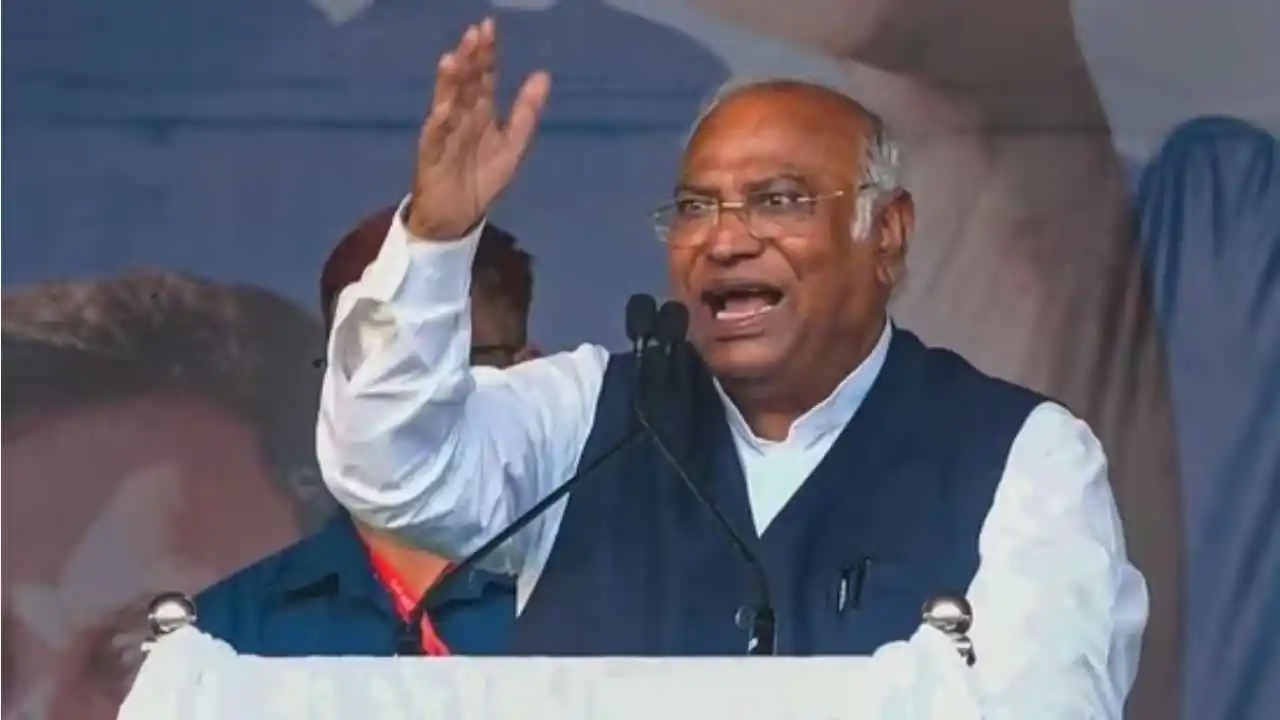
Congress president Mallikarjun Kharge has written to Prime Minister Narendra Modi for the fourth time, seeking an all-party meeting on delimitation. He also flagged the 64-day delay in proroguing Parliament’s Monsoon Session.

India News
Abhijeet Dipke detained ahead of CJP’s national flag march in Delhi
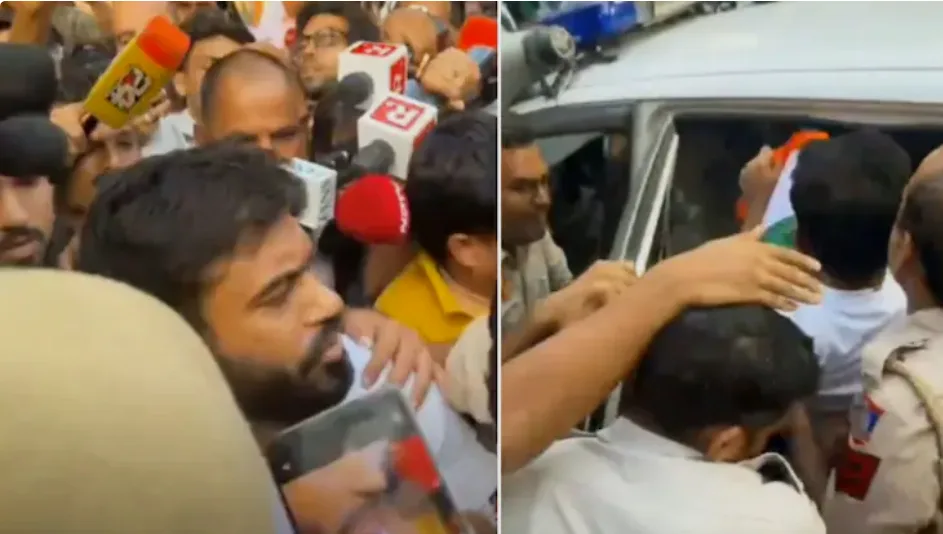
Cockroach Janta Party founder Abhijeet Dipke was detained by Delhi Police on October 16, 2026, shortly before a planned national flag march. The proposed rally followed the judicial custody of two CJP members who had waved the Tricolour at Jantar Mantar.
India News
Delhi deploys 25,000 personnel, installs CCTV cameras ahead of CJP march
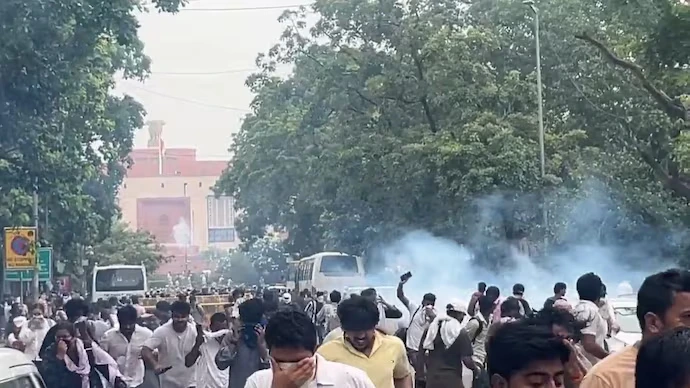
More than 25,000 police and paramilitary personnel have been deployed in Delhi ahead of the CJP’s planned protest march at Connaught Place. Authorities have also imposed restrictions and stepped up CCTV surveillance.

Election Commission orders voter roll revision in 17 states, UTs

Delhi Police offers 11-person limit for CJP’s Connaught Place protest

Actor Imran Khan asked to leave India after CJP protest

Magnitude 7 earthquake strikes Russia’s Kamchatka Peninsula

Mallikarjun Kharge’s ‘Your Friends’ jab at Rahul Gandhi over congress exits

Mallikarjun Kharge seeks all-party meeting with PM Modi on delimitation

Abhijeet Dipke detained ahead of CJP’s national flag march in Delhi
Magnitude 7 earthquake strikes Russia’s Kamchatka Peninsula

Delhi deploys 25,000 personnel, installs CCTV cameras ahead of CJP march
Mallikarjun Kharge’s ‘Your Friends’ jab at Rahul Gandhi over congress exits

Afghan Men Try To Hang With The Jet Engine Of The Aircraft in Kabul- Afghanistan News – Kabul News
Trending Top 10 News: 10000 Crore Fine on Flipkart, Apple to Launch Unique Feature, Hdfc Bank Job Ad

Trending Top 10 News: Nokia 6310, Apple sales, Bachpan ka Pyar Video Kid, Dainik Bhaskar IT Raid

Trending Top 10 News: Canada bans Indian flights, Rain in Delhi NCR, AIMIM Twitter hacked, Raj Kundra case

Trending Top 10 News: Shein India, Apple New Service, Pocket Oxygen, Oppo Launched New Phone
-
 India News24 hours ago
Election Commission orders voter roll revision in 17 states, UTs
-
 India News22 hours ago
Delhi Police offers 11-person limit for CJP’s Connaught Place protest
-
 India News23 hours ago
Actor Imran Khan asked to leave India after CJP protest
-
 Latest world news10 hours ago
Magnitude 7 earthquake strikes Russia’s Kamchatka Peninsula
-
 India News11 hours ago
Mallikarjun Kharge’s ‘Your Friends’ jab at Rahul Gandhi over congress exits
-
 India News10 hours ago
Delhi deploys 25,000 personnel, installs CCTV cameras ahead of CJP march
-
 India News1 hour ago
Abhijeet Dipke detained ahead of CJP’s national flag march in Delhi
-
 India News7 mins ago
Mallikarjun Kharge seeks all-party meeting with PM Modi on delimitation
